Friday, February 20, 2026
Home Blog Page 550

DCF Opens Energy Bill Assistance Program Early

0

The Low Income Energy Assistance Program opens two weeks early this winter.

TOPEKA – With temperatures dropping, the Kansas Department for Children and Families (DCF) announced today that Kansans needing financial assistance to keep their heat on this winter can apply for the Low Income Energy Assistance Program (LIEAP) earlier this year than in past years.

“Kansas winters can be brutal and no Kansas family should be cold,” said Laura Howard, DCF Secretary. “We are accepting LIEAP applications beginning Dec. 18, rather than the beginning of January as we have traditionally done.”

LIEAP helps Kansans restore or maintain energy services that heat their home. This includes electricity, natural gas, propane and other home heating fuels.

“We understand that applying for benefits can be complicated,” Howard said. “Beginning Dec. 18 through the end of March, DCF and partnering energy companies will be available to help Kansans gather information and submit their LIEAP applications.”

To attend an in-person LIEAP application event near you, visit LIEAP one-on-one support page.  Kansans should have with them their identification, proof of income for all adult household members and current utility bills. Partnering energy companies, Atmos Energy, Black Hills Energy, Evergy, Kansas Gas Services and Midwest Energy, will be in attendance at most events in the areas that they provide energy services to Kansans.

Applications are accepted on-line at www.dcf.ks.gov, click “Apply for Services,” until 5 p.m., March 29. To qualify, households must have an adult at the address that is responsible for the heating costs of the home. Applicants be at or below 150% of the federal poverty level.

2024 Income Eligibility Guidelines

Persons Living at the Address

Maximum Gross  Monthly Income

1

$1,823

2

$2,465

3

$3,108

4​

$3,750

​5

$4,393

6​

$5,035

7​

$5,678

8​

$6,320

9​

$6,963

10​

$7,605

11​

$8,248

12​​

$8,890

+1    $643 for each additional person

Discover more information about LIEAP in Kansas including frequently asked questions, other community resources, and the complete list of LIEAP application events scheduled. Funding for LIEAP is provided by the U.S. Department of Health and Human Services, Office of Community Service through the Federal Low-Income Home Energy Assistance Program.

# # #

The Kansas Department for Children and Families (DCF) mission to protect children, strengthen families and promote adult self-sufficiency. DCF’s more than 35 service centers across the state offers a wide range of support services including food, utility, and child care assistance, child support services, and employment education and training. DCF also partners with grantees to provide foster care services to children including case planning, placement, life skills, and foster parent recruitment and training. DCF works in partnership with organizations, communities and other agencies to support families, children and vulnerable adults connecting them with resources, supports and networks in their home communities.

Kansas releases five license plate options. Residents can now vote for their favorite.

0

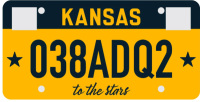
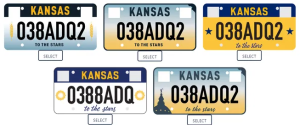
Kansans can vote on their favorite of five proposed license plate designs after Gov. Laura Kelly rescinded the original design after public outcry.

The five designs all adhere to standards established by Kelly’s office on Nov. 28, which specified that graphics must be unobtrusive, the numbering and lettering clear, and any phrase or motto be placed at the bottom. Voting ends at 5 p.m. Friday, and Kelly she will announce the winning design Dec. 18.

In a news release, Kelly said some Kansans sent designs to her office, but the five choices were created by the Kansas-based marketing firm Mammoth Creative Co.

“Many of these designs were beautiful, but we’re moving forward with this voting process to ensure law enforcement can easily read the selected license plate and to get safer plates on the streets as soon as possible,” Kelly said in the release.

All five designs contain the phrase “To the Stars” on the bottom of the plate, which is a tagline used by Kansas Tourism. Graphics on the proposed plates include heads of wheat, sunflowers, stars and the Kansas Statehouse.

Two designs feature a sunburst orange lower half transitioning to a light blue on top. One is solidly white with a blue stripe on top. Another is light blue on the bottom that fades to white with a black stripe across the top. And one is similar to the originally proposed license plate, but using a lighter blue rather than a dark navy across the top.

The emphasis on clear and legible designs are to aid law enforcement and to make them easier to read for automated license plate readers.

“Legible and high-contrast license plates are important for the Kansas Turnpike and for Kansans when they drive on other toll roads,” Steve Hewitt, CEO of the Kansas Turnpike Authority, said in a news release. “Having clear State of Kansas license plates will be crucial in keeping tolls low as we transition to cashless tolling in mid-2024.”

Some aspects of the designs may be tweaked to stay compliant with the parameters for the plates. The governor’s office said the redesigned didn’t incur new costs and were covered by existing contracts.

The design change did change the timeline for receiving new plates, but the release didn’t say how long it would postpone the introduction of new plates to Kansas roadways. On Nov. 28 Kelly estimated it’d delay implementation by about a month.

The Kansas Department of Revenue will continue replacing license plates from traditional embossed designs to digitally produced ones with the current design until a winner is selected.

Kansans can vote for their favorite design at KSPlates.kansas.gov

Sorry Santa, the cookies are for the neighbors

0

Amanda Miller
Columnist
Lettuce Eat Local

‘Tis the season! For so many things, including, but not limited to, cookies. 

I’ve had more interaction with cookies in the last few weeks than I have perhaps the entire rest of the year, and I don’t see that trend slowing down anytime until 2024 rolls around. First of all, having a baby made more show up here than is usual. I had made “breakfast cookies” to aid in my constant prenatal snacking, and then when a friend asked what she could do, I unabashedly said, “Make me your thin mints.” My mom and Benson made some together while she was here, and last week a friend brought a box of personalized heart-shaped “Kiah” cookies. 

Secondly, I’m sure Christmas and cookies have a statistically significant correlation. Anyone with experience in statistics can tell you that correlation does not equal causation, but that relationship does cause me to wonder. We know that cookies don’t cause Christmas (or do they? what if we made a whole bunch of holiday cookies in the middle of March — would Christmas trees and carols somehow reappear?). But does Christmas cause cookies? It does seem like they magically materialize just about everywhere this time of year.

Either way, Christmas cookies are a thing. My family’s home was one of omnipresent cookies: my dad didn’t ask for much in the culinary realm, but he did need cookies available. That particular creak of the freezer lid downstairs is embedded in my memories, since I heard it every day of my young life as Dad got a frozen cookie out of that often-replenished Tupperware. (I specifically made sure I saved a few out of my not-so-frequent cookies to stash in preparation for him visiting at Thanksgiving.)

In fact, I didn’t voluntarily make cookies for probably a couple years after moving out, in response to what I felt was an exorbitant amount of batches required of me throughout childhood. The endless scooping and arranging on the baking sheets…I know, I had it rough. 

Even so, December brought a superfluity of cookies in excess of the standard supply. Chocolate crinkles, monster cookies, decorated sugar cookies, molasses crinkles. We ate some of these (especially right out of the oven, of course), but the majority were destined for the neighbors. Giving out plates of cookies is a delicious combination of many of my favorite things: tradition, community, baking. 

I so appreciate that my mom put in the work to make that tradition happen, because it isn’t always as easy as it sounds. Deciding recipes, making sure the ingredients are handy, finding time to actually do them, cleaning up afterwards, getting organized enough to deliver them. Throw in an overzealous “tookie”-loving two-year-old and his newborn baby sister, and if I didn’t have a history of doing this, I wouldn’t. 

And honestly, I haven’t every year, and this year it’s going to be pretty basic, both in scope of cookie variety and amount of neighbors gifted to. Some of them might not look quite so basic, with the addition of aforementioned Benson’s particular talent in shaping and decorating….

Yet I’m making cookies because I want to. Partially because I have these naive sugar-plum visions of blissful kitchen memories with my son (emphasis on naive), but mostly because cookies are important — important for helping us remember that Christmas is better when it’s shared, even in the small, sugary ways. 


Moch-otta Cookies

These chocolatey, coffee-y cookies are bolstered with creamy ricotta, so you oughta have a lotta. I modified a recipe from a cookie cookbook by Dorie’s Greenspan, a baking “culinary guru” — mostly just upping the flavors a little, because you can never have too much chocolate or coffee (unless, of course, you read about my kids’ cupcake incident). Crispy on the outside, chewy in the center, and simple to make, this might become a new favorite recipe; I might add some chocolate chunks next time. They’ll be a great complement to the spicy peppernuts, fudgy brownies, and whatever else we can pull together for our cookie plates. 

Prep tips: Benson made these without pants on, but that’s not necessary (nor recommended). This batch makes about 40 cookies, so depending on how many neighbors you have/how many you eat in the process, you might need more. 

2 cups all-purpose flour

½ cup cocoa powder

1 teaspoon baking soda

1 teaspoon salt

1 teaspoon cinnamon

2 ounces butter, room temp

2 ounces coconut oil, room temp

1 cup white sugar

1 ½ tablespoons instant espresso powder

a good splash Mexican vanilla

1 egg

⅔ cup ricotta

In a medium bowl, mix flour, cocoa, soda, salt, and cinnamon. Then in the bowl of a stand mixer, beat butter and coconut oil until creamy. Cream in sugar and espresso, then thoroughly beat in vanilla and egg, then ricotta. On low speed, mix in that bowl of dry ingredients just until incorporated. Using a medium scoop, dollop out onto parchment-lined baking sheets with about 2” in between. Bake at 325 degrees for 20 minutes, then cool on racks. Sorry Santa, the cookies are for the neighbors

Walmart and General Mills unite to promote regenerative agriculture

0

Walmart and General Mills have joined together for the common goal of advancing the adoption of regenerative agriculture by funding sustainable farming practices to improve soil health, water quality and carbon sequestration for wheat and other crops in Colorado, Kansas, Minnesota, Nebraska, North Dakota, Oklahoma, and South Dakota.

The endeavor will focus on applying regenerative agriculture to 600,000 acres of land by 2030. This is also roughly the same amount of land General Mills requires to source ingredients for their products that are sold through Walmart and Sam’s Club. General Mills and Walmart will each provide funding for the project, but the National Fish and Wildlife Service will also chip in with matching federal grants.

General Mills set a goal of adopting regenerative agriculture systems on 1 million acres by 2030, and with this new collaboration, the company believes it can exceed that goal. Similarly, Walmart’s goal is to restore at least 50 million acres of land by 2030 and this team effort is expected to bring them closer to that objective.

“Through this partnership, we will work hand-in-hand with Walmart and Sam’s Club to help regenerate the acres of land in the key regions where we source ingredients for our shared business,” said Jon Nudi, group president, North America Retail at General Mills. “We are excited by the opportunity to bring our products, including Pillsbury refrigerated dough and Blue Buffalo pet food and treats, to Walmart shelves more sustainably, with the help of our merchants and farmer partners.”

According to a Walmart press release, the objective is twofold: support the shift to regenerative agriculture in the United States and advance the potential for more resilient yields for farmers through efforts that will help improve soil health, watersheds, biodiversity, climate change and farmer economic resilience.

“We’re committing to making the everyday choice the more sustainable choice for consumers,” said John Laney, executive vice president, Food at Walmart U.S. “This collaboration is an example of how we are working across our value chain on intentional interventions to help advance regenerative agriculture and ensure surety of supply for these essential food products for the long term.”

This venture with General Mills is not the first regenerative agriculture pact Walmart has made with a food or beverage brand. In July, Walmart announced it would be joining up with Pepsi on a $120 million investment to support farmers who are working to improve their soil and water quality. Walmart has also collaborated with cattle ranchers to incentivize improved grazing methods and regenerative land management related to Walmart’s private label long-grain rice. To learn more about the initiative, visit www.generalmills.com/gstandsforgood.com or www.corporate.walmart.com/purpose/sustainability.com.

As reported in the High Plains Journal.