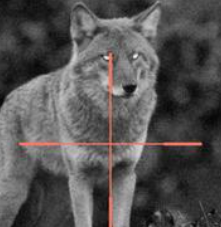
Kansas quietly turned night into legal hunting hours for coyotes for a longer stretch of the year, and the change is already reshaping how you plan winter predator sets. The extended night-vision window offers more opportunity, but it also layers on rules that are easy to overlook when you are focused on gear, wind, and stand selection. If you want to keep hunting instead of arguing on the roadside, you need to understand not just that the season is longer, but exactly how Kansas expects you to use that extra time.
How Kansas got to a longer night-vision coyote season
The modern night-vision framework in Kansas did not appear out of thin air, it grew out of a tightly controlled experiment that originally limited special equipment to a short winter window. When the state first allowed night optics and artificial light for coyotes, the rule tied that privilege to a narrow period from Jan. 1 to March 31, with the Kansas Department of Wildlife and Parks explaining that the Use of this gear would be permitted only in that late season block. That early structure treated night hunting as a test case, not a permanent expansion, and it came with a clear expectation that hunters would provide their experience and insights so regulators could decide whether to go further.
Those insights arrived in the form of a formal opinion survey that asked hunters how the season should evolve and what they were seeing on the ground. In the However section of the 2025 Kansas Night Vision Coyote Hunting Opinion Survey, the agency reported that there was much variability in responses about how the season should be changed, with approximately one third of respondents favoring a longer season, one third wanting the status quo, and one third preferring tighter limits. That split forced Kansas to thread a needle, and the eventual decision to extend night-vision coyote hunting later into the season reflects an attempt to balance demand for more opportunity with concern about pressure on coyotes and potential conflicts with other users.
The new calendar: what “extended” actually means
For you in the field, the most important shift is the calendar, because the state has now carved out a defined Night Vision Coyote Season that stretches beyond the original winter-only window. Kansas wildlife officials have explained that Night Vision Coyote Season rules now give you a longer season to pursue coyotes with night-vision equipment, replacing the earlier structure that confined special gear to only Jan. 1 to March 31. The updated framework still treats this as a distinct season layered on top of the year-round daytime coyote season, which means you must pay attention to both the general coyote regulations and the specific night-vision dates.
The expansion is not just theoretical, it is written directly into the state’s season listings. In the official schedule, the Coyote Night Vision Permit Season First Segment is listed with Location as Statewide and Type as Season, running from 09/29/25 to 12/02/25. That first segment effectively pushes legal night-vision coyote hunting earlier into the fall, and it is paired with later dates that continue into the traditional winter window, so your night sets can now bookend the coldest months instead of being squeezed into a single short block.
Where the rules live and why you cannot wing it
Because the extended season is layered on top of existing coyote rules, you cannot rely on memory or word of mouth if you want to stay legal. The Kansas Department of Wildlife and Parks publishes a full set of annual regulations, and the 2025–2026 Kansas hunting regulations booklet spells out coyote seasons, permit requirements, and equipment restrictions in detail, including the special provisions for night optics and artificial light, which you can review in the 2025–2026 guide. That document is the baseline for everything else, and it is updated as the commission approves new rules, so an old copy in your truck console is not enough.
Alongside the booklet, the agency maintains a live season and regulation portal that reflects any mid cycle changes, emergency closures, or clarifications that might affect your plans. Before you load the truck, you should confirm the current Night Vision Coyote Season dates, permit segments, and any county specific notes on the official ksoutdoors.gov site, which is where Kansas posts its season tables, public land maps, and regulatory news. Treat that site as your pre hunt checklist, because the extended night-vision window is only an advantage if you are actually inside the legal dates and following the latest conditions.
Permits, segments, and the “special equipment” trap
One of the easiest mistakes to make under the new framework is assuming that a general hunting license or a standard furbearer tag automatically covers night-vision coyote sets. Kansas has separated the privilege to use special gear from the broader right to hunt coyotes, which is why the state created a Night Vision Permit Season with defined segments like the First Segment that runs statewide from late September into early December. If you are planning to hunt during that First Segment, you must hold the appropriate night-vision permit that corresponds to the Night Vision Permit Season listing, not just a generic license.
The same logic applies to the winter block that used to be the only window for special equipment. When Kansas first authorized night optics, the rule specified that the Special Equipment Now Legal For Night Coyote Hunting would be tied to a permit and limited to Jan. 1 to March 31 only, and that structure still echoes in the current system. You need to think of the extended season as a series of permit segments that unlock the ability to use artificial light, scopes, and other devices at night, rather than a blanket green light that rides on your daytime coyote privileges.
What gear is actually allowed after dark
Even with the longer season, Kansas is specific about what you can carry when the sun goes down, and the details matter if you are running high end optics. The state’s rules on Coyote Hunting Regulations explain that artificial light, scopes, and equipment designed for use at night are treated as special tools that require a permit and are limited to the defined night-vision season, which is why the Coyote Hunting Regulations section stresses that these devices are not simply add ons to a normal coyote hunt. If you are using a clip on thermal, an infrared illuminator, or a digital night scope, you are squarely inside that special equipment category.
The state has also clarified that the Night Vision Season, Beginning on 9/29/2025, marks the start of the new extended Night Vision Coyote Season, and that Although the season is longer, the same restrictions on artificial light, scopes, and equipment designed for use at night still apply. Those conditions are spelled out in the Night Vision Season guidance, which also notes that these tools cannot be used for taking furbearers treed by hounds. In practice, that means you can run your thermal rifle scope on a coyote stand during the Night Vision Coyote Season, but you cannot simply leave it mounted and use it for other furbearer pursuits outside that window or in ways the rule does not cover.
How Kansas balanced hunter demand and biological caution
The path to a longer season was not a one way push from hunters, it was a negotiated outcome shaped by survey data and biological caution. In the state’s own summary of the 2025 Kansas Night Vision Coyote Hunting Opinion Survey, officials noted that, However much enthusiasm there was for more opportunity, the responses showed a near even split between those who wanted expansion, those who preferred no change, and those who favored tighter limits, which is documented in the However section of the report. That kind of distribution signaled that any move to extend the season would have to be incremental and paired with clear guardrails.
Regulators ultimately chose to lengthen the Night Vision Coyote Season while keeping it confined to coyotes and maintaining restrictions that had already been tightened in other areas. In its announcement of new wildlife regulations taking effect in September, the agency highlighted a Longer Night Vision Coyote Season and explained that Hunters using night vision equipment would now have a longer season to pursue coyotes, even as the state kept in place a ban on certain other night harvesting that had been imposed in 2022. That combination reflects a deliberate choice to expand opportunity where the biological risk is manageable while holding the line where past experience suggested problems.
How Kansas fits into the wider night-hunting trend
If you zoom out beyond state lines, Kansas is not acting in isolation, it is part of a broader regional shift toward more structured night hunting opportunities. A national guide to night hunting legality notes that, However much individual states differ, the general trend throughout the region shows gradual expansion of night hunting opportunities, particularly on private agricultural lands affected by coyote depredation, a pattern described in the However analysis. Kansas’ decision to extend its Night Vision Coyote Season fits neatly into that arc, giving landowners and hunters more tools to respond to livestock losses while still keeping the activity in a defined legal box.
At the same time, Kansas is following the broader pattern of tying night hunting to strict limitations on equipment and methodology, rather than opening the door without conditions. National overviews of state rules emphasize that These exceptions typically include strict limitations on equipment and methodology, with specific provisions regarding the use of lights, firearms, and hunting methods, a structure that is spelled out in the methodology discussion. Kansas’ insistence on a separate Night Vision Permit Season, explicit bans on using special gear for treed furbearers, and clear date boundaries all mirror that national template.
Safety, technology, and the skills you still need
The extended season has arrived at the same time that night-vision and thermal technology have become more capable and more accessible, which can tempt you to lean on gear instead of fundamentals. Modern devices have changed the game, with Night vision technology allowing hunters to be more efficient and successful in hunting coyotes and predators by making it easier to spot their prey and track their movements, as explained in the Night optics overview. That capability is exactly why Kansas treats these tools as special equipment, and it is also why you need to be disciplined about target identification and backstops even when your scope makes the field look like daylight.
Human vision is still the weak link, and the state’s longer season does not change the physics of how your eyes work in the dark. At night, human eyes lose the ability to distinguish detail and depth, which is why experienced hunters rely on thermal imaging or high quality night-vision devices to handle everything from judging distances to recognizing safe shooting angles, a point underscored in a night-hunting guide. Whether you are running a helmet mounted monocular or a rifle scope, you still need to build in extra margin for error, slow your shots, and communicate clearly with partners, because the law may allow more hours, but it does not forgive sloppy safety work.
The rules hunters most often miss when the season stretches
With more legal nights on the calendar, the small print becomes more important, and several recurring mistakes show up whenever Kansas adjusts its wildlife rules. One is assuming that any night-vision or thermal device is legal anywhere you can hunt, when in reality some jurisdictions restrict the type of firearm or platform you can pair with optics on public land. National guidance on night-vision legality notes that, However, on public lands, only shotguns may be used for night hunting in some areas and that night hunting of coyotes is restricted in zones where equipment is not to be attached to mechanized vehicles, a caution captured in the However summary. While Kansas sets its own specifics, the principle holds: you must read the local rules for the land you are on, not just the statewide season dates.
Another blind spot is how quickly fatigue and overconfidence creep in when the season is longer and you are stacking more all night sits into your schedule. Night predator hunting can be both challenging and rewarding, and While the cloak of darkness offers predators a natural advantage, it also tests your ability to manage noise, scent, and movement over multiple stands, as described in a Night tactics guide. The longer Kansas Night Vision Coyote Season makes it easier to chase every weather window, but if you are not pacing yourself, communicating with landowners, and double checking your permits and equipment lists, the mistake you make is likely to be a legal one rather than a missed shot.
Reading the fine print before you head to the field
As the extended season settles in, the most reliable way to stay on the right side of the law is to treat the regulations as part of your pre hunt scouting, not an afterthought. Local outdoor coverage has already walked through the new rules, with one Explore Kansas Outdoors column explaining that the New wildlife regulations taking effect in September include a longer window for night-vision coyote hunting and urging readers to study the details before they set up, a point made in the Explore Kansas Outdoors piece By STEVE GILLILAND. That kind of local perspective is a reminder that the rules are not abstract, they shape how you call, where you park, and what you can carry.
Finally, remember that the longer season also increases the odds that you will share the night with other hunters, which makes identification and communication even more critical. Modern thermal monoculars and scopes are not just for spotting coyotes, they are also tools for confirming that a movement in the distance is another hunter or an animal, and Whether you are identifying fellow hunters in the distance, distinguishing between game and livestock, or spotting potential hazards, your optics can help you avoid dangerous mistakes, as highlighted in a Whether focused safety discussion. Combine that situational awareness with a careful reading of Kansas’ extended Night Vision Coyote Season rules, and you can take full advantage of the new calendar without giving up your margin of safety or your peace of mind when the game warden’s truck rolls up.