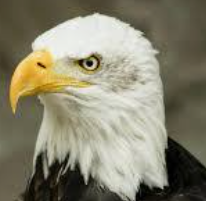
As the weather gets colder, enjoying time outside may be the last thing on your mind. But this time of year actually might be the best time of year to spot an iconic bird.
Last year, there were 248 confirmed bald eagle nests in the state of Kansas, according to data recorded by Jennifer Delisle from the Kansas Biological Survey.
“That might be a low number, because some of the monitoring has decreased a bit,” said Mike Rader, wildlife education supervisor with the Kansas Department of Wildlife and Parks. “But it was a big deal several years ago when we only had a few nesting pairs. But now you’re approaching or over 250 nesting pairs within the state.
“That’s 500 bald eagles that stay here in the summertime,” he noted.
Mid-December through February is the prime time to see a bald eagle in Kansas, Rader said. According to the Christmas bird count, there may be plenty flying around for you to see this year.
“We just concluded the Christmas bird count season in December, and ended last weekend, and there were a total of 1,111 bald eagles reported on all the Kansas Christmas counts total. So I mean, that’s a pretty good number,” Rader said.
Where can I spot bald eagles in Kansas?
Bald Eagles usually nest in forested areas close to large bodies of water, according to AllAboutBirds.org, a project of the Cornell Lab of Ornithology. They usually avoid heavily developed areas, and can also be found near dry, open lands if there is open water for fishing, since fish are the main part of their diet. They also can eat birds, reptiles, crabs and mammals, like rabbits.
If you want the best opportunity to spot a bald eagle, you can travel a bit outside of Wichita. Eagles like places with open water, so looking at lakes or reservoirs would be the best spots in the state to start.
“The places that you’re able to see a lot of [bald eagles] are areas that have either large reservoirs or a large river,” Rader said.
Some reservoirs with confirmed sightings include Quivira National Wildlife Refuge in Stafford County, Tuttle Creek Lake in Manhattan, Waconda Lake in Mitchell County and Kerwin Reservoir in Phillips County.
There were also 153 confirmed sightings in Leavenworth, Rader said.
Biologist Charlie Cope with the Kansas Department of Wildlife and Parks said in Wichita, you will be able to see them flying along the Arkansas River.
“If you go along the Ark River, you can see them in the trees,” Cope said, “but as far as where they are nesting [in Wichita], that’s a little more restrictive of places to access, obviously the Ark River, you see them fly in. But that can vary from week to week where they are.”
It can be difficult to see nests, Cope said, because many bald eagles nest on private property.
“In the 13 counties in south-central Kansas, four counties had bald eagle structures of some sort. And so the population really increased, but the reservoirs would be the best place,” Cope said.
Reservoirs close to Wichita to check out would be Cheney, located about 40 minutes away.
Tips for spotting bald eagles
While it depends on the location, early morning and early afternoon are the two best times of day to see a bald eagle, Rader said. But when lakes ice over, you may see the birds out at different times.
“A lot of birds spend time out on the ice, eating carcasses or frozen fish or things like that through the ice,” Rader said. “You see a lot of those during the mid-morning through mid-afternoon, and they go back to different locations late in the afternoon and evening.”
When you do go looking for bald eagles, Rader says staying in your car may be your best bet.
“Usually, if you get out and walk around, that tends to scare them more than a vehicle might, so usually your car is your best blind,” Rader said.
If you are lucky enough to spot a bald eagle, be sure to not disturb it or its home.
While bald eagles used to be considered endangered, they were removed from the list in August 2007. The Bald and Golden Eagle Protection Act is still in place to protect the species, however.
As a rule of thumb, Cope said if an eagle starts flying away from its nest and seems distressed, that’s a sign you should back away.
“Some eagles, if you’re within 1,000 feet of them, they’re going to be out, flying over and shrieking and things like that. So there are behaviors they display if they’re trying to drive you away from their nest,” Cope said.
“It’s a neat bird, you know, and majestic, and it’s got great history,” Cope said.