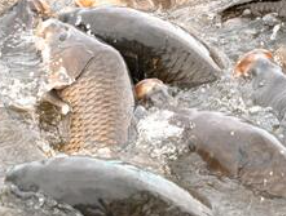
Wildlife crews in Kansas have hauled an extraordinary volume of invasive carp out of a single Midwestern river, removing more than 100,000 pounds of fish that were crowding out native species and disrupting a major waterway. The operation on the Kansas River has turned a routine management problem into a vivid case study in how far agencies now have to go to keep invasive species in check. It is also forcing a practical question that goes far beyond one state: what do you do with 109,000 pounds of unwanted fish once they are on land?
Officials in Kansas are leaning on a mix of science, logistics, and old-fashioned persistence to answer that question, turning a river full of invasive carp into a test bed for nutrient recycling and ecosystem repair. I see their effort as part of a broader shift in conservation, where removing harmful species is only the first step, and closing the loop on waste, energy, and local economies is quickly becoming just as important.
The headline figure is hard to ignore: crews working the Kansas River have pulled more than 109,000 pounds of invasive carp from a single river system. State officials describe the Kansas River as one of the most important waterways in the region, a corridor that supports drinking water, recreation, and habitat across a large swath of Kansas. When that much biomass is removed from any ecosystem, it signals just how thoroughly these fish had taken hold and how aggressively managers now feel compelled to respond.
Biologists and technicians have framed the work as a long term campaign rather than a one off cleanup, with Kansas wildlife workers keeping steady pressure on the invaders as they move through the river. Reporting from KSNThighlights how the Kansas Department of Wildlife and Parks, often shortened to KDWP, has treated the Kansas River as a priority front in the fight against invasive carp, reflecting both the scale of the infestation and the stakes for the state.
Why invasive carp are such a serious threat
Invasive carp are not just another nuisance fish, they are ecosystem engineers that can reshape entire rivers. Kansas currently has three species of these carp, and biologists warn that they can reach large sizes, consume huge amounts of plankton, and outcompete native fish that depend on the same food base. When populations explode, the result is a river that looks healthy on the surface but is quietly losing biodiversity and resilience beneath the waterline, a pattern that has already played out in other parts of the central United States.
State experts have described how these carp can jump, crowd boats, and even pose safety risks to anglers and paddlers, but the deeper concern is what they do to the food web and water quality. Coverage of the Kansas River operation notes that the KDWP has, for years, tried to slow the spread of the invasive fish, with staff like invasive species specialist Liam Odell explaining how quickly they can dominate once established in a system like the Kansas River.
How Kansas wildlife workers pulled it off
Removing more than 100,000 pounds of fish from a flowing river is a logistical feat, and Kansas crews have leaned on a mix of nets, boats, and careful timing to make it work. Biologists have targeted stretches of the Kansas River where carp tend to congregate, using specialized gear to corral and capture them while minimizing harm to native species. The work is labor intensive, with teams spending long hours on the water, then coordinating trucks, holding tanks, and processing sites once the fish are brought to shore.
Accounts from the field describe how Kansas wildlife workers are keeping up the pressure on the invasive species, treating each removal as part of a broader strategy rather than a one time sweep. The scale of the operation has drawn attention precisely because it shows what it now takes to manage a river that has been heavily invaded, and it underscores why agencies like KDWP have made the Kansas River one of their most important battlegrounds in the fight against invasive carp.
What happens to 109,000 pounds of fish on land
Once the carp are out of the water, the story shifts from biology to waste management and resource recovery. Kansas officials have been explicit that the invasive carp removed from the Kansas River are not simply dumped in a landfill or left to rot. Instead, they are used for nutrient recycling, turning what would otherwise be a disposal problem into a source of fertilizer and other byproducts that can be put back into the economy in a controlled way.
State agencies have described this approach as a way to close the loop after large scale removals, making sure that the environmental benefits of taking carp out of the river are not offset by new problems on land. Reporting on the operation notes that more than 109,000 pounds of carp from the Kansas River have been routed into these nutrient recycling streams, a volume that gives Kansas a real world laboratory for scaling up such systems.
Nutrient recycling and the push to close the loop
The idea of nutrient recycling is simple in theory but complex in practice: take organic material that would otherwise be waste and convert it into something useful, such as soil amendments or inputs for industrial processes. In the case of the Kansas River carp, officials say the fish are processed so that their nutrients can be returned to the land in a controlled way, rather than decomposing in the river or in unmanaged piles. That approach aligns with a broader shift in conservation, where the goal is not only to remove harmful species but also to reduce the environmental footprint of the removal itself.
Details from Kansas emphasize that this is not an ad hoc experiment but a deliberate strategy to handle large volumes of biomass generated by invasive species control. The state has framed the carp program as part of a larger effort to keep resources circulating, with NEED and KNOW style summaries highlighting how Kansas officials are trying to keep the system as circular as possible after each major removal from the Kansas River.
The Kansas River as a test case for other states
What is happening on the Kansas River is already being watched by other regions grappling with their own invasive carp problems. The river flows through a landscape where agriculture, cities, and wildlife all intersect, making it a useful proxy for many other mixed use watersheds in the central United States. If Kansas can show that it is possible to remove more than 100,000 pounds of invasive fish, protect native species, and still find productive uses for the carcasses, that model is likely to appeal to other states facing similar pressures.
Reports on the Kansas effort repeatedly point to the river’s importance for the state, which helps explain why Kansas has invested so heavily in this work. The Kansas River is not just a local fishing spot, it is a backbone for communities and ecosystems, and that status has pushed agencies to experiment with more ambitious strategies. Coverage that references Kansas officials underscores how the state is positioning itself as a leader in invasive carp management, with lessons that could travel well beyond its borders.
Positive effects and early signs of recovery
Removing such a large mass of carp is not just a symbolic victory, it has measurable effects on the river’s health. Wildlife workers involved in similar efforts have spoken about the positive effects that follow when harmful species are taken out of a waterway, from improved water clarity to better conditions for native fish and invertebrates. In the Kansas River, the expectation is that each round of removals will give native species more room to rebound, especially in stretches where carp had become dominant.
One account of workers removing a jaw dropping 100,000 pounds of harmful creatures from a U.S. waterway notes how quickly local ecosystems can start to rebalance once the pressure from invasives is reduced. Writer Susan Elizabeth Turek describes how Wildlife crews have seen encouraging shifts after large removals, with fewer carp leaving more food and space for native fish that had been pushed to the margins. Those observations line up with what biologists in Kansas hope to see along the Kansas River as their own 109,000 pound haul starts to ripple through the food web.
The human side of a massive river cleanup
Behind every ton of carp pulled from the Kansas River are people who spend their days on boats, in waders, and at processing sites, doing work that is physically demanding and often underappreciated. These wildlife workers are not just technicians, they are the front line of a long running effort to keep ecosystems from tipping too far out of balance. Their jobs blend science and manual labor, from reading river conditions and fish behavior to hauling nets and coordinating transport once the fish are out of the water.
Profiles of similar operations highlight how crews take pride in seeing tangible results from their work, especially when they can point to cleaner water, healthier native fish, or safer conditions for local communities. In one account, Photo Credit notes that Wildlife teams have removed more than 100,000 pounds of harmful fish from a U.S. waterway, a reminder that the Kansas River project is part of a broader pattern of intensive, hands on conservation work playing out across the country.
What comes next for Kansas and its carp problem
Even after 109,000 pounds of carp have been removed, no one in Kansas is pretending the job is finished. Invasive species management rarely offers clean endings, and the Kansas River will likely need ongoing attention to keep carp numbers from surging back. I see the current effort as a foundation rather than a finale, a proof of concept that shows what is possible when agencies commit to sustained, large scale action and pair it with thoughtful planning for what happens to the biomass they collect.
Future phases are likely to build on the same pillars that define the current campaign: targeted removals, close monitoring of native species, and continued investment in nutrient recycling so that each new haul of carp can be turned into a resource rather than a burden. Kansas officials have already signaled, through detailed explanations of how they handled more than 109 thousand pounds of fish from the Kansas River, that they see this as an evolving system. If they can keep refining it, the state’s experience may offer one of the clearest roadmaps yet for dealing with invasive carp at scale while keeping both rivers and communities in mind.