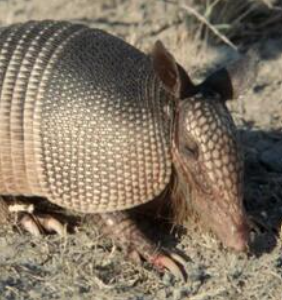
Armadillo activity around homes in Kansas has become more noticeable in recent years. Small holes appearing overnight in lawns, garden beds, or near foundations often leave homeowners puzzled. These signs rarely indicate aggression or danger, but they do reveal something about changing wildlife patterns across the state.
Nine-banded armadillos have steadily expanded northward over decades. Warmer winters, adaptable feeding habits, and fewer natural barriers have allowed them to move into parts of Kansas where they were once uncommon. As they explore suburban and rural neighborhoods, their digging behavior sometimes intersects with human spaces.
Understanding what those holes actually mean helps reduce unnecessary fear while also preventing property damage. Most of the time, the explanation is simple: an armadillo searching for food.
Food Is the Main Reason
Armadillos dig near homes primarily because they are searching for food. Their diet consists largely of insects and small invertebrates that live just below the soil surface. Lawns, gardens, and landscaped yards often provide ideal feeding conditions because irrigation, fertilizers, and mulch create insect-friendly environments.
Moist soil supports grubs, beetles, worms, ants, and termites, which are all common armadillo food sources. From the animal’s perspective, a suburban yard can resemble a natural feeding ground rich in easy nutrition. This is especially true in neighborhoods with well-maintained lawns or gardens.
Although homeowners may view the digging as damage, the armadillo is simply following its instinct to forage. It is not intentionally targeting property.
Nocturnal Foraging Behavior
Most digging happens at night. Armadillos have poor eyesight but an excellent sense of smell. They move slowly across lawns, sniffing for insect activity beneath the surface. Once they detect food, they use powerful front claws to dig small cone-shaped holes.
Nighttime activity helps them avoid predators, traffic, and human disturbance. Cooler nighttime temperatures also reduce stress for these animals, which do not regulate body heat as efficiently as some mammals.
As a result, homeowners often wake up to new holes that were not present the evening before.
Why Residential Areas Attract Them
Residential landscapes unintentionally provide many resources armadillos need. Common attractants include:
-
Irrigated lawns that maintain soft soil
-
Compost or mulch that increases insect activity
-
Outdoor lighting that draws bugs overnight
-
Gardens rich in beetles, grubs, and worms
When these factors combine, a suburban yard can function much like a natural feeding habitat. Armadillos simply follow the food supply.
Typical Appearance of Armadillo Holes
Recognizing Feeding Holes
Identifying armadillo holes helps distinguish them from digging caused by skunks, raccoons, or rodents. Most feeding holes are small and shallow, reflecting quick excavation rather than permanent shelter construction.
Typical features include:
-
About 1 to 3 inches wide
-
Usually only a few inches deep
-
Scattered randomly across lawns or beds
-
Fresh loose soil visible nearby
These holes often appear overnight and may increase during warm seasons when insects are abundant.
Feeding Holes vs. Burrows
Most small holes are not burrows. They are temporary excavations made while searching for insects. Actual burrows used for shelter are much larger and typically located near cover such as brush piles, wooded edges, culverts, or rock formations.
Burrows can extend several feet and provide protection from weather and predators. However, they are less commonly found directly in open residential lawns.
Why Multiple Holes Appear Quickly
Armadillos forage methodically. Once they enter a productive feeding area, they may dig repeatedly in a single night. This can result in dozens of small holes scattered across a yard by morning.
Although visually alarming, this pattern reflects normal feeding behavior rather than aggression or nesting.
What Their Presence Indicates About Your Yard
Healthy Soil Biodiversity
Ironically, armadillo digging often signals healthy soil. A rich population of insects, worms, and other invertebrates supports plant growth and ecological balance. These same organisms attract insect-eating wildlife.
Grubs, beetles, ants, termites, and earthworms are particularly attractive. Their presence indicates active soil biology, which can benefit gardens and lawns.
However, abundant insect life can also increase the likelihood of armadillo visits.