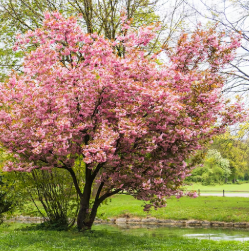
For most trees and shrubs, early spring is a great time to prune, however, the ideal time to prune can vary depending on the specific type of tree or shrub. When evaluating when to prune a tree or shrub, first determine when the plant’s flowers are in full bloom.
If the plant blooms in early spring (such as redbud, crabapple, lilac, magnolia, forsythia, or quince), consider waiting to prune until immediately after the plant finishes flowering (mid-April to mid-May). Pruning these plants before they bloom will not damage the tree or shrub but will reduce the number of spring blooms the plant has.
If the plant blooms in the summer or fall months (such as butterfly bush, crape myrtle, rose of sharon, catalpa, golden raintree, or linden), late winter to early spring is generally the best time to prune. These plants will bloom on new growth that is produced in the spring, so pruning while dormant will not significantly reduce the number of flowers that growing season.
If flowering is not a concern, late winter through early spring (late February through early April), before new growth begins is the best time to prune most deciduous trees. Without leaves, a tree’s structure is easy to evaluate and improve with pruning. This also allows for the quickest wound healing, helping to prevent disease and decay within the tree.
Like any good rule, there are always a few exceptions:
- Oak trees are best pruned when dormant in the early winter months (December through February) to reduce the risk of spreading Oak Wilt disease while pruning.
- Trees with heavy spring sap flow (such as River Birch, Maple, or Elm), may be pruned mid-summer to reduce the mess of bleeding pruning cuts. While this excess sap flow is not damaging to the tree, it can create an undesired and preventable mess.
Evergreens (such as pine, spruce, or juniper) are best pruned in early summer (May to June) as the new growth develops. Most evergreens cannot develop new growth from the interior of the plant, so plant size has to be managed by pruning evergreen growth as it develops and expands.