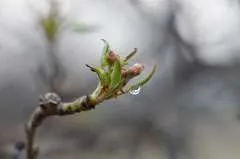
With a warmer than average winter, and springtime temperatures on the rise, many trees are starting to break dormancy. For fruit trees, this can be a concern, as temperature fluctuations will continue for many more weeks and can impact fruit production (especially when temperatures dip below freezing).
The closer a tree is to flowering, the more sensitive it becomes to cold injury damaging flowers and buds. When flowers and buds are damaged, the fruit crop the tree produces can be greatly reduced or eliminated.
As flower buds begin to swell and open, they become susceptible to damage and may be killed at temperatures below 24 degrees Fahrenheit. At full bloom, flower buds will start to suffer damage as the temperature reaches 28 degrees. Injured flowers may still appear normal but have internal damage causing the tree not to bear fruit. All fruit trees have this concern, but apricot and peach trees are most vulnerable to late frosts, as they are often the first fruit trees to bloom.
The amount of damage sustained by flowers and buds will depend not only on the temperature, but also the duration of the cold and at what stage of development the tree is in.
The table below shows the critical temperatures (in Fahrenheit) at which fruit flower buds are injured.
| Type of Fruit | 10% Bud Kill | 90% Bud Kill | Bud Stage |
| Apple | 28°F | 24°F | First White (Pink) |
| Pear | 25°F | 19°F | First White (White Bud) |
| Apricot | 24°F | 14°F | First White |
| Cherry (Sweet) | 27°F | 24°F | First White (White Bud) |
| Peach | 25°F | 15°F | First Pink (Pink) |
| Plum | 26°F | 22°F | First White |
For more information on how temperatures can affect fruit trees at various stages of development, visit the charts and full color photos of the Critical Temperatures for Frost Damage on Fruit Trees publication from the University of Utah Extension: https://extension.usu.edu/productionhort/files/CriticalTemperaturesFrostDamageFruitTrees.pdf
How To Protect Fruit Trees From Late Frosts Or Cold:
Late spring frosts and freezes are the normal part of any spring in Kansas. The damage to fruit trees during such events, however, depends on the time of year, the temperature, length of cold, wind speeds, relative humidity, dew point, cloud coverage, and microclimates on the site.
While it may be difficult to believe, some light frosts or freezes can be beneficial in fruit production. Not all buds open at exactly the same time on fruit trees, so light frosts or freezes, for short periods of time, may act as a form of fruit thinning, leading to larger, more attractive fruit. While fruit thinning is normally accomplished by pruning after the fruit begins to set, frost can have the same effect. Heavy frosts or freezes, on the other hand, can be detrimental to fruit tree yields.
Selecting later blooming trees, planting in locations that are more protected or have a warmer micro-climate, planting on higher ground or on a hillside, and keeping soil moist can all help protect fruit trees from frost damage.
Other methods of protecting trees from cold damage are usually difficult, and its practicality depends upon the size and number of trees. When heavy frost is expected, covering small trees with a bed spread, blanket or similar fabric may prevent bud or blossom injury if temperatures do not fall too low and the cold period is short. Hanging incandescent, or old-style Christmas tree lights that produce small amounts of heat, underneath the cover during frost periods can further protect fruit buds.
Commercial growers can heat their orchards with industrial heaters to protect against frost. Some gardeners will add a heat source under a tree during cold nights, such as heat lamps or charcoal briquettes. Safety and the risk of fire should always be considered when determining whether or not to provide heat.
Overhead sprinklers are effective when temperatures dip below 32 degrees Fahrenheit. As ice forms on the flower buds, heat is released, which protects flower buds until temperatures rise above freezing. Buds will not be harmed as long as unfrozen water remains on the ice. All ice should melt before turning off the sprinklers. Tree limbs can break if ice build-up is excessive.
For more methods of active frost protection in commercial orchards, visit New Jersey Agricultural Experiment Station’s website: https://njaes.rutgers.edu/e363/