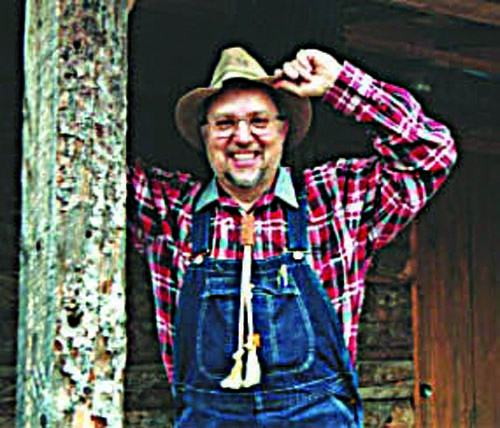
“On the gravel roads again. On the gravel roads again. We just can’t wait to get on the gravel roads again. Taking in the Flint Hills sights again with my friend. We just can’t wait to get on the gravel roads again.” (apologies to Willie Nelson)
Column readers will recall that a favorite pastime of mine is simply driving through the beautiful Kansas Flint Hills admiring the unique tallgrass prairies, the ever-changing landscape, and relishing the region’s current status and trying to absorb its history.
That pastime becomes doubly fun when I’m accompanied by my ol’ high school buddy, Canby Handy, from Platte City, Mo.
As a column reader refresher, our first such “gravel road” tour was a 3-day excursion of the southern Flint Hills that took in parts of Chase, Coffey, Greenwood, Elk, Montgomery, Chautauqua, Cowley, and Marion counties. Our second wuz a one-day tour of the southern part of Morris County. Our third tour wuz a 2-day tour of Wabaunsee County.
Well last Monday, Canby and I redoubled our fun by taking our wives, Neva Yield and MayBea Handy, along with us on a one day “Geezers & Geezerettes Tour of the Flint Hills on Gravel Roads.” It wuz his and my fourth such “gravel road” tour in recent years. This time the tour was the gravel roads of “southernish” Geary County. He did the driving in his comfortable F-150 pickup.
Here’s how the Geary County tour went down. For years I’ve traveled north/south highway 177 from Strong City to Manhattan and north-south highway 57 from the burg of Dwight to Junction City. But, not once have I traveled the east/west gravel roads between those highways and I “knew” there had to be a lot to see in that relatively small area. Canby hadn’t seen that area either.
So, on Monday morning Canby and MayBea drove to our home in Riley. We loaded four chairs, iced up a big cooler, and headed south for our trip. We stopped in Manhattan and bought some sub sandwiches — figgering that we’d “find some nice shade somewhere along the line” to eat our lunch.
We took McDowell Creek Road south out of Manhattan, stopping to see the Ashland Bottoms Research Farm of Kansas State University. Once we got south of Interstate 70, we happened upon the beautiful old St. Joseph’s Church and Cemetery. The native limestone church has been restored and modernized.
Then we took the first gravel road west which wuz Tully Hill Road. Shortly after noon, we happened upon a couple of guys preparing to round bale a little meadow of hay. The meadow wuz right next to a farm house yard containing four huge, clearly ancient oak trees. Canby, who never met a stranger he didn’t want to talk to, introduced himself to the farmers, and soon had their gracious permission for us to eat our picnic lunch in the driveway of the home in the shade of one of the ancient oaks. The trunk of the tree wuz so large that Canby and I couldn’t spread-eagle our arms around it. The farmer said the trees had to be at least 200 years olds.
For the next three hours we moseyed along both east/west and north/south gravel roads. The roads included Burley Road, Ridge Road, Zumbrum Road, Schermann Road, Florence Road, Moyer Road, Rosey-Loop, Welcome Road, Old Highway 13 and Old Highway 18. Welcome Road is as far south in Geary County as we got.
The tallgrass prairie looked excellent everywhere, but Canby and I wondered where all the cattle were. We drove for miles without seeing a bovine on the rangeland. We could tell most of the pastures hadn’t been grazed at all. I know national cattle numbers are way down, but I figgered there would still be some cattle grazing. We did see a goodly number of cow/calf pairs in the pastures and some feeders, but not many. Why? That’s a mystery.
We drove by any number of fine, old, stately remodeled limestone homes and barns. Of course, there were a number of crumbling old farmsteads, just like there are across rural America. We drove past the headquarters of the Moyer Ranch and I wondered if the current owners are related to a long-ago-deceased friend of mine, Wendell Moyer, who wuz the KSU Extension swine specialist decades ago.
We saw plenty of tallgrass prairie birds, including the Golden Plover, killdeers, buzzards, hawks, and unidentified small sparrow-like birds. We knew they were nesting and we wondered how in the world such birds find a specific place in the ocean of grass to build their nests and how they instinctively know where the nest is?
On our way home we stopped briefly trailhead for the Konza Prairie Preserve, an 8,000-acre-plus research rangeland. It wuz too hot to walk the trail.
We got home just before it started raining and cooled off, sending the high humidity hiking. We filled the evening with supper, cards, visiting, and adult beverages.
Canby and I said we’d get together for another such “gravel road” tour whenever it works out.
***
Hoorah! We ate our first homegrown tomatoes for this summer. A couple of yellow tomatoes ripened first. It’s rare for us to get our first ripe tomato in June. And, it will be quite a while before we get the next ripe one. I’ve finished the hoop-trellises for my pole beans.
I’m happy to say that my gardening has reached the “Four W” stage. All I can do now is water, weed, worry, and wait. I can only control the first two.
***
Words of wisdom for this week: “I get most of my exercise these days from shaking my head in disbelief.”
Have a happy and safe Fourth of July — a good ‘un.