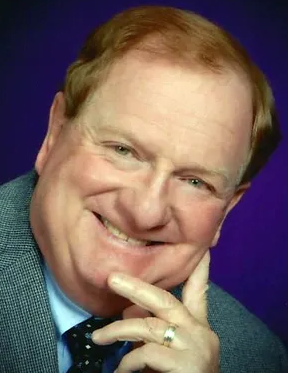
Richard Shank
Columnist
President John F. Kennedy would have been 108 years old May 29, but he is forever frozen in time at age 46 following his assassination on November 22, 1963.
To be exact, JFK, as he was affectionately nicknamed, served two years ten months and two days as president, the fifth shortest time in office among the nation’s 47 presidents, but his legend has no end.
Candidates of all political persuasions have imitated his charisma and style, but few met the mark as there was only one JFK.
In spite of his short time in office, there were significant accomplishments to his credit. In 1961, he challenged America to put a man on the moon by the end of the decade which was, perhaps, the last time the country set a goal that was accomplished with five months to spare.
His Peace Corps dispatched thousands of volunteers of all ages to assist people in developing countries, and has been credited with doing more for the nation’s foreign policy than all the diplomats that served in the nation’s history.
While in office, he oversaw drafting of civil rights legislation, which was passed the year following his death, and has been called the most significant advancement for race relations since the end of the Civil War.
Over the years, it has been interesting to visit with people who met Kennedy to get their take on what made him tick.
White House Correspondent Helen Thomas visited Hutchinson in 1992 to speak before the Dillon Lecture Series, so I asked her what kind of person he was.
Thomas minced few words in stating that no President she had known possessed a greater vision of what America should be as did Kennedy. She told the story how she once caught a ride with JFK across the nation’s capital, and said he drove an old Pontiac that rattled.
Washington Post Editor Ben Bradlee, also a Dillon lecturer, in 2001, said JFK was not a man into collecting objects or driving fancy cars. And, according to Bradlee, Kennedy was a terrible driver.
JFK visited Hutchinson April 2, 1960, to stump for votes at a Democratic conclave. As the story goes, Hutchinson News Editor John McCormally picked Kennedy up at the Hutchinson Airport in a funeral car borrowed from Hutchinson’s Johnson and Sons Funeral Home. McCormally said Kennedy was fascinated with the mile-long grain elevator on the city’s east side and inquired if it was ever completely full of wheat.
From all accounts, Kennedy was a voracious reader and an accomplished writer. His son John F. Kennedy, Jr. speculated that if his father had a chance to re-live his life, he may have been a writer.
Kennedy’s 1960 campaign with Vice President Richard Nixon was an exercise in civility as they treated each other with the utmost respect. Actually, Kennedy and Nixon were first elected to Congress in November 1946 and their offices were across the hall from each other. Nixon claims that Kennedy visited his office one day in 1950 to hand over a campaign contribution, from his father, for his senatorial campaign in California.
In the late 1940s, Kennedy and Nixon took a train trip together to Pennsylvania to debate a particular piece of legislation and, from all accounts, enjoyed the trip.
A film clip at the John Kennedy Presidential Library shows Kennedy and Nixon meeting backstage before their first presidential debate visiting like old friends would. Kennedy called Nixon “Dick” and Nixon called Kennedy “Jack.”
Partisanship existed in Kennedy’s time, but pales in comparison to what exists today. As early as 1963, it was assumed that Arizona’s Senator Barry Goldwater would be the Republican nominee in 1964 to oppose Kennedy’s re-election bid.
Kennedy and Goldwater were political opposites and good friends. Late in his life, Goldwater said he and Kennedy had planned to fly together across the nation in the fall of 1964 for regional debates to give the American people an opportunity to compare the two philosophies.
Since his death, authors have penned no less than 40,000 books on Kennedy, which computes to 25,000 more than Abraham Lincoln, but still less than the Lord who still ranks first.
Kennedy’s quotations still apply to life in America today and offer plenty of material the current president might want to study.
“Let us not seek the Republican answer or the Democratic answer, but the right answer,” Kennedy said. “Let us not fix the blame for the past. Let us accept our own responsibility for the future.”
“If we cannot now end our differences, at least we can help make the world safe for diversity,” Kennedy continued.
Following a state dinner at the White House for Nobel Laureates, Kennedy rose to speak and brought down the house with a humorous statement. “I want to tell you how welcome you are to the White House,” Kennedy said. “I think this is the most extraordinary collection of talent, human knowledge that has been gathered together at the White House, with the possible exception of when Thomas Jefferson dined alone.”
Kennedy’s comment was greeted with thunderous applause.
JFK’s memory is meticulously preserved at the John F. Kennedy Presidential
Library and Museum at Columbia Point in Boston, Massachusetts. Millions have visited the center since it opened in 1979. Tourists visiting Mount Rushmore in South Dakota in the mid 1990s were asked to pick their favorite president, and no one was surprised when a majority selected John F. Kennedy.
A European monarch, watching JFK’s funeral from a continent away said he felt as if the President of the World had passed, a common thought from a wintry November day 62 years ago.
Perhaps, those in charge in our nation’s capital would be wise to study Kennedy’s playbook on how to govern this nation.
On the farm, we have an old pickup we often drive. On the back bumper is a bumper sticker that reads “I miss Ike, hell, I miss Harry too.” It and the old pickup get a mixed reaction depending on the philosophy of those who pass.