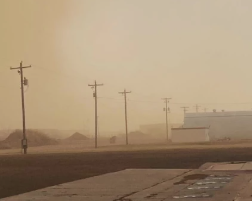
Western Kansas was scorched by wildfires spread out over several counties. While local and state fire agencies contain them, ranchers and small towns move to recovering.
LIBERAL, Kansas — Wildfire season is in full swing, with several fires ripping through parts of western Kansas this week.
The most damaging fires started in the Oklahoma panhandle and then moved north into Kansas. While most of the fires are now in control, it leaves the towns, ranchers and firefighters on high alert.
“It got real close by about two miles. It was just south of us,” said Bill Shaw, a feedyard owner near Ashland, Kansas.
It was the first major fire of the season. The dry vegetation and heavy winds makes wildfires more common this time of year.
The fires spread rapidly thanks to 60 mph wind gusts that helped it move along, threatening multiple towns stretching across several counties from Stevens to Harper.
The southwest Kansas towns of Englewood and Ashland had to evacuate as the miles-wide “Ranger Road” fire spread toward them. Residents in the northwest Kansas town of Herndon also had to evacuate.
An Oklahoma town, Tyrone, had to evacuate to Liberal, Kansas, in Seward County, where the county’s fire department was actively trying to contain multiple fires.
Shaw’s feedlot sits between Englewood and Ashland, but avoided any direct damage. He’s now trying to help neighboring cattle ranchers who weren’t as lucky.
“People are donating hay, and we’re trying to get cattle rounded up, the ones that are alive, and make sure they have feed and water,” Shaw said.
Most of the wildfires burned rangeland used for cattle, and some lost cattle and calves. And for cattle ranchers, dead cattle are costly because of high beef prices.
“Cattle are worth a lot of money right now,” Shaw said. “You could be looking at up to $3,000 per head of cattle right now.”
Shaw said the Ashland Community Foundation was organizing donations and cattle feed.
The fire across Stevens and Seward County is almost 100% contained according to the Kansas Forest Service.
Bill Waln, the State Fire Management Officer, said the fire in Clarke and Comanche Counties was still burning as of Thursday morning.
Waln estimates over 230,000 acres have burned in that fire. The Kansas Forest Service has assisted the rural counties to contain some of the burns.
According to the National Fire Protection Association, most rural counties are served by volunteer fire protection. Waln said that the number of volunteers has decreased over the last 25 years.
“The guys are tired. They have been fighting these fires for 24 to 48 hours nonstop. That’s the benefit of us bringing outside sources to help them out and give those guys a break,” Waln said.
Waln said the collaboration between the Oklahoma Forestry Service and the Kansas Forest Service will end Friday. His focus is shifting towards the increased fire danger in south central and southeast Kansas in the coming days.
He’s urging people to monitor their brush piles, avoid controlled burns and cut off any mechanical equipment that could drag along the road off of trucks or tractors and cause sparks.
“We know the vast majority of wildfires in Kansas are caused by human activity,” Waln said. “Anything we can do as individuals to prevent a fire, that just takes so much stress off of our local fire departments and our first responders.”
Calen Moore covers western Kansas for High Plains Public Radio and the Kansas News Service. You can email him at [email protected].