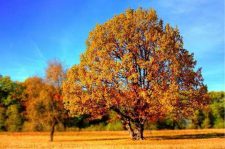
In spring some trees send up growth, known as suckers, from the base of the tree or roots. Suckers can develop several inches to several feet from the trunk of the tree and can be an indication the tree is under stress. However, some species are just more prone to sucker growth regardless of the health of the tree.
Not only are suckers unattractive but they deplete energy from the tree so removal is recommended. Use pruners to clip suckers at the base where they are attached to the main tree. If the cut is not made at the point of origin and a stub is left intact it will likely cause branching and exacerbate the problem. If there are minimal suckers present, removal can be delayed until early summer when regrowth is less likely. Herbicides should NOT be used to treat suckers.
Storm-Damaged Trees
Much of Kansas experienced heavy winds and rain over the past week or will at some point this season. Here are recommendations for managing storm-damaged trees.
- Not all trees should be salvaged. Trees with bark that has split and exposed the cambium or those where the main trunk has split are not likely to survive. Trees with so many broken limbs that the structure is altered may best be replaced. Though these trees may produce new growth, they are under such extreme stress they are much more susceptible to diseases/pests and can be dangerous due to increased risk for further breaks.
- Prune broken branches to the next larger branch or the trunk. Do not cut flush with the trunk, but rather to the collar area between the branch and the trunk. Cutting flush to the trunk creates a larger wound that takes longer to heal.
- Cut back large limbs progressively. The first cut should be made on the underside of the branch about 15 inches away from the trunk. Cut up about one-third of the way through the limb. The second cut should be made on top of the branch but about two inches further away from the trunk creating an angle when joined with the first cut. This will cause the branch to break away. The third cut should be made at the collar to remove the resulting stub.