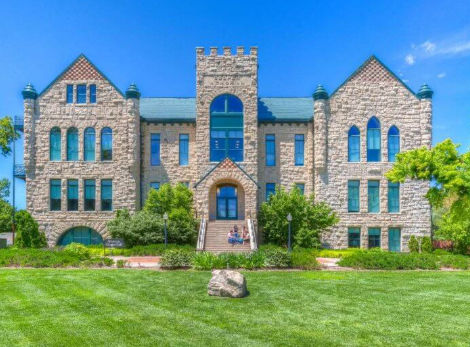
Cooper Hall’s Grand Vision on the Kansas Prairie
In 1886, Pliny Axtell gave ten acres of land to build a dream on the Kansas prairie. The United Presbyterian Church took the gift and set out to build their westernmost college in America.
They named it Cooper Memorial College after a church leader they loved. Soon, architects Evans and Gall got to work on a grand plan.
Local men cut huge blocks from nearby limestone beds to build the three-story hall with its tall 75-foot tower.
When Cooper Hall opened in 1887, it stood as both a school and church, with thick walls and round arches that still catch the eye.
Settlers Wanted Their Own College in 1880s Kansas
Pliny F. Axtell came to Sterling, Kansas as one of the first settlers and bought lots of land in the area.
The growing Presbyterian community in this small frontier town needed a college to teach their young people.
The United Presbyterian Church of North America was looking for a place to build their westernmost college.
Local folks in Sterling got excited about having a college in their small prairie town, as it would put their community on the map.
Ten Acres of Prime Land Sealed the Deal
In October 1886, Pliny F. Axtell gave 10 acres of his best land in Sterling for the college.
He picked a spot on high ground where people could see the building from miles around. This was a big gift worth a lot of money, and Axtell knew it.
The spot worked great as a landmark that farmers and travelers could spot from across the flat Kansas landscape.
Church Leaders Said Yes to the Sterling Proposal
The United Presbyterian Church Synod of Kansas took Axtell’s offer. They promised to pay for the school and keep it running for years.
This choice made Sterling home to the most western college in the entire United Presbyterian system. The church saw this as their chance to spread their values and education into Kansas frontier.
The church named it Cooper Memorial College after Reverend Joseph Cooper, a top Presbyterian leader everyone respected.
Cooper had made such a big impact on the church that they felt he earned this lasting tribute. Presbyterians often named important buildings after church leaders.
The Cooper name gave the new school instant trust within church groups.
Two Talented Architects Dream Up a Masterpiece
George H. Evans and William Gall got the job to design the building.
They picked the popular Romanesque Revival style that people liked for big public buildings in the 1870s and 1880s.
Their plans called for a huge three-story limestone building stretching 120 feet long and 50 feet wide. The best part of their design was a 75-foot tower that would stand tall above the flat Kansas fields.
Kansas Stone Created a Lasting Monument
The builders found plenty of limestone right in Kansas to build Cooper Hall. The area had rock formations that gave perfect building material.
Using local stone saved money on shipping and gave jobs to local quarry workers. The limestone looked great and would last for many years. 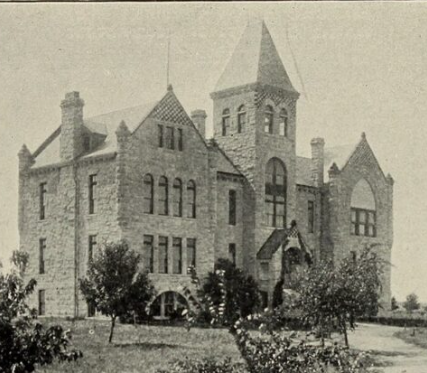
Local Workers Tackled a Massive Building Project
Construction teams started work in 1886 right after the architects finished their plans. Workers from the area brought their skills to this big project that would change the town.
The Romanesque style meant they built round arches, thick walls, and used heavy building methods. Moving the giant limestone blocks from quarries to the building site took special tools and lots of workers.
One Building Served Two Important Purposes
Cooper Hall wasn’t just for classes. It also housed the Second United Presbyterian Church.
This smart plan meant the building stayed busy all week with students and then filled with churchgoers on Sundays.
Sharing the space helped save money when money was tight on the frontier. The multi-purpose approach showed how practical these frontier Presbyterians were.
One Man Ran Both School and Church
Reverend Francis M. Spencer ran both the college as president and the church as pastor.
His background in teaching and preaching made him perfect for this hard job. Having one person in charge of both places kept everything running smoothly.
Spencer became the face of this new school in Sterling.
Doors Opened to Students in Fall 1887
Cooper Hall welcomed its first students on November 1, 1887, with much celebration.
The college became the very first United Presbyterian higher education institution in this part of America, and the farthest west. The impressive building brought big-city architectural style to small-town Kansas.
The successful project showed what could happen when settlers, church leaders, and skilled architects worked together toward a common goal.
Visiting Kansas Historical Society in Topeka
The Kansas State Archives research room at 6425 SW 6th Avenue in Topeka offers free public access to historical records related to Cooper Memorial College (now Sterling College).
The archives operate Tuesday through Friday from 9am-12pm and 1pm-4pm, plus Saturday mornings.
While the Kansas Museum of History remains closed for renovation until November 22, 2025, administrative offices are available weekdays from 8am-5pm.