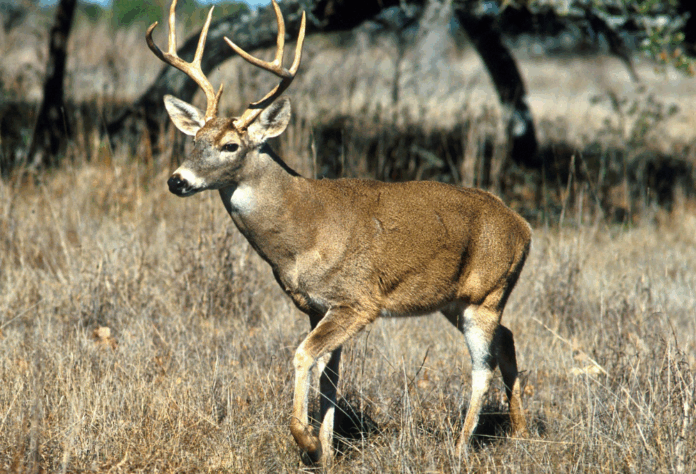
Although it has mostly been discussed as a concern for the cattle industry, the threat of New World screwworm is also causing unease within the wildlife and big game industry. Wildlife officials in Texas are particularly concerned because of the state’s proximity to the Southern Border and Mexico where NWS has been detected.
Kory Gann, big game program director with the Texas Parks & Wildlife Department, said white-tail deer hunting is a $9.6 billion industry in Texas and last year 753,000 hunters harvested 837,000 whitetails in the state.
“Hunting in Texas is extremely important economically, and we’ve got the rural economies that depend on it,” Gann said.
Deer are like cattle in that they are prime hosts for NWS. However, there is also potential for many more species of wildlife to become infested, die, and spread this parasite that eats living flesh.
“When we think about New World screwworm on the wildlife side, deer are definitely going to be a host,” Gann said. “But we’re also looking at every warm-blooded animal—rabbits, raccoons, opossums, potentially even turkeys.”
The last time NWS was confirmed in an animal within the United States border, it was in the Florida Keys’ Key Deer population in 2016. The outbreak was contained in about six months, but more than 130 deer died, which amounted to about 14 to 20% of the Key Deer population, according to the University of Florida, The Wildlife Society and Eagle Hill Institute.
Modes of infestation
Gann said two major modes of NWS infestation are common in deer. Bucks are prone to sustaining small wounds during the rut when they spar with other deer, and NWS are attracted to those open injuries and will lay their eggs in them. Gann said the majority of the infestations in Florida’s Key Deer population were in bucks that had been through the rut.
“The only caveat would be that when we look at the Florida Keys, that’s a very tropical environment, and so they didn’t have that lull in screwworm activity that you might see here,” Gann said. “A lot of times that rut period is going to happen during colder weather, so maybe we won’t see the same impacts as they did in Florida.”
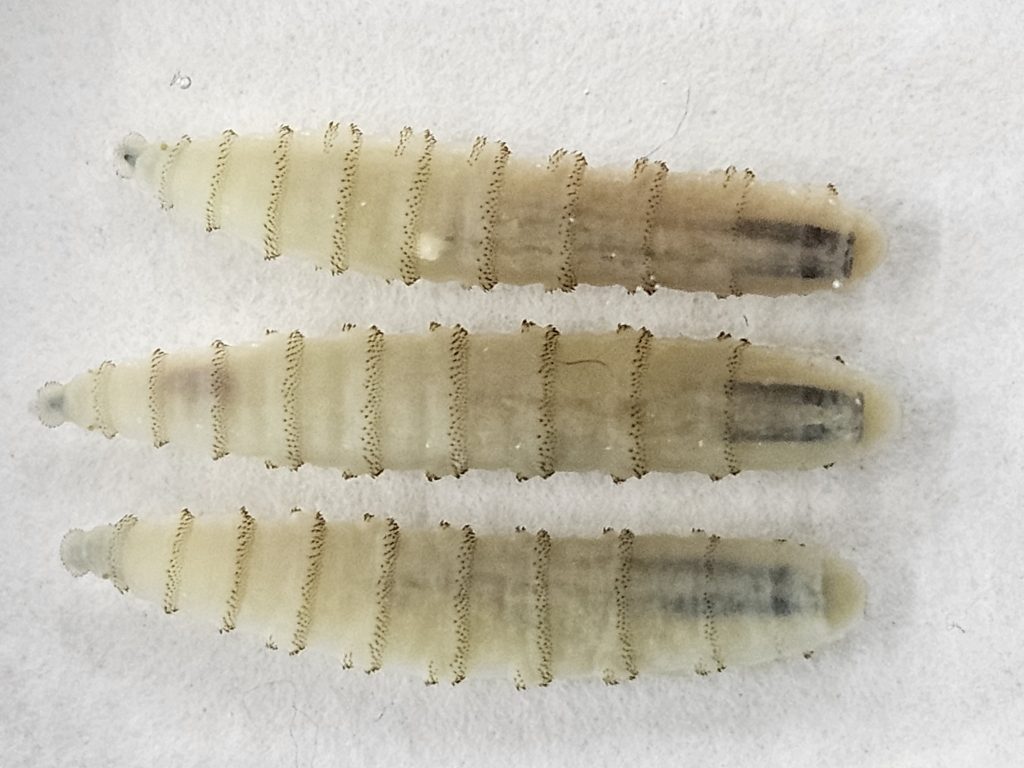
According to Sonja Swiger, Extension entomologist at Texas A&M University, NWS prefer temperatures between 64 to 91 degrees Fahrenheit, with peak activity occurring around 86 degrees. When temperatures fall below 59 degrees Fahrenheit, they have little to no activity. Many are optimistic about a pause in NWS progression because fall is underway, and winter is just around the corner, but not every part of Texas enjoys those cool temperatures. Some areas will still be under threat even in their coldest months.
“We have portions in south Texas, up the coast, where we would expect activity to probably lessen, but not completely go away,” Gann explained. “It’s almost November right now, and my truck still says 93 degrees.”
The other mode of infestation is in newborn fawns, specifically through the umbilical stump area that is an exposed wound for a period after birth. Fawns and calves are highly susceptible to becoming infested with NWS and have an extremely high mortality rate.
“When fawns are born, it’s typically right in the peak time period of when we would expect New World screwworm to be the most active in the United States,” Gann explained. “When we’re looking at Texas, that’s going to be May, June, July, so it’s definitely a problem. While we don’t have great data on previous infestations in the 60s and 70s on the wildlife side, some of the anecdotal information is that we might lose 80% of our fawns due to New World screwworm infestation.”
“We’ve obviously got a lot more wildlife hosts than we had 50 years ago. The white-tailed deer population then was about a million in the state of Texas, and it’s about 5 million today.”
When it comes to the spread, the big concern is about live animal movement. However, Gann was less concerned with the wild deer spreading the pest than humans moving captive deer or cattle that have been infested.
“White-tailed deer do not move extremely long distances,” Gann said. “If we look at even a yearling in the late spring, they may only move 10 to 20 miles at most, so we’re not looking at a big migration. We’re going to obviously see a lot more movement with the transport of animals, which we’re trying to get a handle on.
Fighting NWS from all sides
The U.S. Department of Agriculture, Texas Department of Agriculture, Texas Health Commission, and TPW are all working together to prevent the spread of NWS into the U.S., but Gann said hunters can also be a piece of the puzzle.
“We’ve got a million white-tailed deer hunters going out into the field in Texas, running trail cameras and sitting in blinds and observing wildlife, and that’s going to be extremely important on the surveillance side to help us detect that initial case, if it should get here, or give ourselves some reassurances that we don’t have it,” he said. “Our general message to hunters is if they see maggots in live animals, they should contact their county TPW wildlife biologist.”
Gann said unknowingly transporting maggots from one location is a major concern when hunters are harvesting deer. Since NWS need living flesh to feed on, soon after that animal dies its body temperature will start to drop, and the maggots will begin to come out of the carcass and look for a new host. He recommends every hunter inspect their kill for open wounds or maggots prior to moving it.