Kansas families usually notice wasps at the worst possible moment.
A child runs barefoot across the lawn. A mower passes too close to a fence line. A porch light flicks on at dusk and suddenly several striped insects begin circling the bulb. The reaction is immediate — step back, swat, retreat indoors.
But what Kansas families may be overlooking about wasp behavior is that most stinging encounters follow predictable environmental triggers. Wasps are not randomly aggressive. They respond to territory, food signals, seasonal shifts, and structural conditions that many homeowners don’t even realize they are creating.
Understanding how wasps behave in Kansas — especially through the long summer heat and into late fall — changes how families respond.
Because most problems begin long before the first sting.
The Wasps Most Common in Kansas
Kansas landscapes support several wasp species, but backyard conflicts most often involve yellowjackets, paper wasps, and bald-faced hornets. Mud daubers are also widespread, though their behavior differs significantly and they rarely cause defensive incidents.
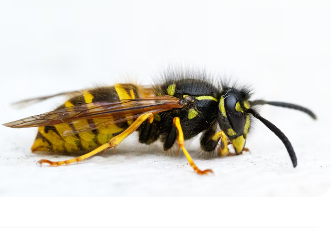
Yellowjackets are the most problematic for families. Compact and black-and-yellow striped, they are often mistaken for bees. Unlike honeybees, however, yellowjackets can sting repeatedly and defend nests aggressively. Many Kansas yellowjackets build underground colonies inside abandoned rodent burrows, landscape voids, or occasionally wall cavities. Because the entrance hole may be small and subtle, these nests frequently go unnoticed until disturbed.
Why Wasps Seem More Aggressive in Late Summer
Many Kansas families describe a noticeable shift in wasp behavior between early summer and late August. What feels like sudden aggression is actually a biological transition.
In spring and early summer, colonies are expanding. Worker wasps collect protein sources — caterpillars, beetle larvae, grasshoppers — to feed developing larvae. The colony’s priority is growth. Human interaction remains minimal unless a nest is directly disturbed.
By late summer, colony size peaks. At the same time, larval production declines. Fewer larvae means fewer mouths requiring protein. Adult workers shift their focus toward carbohydrates and sugars to sustain themselves.
This is when soda cans, fruit bowls, compost bins, and outdoor barbecues become magnets. The increased scavenging behavior is not heightened hostility. It is nutritional necessity.
Late summer wasps are driven by sugar.
That shift changes where and how families encounter them.
The Kansas Climate Factor
Kansas weather patterns strongly influence wasp visibility. Summers are often hot and dry, punctuated by powerful thunderstorms and wind events.
Extended heat drives wasps toward shaded areas and accessible water sources. Covered porches, shaded decks, garden irrigation systems, and pet water bowls become hydration points. During drought conditions, natural nectar sources decline, intensifying foraging around human food and moisture.
Vibration is interpreted as a threat to the colony. Guard wasps respond instantly. Multiple workers may emerge within seconds, resulting in clustered stings.
This reaction is defensive, not predatory. Wasps are not chasing randomly across the yard. They are driving a perceived threat away from the nest entrance.
Underground colonies remain invisible until activated.
That invisibility creates surprise.
Why Paper Wasps Choose Homes
Paper wasps prefer elevated, sheltered sites protected from direct rainfall and wind. Kansas homes provide ideal architecture for this preference.
Roof overhangs offer dry shelter. Porch ceilings provide flat surfaces for attachment. Deck beams and shed interiors create shaded microclimates.
Early spring is when solitary queens establish small starter nests. At that stage, nests may contain only a handful of cells. Removal at this stage dramatically reduces later colony growth.
By mid-summer, nests may support dozens of workers. Defensive response increases as colony size expands.
The structure becomes territory.
And territory triggers defense.
The Role of Scent and Food Signals
Wasps rely heavily on chemical cues to locate food. Sugary residue on outdoor tables, fallen fruit beneath trees, unsealed trash bins, and pet food bowls emit volatile compounds detectable from significant distances.
Late-season colonies, driven by carbohydrate demand, intensify their search patterns. Kansas families often focus on visible nests but overlook attractant management.
Cleaning outdoor surfaces, sealing garbage lids tightly, and harvesting fallen fruit reduce foraging traffic substantially.
Flight patterns follow scent gradients.
Control scent, and movement shifts.
Why Porch Lights Attract Nighttime Activity
Although wasps are primarily active during daylight hours, porch lights can create indirect attraction zones. Light draws flying insects such as moths and beetles. Predatory wasps may linger in early evening near these concentrated prey areas.
This behavior can create the illusion of nighttime swarming. In reality, wasps are exploiting prey clustering.
Turning off unnecessary exterior lighting or using warmer spectrum bulbs may reduce insect concentration, indirectly reducing wasp presence.
Light itself is not the lure.
Food is.
Defensive Behavior vs. Foraging Behavior
One of the most important distinctions Kansas families overlook is the difference between foraging and defense.
Foraging wasps move deliberately, inspecting surfaces and food sources. They rarely show interest in humans unless directly threatened or if food is involved.
Defensive wasps behave differently. When nests are disturbed by vibration or proximity, guard workers launch rapid, coordinated responses. Movement becomes erratic and persistent until the perceived threat retreats.
Recognizing context changes reaction. Calmly stepping away from a foraging wasp often resolves the encounter. Approaching a nest requires caution and distance.
Behavior is situational.
Why Wasps Persist Year After Year
Most social wasp colonies die off in late fall. Workers perish as temperatures decline. Only fertilized queens survive winter, seeking shelter beneath bark, inside attic voids, or within protected crevices.
In spring, those queens establish new nests independently. If a property consistently offers shelter, food, and structural protection, it becomes an attractive annual nesting zone.
This pattern explains why some Kansas homes experience recurring issues. The habitat remains favorable.
The cycle repeats.
Are Wasps Beneficial?
Despite their defensive reputation, wasps play valuable ecological roles. They consume large numbers of pest insects that damage crops and gardens. Paper wasps help control caterpillar populations. Yellowjackets scavenge carrion, contributing to organic decomposition.
Their presence in natural settings supports ecosystem balance.
Conflict arises primarily when nesting sites overlap with high human activity zones.
Awareness allows selective management rather than blanket elimination.
When Should Families Be Concerned?
Concern becomes necessary when nests are located near high-traffic areas — entry doors, playground equipment, frequently used decks, or interior wall cavities.
Consistent traffic entering and exiting a single structural gap suggests an established nest. Large aerial nests should not be approached casually.
Attempting to treat active nests without protective equipment increases sting risk significantly.
Early identification simplifies intervention.
Why DIY Sprays Sometimes Fail
Aerosol sprays can eliminate exposed paper wasp nests when applied correctly at night. However, concealed nests inside walls or underground often require more targeted approaches.
Incomplete treatment may drive wasps to create alternate exit points, increasing indoor encounters.
Professional services can locate hidden colonies and apply appropriate materials safely.
Placement determines outcome.
Kansas Storms and Nest Damage
Kansas thunderstorms are intense and frequent. High winds may partially detach aerial nests, creating instability. Damaged colonies often exhibit heightened defensiveness during repair.
Fallen nests on the ground can still contain live workers. Curious pets or children may encounter these inadvertently.
Post-storm yard inspections reduce unexpected contact.
Weather influences behavior in subtle but significant ways.
Preventing Wasp Conflict on Kansas Properties
Prevention is primarily environmental.
Seal cracks in siding and soffits. Repair damaged screens. Keep vegetation trimmed away from structures. Secure trash lids tightly. Avoid leaving sugary drinks or uncovered food outdoors.
Inspect eaves and sheltered corners in early spring for small starter nests.
Removing nests early is easier and safer than addressing mature colonies.
Observation reduces escalation.
Allergy Awareness
While most stings result in temporary pain and swelling, severe allergic reactions can occur. Families with known allergies should carry prescribed emergency medication and communicate nest locations to household members.
Preparedness reduces panic.
Clear outdoor awareness reduces risk.
Why Wasps Seem to “Chase”
The perception that wasps chase long distances usually stems from defensive pursuit near nests. Guard wasps may follow a perceived threat for several yards to ensure distance from the colony.
Once the threat retreats sufficiently, pursuit stops.
Once the threat retreats sufficiently, pursuit stops.
They defend territory.
They do not pursue humans as prey.
Fall Decline and Seasonal End
As Kansas temperatures drop in late October and November, worker populations collapse. Abandoned nests remain attached to structures but become inactive.
Queens disperse to overwintering shelters. Activity declines rapidly.
The apparent disappearance is seasonal.
The pattern resumes each spring.
FAQs About Wasp Behavior in Kansas
Why are wasps worse in late summer?
Colonies peak in size and shift toward sugar-seeking behavior.
Do wasps reuse old nests?
Most species build new nests each spring.
Are ground nests more dangerous?
They can trigger defensive swarms if disturbed.
Why do wasps hover near my food?
They are seeking sugar sources.
Should I remove a small nest myself?
Early, small nests can sometimes be removed cautiously at night, but safety matters.
Are mud daubers aggressive?
No, they are solitary and rarely sting.
Do cold winters eliminate wasps?
Workers die, but queens overwinter and restart colonies.
Why do they appear after storms?
Storms can displace nests and increase defensive behavior temporarily.
Final Thoughts
Wasp behavior in Kansas is not random aggression.
It is biology shaped by heat, food availability, territory defense, and seasonal timing.
What Kansas families may be overlooking about wasp behavior is that most stings and swarms are preventable when nesting sites and attractants are managed early.
Observe in spring.
Control attractants in summer.
Avoid disturbance in late season.
Because wasps are not targeting families.
They are defending colonies and seeking food — following patterns that repeat every year across Kansas landscapes.