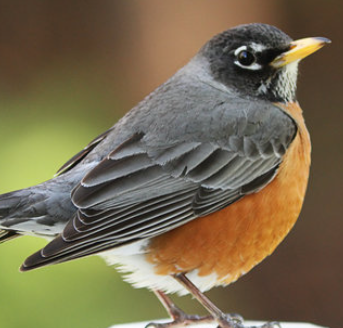
Kansas landscapes are shaped by the constant presence of American robins, yet their behavior is often reduced to a simple image: a bird hopping across a lawn, pulling worms from the ground. That image is accurate, but it barely scratches the surface of what is actually happening. The interaction between robins and backyard soil is complex, dynamic, and deeply tied to ecological processes that most residents never notice.
Soil is not just a feeding surface. For robins, it is a living system filled with signals, movement, moisture gradients, and hidden prey. Every step, pause, and head tilt reflects an active process of detection and decision-making. These birds are not randomly searching. They are reading the ground in ways that reveal an advanced level of environmental awareness.
Understanding robins in Kansas backyards requires shifting focus from the bird itself to the ground beneath it. Once that perspective changes, the behavior that seemed repetitive becomes highly strategic. What most Kansas residents don’t realize is that robins are not simply using the soil. They are interacting with it in a way that shapes both their survival and the condition of the yard itself.
Robins Detect Movement Beneath the Soil Surface
Robins are often seen stopping suddenly, tilting their heads, and then pulling a worm from the ground with surprising precision. This behavior is not based on chance. It is the result of a detection system that relies on both visual cues and subtle ground vibrations.
Their head tilt is a key part of this process. By adjusting the angle of their vision, robins enhance their ability to detect slight disturbances in the soil surface. These disturbances may be caused by earthworms moving just below ground level. In addition, robins are sensitive to vibrations, allowing them to detect movement even when it is not visible.
This dual-sensory approach gives robins a significant advantage. Instead of digging randomly, they target specific locations where prey is most likely to be found. This increases efficiency and reduces energy expenditure, which is critical for maintaining daily activity levels.
Soil Moisture Directly Influences Robin Activity
Robins are closely tied to soil moisture conditions. Earthworms and many soil-dwelling insects become more active and accessible when the ground is moist. As a result, robins adjust their feeding behavior based on recent rainfall, irrigation, or natural humidity.
After a rain event, lawns often become active feeding zones. Robins may appear in greater numbers, moving quickly across open areas and taking advantage of increased prey availability. In contrast, during dry periods, their activity may decrease or shift to shaded areas where moisture is retained.
This relationship highlights how robins respond to environmental conditions at a fine scale. They are not simply present or absent. Their behavior changes continuously in response to the condition of the soil, reflecting a strong connection between weather patterns and feeding success.
Lawn Structure Affects Foraging Efficiency
The physical structure of a lawn plays a significant role in how robins forage. Short grass allows for easier detection of movement and quicker access to prey. In contrast, tall or dense vegetation can obscure visual cues and reduce efficiency.
Robins often prefer areas where the ground is relatively open, with minimal obstruction. This does not mean they avoid all vegetation, but rather that they select areas where visibility and accessibility are balanced. Edges between open lawn and denser plantings can be particularly productive, offering both feeding opportunities and nearby cover.
Human lawn maintenance practices therefore influence robin behavior. Mowing height, watering frequency, and landscaping choices all affect how suitable a yard is as a feeding habitat. Robins respond quickly to these conditions, adjusting where and how they forage.
Worm Extraction Is a Skilled and Controlled Process
Pulling a worm from the soil is not a simple action. Earthworms anchor themselves within their burrows, creating resistance that robins must overcome. The bird’s technique involves a steady, controlled pull rather than a sudden jerk.
Robins grip the worm firmly and apply consistent force, often bracing themselves with their legs. This prevents the worm from breaking and ensures a successful extraction. The process may take several seconds, during which the bird remains focused and stationary.
This behavior reflects both strength and precision. A failed attempt means lost energy and time, so efficiency is critical. Over repeated interactions, robins refine this technique, improving their success rate and maximizing the value of each foraging attempt.
Soil Disturbance by Robins Has Ecological Effects
As robins forage, they inevitably disturb the soil surface. This disturbance, though small in scale, contributes to broader ecological processes within the yard. By pulling worms and insects to the surface, robins influence the distribution of nutrients and organic matter.
Their activity can also affect soil aeration. Small disruptions create openings that allow air and water to penetrate more easily. While these effects are subtle, they accumulate over time, particularly in areas with frequent robin activity.
In this way, robins are not just consumers within the ecosystem. They are participants in soil dynamics, contributing to processes that influence plant growth and overall yard health. Their presence reflects an ongoing interaction between wildlife and the environment.
Robins Shift Diet Based on Seasonal Changes
Although worms are a primary food source, robins do not rely on them exclusively. Their diet changes throughout the year, reflecting availability of different resources. In spring and early summer, soil invertebrates dominate their intake.
As the seasons progress, fruits and berries become more important. This shift allows robins to maintain energy levels even when soil conditions are less favorable. It also supports seed dispersal, linking robin behavior to plant reproduction.
This dietary flexibility is a key factor in their success. It allows them to remain active across a wide range of conditions, adapting to both natural changes and variations in human-managed landscapes.
Backyard Soil Acts as a Consistent Resource Zone
For robins, a backyard is not just a temporary feeding site. It is part of a larger network of resource zones that they use daily. Soil provides a consistent source of food, particularly when conditions are favorable.
Robins often return to the same areas repeatedly, indicating a level of spatial memory. They remember where feeding has been successful and revisit those locations. This creates patterns of use that may not be obvious to casual observers.
These patterns are shaped by both experience and environmental feedback. If a particular area consistently provides food, it becomes integrated into the bird’s routine. Over time, the backyard becomes a reliable component of its territory.
Human Activity Influences Robin Behavior Subtly
Robins are highly aware of human presence, but their response is nuanced. They do not necessarily avoid areas with people, especially if those areas provide consistent resources. Instead, they adjust their behavior based on perceived risk.
They may feed at greater distances when activity is high and move closer when conditions are calm. Regular patterns, such as daily yard use or watering schedules, can become part of their behavioral framework.
This adaptability allows robins to coexist with human activity. They are not passive observers. They actively interpret and respond to the patterns around them, integrating those patterns into their foraging strategy.