Friday, January 16, 2026
Home Blog Page 79

Local Agriculture Market Program helps food systems grow

0

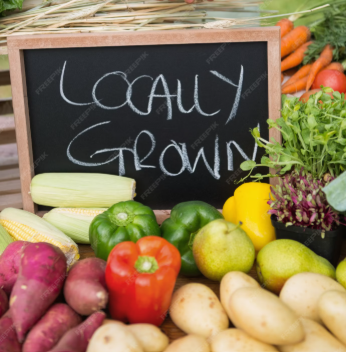
Farmers markets are in full swing this summer, bringing fresh food to communities. These markets, along with food hubs and other local food businesses, play an important role in rural economies. However, connecting with new consumers isn’t always easy for producers. The Local Agriculture Market Program (LAMP) can help.

Administered by the U.S. Department of Agriculture (USDA), LAMP was created in the 2018 farm bill to strengthen local and regional food systems. It combines several USDA programs that help farmers and food businesses grow their operations and reach new markets. These include the Farmers Market and Local Food Promotion Program (FMLFPP) and the Value-Added Producer Grant (VAPG) Program.

FMLFPP includes two sub-programs. The Farmers Market Promotion Program helps start and improve direct-to-consumer outlets like farmers markets, community supported agriculture, and roadside stands. The Local Food Promotion Program supports food hubs, distributors, and other businesses that move locally produced food from farms to buyers such as schools, grocery stores, and restaurants. For both programs, grant funds are awarded to organizations who then provide education and technical assistance to producers and food businesses.

VAPG helps agricultural producers expand their businesses through value-added products and services by awarding grants directly to farmers and ranchers. Funding can be used to generate new products and create or expand marketing opportunities that help producers generate additional income.

Programs like LAMP are key to building a food system that works for farmers and consumers alike. Over time, these projects increase income for small and mid-sized farms, improve access to healthy food, and support job growth in rural areas. As markets grow and communities look for more local food options, continued congressional investment in programs like LAMP will remain essential.

To learn more about the program and associated funding opportunities, visit ams.usda.gov/services/grants/lamp.

By Kalee Olson, policy manager, Center for Rural Affairs

Established in 1973, the Center for Rural Affairs is a private, nonprofit organization working to strengthen small businesses, family farms and ranches, and rural communities through action oriented programs addressing social, economic, and environmental issues.
Why this site off the beaten path is the most beautiful place to see in Kansas

0

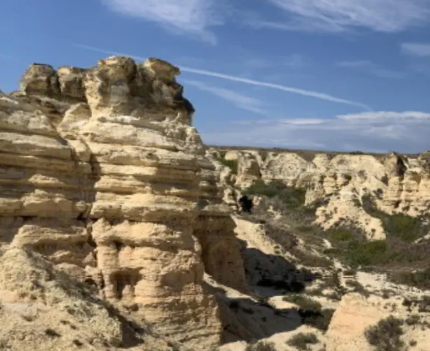
Towering pillars of chalk rising 70 feet into the air attract visitors to the area that the Travel + Leisure website called the most attractive location in Kansas.

Travel + Leisure recently published a list of the most beautiful places in each state and the District of Columbia. Those included Colorado’s Garden of the Gods, Arizona’s Grand Canyon National Park and Florida’s Everglades National Park.

Castle Rock Badlands in northwest Kansas is the most beautiful place in the Sunflower State, the site said.

Travel + Leisure says Badlands provide ‘near-shocking change of scenery’

Located near Quinter in Gove County, Castle Rock Badlands was described by Travel + Leisure as being “quirky.”

The attraction is about a four-hour drive from Topeka and is “quite literally off the beaten path,” that website said.

“Castle Rock Badlands is located on private ranchland — you’ll need a four-wheel drive vehicle to navigate the dirt roads — and the landscape is a relic of an inland sea that once covered this part of the continent,” it said. “The fragile, fossil-rich limestone pinnacles provide a near-shocking change of scenery from the prairie Kansas is known for.”

Magazine website says 2001 storm toppled tallest spire

The Castle Rock Badlands are a “true hidden gem,” said the website for Travel World International magazine, noting that entrance to the area is free.

“The actual Castle Rock formation consists of three impressive spires and was used as a landmark for stagecoach travelers,” it said. “The natural chalk has eroded throughout the years, and a 2001 storm caused the top of the tallest spire to topple. Historic photos show a different view than what visitors see today, but Castle Rock is nevertheless impressive.”

No staff or guides are available at the nearby Castle Rock Badlands, where the Travel World International site said the “look but don’t touch” rule is more relaxed than at most tourist attractions.

“Visitors can walk among the badlands adjacent to Castle Rock and climb on the formations,” it said. “The area is shared with a herd of grazing cattle who pretty much mind their business but are willing photo subjects as long as you don’t get too close.”

How can I find Castle Rock Badlands?

“To find these breathtaking formations you must get off the interstate and see with your own eyes that Kansas is anything but ‘boring and flat,'” said the state government’s travelks.com website.

The badlands are an hour southwest of Hays and a mere 14 miles from Interstate 70, with the route being mostly gravel, that site said.

To get to Castle Rock from the west, take exit 107 off I-70 at Quinter, turn south on Castle Rock Road, go 15 miles, turn east at county road 466 (Gove K), and follow the signs, it said. To get to Castle Rock from the east, take exit 115 at Collyer, turn south on Banner Road, go 12.5 miles, and turn west on county road 466 (also known as Castle Rock Road), and watch for the sign on the right.

The travelks.com site added: “Castle Rock will win you over and you’ll become a firm believer that Kansas is chock-full of surprises. Pun intended.”

As reported in the Topeka Capital Journal

Filing Now Open for Commodity Commission Candidates

0

Grain growers in central Kansas who plan to campaign for a seat on one of the state’s five grain commodity commissions — corn, grain sorghum, soybeans, wheat or sunflowers — should be gathering petition signatures now to meet the November 30, 2025, filing deadline. Voting will take place in January-February 2026. The 2026 election will cover districts IV, V, VI — or the central third of Kansas.

District IV: Clay, Cloud, Jewell, Mitchell, Osborne, Ottawa, Phillips, Republic, Rooks, Smith, and Washington counties.
District V: Barton, Dickinson, Ellis, Ellsworth, Lincoln, Marion, McPherson, Rice, Rush, Russell, and Saline counties.
District VI: Barber, Comanche, Edwards, Harper, Harvey, Kingman, Kiowa, Pawnee, Pratt, Reno, Sedgwick, Stafford, and Sumner counties.

To be eligible to run, candidates must have been actively engaged in growing that commodity (corn, grain sorghum, soybeans, wheat or sunflowers) within the preceding five years and must reside in and represent the district where they maintain their primary residence. To be included on the 2026 ballot, candidates must gather 20 signatures from eligible growers, with no more than five signatures from any one county. Eligible growers are Kansas residents who will be at least 18 years old by January 1, 2026, and who have actively grown corn, grain sorghum, soybeans, sunflowers or wheat for the last three years.

Candidates may choose to collect signatures either on paper or online, or by using a combination of both. The online petition portal is available at: https://portal.kda.ks.gov/enrollment/CommoditiesCandidatePetition. After creating an account, candidates will receive a unique URL to share with eligible signors, who can then provide their contact information and sign the petition electronically. Paper candidate registration packets are also available from the Kansas Department of Agriculture or the grain commodity commissions.

Commodity commissions are grower-led organizations committed to supporting the economic viability of their industries and fostering continuous improvement in their respective commodities. Commissioners serve three-year terms, which will begin on April 1, 2026. They oversee how check-off funds are invested in areas of market development, education, promotion, and research.

For more information on Kansas commodity commissions, including voter registration, please visit the Kansas Department of Agriculture website at www.agriculture.ks.gov/CommodityCommissions.

###

Filing Now Open for Commodity Commission Candidates.pdf


Vegetable Crop Rotation

0
Success in the garden requires planning. To give your plants a healthy start next year, rotate crops within the same family to a different location than where they’re growing this year. This is known as crop rotation and offers several benefits.
Plants in the same family are typically susceptible to similar pests. Some pests overwinter in the soil; some are able to survive on debris. If the same host is available when the pests emerge in the spring, they will be able to continue feeding and multiply the problem. Crop rotation breaks the cycle of these pests.
Plants in the same families have similar nutrient requirements. Rotating crops prevents the soil from becoming depleted of those nutrients. Also, the varied root system depths from one plant family to the next contributes to the health of the soil.
Now is the perfect time to make a map of the vegetable garden so you can switch things up when you plant next year. For example, in the location where tomatoes are growing now, avoid planting anything from the Solanacaeae family (eggplant, pepper, potato) next year.
The Kansas Garden Guide has a helpful table of common vegetable crop families and an example of how to rotate these crops. You can access a digital copy of the Kansas Garden Guide here: https://bookstore.ksre.ksu.edu/pubs/kansas-garden-guide_S51.pdf

Kansas Department of Agriculture Boards to Meet Sept. 11

0

Several advisory boards which serve to guide the work of the Kansas Department of Agriculture will meet on Thursday, September 11, at the Kansas State Fair in Hutchinson. The meetings will be held on the Kansas State Fairgrounds, and all meetings are open to the public.

The boards which will meet on September 11 are:

Kansas Board of Agriculture
1:30 p.m. to 4:00 p.m.
Kansas State Fair Administrative Office Boardroom
Contact: Auburn Wassberg, [email protected] or 785-564-6799

Kansas Board of Animal Health
8:30 a.m. to noon
Prairie Pavilion conference room
Contact: Justin Smith, [email protected] or 785-564-6601

Kansas Marketing Advisory Board
1:30 p.m. to 4:00 p.m.
Prairie Pavilion conference room
Contact: Suzanne Ryan-Numrich, [email protected] or 785-564-6704

State Conservation Commission
9:00 a.m. to 10:30 a.m.
Cottonwood Court building: upstairs meeting room
Contact: Division of Conservation, [email protected] or 785-564-6620

Individuals who have questions about any of the meetings can contact the Kansas Department of Agriculture at 785-564-6700 for more information.

Persons who require special accommodations must make their needs known at least two days prior to the meeting.

###

WHO:            Kansas Department of Agriculture advisory boards

WHAT:          Regular board meetings

WHEN:          September 11, 2025; times vary

WHERE:       Kansas State Fairgrounds in Hutchinson; specific locations vary


Kansas Department of Agriculture Boards to Meet Sept. 11.pdf