Friday, January 16, 2026
Home Blog Page 83

Hunting on state recreation areas begins Sept. 2

0

Hunters are reminded Nebraska’s state recreation areas are closed to hunting until Sept. 2.

Several hunting seasons open in early September, including archery deer, dove, grouse, early teal and other small game and furbearer seasons on Sept. 1.

Regulations state that portions of some SRAs are open to hunting from the first Tuesday following Labor Day – this year is Tuesday, Sept. 2 – through the end of the spring turkey hunting season, unless restricted.

Standard hunting regulations apply. A park entry permit is required for vehicles entering the SRAs. Parks with managed hunting have hunter check-ins and signs posted at designated hunting areas. Hunting is prohibited within 100 yards of any public-use facility or activity area, including picnic areas, campgrounds, private cabins, concession areas, boat ramps and parking lots.

Additionally, limited hunting is allowed in specific areas of some state parks and state historical parks; find details at OutdoorNebraska.gov; search “state park hunting.”

Wildlife management areas, Open Fields and Waters sites and other public lands also are open to hunting; these areas are listed in the Public Access Atlas available online or in print.

Find these resources, as well as summaries of hunting regulations in the Small Game and Waterfowl Guide and Big Game Guide or buy a permit at OutdoorNebraska.gov.

Park guests visiting areas where hunting is allowed are encouraged to use the following safety guidelines:

Know hunting season dates – Applicable hunting dates, species allowed and methods of take are specific to designated park areas.

Know which areas allow hunting – Only limited state park areas and state historical parks allow hunting at specific times. State recreation areas and wildlife management areas often are open to hunting for the full season but are subject to their own restrictions.

Pay attention to signage – Parks and wildlife management areas post signs indicating any additional safety measures parkgoers should be aware of.

Wear bright clothing – While hunter orange is best for visibility, any bright color will stand out. Avoid muted or earthy tones.

Stay on designated trails – Hunters typically avoid well-worn paths; sticking to trails increases one’s visibility. Use extra caution at dawn or dusk. Deer are most active during these times, and low light can make it more difficult for hunters to make out colors or shapes.

Make yourself known – If you hear shooting, use your voice to let hunters know you are in the area. Once he or she is aware of you, be courteous and don’t make additional unnecessary noise that disturbs wildlife.
Wheat Scoop: Breaking the Silence: Mental Health in Farming Communities

0


Life on the farm has never been easy. Long hours, unpredictable weather and volatile markets are part of the job, but in recent years, wheat growers and farmers across the country have faced a wave of challenges that go beyond the fields. Rising debt, shrinking margins and isolation have placed enormous strain on rural families. Tragically, farm organizations, including the National Association of Wheat Growers, have reported an increase in suicides among producers, often younger growers without the financial cushion to withstand the hardships of modern agriculture.

The Silent Struggle

Farming is more than an occupation; it is a way of life. But it is also one of the most stressful professions in America. Studies show suicide rates among farmers are two to five times higher than the national average. At the same time, rural communities often lack adequate mental health services, leaving producers to carry their burdens alone.

National surveys reveal that three out of four rural adults believe reducing stigma around mental health is critical. Yet cultural barriers, especially the perception that asking for help is a weakness, continue to silence conversations. For too long, resilience has been defined only as pushing through. True resilience also means recognizing when support is needed.

Building Awareness and Reducing Stigma

Farm groups, nonprofits and mental health advocates are working to break that silence. Campaigns like Farm State of Mind from the American Farm Bureau Federation, Rural Minds and Stigma-Free Mental Health are providing resources tailored to the agricultural community. These efforts emphasize that seeking help is not a failure but an act of strength.

“Your wellness is a key to your farm’s wellness; stress management is a business strategy,” said Sarah Gideon, executive director of Health Innovations Network of Kansas Inc. “More than ever before, we have to look out for one another, to have those hard conversations when we notice changes in our friends and community members.”

Gideon added that resources are available locally, regionally and across the state, and no one should feel they have to manage alone.

Social media has become a valuable tool in spreading the message. Simple posts reminding neighbors that help is just a call away through the 988 Suicide & Crisis Lifeline, or pointing to resources from the National Alliance on Mental Illness, make a difference in connecting farmers to support.

Where to Find Help

For farmers and rural residents, support is closer than it may seem. The following organizations and programs offer confidential assistance, education and crisis intervention:

  • 988 Suicide & Crisis Lifeline – 24/7 free and confidential support: 988lifeline.org
  • Rural Minds – dedicated to eliminating mental health stigma in rural communities: ruralminds.org
  • National Alliance on Mental Illness (NAMI) – nationwide network for mental health education and advocacy: nami.org
  • AgriSafe Network – health and safety resources for farm families: agrisafe.org
  • Farm Aid – support services and emergency assistance: farmaid.org

Every conversation helps. Whether it is checking in on a neighbor, sharing resources online or reminding a friend they are not alone, small actions can save lives. Reducing stigma and building awareness is a community effort and one that rural America cannot afford to ignore.

Farming will always come with challenges, but no one should have to carry the weight of those challenges alone. As Gideon put it, “If you don’t ask the hard questions, who will?”

If you or someone you know is struggling, dial 988 to connect with immediate help.

Pause and Get Perspective on Current Record Cattle Prices

0

Sometimes memories can be short, and it is good to take a moment to take stock of where we have been and how we got to where we are today. Current cattle prices have risen faster and gone further than many market analysts thought possible over the last two years.  This increase in prices has been across all classes of livestock including fed cattle, weigh-up cows, feeder cattle, calves, and impacting bred cows and bulls as well.

Iowa State University annually publishes the Historical Cattle Prices document that shows average prices paid for different classes of cattle over the last 20 years by month and an average for each respective year. This market report shows prices paid for cattle in the state of Iowa as well as breaking utility cow prices from the Joplin Regional Stockyards in Missouri.  These market prices would be comparable to prices paid in Nebraska for similar classes of cattle of like kind and quality.

Looking at the report issued in March of this year; it reveals the following:

  • Live choice steers averaged $187.92 in 2024, up almost $80 per cwt from the $108.51 per cwt average paid in 2020 when COVID-19 was having the most impact.
  • The average price for breaking and utility cows doubled during that same time frame, going from an average of $60.05 per cwt in 2020 to $123.92 per cwt in 2024.
  • Medium and large framed steers weighing 700-800 lbs. averaged $141.92 per cwt in 2020 and increased to $263.43 per cwt in 2024.
  • Steer calves weighing 500-600 lbs. averaged $163.45 per cwt in 2020, increasing to $314.65 per cwt in 2024, just shy of doubling in price over the four-year period.

Prices over the first seven months of 2025 have trended solidly up across the board compared to a year ago for all classes of cattle. Because prices have continued to increase for all sectors, profits will generally be realized by cow-calf producers, stocker-yearling operators and cattle feeders in 2025. Historically, when prices have gone up like this in the past and cow-calf producers began to experience sustained levels of profit, they begin moving towards increasing calf supplies through retaining heifers for breeding if forage is available. With the widespread rains relieving drought this late spring and summer across the heart of the leading cow-calf producing states, it seems likely that cow herd building through the retaining of heifers will soon be underway; if it is not already.

Consider Price Risk Management at Record Highs

When prices are at profitable levels, have been going up and are going higher, there is the temptation to do nothing from a price risk management standpoint.  Frequently folks who spent money on price protection or forward contracted cattle, just to see the price go roaring higher, find themselves questioning if using price protection is prudent when they are feeling the recent disappointment of having left “money on the table.” This is where pausing and looking back historically at what has occurred with prices in the past can bring perspective. When prices increased dramatically in previous times, resulting in periods of exceptional profitability, those seasons have been followed by times of significant price decline. How soon and how far prices will fall is unknown. However, cattle are still a commodity, and the prices paid for a commodity, over time historically, have generally moved towards breakeven.

A marketing plan with price risk management as a component of that would seem prudent under current market conditions.  For those thrilled with current prices, forward contracting calves or feeder cattle is an opportunity to lock in the current market for this year’s production. For others, protecting a profit by using tools such as Livestock Risk Protection insurance or put options to protect a floor price based on the futures price, allows a producer to protect from significant market declines nationally while leaving the opportunity for the market to move to the upside and benefit from price increases.

How much profit are you expecting to make per head this fall on a weaned calf or on a yearling with current futures prices? Would you be willing to spend $30 per head to protect a $300 profit? Would you be willing to spend $50 per head to protect a $500 profit? Doing nothing from a price risk management standpoint is in fact doing something! It is in a sense stating that you are willing to accept all the risks and the consequences of whatever the market does between now and your expected date of cattle marketing.

Black swan events that drastically impact market prices can and do occur. Historically, the profit levels that can currently be protected under expected market conditions for calves and yearling prices this fall are extremely rare events. Is protecting a profit at current cattle prices something you can afford not to do?

Article by Aaron Berger, Nebraska Extension, Livestock Educator

Managing Cows with Limited Perennial Pasture – A Producer Perspective

0

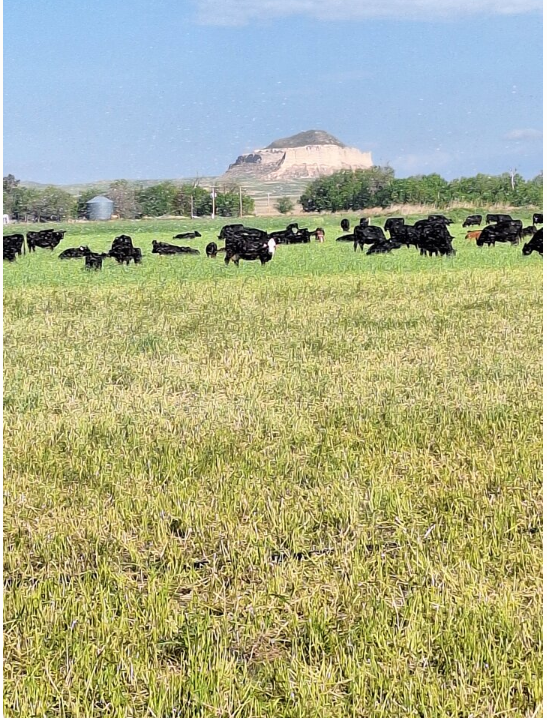
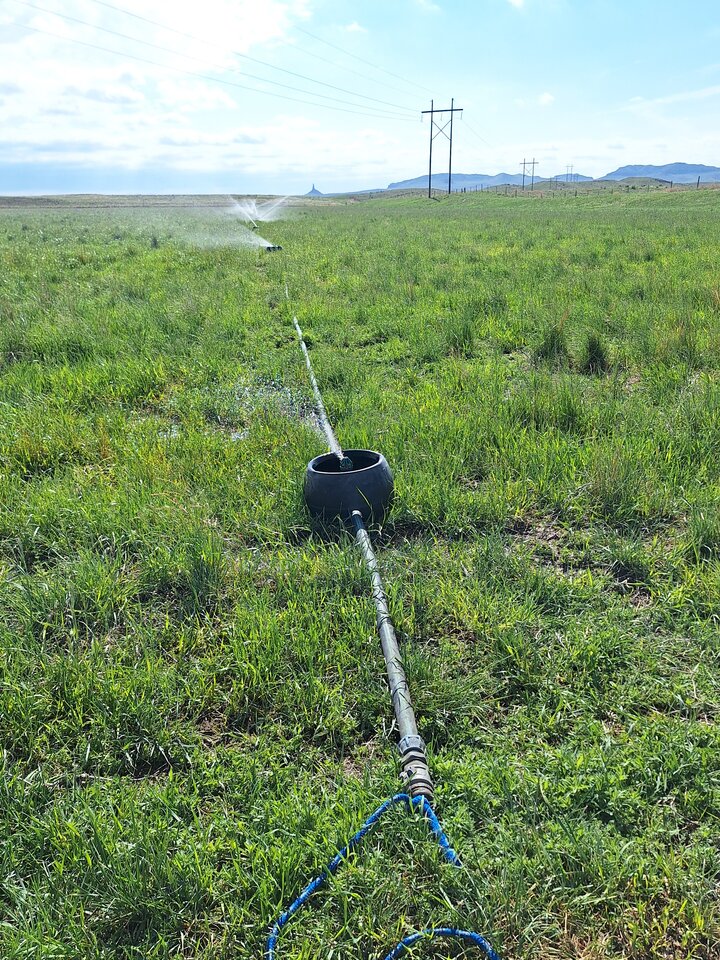
By interseeding annual grass into established alfalfa fields and applying water with a K-line irrigation system, Jerry Weekes has developed a system for maintaining cows on limited perennial acres. Jerry Weekes has spent a lifetime in the cattle industry. Most recently, Jerry sold the local sale barn he owned for 27 years, in the Nebraska Panhandle, but continues to develop innovative approaches to the cattle industry. Intensive grazing management is not a new concept and is certainly not new to Jerry Weekes who was first introduced to the Allan Savory school of grazing management many years ago in South Dakota.

Today Jerry Weekes buys bred cows in January and February, winters them on dormant grass with protein supplementation, then grazes the pairs on the triticale interseeded alfalfa mix using an intense rotation system.  By purchasing short term cows, weaning the calves, and selling the cows in July and August, he avoids dealing with bulls, and takes advantage of the seasonal peak in the cull cow market. He can then use the regrowth from the intensive grazing system to grow the weaned calves.

Irrigation system

By using the water from the irrigation ditch, which comes from the North Platte River, he increases the regrowth in the forages previously grazed. Dividing up the 110 acres into 10-acre tracts, he is able to maintain about 150 cow-calf pairs during the growing season. Because the forage is lush and vegetative much of the time, Jerry is adamant about feeding a mineral package with an ionophore in it to the cows. This helps control digestive issues that might be an issue with high-quality forage. Additionally, he makes sure the calves all get vaccinated against clostridial diseases before being moved to the high-quality pastures.

This intensive grazing rotational system on irrigated pasture allows him to capture more value per taxable acre of land than perennial pasture land would. Additionally, the cost of procuring enough perennial pasture to support the same number of pairs is not currently economically feasible for many producers. Being creative in the face of limited perennial acres has paid off for Jerry Weekes.

https://beef.unl.edu/managing-cows-limited-perennial-pasture-producer-perspective/?utm_source=ActiveCampaign&utm_medium=email&utm_content=BeefWatch%3A%20August%202025&utm_campaign=BeefWatch%3A%20August%202025

Just a Bit of Bark and Banter: Embracing the Season Ahead

0


Jennifer Long
Columnist

Cooler mornings, football games, mums at the store—Fall is sneaking in early this year, and I’m here for it. Read more in this week’s column!
There’s something unmistakable about the first cool breeze of late August. Even before the calendar declares it, Fall makes its presence known. The days grow a little shorter, the air feels a little crisper, and suddenly routines begin to shift.
At my house, that change means the “Fab Four”—my four loyal pups—are enjoying longer walks and more time lounging on the back patio. They seem to sense the change as much as we do, happily taking in the fresh air that comes with cooler evenings.
Autumn also brings familiar comforts that never fail to delight. Starbucks has unveiled its Fall menu, shelves are lined with candles in warm seasonal scents, and yes—Gilmore Girls has already found its way back onto the TV. These small rituals, as ordinary as they may be, carry with them the cozy charm of the season.
Signs of Fall are everywhere. School is back in session, calendars are filling with football games and community events, and garden centers are bursting with the vibrant colors of mums. Each marker serves as a reminder that a new season is upon us—a season that invites both energy and reflection.
What I love most about Fall is not just the crisp mornings or the turning leaves, but the sense of renewal it brings. Much like Spring, Autumn offers us a fresh start, wrapped in the comfort of familiar traditions. It is a time to embrace both the bustle of new schedules and the slower pace of evenings spent enjoying the simple things.
Even if the calendar hasn’t caught up yet, Fall is here—and I, for one, am ready to welcome it.