Tuesday, January 20, 2026
Home Blog Page 99

Popcorn People

0
Thayne Cozart
Milo Yield

After the sale concluded, two middle-aged ranchers were chewing the fat in the livestock auction cafe. They knew each other, but hadn’t had the opportunity to really have a relaxed confab for years.

The extraordinary cattle prices were the first topic. The weather was a natural second topic. Crop status had to be covered. And, finally, their conversation came down to discussing their families — and both cattlemen had sizable families — with all their offspring on the own life trajectories.

As they sipped their iced teas, each began telling the stories of his children and how they arrived at their current careers, where they lived, their marital status and grand-children produced.

After they’d completed their respective family rundowns, one rancher sighs and says, “One of the mysteries of life to me is how all my children took different life paths, were raised the same way, and still ended up in a close-knit family.”

The other rancher sagely replied, “Perhaps our kids are like kernels of popcorn. They have the same parents and grew up the same way. And, they are all prepared in the same pot, in the same heat, in the same oil. But, the kernels do not all pop at the same time. Some early. Some late. Every kernel is different. Yet, the vast majority turn out just like expected. There are few duds. So, it doesn’t make sense to compare your children to one another. They each got to where they are in their own personal way.”

I think there’s an important moral to that story.

***

An elderly farm wife went to a big city with her bowling team. She drove alone on the trip. Her only companion was her fluffy little pet dog.

She checked into her motel and decided to take “Fluffy” outdoors to answer a nature call. On the way into the lobby she’d seen the sign that the motel had a designated “Doggie Lawn,” and that motel patrons were welcome to take their dogs to the area, but were also expected to pick up after them.

So, the lady put Fluffy on his leash, grabbed her purse, and headed to the “Doggie Lawn.” In short order, Fluffy used the facility and the pair headed back to the lobby,

But, as she was crossing the driveway, a punk kid stepped out from behind a car, grabbed her purse, and ran off with a laugh.

A witness to the purse snatching ran over and asked if the lady was okay.

She laughed loudly and said, “It’s no big deal. I always carry a ratty old purse to put my Fluffy’s do-do in until I get home. I hope the kid enjoys his heist.”

***

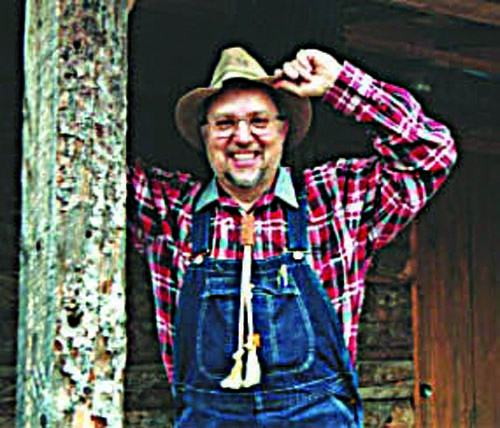
My good Missouri buddy, Willie Jay, continues sending me his personal humorous stories that are worthy of retelling.

Willie is in his 90s and his old hands, like so many of us oldsters, just don’t work as well as they used to. This is a story about Willie and his arthritic hands.

He says his fingers just aren’t nimble enuf anymore to efficiently find the pull-tab on the zipper of his overalls or jeans. To solve that problem, he bored a tiny hole in a penny then wired the penny to the zipper-tab tightly. His old fingers can fine the penny just fine.

Well, he said he wuz at a swap meet, when an observant lady discretely asked him, “Sir, what’s with the penny?”

Without missing such a straight line, Willie replied, “Why, ma’am, that’s a penny for your thought.”

That abruptly ended their conversation.

***

Willie has a knack for solving simple little life problems in novel ways.

After reading about my practical joke herding houseflies, Willie emailed me that he recently had a spate with nuisance flies and gnats in his kitchen.

Here’s how he solved that problem: He put a mixture of a little molasses, wine, lemon and grape juice in a saucer. Then he put the saucer into his microwave and left the door open.

He watched and waited until a lot of flies and gnats were sipping from the saucer and then he slammed the microwave door shut. He said it takes less than five seconds to nuke the flying pests to death. And, he said it’s easy to clean up because the dead are in the saucer and he just dumps it outdoors.

***

Willie also said, with tongue in cheek, that his dad killed flies even simpler. He put some of his homemade wine in a saucer with some sand. He said the flies got drunk and stoned themselves to death.

***

Readers might be ready to stone me after that fantasy joke. I’ve got a casualty report from my ongoing masked bandit war. The first sweet-corn robbing raccoon caught itself in a live trap. But, it was a live traps for only a short time.

Nevah and I froze for the winter sweet corn and peaches we bought. We’ve also canned green bean and tomato juice and whole tomatoes. Plus, we’ve given away a lot of zucchinis and potatoes.

***

Words of wisdom for the week: “You never know how strong you are until being strong is the only option you have!”

Have a good ‘un.

KU News: Techniques honed by Kansas nuclear physicists helped detect creation of gold in Large Hadron Collider collisions

0


From the Office of Public Affairs | https://www.news.ku.edu


Headlines


Techniques honed by Kansas nuclear physicists helped detect creation of gold in Large Hadron Collider collisions

LAWRENCE — Nuclear physicists working at the Large Hadron Collider recently made headlines by achieving the centuries-old dream of alchemists (and nightmare of precious-metals investors): They transformed lead into gold, at least for a fraction of a second. It was scientists from the University of Kansas, working on the ALICE experiment, who developed the technique that tracked “ultra-peripheral” collisions between protons and ions that made gold in the LHC.


KU Libraries select FOLIO as new library services platform

LAWRENCE — The University of Kansas Libraries signed an agreement to implement FOLIO, hosted and supported by EBSCO Information Services, as its new library services platform, managing library operations such as acquisitions, cataloging, circulation and electronic resource management. The flexible, open-source solution will support academic research, discovery and innovation across the university’s programs and services. Services are scheduled to go live July 1, 2026.


Full stories below.


————————————————————————


Contact: Brendan Lynch, KU News Service, 785-864-8855, [email protected]
Techniques honed by Kansas nuclear physicists helped detect creation of gold in Large Hadron Collider collisions


LAWRENCE — Nuclear physicists working at the Large Hadron Collider recently made headlines by achieving the centuries-old dream of alchemists (and nightmare of precious-metals investors): They transformed lead into gold.

At least for a fraction of a second. The scientists reported their results in Physical Reviews.

The accomplishment at the Large Hadron Collider, the 17-mile particle accelerator buried under the French-Swiss border, happened within a sophisticated and sensitive detector called ALICE, a scientific instrument roughly the size of a McMansion.

It was scientists from the University of Kansas, working on the ALICE experiment, who developed the technique that tracked “ultra-peripheral” collisions between protons and ions that made gold in the LHC.

“Usually in collider experiments, we make the particles crash into each other to produce lots of debris,” said Daniel Tapia Takaki, professor of physics and leader of KU’s group at ALICE. “But in ultra-peripheral collisions, we’re interested in what happens when the particles don’t hit each other. These are near misses. The ions pass close enough to interact — but without touching. There’s no physical overlap.”

The ions racing around the LHC tunnel are heavy nuclei with many protons, each generating powerful electric fields. When accelerated, these charged ions emit photons — they shine light.

“When you accelerate an electric charge to near light speeds, it starts shining,” Tapia Takaki said. “One ion can shine light that essentially takes a picture of the other. When that light is energetic enough, it can probe deep inside the other nucleus, like a high-energy flashbulb.”

The KU researcher said during these UPC “flashes” surprising interactions can occur, including the rate event that sparked worldwide attention.

“Sometimes, the photons from both ions interact with each other — what we call photon-photon collisions,” he said. “These events are incredibly clean, with almost nothing else produced. They contrast with typical collisions where we see sprays of particles flying everywhere.”

However, the ALICE detector and the LHC were designed to collect data on head-on collisions that result in messy sprays of particles.

“These clean interactions were hard to detect with earlier setups,” Tapia Takaki said. “Our group at KU pioneered new techniques to study them. We built up this expertise years ago when it was not a popular subject.”

These methods allowed for the news-making discovery that the LHC team transmuted lead into gold momentarily via ultra-peripheral collisions where lead ions lose three protons (turning the speck of lead into a gold speck) for a fraction of a second.

Tapia Takaki’s KU co-authors on the paper are graduate student Anna Binoy; graduate student Amrit Gautam; postdoctoral researcher Tommaso Isidori; postdoctoral research assistant Anisa Khatun; and research scientist Nicola Minafra.

The KU team at the LHC ALICE experiment plans to continue studying the ultra-peripheral collisions. Tapia Takaki said that while the creation of gold fascinated the public, the potential of understanding the interactions goes deeper.

“This light is so energetic, it can knock protons out of the nucleus,” he said. “Sometimes one, sometimes two, three or even four protons. We can see these ejected protons directly with our detectors.”

Each proton removed changes the elements: One gives thallium, two gives mercury, three gives gold.

“These new nuclei are very short-lived,” he said. “They decay quickly, but not always immediately. Sometimes they travel along the beamline and hit parts of the collider — triggering safety systems.”

That’s why this research matters beyond the headlines.

“With proposals for future colliders even larger than the LHC — some up to 100 kilometers in Europe and China — you need to understand these nuclear byproducts,” Tapia Takaki said. “This ‘alchemy’ may be crucial for designing the next generation of machines.”

This work was supported by the U.S. Department of Energy Office of Science, Office of Nuclear Physics.

-30-

————————————————————————

KU provides fire, rescue and law enforcement training across Kansas.


https://ku.edu/distinction

————————————————————————


Contact: Kevin McCarty, KU Libraries, 785-864-6428, [email protected]
KU Libraries select FOLIO as new library services platform


LAWRENCE — The University of Kansas Libraries signed an agreement to implement FOLIO, hosted and supported by EBSCO Information Services, as its new library services platform (LSP). With this transition, KU Libraries are embracing a flexible, open-source solution that supports academic research, discovery and innovation across the university’s programs and services.

The decision to adopt FOLIO as its LSP — the core system used to manage library operations such as acquisitions, cataloging, circulation and electronic resource management — reflects the libraries’ commitment to modernizing their infrastructure with a platform that aligns with open standards and academic values. As one of the nation’s leading public research institutions, KU is advancing a vision of openness, scalability and long-term sustainability.

FOLIO (short for the Future of Libraries is Open) will be implemented across all three of KU’s major library divisions: the Lawrence campus libraries, KU’s Wheat Law Library and the A.R. Dykes Library at University of Kansas Medical Center in Kansas City. FOLIO’s multi-tenant architecture will enable the libraries to maintain local workflows and leadership structures while benefiting from a shared platform that simplifies operations across the system.

With support from EBSCO’s FOLIO implementation team, training and database migration will begin in September and conclude with a go-live date of July 1, 2026.

“The migration to FOLIO will enable the libraries to move to a modern, flexible and scalable platform that will offer improved workflows and efficiencies for staff and ultimately an enhanced experience for end users,” said Mary Roach, KU Libraries executive associate dean. “This effort aligns with the libraries’ priority to upgrade and maximize its core technology platforms and to implement workflows and processes to manage and streamline significant library initiatives.”

Since 1998, KU Libraries have used the client-based Voyager system, which will no longer be supported by its vendor, Ex Libris. For KU Libraries, the upgrade represents the next iteration in a continuing evolution of library technology. Prior to Voyager, KU developed its own online public access catalog, among a long lineage of iterative library technologies.

KU Libraries Dean Carol Smith said the move is an investment in long-term flexibility and alignment with the institution’s mission.

“Implementing FOLIO allows us to move away from traditional, siloed systems and toward a more open, interoperable infrastructure that better supports research, teaching and learning,” Smith said. “We’re excited to partner with EBSCO and the FOLIO community to shape a future-ready library platform. I’m grateful to all involved with empowering a vital transformation of fundamental library functions.”

Peter Zeimet, EBSCO director of SaaS Innovation, said that the University of Kansas contributes to the growing number of academic libraries charting a path toward open infrastructure.

“The University of Kansas brings both vision and leadership to the FOLIO community,” Zeimet said. “Their decision to implement FOLIO demonstrates how academic institutions can take control of their technology stack and design systems around evolving user needs — not vendor limitations.”

KU joins a group of ARL institutions partnering with EBSCO to implement FOLIO. The growing coalition shares a mission to improve interoperability, encourage innovation and support academic excellence in research library systems.

-30-

————————————————————————


KU News Service

1450 Jayhawk Blvd.

Lawrence KS 66045

[email protected]

https://www.news.ku.edu


Erinn Barcomb-Peterson, director of news and media relations, [email protected]


Today’s News is a free service from the Office of Public Affairs

Kansas gets four more months of nighttime coyote hunting under new regulation

0

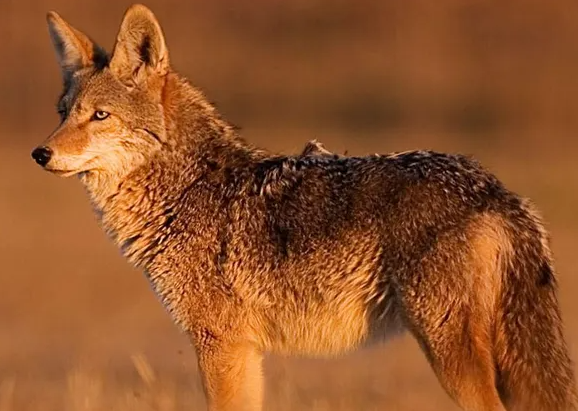
Kansas hunters using night vision or thermal imaging devices could have more than twice as long a hunting season for coyotes.

Kansas currently allows daytime coyote hunting year-round and nighttime hunting in January, February and March. But the start of nighttime coyote hunting season could be pushed back to September under a proposed regulation.

The Kansas Wildlife and Parks Commission will vote on the proposed change in regulation on Aug. 14, and Kansas Wildlife and Parks wildlife division director Jake George said the commission was amenable to the change at a Kansas Administrative Rules and Regulations meeting on Aug. 1.

The commission itself brought the idea of an expanded coyote season forward. Kansas hunters have been allowed to use night vision and thermal imaging to hunt coyotes at night since 2021, but earlier this year, the commission sought input on expanding the season.

Hot tips for cool-season gardening

0

It is still in the heat of summer, but it’s not too early to start thinking about a fall garden.

Gardeners are accustomed to having fresh produce available and have developed an appreciation for nutritious vegetables. Fortunately, gardeners can extend the fresh taste of summer for several more months.

Some of the best quality garden vegetables in Oklahoma are grown and harvested during the fall season, said David HillockOklahoma State University Extension consumer horticulturist.

“Warm, sunny days followed by cool, humid nights provide the perfect conditions for optimal garden production,” he said. “During this time, plant soil metabolism is low, which means more of the food manufactured by the plant becomes a high-quality vegetable product.”

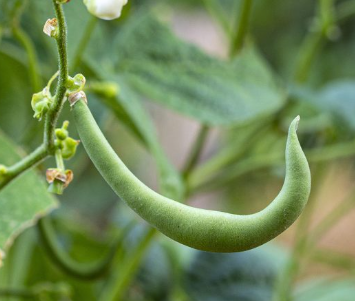
Gardeners can grow crops like carrots, beets and green beans well into the fall. Another option is to do a second planting of fast-maturing summer vegetables, such as cucumber, green onion, zucchini, radish or turnip. Different varieties of lettuce are another good choice.

Successful gardening always comes back to the soil, and fall gardening is no different. But at this time of year, Hillock said, gardeners need to be aware of soil temperatures when planning fall gardens.

“Although fall officially begins on Sept. 22, fall gardening starts much earlier than the calendar indicates,” he said. “As gardeners in Oklahoma know, the climatic conditions of late July and into August involve high soil temperature, high light intensity and rapid drying of the soil, all of which increase the difficulty of obtaining a uniform stand of plants.”

Achieving a full stand of plants when the temperature is at or near triple digits may require special treatments, such as shade over rows when seeded or supplemental watering to reduce soil temperature and to help encourage germination. In addition, seeds need proper temperature, adequate irrigation and sufficient oxygen. Remember to soak seeds overnight before planting. This will speed up germination and seedling emergence when the seeds are most susceptible to death in the hot, dry soil.

When exposed to full sun, soil temperatures can exceed 140 degrees Fahrenheit. Because vegetable seeds shouldn’t be planted any deeper than three times the diameter of the seed, small seeds, such as carrot seeds, would be planted at a mere quarter of an inch. Due to the soil temperature, the seeds likely wouldn’t germinate. So, what’s a gardener to do?

“Apply mulch over the row following planting and watering,” Hillock said. “Gardeners can also use materials like screen wire strips, shade cloths or boards to cover the rows. This moderates both soil temperature and soil moisture. Remove the covers when the seedlings emerge. Another option is to sow seeds in a small seed flat, then transfer them to the garden. Broccoli, cauliflower, Chinese cabbage, leaf lettuce, Brussels sprouts and cabbage respond well to this method of planting.”

Insects have long been a challenge for gardeners, and it’s no different with fall gardens. These pests can cause serious damage in a short amount of time. It’s a good idea to examine plants regularly — at least twice weekly. Look under leaves, along stems and at the plant base or crown for the insects themselves or signs of plant damage. OSU Extension has an informative fact sheet, EPP-7313 Home Vegetable Garden Insect Pest Control, available online to provide gardeners guidance with pest control.

Gardeners who find themselves with a bountiful harvest of some of their cool-season crops can extend the life of the produce by storing it in a cool, moist location. Root crops, such as carrots, beets, rutabagas, turnips and Irish potatoes, should remain in usable condition until late winter when stored properly.

Hillock suggests storing the vegetables in ventilated plastic bags in a cool basement or cellar. Another option for storage once these veggies reach maturity is to simply leave them in the ground. They’ll be fine until about January. To protect them from the cold, the soil layer over the mound should be 6 to 10 inches thick.

“Fall vegetable gardening is a great way to keep the taste of fresh produce in your kitchen beyond the traditional summer garden,” Hillock said.

In Kansas, herds of bison still roam pristine prairie of Maxwell Wildlife Refuge

0

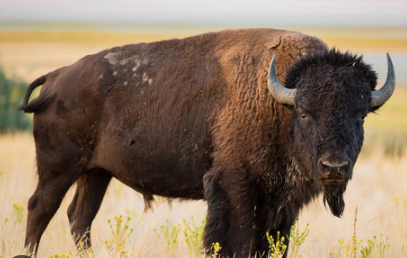
Nestled in the plains of McPherson County is what many have described Kansas’ best-kept secret of an attraction and home to more than 200 bison.

Driving into Maxwell Wildlife Refuge, six miles north of Canton, people may be greeted by one of these bison on the road, but there’s not much tame about these animals and the “wild” of wildlife means people shouldn’t get too close.

Fortunately because of a group of dedicated volunteers, people have access to get fairly up close, in a safe way, to these living symbols of Kansas and national mammals of the United States.

The Friends of Maxwell have been operating guided tours on open air trams, since the 1990s with the assistance of Kansas Department of Wildlife and Parks, which oversees the state-owned land.

How did the Maxwell Wildlife Refuge come about?

The refuge has history dating back to 1859, when John Maxwell, a Scottish immigrant settled in McPherson County as a homesteader.

After falling in love with the animals of the prairies in the area, Maxwell decided he wanted to make sure people in the future had an opportunity to see this area for what it is.

“In 1859, hardly any of these trees were here,” said Les Sporting, one of the narrators of the tram tour. “The grass was 7 feet tall, there were no fences and there were bison, elk, deer, wolves and a host of other animals.”

Maxwell ended up leaving $75,000 in his estate, estimated to be nearly $3 million in today’s economy, with the purpose of buying land and keeping animals on it for the future.

“In 1944, his two sons bought four square miles of native grass … and deeded it to the state of Kansas,” Sporting said.

After building an 8-foot tall fence, which took nearly seven years to complete, the refuge brought 10 bison and six elk onto the land in the early 1950s.

“We got the bison logically from exactly where you’d think we would, the Bronx Zoo in New York City,” he said. “From those meager beginnings, we now have the largest publicly owned (bison) herd in the state of Kansas with a winter herd size of 190.”

Sporting said that herd grows beginning in April or May as bison calves, are born, and as of July, the herd was around 260 to 270 strong.

In November of each year, the herd size is reduced, as some of the bison are sold off in a public auction to people adding to their own herds or for meat.

What can visitors expect to see on a Maxwell tram tour?

Bison can grow to more than 6-feet tall, weigh as much as 2,000 pounds, run 35 to 45 mph and leap as high as six feet, so Maxwell makes sure to keep visitors safe inside these trams.

“This is the time of the year that breeding season starts, so I ask you to please remain in you seat and under no circumstances put your hands outside the tram because these animals can get a little frisky,” Sporting said.

With 2,254 acres of land for the bison to roam, feeding trucks go ahead of the tram with some incentive, little treats placed near the path of the trams.

Along the path, visitors can expect to see bison bulls, cows and calves, or red dogs as they are called due to their reddish fur in the early stages of life.

These bison will get next to and against the tram, allowing some of the closest encounters someone will ever get to these massive mammals.

During some parts of the year, visitors can also expect to see elk, though, unlike bison, elk don’t do well in warmer temperatures and will tend to hide out in shade during sunny summer days.

Finally, people can also see upward of 40 species of wild flowers and witness what the beauty of the mixed grass prairie that most of Kansas is known for.

When and how much are Maxwell Wildlife Refuge tours?

While the refuge itself is open to the public, with access and through traffic via Pueblo Road, there is no guarantee this “free” drive will let people see bison or other wildlife.

That’s what makes these tours a unique opportunity.

Right now, tours are offered at 10 a.m. Tuesdays and Saturdays, with private tours also available by reaching out to the Friends.

Tram tour tickets are $15 for ages 12 and older, $7.50 for children ages 4 to 11 and free for children under the age of three. All children must be accompanied by an adult.

For more information or to buy tickets, visit the Friends of Maxwell website, maxwellwildliferefuge.com.

As reported in the Salina Journal