Monday, December 29, 2025
Home Blog Page 2

Nutrients Needed for Plant Health

0

Why do we fertilize our plants? For growth and sustained health and production! Nutrients most frequently lacking for growth are nitrogen (N), phosphorus (P), and potassium (K).


• N (Nitrogen). This nutrient element provides dark green color in plants. It promotes rapid vegetative growth. Plants deficient in nitrogen have thin, spindly stems, pale or yellow foliage, and smaller than normal leaves.

• P (Phosphorus). This nutrient promotes early root formation, gives plants a rapid, vigorous start, and hastens blooming and maturity. Plants deficient in this element have thin, shortened stems, and the leaves often develop a purplish color.

• K (Potassium). Potassium or potash hastens ripening of fruit. Plant disease resistance as well as general plant health depend on this element. It is also important in developing plump, full seeds. Plants deficient in this element have graying or browning on the outer edges of older leaves.

The content of N, P, and K is specified on fertilizer bags. The analysis or grade refers to the percent by weight of nitrogen, phosphate, and potassium in that order. Thus, a 10-10-10 fertilizer contains 10 percent nitrogen (N), 10 percent phosphate (P2O5) and 10 percent potassium (K2O).


The winter before you begin to garden, you will want to get a sample of your garden soil tested to determine pH and nutrient content. The soil test provides a starting place for a soil improvement program. Unless you know the deficiencies in your garden soil, you are only guessing when you apply fertilizer. The soil test will tell you how much fertilizer you must add to your garden initially. It is then much easier to maintain a high level of fertility as you garden year after year.

KU News: Discoveries in particle physics, award for KGS scientist

0

From the Office of Public Affairs | https://www.news.ku.edu


Headlines


Experiment nixes ‘sterile’ neutrino explanation of previous unexpected measurements

LAWRENCE — Neutrinos, the second most abundant particles after light, are among the least understood particles because of how little they interact. Experimental particle physicists working at the Fermilab National Accelerator Laboratory, including a University of Kansas physicist, have found evidence against the existence of a “sterile” type of neutrino hypothesized to be responsible for previous experiments’ anomalous results.


Kansas Geological Survey assistant scientist receives early career award

LAWRENCE — Kansas Geological Survey assistant scientist Sam Zipper is the recipient of this year’s Hydrologic Sciences Early Career Award from the Hydrology Section of the American Geophysical Union. The award recognizes outstanding contributions to hydrology through research, education or societal impacts.


Full stories below.


————————————————————————


Contact: Brendan Lynch, KU News Service, 785-864-8855, [email protected]
Experiment nixes ‘sterile’ neutrino explanation of previous unexpected measurements

LAWRENCE — Experimental particle physicists working at the MicroBooNE experiment at Fermilab National Accelerator Laboratory have found evidence against the existence of a “sterile” type of neutrino hypothesized to be responsible for previous experiments’ anomalous results, as detailed in a paper recently published in Nature.

For one researcher at the University of Kansas, who was a co-author on the findings, the results hone the ongoing search to explain past anomalies in experimental data — for which a leading interpretation was that the three known neutrino types don’t represent the complete description of these plentiful particles (which are fundamental building blocks of reality, according to the Standard Model of particle physics).

“This experiment is part of a broad international effort to study neutrinos,” said co-author Maria Brigida Brunetti, assistant professor in the KU Department of Physics & Astronomy. “They are the second most abundant particle, after light. They travel through everything; they travel through us. Tens of trillions of them pass through your body each second, but you don’t notice them because they don’t interact much at all — they can only interact through the weak and gravitational forces.”

Because of how little they interact, neutrinos are among the least understood particles, which is why the international particle physics community is investing heavily in studying them.

“One of their peculiar features is that there are three types of them called flavors, and as they travel they transform between each other,” Brunetti said. “This phenomenon is called neutrino oscillation.”

MicroBooNE and other present and future experiments study these oscillations by capturing neutrinos after their journey and looking for differences from predictions.

“Because neutrinos only interact weakly, we need to produce a lot of them in intense beams in order for a few of them to interact in our liquid argon time projection chamber (LArTPC) detectors,” Brunetti said. “These detectors allow us to capture very high-resolution representations of particle interactions. In the detector, neutrinos interact with the liquid argon atoms and produce charged particles. As these particles travel through, they strip the argon atoms of electrons. We put an electric field in the detector, and all these electrons drift toward the readout elements where we collect the signal.”

These can be pixel sensors or, like in MicroBooNE’s case, multiple planes of wires, providing data that will paint scientists a fuller and more accurate understanding of the oscillation of neutrinos, as well as shedding light on other fundamental physics questions.

“From the information on which wires or pixels were hit by the drifted electrons and from the electrons’ arrival time, you can build 2D images or 3D representations,” Brunetti said. “These are high-resolution — we really can photograph the interaction in very high detail. We then develop sophisticated software, such as the Pandora event reconstruction that the KU group is expert at, that tells what it sees in the images. For example, where the neutrino interacted, what particles emerged from the interaction and produced the different signals, and their energies, which enables analysis of our large and complex datasets.”

According to the KU researcher, MicroBooNE was studying whether it’s possible that neutrinos also transform to a fourth sterile type, which could have explained the previous unexpected results.

“Sterile neutrinos would therefore only feel one of the fundamental forces, gravity. The experiment was looking for new physics,” Brunetti said. “But if this was the case, that there’s a fourth type of neutrino we don’t yet know of, this would’ve changed what we saw in our experiment. Instead, MicroBooNE didn’t confirm the anomalies that the previous MiniBooNE and LSND experiments observed, and it ruled out several possible explanations, including one in terms of oscillations to a sterile neutrino in this paper.”

Brunetti said the findings all but ruled out the existence of a sterile neutrino as an explanation for these anomalies. While the mysteries of the anomalous data remain, the KU scientist said the search has been narrowed by the findings, allowing for more informed future investigations.

Brunetti’s group at KU that is primarily involved in the ongoing Short-Baseline Neutrino (SBN) program at Fermilab and the future Deep Underground Neutrino Experiment (DUNE), reconstructs and interprets LArTPC data. This allows the researchers to determine the neutrino flavor and measure its energy to study the phenomenon of oscillation.

“For MicroBooNE, this is part of what we call the Short-Baseline Program at Fermilab,” Brunetti said. “You can either design experiments that look at a short-baseline oscillation, meaning the neutrinos don’t travel as much, or you can study experiments that let the neutrinos travel a longer distance, which is what DUNE will do. DUNE will also use a neutrino beam with a broad range of energies. The combination of the long baseline and the broad neutrino energy range will give DUNE unique capabilities to study oscillations. We have a complex of accelerators and ‘Near Detectors’ at Fermilab, and then we have what we call the ‘Far Detector,’ which will study the oscillated beam. Both Near and Far Detectors are crucial to achieving DUNE’s physics goals, such as determining which neutrino is the lightest and which the heaviest, studying whether neutrinos and antineutrinos behave in the same way, and looking for exciting new physics possibilities. The Far Detector is in South Dakota, so it’s an 800-mile journey.”

While MicroBooNE and DUNE both use LArTPC detectors, DUNE’s detectors will be much larger and more sophisticated. Along with another major effort in Japan, DUNE, which has more than 1,400 collaborators worldwide, represents the forefront of neutrino research, ensuring Brunetti and her students a role in further refining scientific understanding of the most basic workings of the universe.

-30-

————————————————————————

For every $1 invested in KU, taxpayers gain $2.90 in added tax revenue and public sector savings.

https://economicdevelopment.ku.edu/impact

————————————————————————


Contact: Sam Zipper, Kansas Geological Survey, 785-864-0364, [email protected]
Kansas Geological Survey assistant scientist receives early career award


LAWRENCE — Kansas Geological Survey assistant scientist Sam Zipper is the recipient of this year’s Hydrologic Sciences Early Career Award from the Hydrology Section of the American Geophysical Union. The award recognizes outstanding contributions to hydrology through research, education or societal impacts.

Zipper joins a distinguished group of scientists, leaders and communicators recognized by AGU for advancing science. Each honoree reflects AGU’s vision for a thriving, sustainable and equitable future supported by scientific discovery, innovation and action. Early career awards recognize scientists who are within 10 years of receiving their doctorates.

Steven Loheide, Zipper’s doctoral adviser and distinguished professor of water resources engineering at the University of Wisconsin-Madison, nominated Zipper for the award.

“Sam is a really unassuming scientist and amazing to watch work through a problem,” Loheide said. “He has a particular knack for making an observation or hearing something and storing away that piece of information. Then, he sees the puzzle where that piece should fit. One of the really fun things that I enjoyed when working with Sam was watching how he was able to, in the end, bring together all of the information he had at his disposal.”

Zipper leads the HydroEcology of the Anthropocene Lab (HEAL) at KGS. The goal of HEAL is to understand how local, regional and global change will affect the water resources of Kansas and the Great Plains region now and in the future. Zipper is also an assistant professor in the Department of Geology at the University of Kansas.

“In my work with Sam, I have been impressed by the breadth and depth of his knowledge, his energy level and his commitment to making contributions that have a strong societal relevance,” said Jim Butler, KGS senior scientist. “This is a well-deserved recognition of the quality of Sam’s work. It is also great recognition of the quality of the work that is done at the KGS and continues our tradition of national recognition of the strength of KGS hydrologists.”

Zipper was recognized Dec. 16 at AGU25 in New Orleans.

-30-

————————————————————————


KU News Service

1450 Jayhawk Blvd.

Lawrence KS 66045

[email protected]

https://www.news.ku.edu


Erinn Barcomb-Peterson, director of news and media relations, [email protected]


Today’s News is a free service from the Office of Public Affairs

KLA Seeks Public’s Help After Horse, Cattle Reported Stolen in Kansas

0

Kansas Livestock Association (KLA) officials are asking for the public’s help after reports of stolen livestock in two separate incidents in northeast and north-central Kansas.

A KLA member reported a horse stolen from pens near their home along K-4 Highway west of Topeka in Shawnee County. The theft occurred sometime between the night of Dec. 17 and the morning of Dec. 18. The missing horse is a 10-year-old registered Quarter Horse gelding, grullo in color, also described as a gray dun.

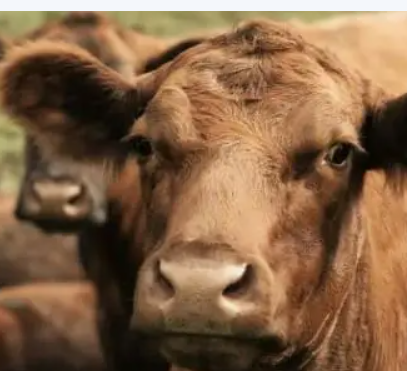
In a separate case, another KLA member reported two bred cows and two calves missing from a pasture near Concordia in Cloud County. The black crossbred cattle are branded with a rafter backward R, either on the left hip or both hips. The cows have yellow ear tags with the brand, while the calves have white ear tags and weigh between 550 and 750 pounds.

The Kansas Livestock Association is offering rewards of up to $5,000 in each case for information leading to the arrest and conviction of those responsible. The reward program applies only when the victim is a KLA member.

Anyone with information about the stolen horse is asked to contact the Shawnee County Sheriff’s Office at 785-251-2200. Information regarding the missing cattle should be reported to the Cloud County Sheriff’s Office at 785-243-3636.

The Most Special Christmas

0

Dawn Phelps
Columnist

*I know Christmas is a few days in the past.  But I would like to share a true Christmas story from my childhood as I wish a healthy, happy New Year for each reader!


“Don’t worry,” my mother said.  “We will have Christmas.”  I still remember her words one Christmas when I was a young child, a Christmas when there was no money for the usual “Santa Claus” gifts for our family.  Farming had not been profitable for my dad that year, and his health was not good.


But first let me give a little background to my life in Tennessee.  I was the second of seven children.  At the time of “the special Christmas,” there were six children in our family—my youngest sister had not been born.  My grandmother also lived with us, making a total of nine in our household at the time.  


We lived in a large rambling thirteen-room house on 160 acres.  The house was heated by two fireplaces and a cook stove in the kitchen.  


I remember how cold it was to sleep in an unheated bedroom—how my oldest sister Joy and I, wearing our long flannel nightgowns, warmed ourselves by the fireplace in my parents’ bedroom until our nightgowns were hot to touch, then run down the hall, and dive into an ice-cold bed.  We would huddle in bed, shivering, our teeth chattering, until we warmed up.    


We grew up eating wild greens called poke salad, turnip greens, and wild game, including rabbits and squirrels that my daddy shot in the woods.  But we mostly ate white beans or pinto beans with cornbread which were baked in a black iron skillet twice a day.  But we also ate vegetables canned from own garden and wild blackberries that we picked, braving the rattlesnakes and copperheads!    


For breakfast, my mother baked biscuits 364 days a year.  But on Christmas morning, mother took a break from biscuit making—a part of my Christmas story.  


Each Christmas eve the children in my family would discuss where our “Santa Claus” gifts should be left.  We made name tags, leaving them in our chosen spots for our presents, such as on the couch or a particular chair.    


Our gifts usually were not big ones.  Sometimes we would get a new tablet or pencils for school, and sometimes new socks or a clothing item.  But we were pleased with anything we received.  


It was also a part of our tradition to have bananas, pecans, and tangerines on Christmas morning, but only on Christmas morning.  That was the day my mother got a break from cooking, and we were allowed to eat as many bananas or tangerines as we wished—they were so good!   


That particular year, up until the day before Christmas, there was still no money.  But my mother still stood firm that we would have Christmas.  To me as a child things did not look very promising.  


When the mailman brought the mail that Christmas Eve day, there was a card from my Uncle Douglas and Aunt Ruth in California.  Inside the card, there was a twenty-dollar bill—a lot of money for our family!   


On Christmas Eve my mother and my oldest sister took the twenty-dollar bill to Columbia to shop.  Somehow, with the sales, the twenty dollars stretched to provide gifts for everyone in the family!  We also had our traditional bananas and pecans and tangerines.  


My Uncle Doug in California did not know there was no money for Christmas that year.  He did not know that his twenty-dollar bill would provide the most memorable Christmas of my childhood.  


Looking back, Christmas to our family was not just about the “things” we received.  Christmas was about memories made as we helped cut a cedar tree from the pasture and about decorating the tree with bubble candles and the same decorations used through the years.


It was about being together.  It is about Aunt Mary’s “cup salad” and jam cake, made from the wild blackberry jam.  It was about my mother’s homemade coconut cake and boiled custard.  And, yes, it was about a special Christmas.  To a child that twenty dollars was a miracle provided by God through an uncle in California.    


But even more, Christmas is about family, relatives, and friends.  But most of all Christmas is about the birth of Jesus—the biggest miracle, the most special Christmas of all!


I hope you have already had a wonderful Christmas and that you will have a blessed year in 2026!  Happy New Year!


[email protected]


Lovina Shares About Christmas Dinner, Pork Butchering and Much More

0

Lovina’s Amish Kitchen
Lovina Eitcher,
Old Order Amish
Cook, Wife &
Mother of Eight

Christmas 2025 will be here in a few days already! This year our family will gather on Christmas Day. What a joy it is to me when we can be with our loved ones. Let us remember the reason for the season. Our Savior Jesus Christ was born.

Today, December 22nd is my husband Joe’s 57th birthday. He had to work today and again tomorrow then he’ll be off the rest of the week. I made Christmas cookies and decorated them for him to treat his co-workers. Daughter Elizabeth told me when three-year-old Andrea found Timothy’s (TJ) candles for his birthday cake she said, “Mom, these are the blessings that TJ will blow out.” So sweet!

We attended the Christmas program at the school on Thursday night. Eight of our fifteen grandchildren were in the program. Their faces light up when they see us there. It doesn’t seem that long ago when it was our children in the program and now it’s their children. Unbelievable!

Since my last letter we have butchered pork. We butchered two pigs. One was for us and one for Daniel Ray and Verena. Some of our married children and Daniel Ray’s parents assisted us with the pork butchering. The tenderloin, pork loin, pork steaks, ham and bacon is cut out and the meat is cut up into smaller pieces for the grinder to grind into sausage. The bones are trimmed then put in the hot water in the big black kettle outside over the open fire to cook off the meat. The lard is cut into small pieces and rendered in another big black kettle outside. The juice and the meat from the bones is used to make Pon Hoss. Some of the sausage is canned but the majority is bagged for the freezer.

On Friday Joe and I attended the wedding of our neighbor’s son Phillip and Sara Sue. It was a cold, windy, snowy day! The wedding services were held under a big tent. They had a lot of heaters, but that wind seemed to find its way into the tent. We all had our coats on during the service. Needless to say, we were all glad when it was time to go inside the warm pole barn where the tables were set to eat a delicious meal. The coffee tasted extra good! We wish the couple a happy married life!

Last Tuesday evening we were invited to our neighbors David and Barbara for a Christmas dinner. They invited the older couples, widows and widowers from the three surrounding church districts. We were served a very good meal. They had some younger couples bring snacks and sing Christmas songs for us after supper. So many goodies! We were sent home with a plate of goodies. It was an enjoyable night! On Sunday our church had our annual Christmas potluck dinner after church services. Christmas songs were sung afterwards. 

Four-month-old Brooklyn (Daniel and Lovina) still isn’t sure about the German songs we sing at church. She keeps making a pout face like she’s going to cry when we sing. So cute!

Kylie (Dustin and Loretta) is taking her first steps. She will be a year old on January 4th. Her older brothers get excited to see her do something new. Kylie loves to try to wake up her brothers when they are taking a nap if she gets a chance. 

The snow is almost all gone except for the piles on the sides of the drive. For me I’m fine with not having more but we all know that won’t be true. We will accept whatever God sends to us. 

This week I’ll share the recipe my daughters and I like to use to make cut out cookies. It’s Sour Cream Cutout cookies. The dough is easy to handle. I mixed the dough a few days before and refrigerated it until I found time to bake and decorate them. 

From our house to yours….we wish you a blessed Christmas and time well spent with your loved ones. May God bless your families and bring you much love in the new year 2026! Our hearts go out to the ones that lost loved ones and are spending the holidays without their dear ones. May God give you peace and comfort! God’s blessings!

 SOUR CREAM CUTOUT COOKIES

 2 cups sugar 

 3 eggs

 1/2 cup butter( room temperature )

 1/2 cup butter flavored shortening 

 1 cup sour cream 

 2 teaspoons baking powder 

 2 teaspoons baking soda 

 1/4 teaspoon salt

 2 teaspoons vanilla 

 5 to 6 cups flour

 Combine sugar, butter, and shortening, then add eggs and sour cream and mix well. 

Add baking powder, baking soda, salt, and vanilla to the creamed mixture. Gradually add flour. Refrigerate for several hours or overnight. Roll out on a floured board and use your desired cutout shapes. Bake on a greased cookie sheet at 350 degrees for 8 to 10 minutes or until golden brown on the edges. Use your favorite frosting to decorate the cookies. 

Lovina’s Amish Kitchen is written by Lovina Eicher, Old Order Amish writer, cook, wife, and mother of eight. Her three cookbooks, The Cherished Table, The Essential Amish Cookbook, and Amish Family Recipes, are available wherever books are sold. Readers can write to Eicher at Lovina’s Amish Kitchen, PO Box 234, Sturgis, MI 49091 (please include a self-addressed stamped envelope for a reply); or email [email protected] and your message will be passed on to her to read. She does not personally respond to emails.