Friday, December 26, 2025
Home Blog

K-State to Honor Farmers

0

Farmers from Kansas and other parts of the world who have competed against each other in an increasingly popular program to test new water saving strategies will be recognized during an awards banquet Jan. 24 in Garden City.

Producers across western Kansas continue to operate under mounting pressure as groundwater availability declines and irrigation capacity tightens. Their response includes testing new strategies, comparing management approaches and adapting cropping systems, as part of the Testing Ag Performance Solutions program, hosted by Kansas State University.

The Jan. 24 banquet, which will be held at The Refinery Event Center, will shine the light on those who had the most success in this year’s competition. Reservations are required by Jan. 19 at www.k-state.edu/TAPS. Anyone with an interest in the KSU-TAPS program is welcome to attend.

University officials said the 2025 awards reflect the results of two competitions shaped by regional realities: the Corn/Forage Sorghum Water Allocation Competition at the Northwest Research-Extension Center in Colby and the Corn Water Utilization Competition at the Southwest Research-Extension Center in Garden City.

Together, the contests attracted teams from across Kansas and participants globally, each making season-long management decisions under the local Q-stable benchmark. Q-Stable represents the amount of groundwater a region can pump sustainably, giving producers a realistic benchmark for long-term water availability.

Two competitions shaped by two different water realities

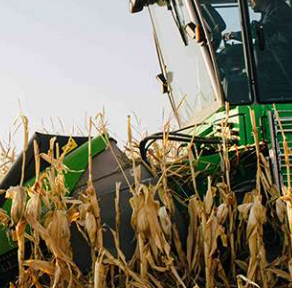
The Corn/Forage Sorghum Water Allocation Competition in Colby operated under a strict 10-inch irrigation cap, mirroring the Q-Stable benchmark for the region. The competition emphasized flexibility: teams managed both corn and forage sorghum as they navigated reduced pumping targets and the economic importance of feed production in northwest Kansas.

TAPS officials said the competition marked the program’s first use of a forage crop, reflecting a growing need for cropping systems that remain productive when irrigation is highly constrained.

The Corn Water Utilization Competition in Garden City confronted a different set of pressures. The region supports one of the most concentrated beef-producing corridors in the country, and feed availability — especially irrigated corn — is a priority for dairies, feedyards and finishing operations.

Teams managed their farms under the Garden City Q-Stable limit of 10.95 inches, evaluating how irrigation timing, hybrid selection and nitrogen decisions influence the region’s essential feed supply chain.

Organizers said that by running two competitions that reflect different hydrologic and economic conditions, KSU-TAPS allowed producers to compare strategies across systems that matter deeply to western Kansas agriculture.

Forage sorghum joins the competition for the first time

The addition of forage sorghum in Colby was designed to test system-level adaptation. As groundwater management districts across northwest Kansas move toward reductions of 18-32%, many producers are exploring forage sorghum as a water-efficient feed source.

The crop’s deep rooting, strong biomass production under deficit irrigation and growing use in dairies and feedyards made it a natural fit for a competition centered on resource allocation.

“Forage sorghum gives us a way to evaluate how feed production continues when water becomes a limiting factor,” said Daran Rudnick, K-State director of sustainable irrigation and director of TAPS. “But it’s the producers who make the decisions that drive those insights forward.”

Producer decisions at the center

Teams in both competitions made season-long management decisions, including crop insurance, hybrid or variety selection, seeding rate, irrigation strategy, nitrogen management and marketing. Those decisions were imposed on research plots using variable-rate irrigation technology.

All other agronomic practices were standardized across farms by TAPS and WKREC personnel, allowing performance differences to be traced directly to participant strategy.

In Colby, farms were scaled to represent 2,000 acres of grain or silage production, reinforcing the economic significance of feed in a region anchored by cattle. In Garden City, participants focused solely on corn, mirroring the area’s heavy reliance on irrigated grain to support high-throughput beef and dairy infrastructure.

Recognition and impact

Awards will be presented in profitability, input-use efficiency, yield performance, and — in Colby — forage quality. Winners will be announced during the banquet program following a 5 p.m. social hour and 6 p.m. meal.

The KSU-TAPS program is supported by the USDA–Natural Resources Conservation Service, the Kansas Water Office, the Kansas Water Institute, Kansas Sorghum and the Sorghum Checkoff, Environmental Defense Fund, and a wide network of agricultural service, technology, and local partners.

For additional details, contact Renee Tuttle, K-State Extension irrigation associate and associate director of KSU-TAPS, at [email protected] or 620-805-9045.
What ranchers need to know about anaplasmosis

0
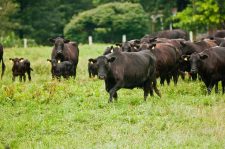
Photo credit: U.S. Department of Agriculture

A single tick bite on a cow may not seem like cause for alarm, but according to Dr. Fred Gingrich of the American Association of Bovine Practitioners (AABP), “anaplasmosis still bites when you’re not looking.”

In a recent episode of the Cattle Chat podcast, Gingrich explained that the disease often slips into a herd quietly, only showing itself when cattle suddenly weaken, go off feed, or collapse under stress, much like how people don’t notice anemia until exhaustion sets in.

Anaplasmosis is caused by the bacterium Anaplasma marginale, which attacks red blood cells. The disease is primarily spread through ticks, though biting flies, mosquitoes, and contaminated equipment such as needles or dehorning tools can also transmit it,according to Kansas State University veterinarians.

Once infected, cattle may show pale gums, a yellowish tint to the eyes or skin, extreme fatigue, fever or reduced milk production. Older cows tend to be hit the hardest.

“One of the hardest parts is lag time (waiting period) because cattle can carry this infection and look fine until the stress of winter or calving pushes them over the edge.” Gingrich said.

He said management starts with early detection and rapid action. Treatment typically involves long-acting antibiotics prescribed by a veterinarian. Preventive measures also play a key role: controlling ticks, sanitizing equipment between their use on animals and minimizing contact between infected and uninfected cattle can significantly reduce risk, according to Gingrich.

Producers who suspect anaplasmosis should contact their herd veterinarian or reach out to professionals through AABP or the Academy of Veterinary Consultants (AVC).

While the cattle form of anaplasmosis is different from the tick-borne strains that can affect humans, Gingrich noted that the comparison helps remind people why tick control matters. For both cattle and humans, a bite that’s easy to overlook can lead to problems that are anything but simple to manage.

To learn more about this disease and ways to manage it, check out the recent Cattle Chat episode, produced weekly by K-State’s Beef Cattle Institute.

Hearing for Proposed Changes to Water Regulations

0

MANHATTAN, Kansas — A public hearing will be conducted at 1:00 p.m. on Thursday, January 8, 2026, to consider changes to several administrative regulations relating to the Kansas Water Appropriation Act (KWAA). The hearing will be held in person at the Kansas Department of Agriculture at 1320 Research Park Dr. in Manhattan, as well as via video conferencing system.

The KDA Division of Water Resources is proposing changes to some existing regulations along with the addition of new regulations related to the implementation of the KWAA. First, KDA–DWR is proposing the amendment or revocation of regulations related to requirements for water flowmeters.

One of the new regulations being proposed by KDA–DWR relates to the changes in the points of diversion for groundwater rights. The others relate specifically to the establishment of water conservation areas, or WCAs, which are voluntary water conservation agreements that water right owners can enter into with the Chief Engineer of KDA–DWR.

More extensive information about these proposed regulation changes, including a copy of the changes, as well as the full notices of public hearing, may be accessed on the KDA website at agriculture.ks.gov/PublicComment. Anyone desiring to participate via video conference must pre-register to be provided with a video link; the registration is available in the notice of public hearing. Written comments can be submitted prior to the hearing on KDA’s public comment web page, or sent by email to [email protected] or by mail to the Kansas Department of Agriculture, Attn: Ronda Hutton, 1320 Research Park Dr., Manhattan, KS, 66502.

Any individual with a disability may request accommodations in order to participate in the public hearing and may request a copy of the regulations in an accessible format. Persons who require special accommodations must make their needs known at least five working days prior to the hearing. For more information, including special accommodations or a copy of the regulations, please contact Ronda Hutton at 785-564-6715 or [email protected].

###

WHAT:          Public hearing on proposed changes to water regulations
WHEN:          1:00 p.m. on Thursday, January 8, 2026
WHERE:       Kansas Department of Agriculture
1320 Research Park Dr., Manhattan, Kansas
Or virtual: via video conferencing system

Staying active contributes to healthy holidays

0

K-State’s Jackson offers tips for exercising when the weather turns cold.

Cold, winter days can often lead to thoughts of curling up under a blanket, kicking back on the couch, and putting on your favorite holiday shows.

Indeed, it can be a wonderful life.

But K-State Extension family and consumer sciences specialist Sharolyn Jackson says that enjoying the season to the fullest should also include keeping yourself active and healthy.

“As we look at options for staying active in the winter months, the one thing that is a common theme is that it’s a conscious choice that you make,” Jackson said. “It’s not just going to happen. We are creatures that want to hibernate, so it’s a conscious choice to stay active in the winter months.

“It doesn’t mean that you have to go to a gym and have a really heavy workout. It’s just building activity into your entire day. We’ve done a really good job of engineering regular physical activity out of our day.”

The physical activity guidelines for adults suggest 150 minutes a week of moderate intensity, or 30 minutes five days each week. Weather conditions may prevent some from fully meeting that goal, but every little bit helps.

“A 10- or 15-minute walk is good, too, if that’s all you can get,” Jackson said. “Make the time to go for a good, brisk walk outdoors. You’re going to walk a little more quickly, perhaps, when you’re outside and it’s cold.”

When it’s snowing, kids love to be out in the snow. “As adults, we need to take that cue and go join them for a little bit,” said Jackson, who also suggests using outdoor chores such as raking leaves or removing snow as good activities that keep you moving and healthy.

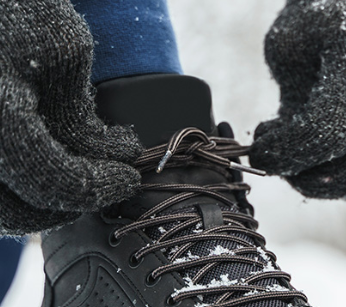
“It’s very healthy to be outside, but just be prepared for it,” she said. “Dress in layers, paying attention to your hands, feet and face. The outer layer needs to protect you from the wind and moisture. If it’s really cold and you’re really uncomfortable, it’s probably not a very good idea to be out there, but we get a lot of days in Kansas where it’s a little chilly and not too bad.”

Jackson said there are also many opportunities to be active indoors.

“The three things you should focus on are strength, flexibility and balance,” she said. “Strengthening and stretching exercises can be pretty simple, either with specialized equipment or using body weight. You can also do arm curls with cans of vegetables while watching TV, or buy resistance bands and follow the diagrams that come with the packaging.”

Small jumps, or hops, around the home – jump rope, anyone? – help to build bone strength. Simple hops may feel silly for adults to do, but you can be creative to do what works for you.

“For balance, simple things can help,” Jackson said. “When brushing your teeth or washing the dishes, stand on one foot. That builds strength and balance.”

She also suggested a wide-leg squat, standing up and sitting down, while watching TV or talking with family.

“You’re never too young and never too old to do these exercises,” Jackson said. “You can start to add any type of activity, strengthening or stretching at any point in your lifetime, at a level that is appropriate for you.”

Jackson recommends a K-State Extension program, Stay Strong, Stay Healthy, as one way to stay active with a support group. The eight-week program helps older adults build appropriate muscle strength and is offered in many counties in Kansas.

Contact your local extension agent to ask if the program is offered where you live.

ackson also is the statewide director of Walk Kansas, an eight-week program that encourages teams of Kansans to get together and walk the equivalent distance of the state of Kansas. More information is available online.

“Social support is huge,” Jackson said. “We are seeing that in both of these programs. The social connection and the support to be more active is a huge motivating factor.”

K-State Extension news service

Are drivers allowed to sleep at Kansas rest areas? What the law says

0

Millions of motorists will soon take long road trips.

Some will grow tired behind the wheel — and AAA says drowsy driving is as dangerous as drunken driving.

Fortunately for such motorists, Kansas has no state laws prohibiting people from sleeping in their cars, although local ordinances may ban that practice.

Here are Kansas rules regarding rest areas

The National Highway Traffic Safety Administration suggests drivers drink coffee or energy drinks and pull over to take a brief nap at a designated rest stop if they find themselves getting sleepy behind the wheel.

While laws regarding “car camping” vary throughout the nation, that practice can get a person ticketed in some states.