Friday, January 9, 2026
Home Blog Page 18

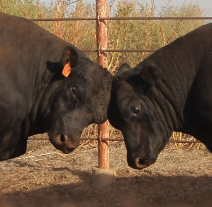
What producers can do to cut down bull conflict

0
K-State beef cattle experts suggest several ways producers may want to consider housing bulls for minimal fighting.

Anyone who’s ever had a difficult roommate knows the struggle of sharing space — and according to Kansas State University beef experts, bulls aren’t much different.

On a recent BCI Cattle Chat podcast episode, K-State beef cattle experts discussed what producers can do to reduce conflict when co-mingling bulls.

“We really don’t have strong data that tells us the exact ‘right’ way to co-mingle bulls,” K-State veterinarian Bob Larson said. “But we do know the basics matter: Plenty of space, plenty of water and plenty of feed go a long way toward reducing aggressive behavior.”

Larson emphasized that pen and housing design is where producers have the greatest opportunity to prevent injuries.

“Pen design is probably where we have the most room for problems,” he said. “Make the pen bigger than you think it needs to be. Giving bulls extra space doesn’t solve everything, but it absolutely helps.”

BCI beef cattle nutritionist Phillip Lancaster also weighed in, noting that physical barriers can make a difference under the right conditions. “If you have the facilities, separating bulls with a solid fence can prevent a lot of fighting,” Lancaster said.

The experts also discussed how bull age and maturity levels can influence behavior. According to Larson, mixing bulls of different ages may actually reduce conflict.

“A yearling bull paired with a mature bull may have fewer problems because everyone knows their place a little better,” he said. “Hierarchy gets sorted out more quickly when the size and maturity differences are obvious.”

While no management strategy can eliminate all fighting, Larson said thoughtful planning can reduce both the frequency and intensity of conflict.

“You probably can’t prevent every fight, but you can create an environment that lowers the risk,” Larson said. “Space, resources and smart grouping decisions give you the best odds of success.”

The veterinarians ultimately concluded there is not significant research to justify if any of these methods are considered effective, but these are just suggestions. To learn more about this topic, as well as information about rural veterinary clinics and bull-to-cow ratios, check out the BCI Cattle Chat podcast.

Questions on these topics also can be sent by email, [email protected].

Theileria losses may qualify for USDA Livestock Indemnity Program

0

Beef producers who have lost cattle to Theileria orientalis may qualify for financial assistance through USDA’s Livestock Indemnity Program (LIP), says Craig Payne, University of Missouri Extension director of veterinary medicine.

The program provides payments to livestock owners when deaths exceed normal mortality due to certain weather events, predator attacks or eligible diseases. Because Theileria orientalis is a vector-borne disease without an effective vaccine or control practice, USDA lists it as an eligible cause of loss under LIP.

“If Theileria orientalis caused losses that exceed your herd’s normal mortality, LIP may help you recover a portion of your financial losses,” says Payne.

To apply, contact your local Farm Service Agency (FSA) office. The deadline to apply for losses incurred during 2025 is March 1, 2026.

You will be asked to provide records that verify the loss. Useful documentation includes veterinary or necropsy reports confirming Theileria orientalis, herd inventory records showing the number and class of cattle before and after the outbreak, and mortality records that show when and how many animals were lost. You will also need proof of ownership, such as calving, purchase or production records. FSA may ask for additional evidence such as photographs, sale or disposal receipts, or a veterinarian’s statement linking the deaths to Theileria.

Payments are made only for the number of livestock deaths that exceed the applicable type of livestock’s normal mortality. The amount is based on 75% of the average USDA-determined fair market value for each class of livestock. For 2025, the payment rate is $1,810.09 per adult beef cow, $2,353.12 per adult bull and $1,133.82 for non-adult cattle weighing 400-799 pounds.

More information

USDA to Expand Crop Insurance Access for Farmers and Ranchers, Boosting the Farm Safety Net

0

U.S. Secretary of Agriculture Brooke L. Rollins today announced major updates to federal crop insurance, reducing red tape for farmers, modernizing long-standing policies, and expanding access to critical risk protection beginning with the 2026 crop year. The Expanding Access to Risk Protection (EARP) Final Rule streamlines requirements across multiple crops, responds to producer feedback, and strengthens USDA’s commitment to putting America’s farmers first.

“President Trump is cutting burdensome regulations and strengthening the farm safety net to ensure the future viability of American agriculture. Across the Trump Administration, we are removing burdensome regulations that were strangling small businesses. For every new regulation, President Trump has eliminated a remarkable 48 – lifting a weighted blanket from the American economy,” said Secretary Brooke Rollins. “With this new rule, we are delivering real, meaningful relief by modernizing the system, expanding access to crop insurance, and making it easier, not harder, for farmers and ranchers to protect their operations and keep doing the work that keeps America fueled and fed. We are continuing to put Farmers First every step of the way.”

Reducing Regulatory Burdens

Improving Land Access Through Prevented Planting Relief

  • Removes the “insured” requirement from the “1 in 4” rule for prevented planting payments. Producers must still show the land was planted and harvested (or adjusted for an insurable cause of loss) in one of the previous four years.

Streamlining Production Reporting

  • Allows policyholders switching Approved Insurance Providers (AIPs) to submit production reports directly to their new provider, reducing confusion and paperwork.

Expanding Direct Marketing Options

  • Allows insurance under the Dollar Plan for direct-marketed fresh market tomatoes and peppers beginning with the 2027 crop year, reflecting specialty crop business practices in Northeastern states.

Simplifying Dispute Resolution

  • In accordance with Executive Order 14192, Unleashing Prosperity Through Deregulation, removes the “automatic nullification” rule and shifts fact-finding authority to the courts, reducing administrative burdens on policyholders and AIPs.

Deregulating Coverage Dates

  • Removes termination, cancellation, and end-of-insurance dates from federal regulations and places them in policy provisions, enabling more flexible, county-level updates.

Additional Policy Updates

One Big Beautiful Bill Act (OBBBA) Implementation

  • Incorporates provisions from Manager’s Bulletin 25-006.
  • Extends beginning farmer and rancher eligibility from 5 to 10 crop years.
  • Updates additional premium subsidy rates: 15% (years 1–2), 13% (year 3), 11% (year 4), and 10% (years 5–10).

Revenue Protection Clarifications

  • Establishes that harvest prices will equal projected prices when insufficient data prevents use of the approved methodology.
  • Creates a reimbursement process for policyholders who paid additional revenue protection premiums in such cases.

Crop-Specific Improvements

  • Fresh Market Tomatoes: Extends end of insurance period by one month in TN and SC to better cover late-season hurricanes (2027 crop year).
  • Fresh Market Peppers: Adds insurance dates aligned with northern growing seasons to support Dollar Plan expansion into Northeastern states.
  • Safflower: Moves the contract change date from December 31 to November 30, aligning with other spring crops and simplifying enrollment.

Effective Dates and Public Comment

The EARP Final Rule became effective Nov. 30, 2025, for crops with a contract change date on or after that date (2026 crop year) and for the 2027 crop year as specified. USDA will accept public comments until January 27, 2026.

Additional Information

Producers should contact their local crop insurance agent or visit the RMA website for guidance on how these updates may affect coverage options.

RMA supports American agriculture by providing world-class risk management tools through Federal crop insurance and education programs, offering coverage for more than 130 crops and continuously improving policies based on producer feedback.

KFU Members Gather to Elect Leadership, Honor Family Farm Supporters

0

MCPHERSON, Kan. – Kansas Farmers Union (KFU) members gathered in Wichita November 18-19 for its 118th anniversary convention to elect leadership, advance key policy priorities for state and federal government, and present awards to family farm agriculture supporters.

“Our recent state convention was superb,” KFU President Donn Teske said. “The group of speakers was awesome, and it’s always wonderful to have presenters who make the convention participants think, learn, and challenge themselves.”

Kansas Farmers Union Vice President Matt Ubel, Wheaton, was re-elected to a two-year term. Ubel is a generational farmer who raises row crops, cattle, and kids with his wife, Leah, near Wheaton, KS. Along with his brother, Matt owns and operates a custom application business. He is also active in local government at the county level.

KFU board members Jill Elmers, Lawrence, and Donna Pearson McClish, Wichita, were re-elected to three-year terms representing the North and South Districts, respectively. Elmers has owned and operated Moon on the Meadow farm near Lawrence since 2003 and raises 30-40 different kinds of certified organic vegetables, small fruits, herbs and flowers on her farm’s three acres and the 30-acre Common Harvest Farms she owns with partners. Pearson McClish is a multi-generation urban farmer; owner, and operator of Common Ground Producers and Growers, Inc., a unique mobile food hub that serves both urban and rural families.

Delegates elected to represent KFU at the National Farmers Union (NFU) Convention in New Orleans, LA March 7-9, 2026, include James Bowden, Gypsum; Donna Pearson McClish, Wichita; Sheila Kjellberg, Salina; Amanda Lindahl, Chapman; Jazelle Thomas, Wichita; and Scott Kohl, St. George. KFU Executive Director Nick Levendofsky, Courtland, will represent KFU on the National Farmers Union Policy Committee at the national convention.

“I am honored to serve in this role to represent KFU members and their grassroots policy at the national level,” said Levendofsky, “I look forward to working with other Farmers Union members from across the country to present and advance policies that benefit family farmers and ranchers and their communities.”

Recipients of the 2025 Ruth Hirsh Friend of the Family Farmer Award included Senator Mary Ware, Wichita and former Kansas State Farm Service Agency (FSA) Executive Director Dennis McKinney, Greensburg.

Senator Ware was elected to her first term in the Kansas Senate in 2018 where she represented parts of Wichita in Sedgwick County until her recent resignation. Senator Ware served as the ranking member of the Senate Agriculture Committee and championed many issues on behalf of Kansas family farmers during her time in the Senate.

Dennis McKinney was appointed by the Biden Administration to serve as the State Executive Director of the USDA Farm Service Agency (FSA) in Kansas in February 2022. McKinney is a Kansas farmer and cattle producer in southern Kiowa and northern Comanche counties and served as a Kansas State Representative and Kansas State Treasurer.

Wes Jackson is the recipient of the 2025 Linda Hessman Lifetime Achievement Award for Service to Rural Kansas. Jackson is a prominent environmentalist and plant geneticist known for co-founding The Land Institute, near Salina, KS. He has been a leader in the sustainable agriculture movement, advocating for ecologically based practices. “It was a pleasure and honor to have the opportunity to present the legendary Wes Jackson with our beloved Linda Hessman Lifetime Achievement Award,” President Teske said.

Tom Giessel, Larned, was honored for participating in his 50th consecutive Kansas Farmers Union Convention. Giessel, who recently retired from farming, serves as the amateur historian for National Farmers Union and is a regular presenter on Farmers Union history at national and state conventions. Giessel was presented with a framed, pewter Farmers Union medallion that was once part of the late NFU President Tony Dechant’s personal collection.

Jeff Downing, General Manager of Farmers Union Midwest Agency (FUMA) was the recipient of FUMA Insurance Agent of the Year. Downing has been part of the Farmers Union Insurance family for 21 years and will be retiring March 2026.

President Teske informed convention participants that he also intends to step aside at the end of his two-year term in 2026, “so the dynamic young leaders and board members who make up the organization can step up.”

About Kansas Farmers Union – Since 1907, Kansas Farmers Union (KFU) has worked to protect and enhance the economic interests and quality of life for family farmers and ranchers and their communities. Kansas Farmers Union represents its members, who are engaged in diverse farming and ranching pursuits, through education, legislation, and cooperation.

Kansas will get the world’s first mile-deep nuclear reactor and the groundbreaking is next week KCUR | By Celia Llopis-Jepsen Published December 4, 2025 at 6:00 AM CST Facebook Twitter

0
Deep Fission says it plans to install a nuclear reactor underground at an industrial park in southeast Kansas. State and local government leaders are on board. It’s part of a national push for new nuclear energy generation.

Parsons, Kansas, will be the site of a California startup’s first ever 1-mile-deep nuclear reactor — with support from county commissioners, both Republican Kansas U.S. senators and Democratic Gov. Laura Kelly’s administration.

Deep Fission will hold a ceremonial groundbreaking on Tuesday at Great Plains Industrial Park. Company leaders hope to receive U.S. Department of Energy authorization and get its nuclear reactor up and running by next Fourth of July.

The company is part of a presidential pilot program that aims to demonstrate new reactors by then. After that, Deep Fission hopes to pursue commercial operations.

“The industrial park is looking to bring in, to attract industry and possibly data centers or other large uses of electricity,” Deep Fission CEO Liz Muller said in an interview with the Kansas News Service. “But in order to attract them, it needs to have a source of electricity.”

Deep Fission is an advanced nuclear company founded in 2023 that promises to place small nuclear reactors at the bottom of 30-inch wide, mile-deep boreholes.

In Kansas, a standard nuclear power plant proposal from an electricity company would need to pass through the agency that regulates utilities — the Kansas Corporation Commission — for a siting permit and public hearings, among other steps. However, the KCC said it doesn’t have enough information yet to know the full extent of its jurisdiction over Deep Fission’s project. For example, it remains to be seen whether the company will fall under laws that apply to electric utilities.

“The nature of Deep Fission’s operations will determine whether it qualifies as an electric utility,” the KCC said in a recent email.

Deep Fission’s letter of intent with the industrial park ultimately envisions a full-scale commercial project.

Parsons offers the opportunity to “potentially grow with the Park for decades to come,” the company said in a press release.

This would mean installing more nuclear reactors over the years, since Deep Fission designs its reactors to generate power for two to seven years.

Muller said the design is safe.

“All of the radioactivity stays at the bottom of the borehole a mile underground,” she said. “The only thing that is coming up through the borehole is clean, fresh water. We feel really good about our ability to protect both humans and the environment.”

That water comes up in the form of steam for turning a turbine to generate electricity, then cools and goes back down into the borehole.

Elected officials welcome Deep Fission to Parsons

Parsons, a city near the Oklahoma and Missouri borders, has a population of about 10,000. The Great Plains Industrial Park on the east side of Parsons covers 14,000 acres and is the former site of the Kansas Army Ammunition Plant.

Deep Fission’s press release includes enthusiastic quotes from a host of local, state and congressional voices.

“Kansas has long been a leader in energy production, and we’re continuing to diversify our portfolio with innovative technologies such as advanced nuclear,” Kansas Lt. Gov. and Secretary of Commerce David Toland said.

Toland said the Kansas Department of Commerce “will support (Deep Fission’s) efforts to integrate a thoughtful and transparent community engagement process that gives local residents clear avenues to ask questions and be part of the conversation.”

Republican Sens. Roger Marshall and Jerry Moran hailed the project.

“As our nation’s demand for reliable, around-the-clock energy continues to grow, advanced nuclear technology will play a critical role,” Marshall said. “It’s exciting to see cutting-edge innovation and high-quality energy investment come to Kansas.”

Robert Wood, chairman of the Great Plains Development Authority that owns the industrial park, said Deep Fission’s project is “showcasing Kansas’s potential to the world.”

“The Board and I look forward to building a long-term relationship with Deep Fission and the positive impacts this collaboration will bring,” Wood said.

County commissioners also touted economic development.

“We are committed to backing projects that provide jobs, energy, and economic growth for the citizens of Labette County,” the County Commission said.

Deep Fission melds nuclear, geothermal and oil industry technology

Muller entered the nuclear industry with her father, University of California Berkeley professor emeritus of physics Rich Muller. They wanted to solve two of the nuclear industry’s problems: nuclear waste and the high cost of nuclear power.

So the duo created two companies: Deep Isolation and Deep Fission.

The first company proposes solving nuclear waste disposal by drilling boreholes 1 mile deep and putting the waste at the bottom. The second company plans to make nuclear power much cheaper by drilling equally deep boreholes and putting reactors into them.

Deep Isolation is currently conducting tests. Deep Fission has signed letters of intent for sites in Kansas, Texas and Utah.

In August, Deep Fission’s reactor design became one of 11 projects picked for President Donald Trump’s nuclear pilot program, which offers to expedite testing of new designs and ultimately fast-track them to commercial licensing.

The federal program’s target is to get at least three nuclear reactors operating at a state of steady fission before next Fourth of July.

Deep Fission’s design will use a pressurized water reactor — the world’s most common kind of nuclear technology — small enough to fit into the borehole and powerful enough to generate about as much power as 10,000 homes consume, Muller said.

Deep Fission will then fill the borehole with water. The reactor at the bottom will transfer heat to water that will rise to the surface, become steam and turn turbines.

The steam will then cool down and return to the borehole, so that the same water is constantly reused.

The idea borrows technology and concepts from the geothermal and oil and gas industries, Muller said. Borehole drilling is standard practice for oil and gas. And geothermal power uses hot water that rises up a borehole, turns a turbine and is then reused.

A Deep Fission reactor will churn out power for two to seven years, depending on its design, Muller said. Afterward, the company could seal the reactor and leave it there. Or, if the U.S. develops a site for nuclear waste disposal, it could remove the reactor and send the waste there.

Deep Fission also said that once a reactor is spent, it could seal that one off and stack new ones on top of it, as long as the borehole was originally drilled deeper than 1 mile so that the uppermost reactor remains at least 1 mile deep.

This would make maximum use of a single borehole.

“We can keep doing that: seal it off, add another one on top,” she said. “And so if (one reactor) lasts seven years and you do seven of those cycles, that’s 49 years.”

Does the public get a say about Deep Fission’s plans?

Deep Fission said it considers community input critical.

“We have already had a significant amount of engagement with the community,” Muller said. “ We’ve done conversations with the government — local government, state government. We’ve had a number of stakeholder groups.”

Muller didn’t elaborate further on the stakeholders who have provided input and she didn’t indicate when the company plans to hold any public meetings that would allow the broader community to weigh in.

But she signaled that her company’s vision includes such meetings.

Asked whether the public’s input would have any influence, since Deep Fission has already selected a site and set a demonstration deadline of July 4, 2026, Muller said the company will want ongoing engagement on steps such as commercialization.

“There’s going to be lots of opportunities to participate, to be heard, to ask questions,” she said. “Starting immediately, but continuing on for years to come.”

State and federal oversight of nuclear energy

The extent to which Kansas energy regulators would oversee Deep Fission’s activities remains partly unclear. The KCC is in the early stages of communication with the company.

“The KCC is generally aware of Deep Fission and its intent to pursue a demonstration project” in Kansas, KCC staff said in an email last month. “Our agency has only had introductory meetings with the company.”

The KCC could conceivably regulate an underground nuclear reactor for a few reasons.

First, the commission regulates drilling and operations related to certain wells.

Second, the commission oversees public utilities, with a mission of keeping utilities reliable and reasonably priced.

If a public utility wants to build a new power plant, it has to file a proposal with the KCC. This can trigger public hearings on how the plant would impact other customers and what they pay for electricity.

Also, an electric utility that wants to build a nuclear plant needs a siting permit from the KCC. Getting that permit requires going through a public hearing.

Of these two spheres of regulation — oversight of wells and of public utilities — KCC jurisdiction is clearer in the first than the second.

The KCC said Deep Fission will have to first drill a pilot hole – which will help determine if the site is suitable. For the pilot hole, the company will need to seek a drilling license and permit from the KCC and provide financial assurance related to the pilot hole.

“Beyond that initial pilot hole, the KCC would not have jurisdiction over a nuclear reactor well,” the KCC said.

In the case of public utility regulation, the KCC said it needs more information to know its full jurisdiction.

“For example, Kansas law only requires ‘electric utilities’ to obtain a siting permit from the KCC for nuclear generation facilities,” the agency said, and it remains to be seen if Deep Fission fits that definition.

If Deep Fission does fall under that rule, it would have to file details to the KCC about its nuclear plans, including about the construction, operation and maintenance.

As for commercializing the project, Deep Fission’s long-term goal after demonstrating its technology, KCC said that state law doesn’t allow Deep Fission to sell electricity at retail without partnering with a regulated utility, which would trigger KCC oversight.

The rule wouldn’t apply if Deep Fission sells wholesale, the KCC said.

Apart from potential state regulation, Deep Fission’s project will fall under oversight from federal authorities such as the Nuclear Regulatory Commission.

The Trump administration is working to overhaul federal nuclear oversight, which it argues is overly burdensome and risk avoidant.

“Instead of efficiently promoting safe, abundant nuclear energy,” one of Trump’s executive orders said, “the NRC has instead tried to insulate Americans from the most remote risks without appropriate regard for the severe domestic and geopolitical costs of such risk aversion.”

Earlier this year, the administration unveiled executive orders and plans to press for approval of projects, rewrite regulations and use the controversial Department of Government Efficiency to shrink the Nuclear Regulatory Commission and focus on “expeditious processing of license applications and the adoption of innovative technology.”

Are there risks to groundwater or other environmental concerns?

The Kansas News Service asked whether state agencies would play any role in checking if Deep Fission’s chosen drilling site would pose any problem for water supplies or face any risk from earthquakes.

The KCC said it’s possible that the Kansas Department of Health and Environment will have a regulatory role and that collaboration with the Kansas Geological Survey (which houses expertise on groundwater, earthquakes and oil and gas wells) is also likely.

The Kansas News Service asked KDHE questions last month, including whether it would play any part in checking whether Deep Fission’s plans are safe for groundwater or other environmental implications. The agency didn’t respond and neither did the governor’s Office.

Deep Fission said its project poses no threat to groundwater.

“We know how to protect the water table,” Muller said, adding that the reactor would be about 1 mile below groundwater.

“It’s a full mile of rock. Billions of tons of rock,” she said.

As for keeping the water in the borehole secure, Muller said the company would use secure casing methods already used in the oil and gas industry.

Deep Fission’s partnership with waterless data centers

Separately from its plans in Parsons, Deep Fission is making inroads with the kind of data center companies that its federal financial filings indicate are its initial target market.

The company has a partnership with Endeavour, the parent company of Edged waterless data centers that have opened in Kansas City, Dallas, Atlanta, Chicago, Columbus, Des Moines and Phoenix — as well as Spain and Portugal.

The Edged data centers are designed to cool servers without water. Heavy water use for cooling is considered a top environmental concern related to the fast global increase in data centers.

In a federal filing, Deep Fission said its partnership with Endeavour should help it get a head start in the data center power segment.

“Even under conservative assumptions — such as 6% annual growth in data center demand, resulting in a doubling of consumption by 2035 — capturing just a percentage of incremental demand would represent a significant growth driver,” the company wrote.

Tech companies are building data centers at a furious pace in part because of the rapid rise of artificial intelligence.

In October, Deep Fission announced that it has so far inked letters of intent with “data centers, co-developers, industrial parks and strategic partners” that would entail generating 12.5 gigawatts of power.

Celia Llopis-Jepsen is the environment reporter for the Kansas News Service and host of the environmental podcast Up From Dust. You can follow her on Bluesky or email her at celia (at) kcur (dot) org.