Monday, January 12, 2026
Home Blog Page 28

Wheat Scoop: Kansas Wheat Growers Share Wheat Outlook

0
Kansas Wheat

Contact: Marsha Boswell, [email protected]

For the audio version, visit kswheat.com.

Kansas wheat farmers gathered last week for a joint board meeting between the Kansas Wheat Commission (KWC) and the Kansas Association of Wheat Growers (KAWG). Per usual, farmer board members shared crop progress updates on how wheat drilling and fall harvest are progressing in their areas.


Each member shared local conditions and insights on planting progress, early stand development and fall harvest results. Their discussion offered a timely, farmer-led perspective on the state of the wheat crop during a fall marked by unseasonable rains, variable planting windows and shifting markets.


On October 30, the Kansas Wheat boards met jointly to review producer-led research, policy priorities and educational outreach. The collaboration connects the statewide mission of Kansas Wheat with local voices, ensuring Kansas farmers are represented both in Topeka and in global trade conversations. Last week’s meeting also marked a shift from the dry falls of recent years, as many producers finally worked with moisture instead of managing without it.


In southwest Kansas, rains delayed planting but left fields in good condition going into winter.


“Our wheat went in about ten days later than normal,” said Gary Millershaski of Lakin, past chairman of the Kansas Wheat Commission. “We’ve got good stands everywhere, just not as much growth, and with it cold right now, we’ll see what happens.”


Millershaski said acres are “down just a little” as some growers are rotating more toward row crops rather than fallow. “We’ve had good moisture going in,” said Millershaski. “It’s been a long time since we could say that.”


In Northwest Kansas, farmers faced pest pressure early but are finishing the fall with confidence.


“We had a little bit of a challenge with armyworms this year,” said Chris Tanner of Norton, KAWG president. “We did a really good job controlling volunteer wheat for the most part, and the August rains made a huge difference.” Tanner said wheat acres may be “down slightly” because of price instability, but praised this year’s yield potential.


In south central Kansas, producers experienced a season of extremes.


“It’s been a struggle,” said Derek Sawyer of McPherson, KWC Chairman. “We’ve had rain, a mix of volunteer and newly planted wheat and a frost last night. Acreage is about even, maybe a little down.”


Sawyer warned that disease pressure could still develop. “There’s potential for a bad WSMV year in some spots,” said Sawyer. “But the stands that made it look really good right now.”


Martin Kerschen from Garden Plain reported that rain has delayed fall harvest, so wheat planted behind fall crops has yet to be completed. He said about one third is up and ready for grazing, about one third has just emerged and another third is not planted yet.


“We’re about 80 percent done with fall harvest,” said Doug Keesling of Chase. “Milo actually out-yielded corn for many farmers, which was a surprise after a tough summer.”


Keesling said wheat acres are “flat to slightly down,” with most of the crop already emerged and ready for cattle turnout.


“We’ve got good stands and decent moisture,” said Keesling. “The only real concern right now is volunteer wheat from neighbors’ fields. The potential is there for a problem if it isn’t controlled.”


Stay up to date on crop conditions and management resources at kswheat.com.

KU News: KU Debate excels at 3 tournaments in 1 weekend

0

From the Office of Public Affairs | https://www.news.ku.edu

Headlines

Editors: Note students from Lawrence, Leawood, Olathe, Overland Park, Shawnee, Stilwell, Topeka and from Lee’s Summit, Missouri.


Contact: Scott Harris, KU Debate, 785-864-9878, [email protected]
KU Debate excels at 3 tournaments in 1 weekend


LAWRENCE — KU Debate had an outstanding weekend Oct. 31-Nov. 3 as University of Kansas debaters excelled at three different tournaments across the country at tournaments hosted by Gonzaga University, the University of Oklahoma and the University of Alaska.

Gonzaga University tournament

KU’s top policy debate team finished in third place at a major national tournament at Gonzaga University in Spokane, Washington. KU seniors Rose Larson, Milwaukee, and Luna Schultz, Houston, won 11 consecutive debates before dropping a 2-1 split decision to the University of Michigan in the semifinals of the tournament, a team they had defeated in the preliminary rounds the day before. The pair moved their record on the season to 35 wins and 4 losses.

They were a perfect 8-0 in the preliminary rounds, with wins over five of the top 10 teams in the country, to qualify for the elimination rounds as the top seed. Seven of the eight teams they debated in the prelims qualified for the elimination rounds at the tournament. They reeled off wins over the University of Texas-Dallas, UC-Berkeley, Northwestern University, two teams from the University of Michigan, Michigan State University, the defending national champions from Binghamton University and Georgetown University. In the elimination rounds they first defeated the University of Kentucky, then advanced over another KU team in the octafinals and beat a team from the University of Michigan in the quarterfinals before their streak ended with the loss to Michigan’s top team in the semifinals. Michigan would defeat Georgetown in the finals to win the tournament.

Three other KU teams finished in the top 20 teams, qualifying for the elimination rounds as the 16th, 17th and 18th seeds. Kate’Lynn Shaw, Chicago, and Nargis Suleman, Leawood, were the 16th seed and advanced over teammates Brooklynn Hato, Overland Park, and A.J. Persinger, Lawrence, in the first elimination round before meeting the top-seeded KU team in the octafinals. Owen Owings, Lee’s Summit, and Zach Willingham, Topeka, were knocked out by the 15th seed from Michigan State in the first elimination debate.

Larson was the second-place individual speaker, Shultz was 12th, and Nargis Suleman was 18th.

Schools competing at the tournament included Arizona State University, Baylor University, Binghamton University, CSU Long Beach, Dartmouth College, Emory University, George Mason University, Georgetown University, the University of Georgia, Gonzaga University, Harvard University, the University of Iowa, the University of Kentucky, Liberty University, the University of Michigan, Michigan State University, the University of Minnesota, the Naval Academy, Northwestern University, Purdue University, the University of Southern California, Stanford University, the University of Texas, Trinity University, UC Berkeley, the University of Texas-Dallas, Wake Forest University, Wichita State University and the University of Wyoming.

University of Oklahoma policy debate tournament

While KU teams were competing in Spokane, Washington, several other KU teams were competing at a tournament in Norman, Oklahoma. The KU team of freshmen Kavinayashri Chidambaranathan, Topeka, and Iman Suleman, Leawood, won the championship at the University of Oklahoma policy debate tournament. The pair went a perfect 9-0 at the tournament, defeating the University of Houston in the finals of the tournament.

Four other KU teams qualified for the elimination rounds at the tournament. The teams of Tyler Bauman, Stilwell, with Sigmund Persson, Boulder, Colorado; Jaxson Terreros, Shawnee, with Quinn Smith, Springfield, Missouri, and Gilead Falin, Lawrence, with Harris Chaudhry, Topeka, all reached the quarterfinals of the tournament. The team of Grayson Webber, Colorado Springs, Colorado, with Cameron Linde, Overland Park, advanced to the octafinals of the tournament. Persson received the fourth-place individual speaker award, and Bauman was 10th.

Schools competing in the tournament included Baylor University, the University of Central Oklahoma, George Mason University, Houston University, Kansas State University, Liberty University, Missouri State University, the University of Oklahoma, Samford University, Southern Nazarene University and the University of Texas San Antonio.

British Parliamentary tournament

KU teams also had an excellent performance at a national British Parliamentary tournament hosted by the University of Alaska Anchorage. Four KU duos competed in the tournament, and all four teams qualified for the elimination rounds. The team of Joseph Higgins and Jack Turec, both from Olathe, won the championship in the novice elimination rounds for first year BP debaters. The team of Alba Wilson-Axpe, Greenwood Village, Colorado, with Sofia Bullard, Simi Valley, California, reached the semifinals of the tournament in the open division, and the team of Michael Redlich and Mason Renner, both from Kansas City, advanced to the quarterfinals. The team of Alex Brake, Olathe, and Isaac Martinez, Spearman, Texas, made the finals of the honors division.

Five KU debaters, all freshmen, won speaker awards at the tournament. Bullard was the overall fourth-place speaker at the tournament. In addition, speaker awards for first-year BP debaters went to Turec, first; Redlich, second; Renner, third, and Higgins, fifth.

Schools competing at the tournament included the University of Alaska, Ball State University, California Polytechnic State University, Claremont College, Clemson University, Denver University, the College of Idaho, Linfield University, Loyola Marymount University, Loyola Chicago University, Metropolitan State University of Denver, the University of Mississippi, Morehouse College, Red Rocks Community College, Randolph-Macon College, Seattle University, Tennessee Tech University, Texas Tech University, the U.S. Air Force Academy, the University of San Francisco, the University of Vermont, Vanderbilt University, Wheaton College and Willamette University.

“It was a remarkable achievement by the coaching staff to manage 38 students competing in three different locations and an amazing performance by the students themselves as 13 of the 19 teams competing qualified for elimination rounds at those tournaments,” said Scott Harris, the David B. Pittaway Director of Debate at the University of Kansas. “We are very proud of the hard work of every member of the squad that made it possible.”

-30-

————————————————————————


KU News Service

1450 Jayhawk Blvd.

Lawrence KS 66045

[email protected]

https://www.news.ku.edu


Erinn Barcomb-Peterson, director of news and media relations, [email protected]


Today’s News is a free service from the Office of Public Affairs

 

KU News: New study explores ‘legacy effects’ of soil microbes on plants across Kansas

0

From the Office of Public Affairs | https://www.news.ku.edu

Headlines

New study explores ‘legacy effects’ of soil microbes on plants across Kansas

LAWRENCE — Findings from the University of Kansas could offer important context for farmers who want to use beneficial microbes to improve yields. Today, microbial commercialization in agriculture represents an expanding multibillion dollar sector.


Chancellor Girod begins term as board chair of Association of American Universities
LAWRENCE — The member presidents and chancellors of the Association of American Universities have elected University of Kansas Chancellor Douglas A. Girod as chair of the AAU Board of Directors. In addition to his role with the AAU, Girod currently serves as chair of the Big 12 Conference’s board of directors, and as a member of both the NCAA Division I board of directors and the NCAA board of governors.


Sen. Jerry Moran among honorees as KU celebrates first-generation Jayhawks, advocates
LAWRENCE — “I Am First Too” recognizes students, alumni, faculty and staff who were the first in their families to earn a college degree or who champion first-generation success. This year’s honorees embody the persistence and leadership that define KU’s first-generation community. Among the honorees is U.S. Sen. Jerry Moran of Kansas, a KU alumnus honored for his longstanding commitment to expanding educational access and supporting students across Kansas and beyond.


KU Design students, faculty and alumni win AIGA Kansas City awards

LAWRENCE — KU students took home a total of 13 awards in the student category, including the Best in Class Award for Brand and Identity. Matthew Cook, KU assistant professor in the animation and illustration programs, won two awards in the professional category. Winning students are from Lawrence, Olathe, Spring Hill, Tonganoxie, Victoria and Wichita, as well as Kansas City and Liberty, Missouri.


Full stories below.


————————————————————————


Contact: Brendan M. Lynch, 785-864-8855, [email protected]
New study explores ‘legacy effects’ of soil microbes on plants across Kansas
LAWRENCE — A new study appearing in Nature Microbiology analyzes soils sampled across the state of Kansas to determine the importance of “legacy effects” — or how soils from a specific location are influenced by microbes that have evolved in response to the specific climate at that site for many years.

“The bacteria and fungi and other organisms living in the soil can actually end up having important effects on things that matter, like carbon sequestration, nutrient movement and what we’re particularly interested in — the legacy effects on plants,” said co-author Maggie Wagner, associate professor of ecology & evolutionary biology at the University of Kansas.

“We got interested in this because other researchers, for years, have been describing this type of ecological memory of soil microbes having some way to remember from their ancestors’ past,” she said. “We thought this was really fascinating. It has a lot of important implications for how we can grow plants, including things like corn and wheat. Precipitation itself has a big influence on how plants grow, but also the memory of the microbes living in those soils could also play a role.”

According to Wagner, while legacy effects previously have been reported, they aren’t well characterized. A better understanding could eventually benefit farmers and agricultural biotech firms, which could build on the research.

“We don’t really understand how legacy effects work,” she said. “Like, which microbes are involved at the genetic level, and how does that work? Which bacterial genes are being influenced? We also don’t understand how that legacy of climate moves through the soil to the microbes, and then eventually to the plant.”

By sampling soils from six sites across Kansas — from its lower, rainier eastern half to the state’s western High Plains, higher in altitude and drier because of the rain shadow of the Rocky Mountains — the researchers aimed to determine differences in legacy effects.

“This was a collaboration with a team at the University of Nottingham in England,” Wagner said. “We divided up the work, but the bulk of the experiment — actually, the entire experiment — was conducted here at KU, and we also focused on soils from Kansas for this work.”

Back at KU, Wagner and her colleagues began testing the soils to better understand legacy effects of the samples’ microbes.

“We used a kind of old-school technique, treating the microbes as a black box,” she said. “We grew the plant in different microbial communities with different drought memories and then measured plants’ performance to understand what was beneficial and what was not.”

The researchers challenged the microbial communities for five months, either with plenty of water or very little water.

“Even after many thousands of bacterial generations, the memory of drought was still detectable,” Wagner said. “One of the most interesting aspects we saw is that the microbial legacy effect was much stronger with plants that were native to those exact locales than plants that were from elsewhere and planted for agricultural reasons but weren’t native.”

While more plant species will need to be tested to confirm this hypothesis — the researchers tested one crop (corn) and one native plant (gamagrass) — the researchers said the findings could offer important context for farmers who want to use beneficial microbes to improve yields.

“We think it has something to do with the co-evolutionary history of those plants, meaning that over very long periods, gamagrass has been living with these exact microbial communities, but corn has not,” she said. “Corn was domesticated in Central America and has only been in this area for a few thousand years.”

Additionally, the research team performed genetic analysis on both microbes and plants to better understand on the molecular level how legacy effects might function.

“The gene that excited us most was called nicotianamine synthase,” Wagner said. “It produces a molecule mainly useful for plants to acquire iron from the soil but has also been recorded to influence drought tolerance in some species. In our analysis, the plant expressed this gene under drought conditions, but only when grown with microbes with a memory of dry conditions. The plant’s response to drought depended on the memory of the microbes, which we found fascinating.”

The KU researcher said gamagrass is being looked at as a possible source of genes to improve corn performance under challenging conditions.

“The gene I mentioned earlier could be of interest,” she said. “For biotech firms focused on microbial additions to crops, this gives hints about where to look for microbes with beneficial properties. Microbial commercialization in agriculture is a multibillion dollar industry and still growing.”

Wagner’s KU collaborators were lead author Nichole Ginnan, now of the University of California-Riverside, and Natalie Ford, now of Pennsylvania State University; Valéria Custódio, David Gopaulchan, Dylan Jones, Darren Wells and Gabriel Castrillo of the University of Nottingham; Isai Salas-González of the Universidad Nacional Autónoma de México; and Ângela Moreno of the Ministério da Agricultura e Ambiente in Cabo Verde.

“One of the things that makes this work valuable is how interdisciplinary it was,” Wagner said. “We brought together genetic analysis, plant physiology and microbiology, allowing us to ask and answer questions that couldn’t have been addressed before.”

This research was funded by the National Science Foundation’s Division of Integrative Organismal Systems.


-30-

————————————————————————

A study by global analytics firm Lightcast quantifies KU’s annual statewide impact at $7.8 billion.

https://economicdevelopment.ku.edu/impact

————————————————————————

Contact: Joe Monaco, [email protected]
Chancellor Girod begins term as board chair of Association of American Universities
LAWRENCE — The member presidents and chancellors of the Association of American Universities have elected University of Kansas Chancellor Douglas A. Girod as chair of the AAU Board of Directors.

Girod succeeds Princeton University President Christopher Eisgruber, who had served as AAU’s board chair since October 2024. AAU board chairs serve a one-year term.

“I am honored to serve as board chair for the Association of American Universities and to have the opportunity to partner with colleagues across the nation on issues that impact higher education,” Girod said. “America’s leading research universities are vital to our nation’s prosperity, health and security, and AAU plays a crucial role in advocating on their behalf and helping them work together. This is an important moment for higher education, and I look forward to collaborating with AAU peers, policymakers and industry leaders to ensure our nation’s research universities are positioned to continue benefitting society.”

As chair, Girod will help guide AAU’s work and serve as a spokesperson for the association, particularly on federal policy issues affecting research universities. He will also represent AAU in discussions with lawmakers, help develop the association’s national policy positions, and play a significant role in determining AAU’s agenda during the coming year.

Girod previously served as vice chair of the AAU board.

“I have had the pleasure of working with Chancellor Girod as one of AAU’s longest-serving university leaders, and I have had the pleasure of working with him for many years,” said AAU President Barbara R. Snyder. “He is an exceptionally talented leader who approaches complex challenges with thoughtfulness and deliberation. As a public university leader, he deeply understands the transformative power of higher education and the critical role universities play in driving local, state, and national economies. I look forward to collaborating with him to ensure that America’s leading research universities continue to foster groundbreaking scientific and technological advancements that serve the public good and keep our nation globally competitive.”

In addition to his role with the AAU, Girod currently serves as chair of the Big 12 Conference’s board of directors, and as a member of both the NCAA Division I board of directors and the NCAA board of governors.

-30-

————————————————————————

For every $1 invested in KU, taxpayers gain $2.90 in added tax revenue and public sector savings.

https://economicdevelopment.ku.edu/impact

————————————————————————


Contact: Chance Dibben, [email protected]
Sen. Jerry Moran among honorees as KU celebrates first-generation Jayhawks, advocates

LAWRENCE — LAWRENCE — The Center for Educational Opportunity Programs (CEOP) will celebrate first-generation Jayhawks and their advocates during the seventh annual “I Am First Too” poster unveiling ceremony from 3-4 p.m. Nov. 3.


“I Am First Too” recognizes students, alumni, faculty and staff who were the first in their families to earn a college degree or who champion first-generation success.


I Am First Too logo

This year’s honorees embody the persistence and leadership that define KU’s first-generation community. Among the honorees is U.S. Sen. Jerry Moran of Kansas, a KU alumnus honored for his longstanding commitment to expanding educational access and supporting students across Kansas and beyond.


“As a first-generation college student, I recognize a college education can be an avenue to open new doors and opportunities for young people,” Sen. Moran said. “Throughout my time in Congress, I have supported programs like TRIO and other initiatives to help first-generation students succeed because our state is stronger when every student – no matter their background – has the opportunity to achieve their goals.”


2025 “I Am First Too” honorees are:


Alumni: Sen. Jerry Moran, Sabrina Gregersen, Ashley Hernandez, Curtis Nelson

Faculty: Dallas Doane, Jennifer Delgado, Marsha McCartney

Staff: Cassie Nix, Jesus Cooper-Pereda, Jody Johnson, Kevin Foster

Student: Emily Costner

“I Am First Too” is an initiative of CEOP’s TRIO Student Support Services (SSS) program, which provides personalized support services to eligible students, helping them achieve academic success and graduate with a bachelor’s degree.


Gretchen Heasty, director of TRIO SSS, said the event helps first-generation students see themselves reflected in KU’s broader community.


“When students see their stories reflected in others, it reminds them they’re not alone,” Heasty said. “The ‘I Am First Too’ campaign honors those who have blazed their own path and now use that experience to lift others up. It’s about belonging, pride and shared purpose.”


Ngondi Kamatuka, CEOP director, said the initiative also reflects KU’s ongoing commitment to expanding opportunity and supporting student success.


“First-generation students embody the determination that defines the University of Kansas,” Kamatuka said. “By recognizing leaders like Senator Moran and the many Jayhawks who have walked this path, we celebrate both individual achievement and the collective effort that makes those successes possible.”


Posters from the “I Am First Too” campaign are displayed across the Lawrence campus to highlight the many Jayhawks who share first-generation experiences and to remind students that support is always within reach.


-30-

————————————————————————

KU spent $78.9 million across Kansas on research-related goods and services in FY23.

https://ku.edu/distinction

————————————————————————


Note to editor: Hometown interest for Lawrence, Olathe, Spring Hill, Tonganoxie, Victoria and Wichita, as well as Kansas City and Liberty, Missouri.

Contact: Dan Rolf, 785-864-3027, [email protected]
KU Design students, faculty and alumni win AIGA Kansas City awards
LAWRENCE – University of Kansas Department of Design students, faculty and alumni were recognized at AIGA Kansas City’s 20th Annual A-Awards & Gala last month at the Zhou B Art Center in the 18th and Vine Jazz District.

KU students took home a total of 13 awards in the student category, including Holly Covington’s Best in Class Award for Brand and Identity. Matthew Cook, an assistant professor in the animation and illustration programs, won two awards in the professional category.

Among multiple awards won by KU alumni, Carpenter Collective, the branding agency founded by Jayhawks Jessica and Tad Carpenter, received Best in Class and Juror’s Choice awards.

Student category winners:

Branding and Identity: Maxwell Commer, Wichita; Holly Covington, Lawrence (two awards, including Best in Class).
Editorial, Print Design: Wes Kemnitzer, Kansas City, Missouri; Kalani Rio, Liberty, Missouri.
Environmental, Public Art: August Oppeau, Spring Hill; Ami Weicker, Munsbach, Luxembourg.
Illustration: Kate Uecker, Kansas City, Missouri.
Lettering, Typeface Design: Lauren Waldo, Olathe.
Packaging: Audrey Keltner, Tonganoxie; Kalani Rio; Kristin Weidner, Downers Grove, Illinois; Kaitlyn Windholz, Victoria.

Awarded student projects were mentored by design faculty members Alex Anderson, Andrea Herstowski, Sam Meier and Jeremy Shellhorn.

-30-

————————————————————————


KU News Service

1450 Jayhawk Blvd.

Lawrence KS 66045

[email protected]

https://www.news.ku.edu


Erinn Barcomb-Peterson, director of news and media relations, [email protected]


Today’s News is a free service from the Office of Public Affairs
The Little-Known, Uncrowded Natural Wonder Hailed As The ‘Grand Canyon Of Kansas’ Read More: https://www.islands.com/2029257/arikaree-breaks-uncrowded-little-known-natural-wonder-grand-canyon-kansas/

0

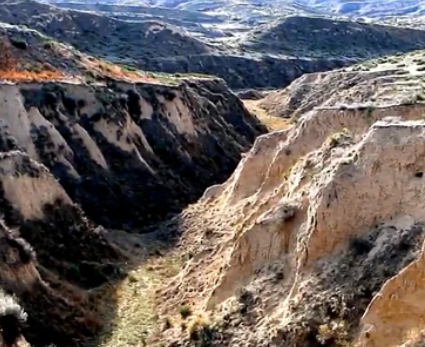
For all its virtues, Kansas doesn’t have a reputation as one of America’s grandest states. Better known for its flatland prairies and wheat fields — and as the parochial setting of Dorothy’s home in The Wizard of Oz — it’s perhaps one of the last places you’d expect to find something akin to the Grand Canyon. But at the Arikaree Breaks, on the border with Nebraska, you’ll find a dramatic formation of gullies, ravines, and loess sediments stretching for 36 miles all the way to Colorado.

Granted, the Arikaree Breaks are much less imposing than Arizona’s epic natural wonder, but to find solitude at the Grand Canyon, you’ll have to take the less-traveled, backcountry route. The Arikaree Breaks, for now at least, are comparatively uncrowded. So much so that they were included in a recent Only in Your State article titled “5 Places in Kansas Locals Hope Tourists Never Discover.” Clearly, the cat is now out of the bag. But that doesn’t mean you should avoid visiting the Arikaree Breaks altogether, but rather be mindful of how to experience them.

For example, given that most of the breaks run through private property, be aware of no-trespassing signs and stick only to the areas you’re permitted to access. According to some Tripadvisor reviews, it’s better to stay on the public roads passing through a small section of the breaks and stop at lookout points — which are marked on a self-driving tour map of the area. You can pick one of these maps up at the information kiosk on Highway 36 in St. Francis, as well as at restaurants and gas stations in the town.

Exploring the ‘Grand Canyon’ of Kansas

You can get to Arikaree Breaks, around 15 miles north of St. Francis, from the Land & Sky Scenic Byway, one of the Sunflower State’s premier driving routes. Access is, however, via unpaved roads better suited to 4WD vehicles (and particularly tricky when wet). That said, the lack of public transportation or designated hiking trails means getting here by car is a must. Thankfully, Kansas is considered to have the best driving conditions in America, so it’s a great off-the-beaten-path destination for a road trip. Additionally, there are no restrooms and few amenities, so bring water, food, and sunscreen, and be prepared to carry out your trash.

When you arrive, head to Lookout Point, where you’ll get the best views of the breaks, per an online self-guided tour by Kansas Travel. Here you can appreciate how, thousands of years ago, water erosion carved up the now semi-arid region into serpentine gullies — in some places it went deep enough to reveal the much more ancient bedrock below. Though relatively treeless, which gives visitors a better sense of the breaks’ scale, grass has reclaimed the landscape. Sage bush and tufts of weeds grow on the pastures, as do 16 native plants considered rare in Kansas. Wildflowers are particularly prevalent in spring, while mule deer and various bird species can be spotted all year.

Other areas of interest around the Arikaree Breaks include Devil’s Gap, which the Cheyenne Indians used to pass through on route to Old Julesburg in 1865 — though beware that the road through here is narrow and steep. Another landmark in the breaks, Horse Thief Cave, was a two-chamber cavern used by brigands as a residence and stable for purloined horses. It can be challenging to find, so consult your guide map.

The breaks are a great option for visitors to Kansas who seek out the untrodden trail. This Three Corners region, where Kansas, Nebraska, and Colorado meet, is a pretty rural patch of America, with no large population centers for more than one hundred miles. The nearest, Denver, is three hours away by car, which is just about close enough that the Arikaree Breaks might work as a day trip from America’s craft beer capital, if you’re up for it.

If you prefer to stay overnight rather than driving six hours in a day, then the nearest town of St. Francis is your best bet for accommodation near the breaks. Your options here consist of RV sites, motels, and clapboard guesthouses, which work well in tandem with the town’s provincial setting. Camping isn’t possible in the breaks, unfortunately, but campsites are available in Goodland, around 30 miles south of St. Francis. Goodland Koa Journey is a surprisingly lush, award-winning retreat with tent sites, RV spaces, and cabin-style lodging.

By David McElhinney

KS Department of Agriculture issues animal health alert

0
The Kansas Department of Agriculture’s Division of Animal Health is urging horse owners to take immediate precautions following confirmed cases of Equine Herpesvirus Myeloencephalopathy (EHM) in Texas and Oklahoma. The cases are linked to two major equine events: the Women’s Professional Rodeo Association World Finals in Waco, Texas, and the Barrel Futurities of America World Championship in Guthrie, Oklahoma.

While no EHM cases have been reported in Kansas, state officials have contacted all known Kansas horse owners who attended either event. Those owners have been advised to isolate exposed horses for 14 days and closely monitor for symptoms. The virus’s incubation period can last up to two weeks, meaning a horse may appear healthy while still shedding the virus and potentially infecting others.

EHM is a serious neurologic disease caused by Equine Herpesvirus-1 (EHV-1). It spreads through horse-to-horse contact via nasal discharge or inhaled droplets, and it can also be transmitted through contaminated surfaces including stalls, tack, feed, water sources, and transport trailers. Humans may inadvertently spread the virus through contaminated hands, clothing, and equipment.

Symptoms horse owners should watch for:
  1. Fever over 101.5°F
  2. Nasal discharge
  3. Lethargy
  4. Hind-end weakness
  5. Any signs of neurological issues

Animals showing neurological symptoms are considered to be in medical emergency status, and owners are urged to contact a veterinarian immediately.

KDA also reminds Kansans planning to travel with their horses to check current entry requirements for their destination state, as protocols may change quickly during disease outbreaks.

For ongoing updates, the Equine Disease Communication Center has established an online alert page tracking this outbreak and providing educational resources. The page is available at: equinediseasecc.org/alerts?alertID=4722

Horse owners with questions about quarantine guidance or possible EHM exposure can contact the KDA Division of Animal Health at 785-564-6601.