

A Thousand Problems!

Tomatoes are easy to grow but have a thousand problems! You may have heard me say this before but I am convinced this is a true statement. Here are some quick facts about growing tomatoes:
*Be sure to mulch around tomato plants with leaves or straw to reduce weeds and conserve moisture. Do not let the mulch touch the tomato stem.
*Water at the base of the plants and keep the foliage dry. Use soaker hoses or drip irrigation instead of overhead sprinklers to help achieve this.
*Tomato plants can develop disorders that distort plants and blemish fruits.
*Tomato disorders are generally caused by varietal, environmental, or management issues
*For most disorders, good nutrient management and watering practices will reduce occurrence of issues.
*Different tomato varieties may be more or less likely to develop certain disorders.
*You may have to try out different tomatoes before finding varieties that do well in your location. Seed catalogs often give information that can help you choose varieties that avoid problems. There are a lot of tomato varieties in the world. Hopefully you can find a few that work well for you in your garden!
Day 11, Kansas Wheat Harvest Report

Contact: Marsha Boswell, [email protected]
For audio version, visit kswheat.com.
This is day 11 of the Kansas Wheat Harvest Reports, brought to you by the Kansas Wheat Commission, Kansas Association of Wheat Growers, Kansas Grain and Feed Association and the Kansas Cooperative Council.
Despite early drought, uneven stands and losses to wheat streak mosaic virus, some farmers are reporting better than expected yields, with test weights and protein levels starting strong before tapering off due to late rains. Overall, the 2025 season has been an improvement over recent years.
Stan Remington, CEO of Frontier Ag, described this year’s wheat harvest as average overall, though results varied across their trade territory, which stretches from the Colorado border to Ogalala along I-70, and from the Nebraska line south to Ransom and Utica along Highway 4. With harvest now about 90 percent complete in their territory, Remington noted that the 2025 season stands out as above average when compared to the past few years.
In the northwest corner of the state, yields came in a little lower than expected. Fields north of Highway 24 also struggled, with several producers reporting below-average performance. Meanwhile, the Ness County area saw a stronger crop. As with most years, weather conditions made all the difference.
One of the bigger challenges this year came from wheat streak mosaic virus, which showed up more frequently along the I-70 corridor. These areas saw some of the most disappointing harvest results across Frontier Ag’s footprint, with Oakley and locations to the east experiencing the most severe impact from the virus. The presence of the virus in concentrated pockets dragged down yields.
Protein levels were also varied across the region. Weather conditions earlier in the growing season took a toll on quality in some areas. In addition, timing of spring rains played a key role. Fields that missed those critical windows saw reduced performance. Scattered showers during harvest also caused occasional delays, slowing progress in some locations.
Brian Linin, a farmer from Goodland, reports that harvest began on July 1 and his crew has about 10 days left. Linin, who farms alongside his dad and son, says their wheat is better than it looked, averaging above 50 bushels per acre so far, much better than last year and slightly above average.
Last fall’s drought conditions forced the Linins to redrill some fields in early November, a decision that significantly improved both stand establishment and yields. In fact, fields drilled later in the season are outperforming the earlier-emerging wheat across the area.
Test weights have been strong, ranging from 58 to 61.5 pounds per bushel, while protein levels are above average, running between 13.5 and 14 percent. Linin reported that drought was the biggest challenge this season, adding, “If we had received rain a month earlier, yields would be so much better.”
“Wheat is an excellent crop for this area,” said Linin, emphasizing that it fits well into their rotation. The stubble left behind greatly benefits the soil and improves the subsequent crop, and with decent yields, wheat can be a good cash crop.
In Lane County, farmer Ron Suppes, who grows hard white wheat, says he’s about 98 percent done with harvest and is working to finish up the last bit between rain showers. He brought in his first load about two weeks ago.
Suppes says recent rains have knocked down test weights, which started out about 61 to 63 pounds per bushel but have since dropped to 57 to 58 pounds. Protein levels have also dropped, starting out at 12 to 12.5 percent and are now sitting closer to 11 percent.
He says one of the biggest challenges this season started last fall, when wheat was planted into very dry soil. That led to uneven stands and staggered maturity across his fields, making harvest more complicated. Suppes planted KS Big Bow, KS Silverado and KS Snow Fox this year, and says all three have held up well despite the season’s challenges.
The 2025 Harvest Report is brought to you by the Kansas Wheat Commission, Kansas Association of Wheat Growers, Kansas Grain and Feed Association and the Kansas Cooperative Council. To follow along with harvest updates on social media, use #wheatharvest25. Tag us at @kansaswheat to share your harvest story and photos.
###
The elusive five-spot
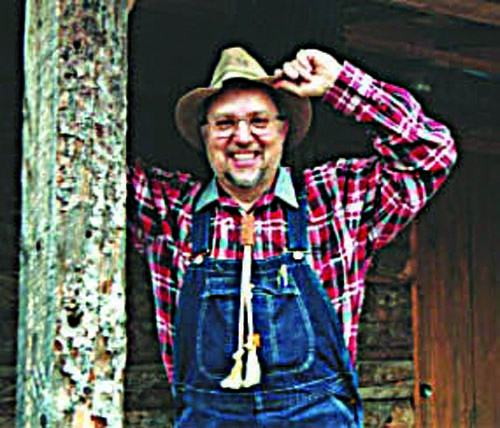
Playful practical jokes can enlighten our lives and offset some of the negatives that are thrown at us way too often. Hurtful practical jokes have no place in our lives. But, the playful ones can bring a grin, chuckle, smile or a hearty belly-laugh. Hopefully, the playful joke described below prompts some kind of humorous effect.
The scene of the practical joke is the Dew Drop In Country Bar & Grill in the heart of rural America. It serves as a social gathering place where long-time rural folks interact with newly-arrived folks from urban areas seeking the rural good life.
A small clique of young local cowboys and farmers and their wives concocted this playful practical joke. On occasions they would gather in the Dew Drop after dark and position themselves in several booths on either side of the aisle leading from the entry door to the bar.
Then someone would produce a $5. Someone else would produce a spool of black sewing thread and a needle. Then the thread wuz carefully attached to an end of the five-spot.
Then, the $5 bill would be strategically placed on the floor not far from the entry door and the black thread strung out camouflaged along the edge of the booths and some enterprising joker would keep one hand on the thread and one eye on the door. The “trap” wuz set to spring.
Soon, an unsuspecting and gullible “newbie mark” would enter the bar and spy the five-spot laying unattended on the floor. Most of the marks would do the obvious. They would quickly bend down to capture the largess that had luckily fallen their way.
But, as they bent over and prepared to pick up the five-spot, the bill would jump away from their grasping fingers by a few inches because the joker holding the black thread would give it a little jerk like the wind had moved it. Many times the mark would re-adjust and grab again, and yet again — with the same effect.
Soon, the mark understood the joke and realized he’d been hoodwinked. When he stood up, embarrassed, that’s when the laughter at his expense came. Most were good natured about the joke and laughed themselves.
And, sometimes the mark would react differently when he spied the five-spot on the floor. This kind of mark would casually step on the bill, then scratch his chin and nonchalantly bend down like he wuz going to scratch his leg.
But, when he lifted his shoe from the five-spot to pick it, it once again flitted out of his reach. And, that’s when he became the embarrassed recipient of a round of good-natured laughter.
No one ever got hurt with this practical joke and it did serve in a small way to build camaraderie amongst the rural-urban folks in the small rural community.
***
While I’m on the subject of practical jokes, I admit to pulling a few and being the recipient of few. I once got pranked by my friend Albie Kirkie who wrote me a nasty letter from the federal tax folks questioning my legitimate tax deductions for my kennel of Brittany bird dogs. I bit on it hook, line and sinker.
Then once Albie and I teamed up on a friend who wuz on vacation the week after Christmas. We put an ad in the local paper that this friend wanted “used” Christmas trees delivered to his home. When he arrived after vacation, he had a literal “lot full” of tinsel-laden trees to dispose of.
Once I posed as a radio personality giving away free cans of Campbell soup to folks who could sing the Campbell soup advertising song. The wife of a good friend lustily sang the ad song to me and requested her gift soup to be Campbell chicken noodle. Needless to say, she’s received several gift cans of chicken noodle soup from me over several decades.
My sheep-shearing buddy from Iowa, ol’ Nick deHyde, and I exchanged practical jokes many times during the years we were Iowa neighbors. He hated birthday celebrations, so I had the local radio station announce his birthday on an early-morning show. Another time, I hung birthday banners on the front of his sheep barn. Still another time, after I moved back on Kansas, I had a bunch of my friends, unknown to Nick, call him on his cell phone and wish him a happy birthday.
Nick practical joked me in return. One time he dressed up a dead ewe in freezing weather and propped her up in my small barn where she “stood” for several freezing weeks.
Another time, he dressed up a live ewe and presented her to me as a potential “friend.” And, still another time, he tied up my black Tennessee walking horse to the bumper of my truck in my garage. That liked to scared me to death, and the horse, too, when I opened my garage door.
But, like a said in the beginning of this column, no one got hurt in these practical jokes. Everyone got some immediate good laughs. And in the end, we all got fond memories and I got some column material.
***
I recently saw a cartoon that showed a farmer at the entry to the pearly gates. St. Peter was telling him, “You would have made it except for your language when working on your truck.”
I emailed that message to Nick deHyde, and he replied to me, “My sheep shearing mentor once told me, ‘If you’re gonna shear sheep, they’re gonna make you mad, and then you’ve got two choices — beat ’em or cuss ’em. You’ll get more repeat bizness if you just cuss ’em.'”
Those words will serve as the wise ones for this week. Have a good ‘un.
“The Implant and Surgical Approach Choices Every Cataract Patient Should Understand” By Vance Thompson, MD
Introduction
Few decisions in life are more impactful than the choice to undergo cataract surgery—and how to have it done. Because cataract surgery is so common, many patients don’t realize it involves important decisions that can affect their vision for the rest of their lives. Modern technology has introduced new options for how the surgery is performed and what type of lens implant is used. These choices matter.
Before we explore the available options, it’s important to first understand what a cataract is and the role of the natural lens in our vision.
The Lens of the Eye
Behind the pupil sits the eye’s natural lens. When we’re young (typically under age 40), this lens is flexible and able to shift focus to help us read and see clearly at all distances. It also contributes about 20% of the eye’s focusing power.
As we age, this lens gradually becomes stiffer—often starting in our 40s—leading to difficulty seeing up close. This is why people begin to need reading glasses or bifocals. Over time, the lens also becomes cloudy, reducing the quality of vision even with glasses. When this happens, it’s called a cataract.
Cataract surgery is one of the most successful and common procedures in the world. It involves replacing the cloudy natural lens with a clear artificial lens implant.
Lens Replacement Surgery: More Than Just Cataract Removal
During cataract surgery, we remove the clouded lens and replace it with a new, clear one. Some lens implants restore clarity but still require glasses—often trifocals—to help patients see far away, up close, and at intermediate distances (like a computer screen).
Other advanced lens implants do much more. They restore both clarity and a full range of vision, often giving patients the ability to read, work, and drive without glasses—similar to the visual range they had in their 30s.
It’s important to understand:
· Insurance typically covers the standard lens that restores clarity only.
· Advanced lens implants, which restore clarity and reading range, involve an additional investment by the patient.
· Both options are good—but which is best depends on the patient’s lifestyle, eye health, and visual goals. Your consultation with your eye doctor and surgeon helps with these important decisions.
Some people choose to have Lens Replacement Surgery even before their cataract fully forms, especially if they’re in their 40s to 60s and want to eliminate their need for reading glasses or bifocals. This is called Refractive Lens Exchange and the patients who do it never need to worry about developing a cataract and they are not dependent on reading glasses or bifocals anymore.
Surgical Technique: Manual vs. Laser Lens Capsule Opening
The natural lens is housed in a thin, clear membrane called the capsule—imagine a grape inside a grape skin. During surgery, the surgeon must create a round opening in the front of the capsule, about 5.0 mm
in diameter, perfectly centered over the lens. This allows the lens to be removed and the new implant to be placed in the capsule.
After surgery, the capsule naturally “shrink-wraps” around the new lens implant. This process, called capsule contraction, helps hold the lens in place for the rest of the patient’s life—and does this the best if the opening overlaps the edge of the implant for 360 degrees.
Achieving this ideal overlap is a key to long-term stability of the implant.
There are two main methods for creating the capsule opening:
1. Manual method – done with handheld forceps and typically quite accurate.
2. Laser method – uses a femtosecond laser guided by advanced imaging (OCT) to precisely place and shape the opening.
The laser method can:
· Provide a near-perfectly round and centered opening.
· Improve the chances of 360° overlap, which enhances lens stability.
· Use imaging to determine the exact center of the natural lens—something that can be more difficult to judge manually.
Both manual and laser methods are highly respected and can lead to excellent outcomes. However, the laser approach involves an additional cost and is generally considered more precise. Patients should weigh these benefits with their doctor when deciding which approach is right for them.
Conclusion
When considering cataract surgery—or elective lens replacement—patients should be informed about:
· Implant choices: standard (clarity only) vs. advanced (clarity and range of vision).
· Surgical techniques: manual vs. laser-guided lens capsule opening.
Understanding these options empowers you to have meaningful conversations with your eye surgeon and make the best decision for your vision and lifestyle.
Vance Thompson, MD is an internationally recognized specialist in refractive cornea, phakic IOL and lens replacement surgery. He is the Founder of Vance Thompson Vision Sioux Falls, SD and the Director of Refractive Surgery. Vance Thompson Vision has grown to serve the mid and mountain west with nine locations. Dr. Thompson also serves as a Professor of Ophthalmology at the Sanford USD School of Medicine. As a leading international researcher, he has played a key role in the development of the most advanced technologies and techniques for both laser and implant vision correction. He has a passion for research and development of new technologies and has served as the medical monitor or principal investigator in over 130 FDA monitored clinical trials studying laser and implant surgery. Dr. Thompson is the immediate Past President of the American Society of Cataract and Refractive Surgery (ASCRS) a nd is also on the Executive Committee as Vice President of the International Intraocular Implant Club (IIIC) that was founded in 1966 by Sir Harold Ridley, the inventor of the Lens Implant that revolutionized cataract surgery and refractive lens exchange. In addition, Dr. Thompson has published numerous papers and book chapters and is co-author of the textbook Refractive Surgery. He has lectured and taught advanced laser and implant surgery to thousands of surgeons all around the world. Follow The Prairie Doc® at www.prairiedoc.org, Facebook, Instagram, YouTube, and Threads. Prairie Doc
Programming includes On Call with the Prairie Doc®, a medical Q&A show (most Thursdays at 7pm streaming on Facebook), 2 podcasts, and a Radio program (on SDPB), providing health information based on science, built on trust.
