Monday, January 19, 2026
Home Blog Page 121

Insight: Protecting The Herds

0

Greg Doering,
Kansas Farm Bureau

If there’s one constant in the world, it’s every living thing is looking for food while avoiding becoming a meal. Farmers fight weeds, bacteria and fungus from the moment seeds go into the ground until the crop is harvested. Ranchers are on constant alert for predators waiting for the right opportunity to secure an easy meal.
In growing food, there’s a constant battle against pests, both seen and unseen.  One of agriculture’s greatest successes over the past 75 years has come from managing these threats even if they’re not eliminated entirely.
The New World screwworm (NWS) is a parasitic pestilence of fly larvae that burrows into open wounds on livestock causing serious to fatal injury to infected animals. NWS was a scourge in the United States until 1966 when a government program used sterile flies to eradicate the breeding stock.
This biological barrier eventually banished the NWS to the Caribbean and South America, but recent sightings in Central America and Mexico have put the United States on alert. Like any fence, the barrier occasionally develops some weak spots. An outbreak occurred in Texas in 1976 and the NWS cropped up again in the Florida Keys in 2016, affecting wild deer there.
Vigilance is key to halting the most recent migration, and officials are working to reverse the course of NWS before it can reestablish in the United States. While not cheap, these efforts provide enormous economic benefits, with one U.S. government estimate showing an outbreak similar to the one in 1976 could cause nearly $2 billion in losses.
The reemergence of NWS into the public discourse is also an opportunity to highlight how dedicated farmers and ranchers are in caring for their livestock. It’s easy for someone outside of the industry to only see cattle grazing in a pasture as they drive by on the highway and believe the animals are largely on their own.
While this is the time of year cattle are likely to have the least amount of interaction with their caretakers, it’s still substantially more than what a passersby can see from the road. There are regular water checks, replenishment of supplemental mineral and salt in addition to periodic fence checks.
This is in addition to more thorough assessments when rotating cattle to fresh pasture. When I was growing up, moving cattle to a new pasture always involved a stop at the pens to spray the cattle with a mild insecticide to combat flies, ticks and other biting insects. This also offered the chance for close evaluation of the herd.
We’d start the day before sunrise so we could move the cattle when it was coolest, and the observation started as soon as we began guiding them to the pen. We studied the strides looking for any sign of a limp or lethargy that could indicate an illness. Once in the pen, we paid close attention to posture, coat, eyes and mouth for any signs of sickness or distress. Any potentially sick animals would be separated for further evaluation and treatment if necessary.
Catching problems early makes them much easier to solve. Screwworms are still a threat, but through care and vigilance they were spotted early, and mitigation measures are underway to protect all the herds in the United States.
“Insight” is a weekly column published by Kansas Farm Bureau, the state’s largest farm organization whose mission is to strengthen agriculture and the lives of Kansans through advocacy, education and service.

Rain followed by sun; best therapy ever

0

Trent Loos
Columnist

I’m writing about a big win in the central Plains. Up until about three weeks ago, it felt to me like the summer weather patterns would be far too similar to the drought of 2012.
In fact, folks I know who subscribe to a “weather guru” suggested the central Great Plains would indeed experience extreme drought. In our general area, it was so dry that center pivots were running the minute crops were planted. All we could do was share the old adage “plant in the dust and the bins will bust.” Honestly, it is a little early to say the crop is made, but 10 inches of rain in the past two weeks has certainly made the cows happy.
It’s funny how some moisture followed by blue sky and sunshine will give you the boost to take on any project.
Before I go on, I know many parts of the United States still look to the sky every day for a cloud front that might yield a bit of rain. I don’t want to make anybody reading this feel like they are getting left out, but I want to point out that green grass is the best therapy one could sign up for.
Some people in areas of the West are still experiencing the worst drought in their lifetime but, at the same time, a hundred miles down the road folks are in great shape. I am always aware that a pretty large section of the “Corn Belt” is rarely in a drought, but maybe just not getting the normal rainfall on crops for this time of the year.
All of this causes me to wonder how the current weather pattern stacks up with the historical droughts of the U.S. in the past 100 years. I went to a government tracking website called National Integrated Drought Information Systems to learn this: Between 1895 and 2010, on average, around 14% of the United States was experiencing severe to extreme drought (D2–D3) in any given year, according to the U.S. Drought Monitor. While recent droughts and heat waves have made news and broken records in some areas of the United States, by the size of the geographical area affected and the length of time that it persisted, the Dust Bowl era of the 1930s is still the most notable drought and extreme heat event in the U.S. historical record.
I know that every part of this country (with the possible exception of southern California) has this quippy little saying, “If you don’t like the weather, wait 10 minutes and it will change.” Clearly that is the case all across the land. I also have no question that weather patterns have continued to change over the years.
In fact, the number of people talking about how the earth’s magnetic pole is shifting and could reverse gives cause for an interesting discussion on the future of how and where land use will change.
I might add, in my opinion, none of this is the result of manmade climate change. You don’t need to be much of a historian to see the continual shift in the harshness of the climate. If you don’t believe me, go check out the Grand Canyon. I reckon that wasn’t a great day to be sitting on the porch drinking coffee.
I am writing this in the glow of the June Strawberry Moon as experts tell us that the full moon is as close to us as it will be until 2043. It is worth mentioning that the June moon was so named because this is the time when the American Indians would find the first batch of wild strawberries for the summer under this moon.
I realize all of us have morphed into the convenience of homes, indoor plumbing and instant communication so we have isolated ourselves from the forces of nature. My critters seem to be more in tune with nature than we humans. Meanwhile we will take on the challenges we face with a clear mind thanks in part to sunny skies and bountiful green grass on the ground.
www.LoosTales.com, or email Trent at [email protected].

Protecting your home from wasps

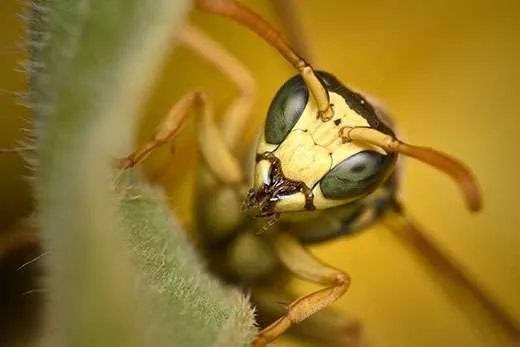
A common problem many homeowners encounter is wasps taking up residence outside their homes. Kansas State University entomologist Raymond Cloyd says, however, not all wasps are harmful.
“Wasps are beneficial and they are part of the ecosystem,” Cloyd said. “They are predators of many caterpillar pests and are docile overall. They will usually only sting if disturbed or agitated.”
Mud daubers and paper wasps are commonly seen around homes and will generally not attack people. However, yellow jackets will actually attack people.
Despite the beneficial role of wasps, many people may want to remove wasp nests to avoid the possibility of getting stung when outdoors. When considering removing wasp nests, Cloyd advises determining whether the nest is new or mature.
“If the home has a history of wasps building nests, such as in late spring or early summer, physically remove the nest when you see the nest being initially built,” Cloyd said.
New nests can be removed with  minimal risk of being stung because there are usually fewer wasps present inside the new nest. Wasps generally do not rebuild nests in the same location, so physically removing the nest will avoid having to deal with nests in the future.
Spraying nests with an insecticide should be done at night when the wasps are inside the nest, Cloyd said.
If the nest is large, mature, and has been around for some time, Cloyd recommends contacting a pest management professional.
“To avoid getting stung, contact a pest management professional,” he said.
Cloyd said that it is important to correctly identify the wasp that is creating the nest. He recommends contacting your local K-State Research and Extension office and either describing the insect over the phone or sending pictures via email.

Lovina Shares About the Wedding

0

It’s already 10:30 p.m. this Monday evening. We had a late night, but we accomplished a lot today. Daniel Ray and Verena are moved into their new living quarters. Son-in-laws Dustin, Daniel, Daniel Ray and Alvin (Daniel Ray’s father), and two of Daniel Ray’s brothers were here today helping build the walls in part of the pole barn. They made a bedroom, and it already has a bathroom. The living room, dining room, and kitchen will be an open concept. Not everything is done, but they have moved enough in to make it livable for now.  

Thank you to everyone that sent wedding gifts or money. They really appreciated all the gifts and well wishes. They spent 8 days on a honeymoon and are back home. They had a nice time. 

The wedding was nice and worth all the work to get everything set up for it. We couldn’t have done it alone. Many hands make light work. They had around fifty cooks, twenty-eight table waiters (servers), and special helpers that were Daniel Ray’s brothers and sisters and Verena’s older nieces and nephews. They do odd and end jobs such as pass the guest books, pass out the little gifts for everyone, etc. 

The wedding services started at 9:00 a.m. We had four hundred pounds of chicken here that needed to be grilled for both meals. We got up at 4:00 a.m. and soon after that the men were already starting their grills to get the chicken started. Our sons-in-law, son Joseph, nephew Ben, and brother-in-law Levi did the grilling. They all did a great job. 

My sisters Liz and Emma were my head cooks and did a great job organizing everything and keeping everyone on their jobs. Our menu was barbequed chicken, mashed potatoes, gravy, buttered noodles (it took thirty pounds), dressing (made from thirty-six loaves of bread), mixed vegetables, dinner rolls, garlic butter, and overnight salad. Overnight salad can be made the night before, so it was easy to have those prepared the day before. Dessert was strawberry and peanut butter pies, fresh fruit (a combination of blueberries, watermelon, musk melons, and grapes), cupcakes (chocolate and white), ice cream, and of course the traditional candy bars. No Amish wedding seems complete without the candy bars served last to everyone. 

After the wedding services start the bride and groom have a short meeting with the ministry. While they are absent, singing is done. These songs are all sung from the Ausbund and all in German. Close family members are asked to lead these songs. 

Before the ministry comes back, the mothers of the bride and groom, grandmothers, sisters, etc. all go in to sit close to the wedding party. Around 11:15 a.m. the table waiters, special helpers, and cooks all come sit in the wedding services so they can see the bride and groom get married. At 11:30 a.m. the bishop marries the couple. After they are married the table waiters, special helpers, and cooks all leave again to get back to their jobs. The table waiters start filling the water glasses at their tables and get prepared to serve. 

When the services are over all the people head over to the building the tables are set in. Daniel Ray and Verena were married in daughter Loretta and Dustin’s pole barn across the road. Family is seated first closest to the “Eck” (the corner where the bride and the groom and their witnesses sit). Once everyone is seated the bishop of the bride will announce that everyone is silent for prayer. A song is placed by every plate and is sung while the table waiters collect all the bowls of food they need to serve their table. 

I will try to keep explaining more about the wedding next week. Until then God Bless.

For more wedding pictures visit Lovina’s Amish Kitchen on Facebook

PEANUT BUTTER PIE

8 cups milk

2 cups white sugar

1 1/3 cups flour 

1/4 teaspoon salt

3 eggs beaten 

4 (9 inch) baked pie shells

Whipped Topping 

Crumbs

9 cups powdered sugar 

3 cups peanut butter

Heat milk to scalding. In a separate bowl, mix sugar, flour, salt and eggs. 

Add mixture to hot milk and cook over medium heat stirring constantly until thick. Remove from heat. 

Make crumbs: stir together the powdered sugar and peanut butter until it’s a crumbly texture. Place 3/4 cup of this crumb mixture into the bottom of each baked pie shell. Reserve the remaining crumbs for topping.

Divide cooked mixture among the pie shells. Let cool then refrigerate. When ready to serve, top with whipped topping and sprinkle the remaining crumbs evenly over the 4 pies. Makes 4 (9 inch) pies 


Lovina’s Amish Kitchen is written by Lovina Eicher, Old Order Amish writer, cook, wife, and mother of eight. Her three cookbooks, The Cherished Table, The Essential Amish Cookbook, and Amish Family Recipes, are available wherever books are sold. Readers can write to Eicher at Lovina’s Amish Kitchen, PO Box 234, Sturgis, MI 49091 (please include a self-addressed stamped envelope for a reply); or email [email protected] and your message will be passed on to her to read. She does not personally respond to emails.