Wednesday, January 21, 2026
Home Blog Page 150

Killdeers

0

Over the years I’ve had many encounters with those jaunty little stilt-legged birds known as Killdeers. As a midwestern farm kid I can’t count the number of times the little beggars ran ahead of the tractor in the middle of a field full of absolutely nothing but bare soil, never once hesitating to take on the big green behemoth invading their space. And that broken wings thing they do to lead you away from their nest; seriously? Occasionally I’d stop to chase one around and the minute I’d start to gain on it those wings that looked broken to the point of dragging uselessly in the dirt would miraculously heal and those tiny stick legs would propel it well out of reach again. I suppose Killdeer are named partly for the loud “KILL DEE” call they use, especially after they’ve fooled you again with the broken wing thing.

Killdeers migrate south for the winter, and are probably the first sign of spring each year, often arriving back in Kansas in mid-February. Killdeer are members of the plover family which includes several other cousins that also look a lot like Killdeers. I learned that baby birds are divided into two distinct groups. Birds that hatch blind, naked and helpless are known as altricial, (Greek for “wet nurse.”) This group includes robins, blue jays and most other backyard birds whose hatchlings lie helplessly in their nest utterly relying on the parents to bring them food and push it down their throats. Its two weeks or more before altricial hatchlings mature enough to leave the nest, and even then, they rely completely on the parents for food. The other group is known as precocial, (Latin for “ripened beforehand,”) and includes ducks, geese, pheasants, quail and killdeer. These hatchlings remain in the nest only long enough for their feathers to dry, then they are already out following their parents about, learning the ropes of life. Precocial birds remain in the egg twice as long as altricial birds to give them more time to develop. So, for example, a one-day old killdeer chick is at least two weeks older than a one-day old robin hatchling. And along with this, Killdeer eggs are twice as big as robin eggs to allow for more nourishment to be built into the egg to sustain the chick for its longer time “behind the shell;” yet another “God Thing” found in nature. Killdeers almost always lay four eggs but none of the eggs start to develop until the last egg is laid and the parent begins to sit on the nest. When the embryos feel the warmth of the adult Killdeer on the nest, they all start to develop at the same time, meaning that even though three of the eggs are older than the last one laid, all chicks will still be the same age when hatched; yup, you guessed it, another God Thing!

The thing about Killdeers that has always baffled me is why on earth they nest in the places they do. Although technically in the family known as shorebirds, their nests will usually be found about as far away from water as they can get; often in the middle of a plowed field or in the gravel of a busy parking lot; places with absolutely no cover whatsoever. As far as no-frill nests go, they rank right up there with turkey vultures. They’ll use a slight depression, if there happens to be one, to hold the eggs, but that’s about as fancy as it gets. They make up for all

this by laying eggs that blend in so well with their chosen locations, it’s a fortunate person indeed who ever actually spots a Killdeer nest and eggs in the wild. And from those humble nests hatch some of the cutest chicks there can be, looking for all the world like fuzzy little ping pong balls on toothpick legs. Killdeers are very tolerant of us humans; there are numerous examples of them nesting and hatching families along busy sidewalks or next to tennis courts.

Like I said, when I was a kid, I had dozens of encounters with those cute little birds with the stick legs known as Killdeers, but never once did I ever find a nest. In fact, I don’t think it ever occurred to me to search for one. The actor with the broken wing would drag its apparently poor dilapidated body out of my way and the tractor would steam past. Now as I think about it, it kind of bothers me thinking about all the Killdeer nests I probably unknowingly disked under. To Killdeers everywhere, can you find it in your heart to forgive me? And maybe next time rethink the whole nest location thing. Continue to Explore Kansas Outdoors!

Steve can be contacted by email at [email protected].

KAWG applauds Senator Moran for comments on food aid

0
Kansas Wheat

Contact: Marsha Boswell, [email protected]

KAWG applauds Senator Moran for comments on food aid
The Kansas Association of Wheat Growers (KAWG) applauds Senator Jerry Moran (R-KS), for his remarks on the importance of the Food for Peace and McGovern Dole programs.


“The Kansas Association of Wheat Growers would like to thank Senator Moran for his comments on transferring authority over the Food for Peace Program from USAID to the U.S. Department of Agriculture,” said KAWG President Chris Tanner, a farmer from Norton County, Kansas. “The Senator’s remarks on the purpose of Kansas farmers are meaningful. We appreciate his comments on food security being essential to national security.”


KAWG also applauds the efforts of Senator Roger Marshall (R-KS) for his support of moving Food for Peace to USDA.


Tanner had the opportunity to address this issue at a roundtable with USDA Secretary Brooke Rollins earlier this spring. He said, “Kansas has a long history with food aid; at a meeting in the 1950s, a farmer brought up the idea of providing the grain Kansas produces to those in need. The bill was sponsored by a Kansas representative and signed into law by President Eisenhower. We feel you’re well equipped to house Food for Peace, as you will already handle Food for Progress and McGovern Dole. The program would have great oversight under your leadership. USDA is much closer to the domestic farmer constituency to best implement the program in a way that benefits America first.”


We also want to thank Senators Moran and Marshall, Senator Hoeven (R-ND) and Congressman Mann (R-KS-01) for their leadership on the American Farmers Feed the World Act, which would ensure Food for Peace is purchasing American grown grain — the original intent of the program.


KAWG urges Congress to swiftly consider and pass this important legislation.


To learn more about the importance of food aid, listen to the latest episode of the Wheat’s On Your Mind podcast, where Peter Laudeman of U.S. Wheat Associates and Justin Gilpin of Kansas Wheat take listeners on a firsthand journey through East and Southern Africa, where U.S.-grown wheat becomes a lifeline for hundreds of thousands of hungry people.


###

Just a Little Light: Little Whirligigs

0

Dawn Phelps
Columnist

A few weeks ago, I was amazed at the number of maple seeds furiously flying around outside as they left their host maple tree in our backyard.  Some were hitting our back window with a splatting sound.  Some were swirling like little helicopters, and some were propelled through the air before landing on our patio and in our flowerbed.


Recently, Tom and I were pulling grass from our flowerbed when we noticed a multitude of maple seeds that are still on our concrete patio.  They are no longer in pristine condition as they were a few months ago, and many have a worn appearance.  


When I read Judy Lobaugh’s May 8 Tootle’s Tales column for another newspaper, I became aware that she and her husband Mark had a lot of maple seeds at their house too.  


Here are Judy’s words:  “The maple tree in our backyard produced a tremendous amount of winged seeds this year.  The strong winds had blown the seeds into large piles in front of a row of bushes by the driveway.  The piles were large enough that we had to use a shovel to scoop them up and dispose of them.  I had never seen this many seeds produced by this tree at any other time.”


When my siblings and I were kids, we called maple seeds whirligigs.  The technical name for the seeds is samara, so named because they are designed to travel long distances from the parent tree.  They are good at flying and may also be called maple ’copters, helicopters, maple keys, whirlers, whirlybirds, or twisters.

Several years ago, soon after my daughter Misty and family moved to Wales, Tom and I went there to visit them.  I was both surprised and pleased to see whirligigs on the ground and sidewalks.  Wales, like the U.S., has maple trees too!

But back to my whirligig story.  The seeds continued to fall for several days, and now our flower garden is covered with tiny maple trees every few inches!  But they cannot stay—we have no space for new trees!

Tom and I talked about how many seeds fell a few weeks ago.  We wondered, “Why this spring?”  So, I did some reading and found that maple trees will produce more seeds if they feel stressed.

And if you think about it, looking back a few weeks, we had a very long winter, and snow and ice were on the ground for several weeks before the thaw began.  Our furnace had run constantly, yet it could not keep up with the cold weather outside.

So, I am wondering if the extremely cold weather was the stressor for the maple trees.  One source said that when the trees produce more seeds than normal, they try to survive and propagate themselves.

In fact, scientists have studied how maple seeds are made and what makes them spin in the air like helicopters.  They found that there is a low pressure above the seeds and a high pressure below which contributes to the uplift of the seeds in the air.  

They are “self-planting” since they can be carried in the air up to a mile due to their special design.  When they land, the seeds patiently wait for a person, an animal, or moisture to help push them into the ground, thus planting them.  

Turkeys, finches, squirrels, and chipmunks will eat the seeds.  The seeds can also be eaten by people, but the outside covering needs to be removed first.  They can also be roasted. 

Perhaps you played with whirligigs when you were a kid, but you may have called them helicopters since they seem to “fly” in the air like helicopters.  Not only are maple seeds “toys” for kids.  They are scientific wonders!  

When God made maple tree seeds, He made a versatile thing.  They provide entertainment, grow into beautiful trees, and can provide food for animals or people.  And if you have a maple tree in your yard, you may see more tiny trees sprouting in your yard, those determined little whirligigs.

[email protected]

A Taxing Time

0
lee pitts

Dateline: April 15… Well, the worst is over. Our income tax is in the mail, now all I have to do is find the money to cover the check. You sure gotta hand it to the IRS (literally), somehow they always manage to get another raise, even when we make less money. Every time we send in our state and federal income taxes, along with our estimated taxes, I feel like an emaciated Holstein who just got her crankcase squeezed until she was bone dry.

My wife does all the heavy lifting on our taxes, spending two months getting everything ready for the accountant. I tell my wife that I’d be glad to help but she says people with high blood pressure should NEVER do their own taxes. She’s afraid I’d have another stroke or become ‘intaxicated’ if I even got near a 1099. Plus my wife knows I’d make all kinds of mistakes because I’d try to write off last years taxes as a bad investment or claim two dependents… the feds and the state.

I feel I’ve already contributed enough just so the politicians can live in the lifestyle to which they’ve become accustomed but my work is still not done because Tax Freedom Day, the day of the year when the average taxpayer has theoretically earned enough income to pay for local, state and federal taxes, is estimated to be June 12th this year. Let that sink in. If you still don’t get my point consider that the average worker pays more in income tax than food, shelter and clothing costs combined!

My wife and I sat down and made a list of all the taxes Americans are forced to pay and they include: federal income tax, state income tax, capital gains tax, gift taxes, payroll taxes, value added taxes, sin taxes on cigarettes and booze, sales tax, bond issues, gas tax, estate tax, and on and on. (I’m sure you probably can think of a lot more different taxes to add to our list).

Rubbing it in, right about the time we have to pay our state and federal taxes and estimates we get hit with the worst tax of all: property tax. Paying it is like having to buy something we already own. The bureaucrats in Sacramento say I shouldn’t object because my state taxes go towards paying for things we use constantly like road repair, fire suppression and schools. But we don’t have kids and our roads have potholes that make the Grand Canyon look like a dimple. And if losing their homes wasn’t bad enough the burned-out residents of Los Angeles learned after the fact that the salary of the fired LA fire chief was $439,772 per year counting overtime and benefits and the DEI officer in charge of the LA Fire Department Equity Bureau made more than that! (What the heck is an EQUITY BUREAU?)

If that doesn’t give you a pain in the wallet how do you feel about paying for…

• The fifty-nine-million-dollars the Federal Emergency Management Agency (FEMA) handed over to house illegal immigrants in luxury New York City hotels.

• A congressional inquiry found the Air Force was spending $1,300 for every reheatable coffee cup aboard one of its aircraft. And a two-year audit by the Defense Department Inspector General last year found that Boeing overcharged the Air Force by $149,072 or 8,000% over the previous price for soap dispensers.

• During the height of the war in Afghanistan, USAID spent millions of dollars to persuade Afghan farmers to grow fruits and other vegetables instead of opium. The results: opium poppy cultivation across the country doubled as the farmers used the new canals, financed by us, to grow more poppies.

• Over four years USAID gave Morocco $27 million in funding to train Moroccans how to create and design pottery. (Morocco has for thousands of years created pottery, dating back to 6,000 B.C.)


•And one of my favorite DOGE findings: $1.6 million of your dollars, thank you very much, was given to the University of Florida to study the “social and institutional detriments of vulnerability and resilience to climate hazards in African Sahel.”

I fear I may have caused you some distress or given you a headache. In that case take two ‘Senditall’ tablets, which also describes the new short form for filing your taxes next year.

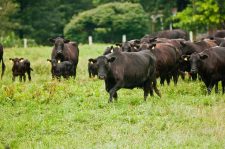
Kansas Trade Mission to Mexico Aims to Boost U.S. Beef Cattle Genetics Exports

0
Photo credit: U.S. Department of Agriculture

In early May, a delegation of U.S. livestock genetics and agriculture leaders representing Kansas, Missouri, New Mexico, Idaho, and the Senepol Cattle Breeders Association traveled to Aguascalientes, Mexico, to advance trade partnerships and expand the global reach of U.S. beef cattle genetics. Delegates from Kansas included Dr. Justin Smith, Kansas Department of Agriculture Animal Health Commissioner; Dr. John Nelson, KDA field veterinarian; and Thad Geiger, Geiger Cattle, Troy, Kansas.

Mexico remains the largest agricultural trade partner for the state of Kansas, with trade totaling $1.85 billion in 2024. As global trade relationships evolve, this mission emphasized the importance of continued collaboration, especially in livestock and genetics.

“Expanding U.S. beef cattle genetics exports and understanding Mexico’s evolving feedlot operations are essential to fostering resilient supply chains,” said Suzanne Ryan-Numrich, KDA Director of Ag Marketing. “While we work to promote beef cattle genetic exports, we also aim to better understand the needs and priorities of our Mexican counterparts.”

The delegation took part in trilateral discussions with the Confederación Nacional de Organizaciones Ganaderas and the Canadian Cattle Association, where they addressed shared industry concerns including trade barriers, inspection protocols, and threats such as the New World screwworm, a pest that poses a risk to livestock and has disrupted cross-border trade.

The delegation also conducted site visits to cattle breeding operations and regional feedlots and engaged with industry during the Feria Nacional de San Marcos, one of Mexico’s most prominent agricultural expos.

“The trip gave me a deep appreciation for the resilience of Mexican cattle producers who operate successfully in challenging conditions,” said Geiger. “The trilateral discussions underscored how closely our industries are connected. Our strengths complement each other, and strong partnerships benefit both sides of the border.”

This trade mission is part of KDA’s mission to support Kansas producers and agribusinesses, including facilitating opportunities for producers to market and sell livestock genetics both domestically and internationally. These missions are made possible through KDA’s membership in U.S. Livestock Genetics Export, Inc., with funding provided through the USDA Market Access Program.

For more information, visit KDA’s international market development webpage at agriculture.ks.gov/international or contact Ryan-Numrich at [email protected] or 785-564-6704.

###