Thursday, January 22, 2026
Home Blog Page 162

Snakes on the plains: Watch out for these venomous vipers in Kansas

0

What types of venomous snakes slither around in the Sunflower State?

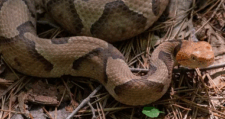
The copperhead and massasauga rattler are among four native venomous snakes present in Kansas, with the others being the prairie rattlesnake and timber rattlesnake, said the website of the Kansas Department of Wildlife and Parks.

“Western diamond-backed rattlesnakes were introduced, but are not widespread and have been recorded in only a few central-Kansas locations,” that site said.

It said another type of venomous viper, the northern cottonmouth, is “rare” in the Sunflower State, as only two specimens having been recorded — both in the Spring River drainage area in the state’s southeast corner.

Venomous snakes in Kansas all share this distinctive feature

The KDWP website said all venomous snakes found in Kansas are pit vipers, meaning they have heat-sensitive pits in front of each eye to help locate prey.

  • Kansas is home to four native venomous snakes: the copperhead, massasauga rattlesnake, prairie rattlesnake and timber rattlesnake.
  • All venomous snakes in Kansas are pit vipers, possessing heat-sensitive pits to locate prey.
  • If bitten, keep the bite below heart level and seek immediate medical attention; do not apply a tourniquet or attempt to remove venom.
  • Snakes are an important part of the ecosystem and are generally shy unless provoked.

The pain was excruciating when a venomous snake bit Grady Kornelson in 2018 in south-central Kansas.

“On a scale of one to 10, it was a nine,” he told the Hutchinson News.

Kornelson received five doses of antivenom and spent a weekend in a hospital after being bitten on a forearm as he was getting out of the water just after dark on a Friday in a cove at Cheney Reservoir.

Hospital staff told Kornelson he’d been bitten by a copperhead, though a Kansas Department of Wildlife and Parks official suggested it may have instead been a massasauga rattlesnake.

What types of venomous snakes slither around in the Sunflower State?

The copperhead and massasauga rattler are among four native venomous snakes present in Kansas, with the others being the prairie rattlesnake and timber rattlesnake, said the website of the Kansas Department of Wildlife and Parks.

“Western diamond-backed rattlesnakes were introduced, but are not widespread and have been recorded in only a few central-Kansas locations,” that site said.

It said another type of venomous viper, the northern cottonmouth, is “rare” in the Sunflower State, as only two specimens having been recorded — both in the Spring River drainage area in the state’s southeast corner.

Venomous snakes in Kansas all share this distinctive feature

“Venomous snakes are generally shy and aren’t looking for a fight, but they will bite in self-defense if you step too close, step on or provoke them,” the KDWP website said.

It said venomous snakes tend to be well-camouflaged, “So watch where you walk, and don’t go barefoot or wear flip-flops or sandals, even on established trails or around campgrounds.”

Many people each year are bitten by harmless snakes “and experience nothing but small scratches that readily heal,” said “A Pocket Guide to Kansas Snakes.”

The guide — written by Joseph T. Collins, Suzanne L. Collins and Travis W. Taggart — is on its sixth edition after initially being published in 2011.

What should you do if a venomous snake bites you?

Deaths from snake bites in the Sunflower State are rare, the pocket guide said.

“There is only one documented fatality in Kansas since 1950,” it said.

The KDWP website encourages anyone who thinks he or she has been bitten by a venomous snake to “keep the site of the bite quiet and below the level of your heart.”

The pocket guide encourages those in that situation to stay calm., treat for shock and go by vehicle to the nearest hospital or other medical facility.

It said such victims must NOT do the following things:

  • Use a tourniquet. If the tourniquet is tied too tight, that may cause the loss of a limb.
  • Make cuts through or near the site of the bite.
  • Try to suck venom from the site of the bite, as “You might have a tooth cavity or gum sore and this would place venom into that wound.”
  • Allow antivenom to be administered to them unless they first get tested to determine if they’re allergic to it.
  • Try to kill or capture the snake, as that would only give it another chance to bite.

Killing or capturing the snake is also unnecessary, the KDWP site said, “because a single type of antivenom is used to treat all pit viper bites in the U.S.”

When and where do snakes hang out?

Kansas is home to 42 different native species of snakes, which are active during the warmer months between late March and November — the same time period when people are most active outdoors, the KDWP website said.

“Most snakes are found in rural or semi-rural areas where there is suitable habitat and prey,” it said. “They may be found in woodlands and shrubby areas; brush, log or rock piles; around water; in tall grass; around rocky outcrops or ledges; or even under ornamental shrubbery and gardens.”

Snakes are a vital part of the food chain, the pocket guide said.

“They are small, shy animals that are frightened by people,” it said. “Understanding their role in nature and their unassuming presence are vital to dispel the myths and fears people have of snakes.”

Snakes can’t regulate their body temperature internally, so they’ll be more active at night during times of hot weather, retreating to shady areas or under rocks and logs during the day, the KDWP website said.

“When it’s cooler, they tend to be more active during the day,” it said.

What’s the largest rattlesnake in Kansas?

The venomous timber rattlesnake is found in the eastern fourth of the state, the KDWP website said.

The timber rattler is the largest rattlesnake in Kansas, capable of growing up to 5 feet, 3 inches in length, the pocket guide said.

That species feeds on small mammals and smaller snakes, it said.

Prairie rattler feeds on lizards, mice, rats, pocket gophers

The prairie rattlesnake is found in the western half of the state, the KDWP website said.

It is capable of growing up to 4 feet, 9 and a half inches long, the pocket guide said.

It said the prairie rattler feeds on lizards, mice, rats and pocket gophers.

Massasauga rattler is the state’s smallest rattlesnake

The massasauga rattlesnake is found in the eastern two-thirds of the state, the KDWP website said.

It is capable of growing up to 2 feet, 9 and a half inches long, the pocket guide said.

It said the massasauga rattler feeds on frogs, lizards, rodents and other snakes.

Copperhead is particularly fond of rodents

The copperhead is found in the eastern third of Kansas, the KDWP website said.

It is capable of growing up to 3 feet, 4 inches long, the pocket guide said.

It said copperheads are particularly fond of rodents but also feed on insects, frogs, toads, lizards, small birds and other snakes.

As reported in the Topeka Capital Journal
K-State lab remains vigilant toward protecting food systems

0

American agriculture must remain vigilant at every stage of food production to protect from threats throughout the system. Fortunately for American consumers, researchers at K-State and other universities are addressing many of these threats.

The University is part of national plant biosecurity effort. 
MANHATTAN — Americans trust the safety and security of their food.
Kansas State University plant pathologist Jim Stack says our trust is well-founded, pointing to a series of checks and balances that help to ensure that the food we eat arrives safely and on time at the dinner table.
Consider this: Farm crops — be they wheat, corn, soybeans, sorghum or many others — face daily challenges in the farmer’s field due to such threats as insects, diseases, weeds and weather events.
If the crop passes the test, it’s on to harvest with heavy machinery, then storage in bins and distribution through any of several channels — truck, ship, train and even airplane. Then there is processing and packaging the food, retail storage and marketing, and then it’s off to a kitchen where Americans have the ultimate responsibility to chill, clean and cook the product safely.
“Most of the foods in Kansas grocery stores were not grown in Kansas; they were produced elsewhere and transported into Kansas,” Stack said. “That is true for most U.S. states and many countries globally. Our foods are grown in multiple locations and transported to multiple locations. This creates the significant risk of transporting pests and pathogens with their foods and their containers.”
Because there are threats throughout the system, American agriculture must remain vigilant at every stage of food production. Fortunately for American consumers, researchers at K-State and other universities are addressing many of these threats.
Plant experts dot the United States
Stack is the director of the Great Plains Diagnostic Network, one of five regional centers under the National Plant Diagnostic Network, established in 2002 by the National Institute of Food and Agriculture and the U.S. Office of Homeland Security. The network was formed to enhance agricultural biosecurity by detecting potential disease outbreaks or bioterrorist threats.
Kansas State University software engineers developed a lab management information system, called Plant Diagnostic Information Systems, that is used by many states throughout the nation. Today, the network has plant diagnosticians — including pathologists, entomologists, weed scientists and other plant specialists — who share information across the country to keep America’s food and fiber system as safe as possible.
“If countries want to participate in global trade, there is a set of rules that they must abide by,” Stack said. “Those rules are the basis of phytosanitary policy. The World Trade Organization designated the United Nations Food and Agricultural Organization to be responsible for these rules, under the International Plant Protection Convention.”
The International Plant Protection Convention is a 1951 treaty between participating nations — the U.S. included — that aims to secure actions that prevent and control the introduction and spread of plant pests.
“Trading partners are required to put clean material into the global marketplace,” Stack said. Some ways to determine if you’re doing that include incorporating best production practices, field surveillance and diagnostic testing.”
Annually, the Great Plains Diagnostic Network, which has its headquarters on K-State’s Manhattan campus, processes 1,500 samples of suspected diseases, unidentified insects, or unusual symptoms on plants and farm crops.
“Diagnostics is the process of identifying not only what the organism is, but also understanding why the disease or infestation is happening,” Stack said. “We use a lot of technology to do that. One of the positive results of having phytosanitary policies is that we’ve been cleaning up the plant material that is traded around the planet.”
No margin for error
Detecting plant pests and pathogens requires precision and accuracy, Stack said.
“Most international and federal response plans are linked to the name of the organism. If you don’t get the name right, you don’t have a legal right to respond to a suspected outbreak,” he said.
An incorrect diagnosis, in other words, might lead to the introduction, establishment and spread of a pest or pathogen.
“In 2010 in Australia, they discovered a new rust disease in a nursery in New South Wales that they called myrtle rust,” Stack said. “They quarantined the nursery to contain and eventually eradicate the pathogen.
“But a secondary analysis indicated that it was not myrtle rust but rather guava rust; however, the response plan was for myrtle rust. While the discrepancy in the name was being resolved, the nursery was not precluded from trading its plants. While waiting to get a correct identification, the pathogen spread from New South Wales to Queensland and other places.”
The disease turned out to be myrtle rust after all — putting an estimated 70% of Australian flora at risk.
“That’s just one example,” Stack said. “There are multiple examples like that in countries around the world. We spend a lot of time and effort to get it right the first time.”
Fending off a destructive wheat disease
Kansas State University scientists have had their eye on a particularly troubling disease that is capable of taking out entire wheat fields. Recently retired plant pathologist Barbara Valent initiated research projects at K-State that are considered the world’s most comprehensive studies on wheat blast.
Valent’s research team was the first to discover a source of resistance, called 2NS, for wheat blast disease. Her group also pioneered sophisticated microscopic techniques that allow them to watch and record how the disease develops cell-by-cell and hour-by-hour in amazing detail.
Prior to her retirement in late 2024, Valent had worked on understanding blast disease for more than 40 years; in 2022, she was recognized with membership into the National Academy of Sciences — the first scientist at K-State to earn the honor for original research conducted at the university.
Stack and fellow K-State faculty members Giovana Cruppe and Sanzhen Lui are continuing that work in K-State’s Biosecurity Research Institute, a biosafety level-3 agriculture facility on K-State’s Manhattan campus.
“We are looking at the likelihood of detecting this pathogen by the methods that are commonly used in seed inspection,” Stack said. “And — I’ll just cut to the conclusion — it’s very, very unlikely to detect the pathogen that way. Unless it’s a full-blown epidemic, you’re probably not going to detect it.”
The team of plant biosecurity scientists began developing different protocols to see if they could more accurately detect the presence of the wheat blast pathogen in a shipment of seed.
“We ended up with the conclusion that you could have up to 100 kilograms of infected seed in a 20-metric-ton harvest wagon, and you would not detect infected grain with traditional methods,” he said.
In other words, if even half of 1% of a shipment of seed goes undetected for wheat blast disease, that shipment could cause widespread devastation anywhere those seeds are planted.
“That seed is being shipped across the world, potentially into the United States,” Stack said. “Because of that, if we’re not vigilant, we’re likely to experience more outbreaks.”
Additional work in Stack’s lab includes studies with bacterium and the emergence of new diseases that could potentially affect agricultural crops as well as plant toxins that could be lethal to livestock if ingested.
Vast network is always on alert
Stack said that the National Plant Diagnostic Network has provided diagnostic services to about 97% of the more than 3,000 counties in the United States since its inception 20 years ago, including the territories in the Caribbean and Pacific.
“We span seven time zones and have about 75 active labs, plus partners in satellite labs. And the labs at the Department of Agriculture in some states are part of the network,” he said. “We also have a few industry labs that see value in this system.”
Stack said that the combined power of the network is critical because the consequences of a late detection or an inaccurate identification are quite serious, not just domestically but also internationally.
“The result of disease introductions into our food systems is potentially the reduction of production, or at least lost potential,” Stack said. “You take a crop like wheat in Kansas … half of that is for export. Or think of corn and the diseases we are dealing with. About 80% of Kansas’ corn production is in southeast Kansas to support the livestock industry. If we can’t produce enough corn or produce it profitably, it will hurt both crop and livestock producers.
“Plant diseases cause ripple effects that we need to take into account. We need to be all over this.”

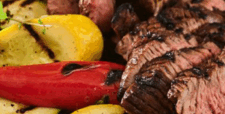
Mediterranean grilled chuck roast with garden grilled vegetables

0

Beef. It’s whats for dinner! Dive into this marinated, grilled chuck roast paired with flavors of the Mediterranean. Served with seasonal grilled vegetables.

Ingredients:

Marinade:

Cooking:

  1. Combine marinade in a small bowl. Place beef Chuck Steak and marinade in food-safe plastic bag; turn to coat. Close bag securely and marinate in refrigerator 6 hours or as long as overnight, turning occasionally.
  2. In a medium size bowl toss zucchini & mini bell peppers with 1 teaspoon olive. Place vegetables on grid over medium heat. Grill 3 to 5 minutes on each side. Remove from grill and set aside. Once slightly cooled slice zucchini into 1/4inch slices and set aside.
  3. Remove steak from marinade, discard marinade. Season each side of roast with 1/2 Tablespoon of spice mix. Place on grid over medium, ash-covered coals. Grill, covered, 3 to 4 minutes (over medium heat on preheated gas grill, 3 to 4 minutes) for medium rare (145°F) to medium (160°F) doneness, turning occasionally.
  4. Remove from the grill and season with salt, as desired. Serve alongside grilled vegetables.

Safe Handling Tips:

  • Wash hands with soap and water before cooking and always after touching raw meat.
  • Separate raw meat from other foods.
  • Wash all cutting boards, utensils, and dishes after touching raw meat.
  • Do not reuse marinades used on raw foods.
  • Wash all produce prior to use.
  • Cook steaks and roasts until temperature reaches 145°F for medium rare, as measured by a meat thermometer, allowing to rest for three minutes.
  • Cook Ground Beef to 160°F as measured by a meat thermometer.
  • Refrigerate leftovers promptly.

For more information on degree of doneness and other cooking tips visit: https://www.beefitswhatsfordinner.com/cooking/determining-doneness

For more information on safe food handling and beef safety, see: https://www.beefitswhatsfordinner.com/cooking/food-safety

Assessing herd performance

0
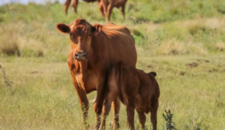
Operational goals relating to calving.

When an athlete is aiming to improve their performance, they begin with a starting measurement, and as they train, they continue to assess their abilities to measure progress. For cattle producers, that scorecard may include pregnancy percentages, the number of calves weaned and, in some cases, death loss.

This was a topic of discussion on a recent Cattle Chat podcast hosted by faculty at Kansas State University’s Beef Cattle Institute. K-State veterinarian Bob Larson joined with K-State beef extension specialist Jason Warner to set goals for cow-calf operations.

“This is a good time of year to review your records and if the numbers aren’t where you want them to be, you can make management adjustments under the guidance of your veterinarian, nutritionist or another advisor,” Warner said.

Two areas that Warner tells producers to focus on are the number of live calves born compared to the number of cows exposed to bulls at the start of the breeding season; and the number of cows that became pregnant early in the breeding season.

A top priority for Larson is to have calves born early in the calving season.

“The goal is to have 65% of the calves born in the first 21 days, and 85 to 90%% of the calves born within the first 42 days of the season,” Larson said. “If that happens, I know that the cows were in good body condition at the start of the breeding season and the bulls were fertile.”

As far as the percentage of live calves weaned relative to the number of pregnant females, Warner says the goal is at least 90%.

“The national average is between one to two percent for calf death loss and that will vary from year to year within the same operation,” Larson said. “If the producer is calving out a high percentage of heifers, that can influence the calf death loss percentage.”

To hear the full discussion, listen to Cattle Chat on your preferred streaming platform.

The Trump administration pauses a moonshot push to grow biofuel crops with less fertilizer

0
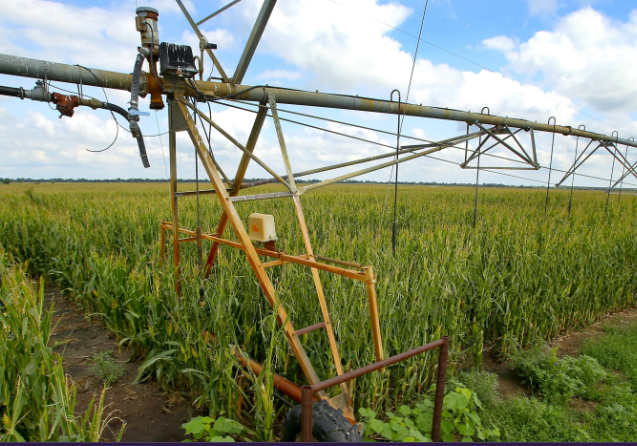
Corn is a key source of biofuel. Fertilizing it releases a potent greenhouse gas into the air, so the federal government had approved research to grow the crop with less nitrogen. The funding is now paused.
Scientists in Kansas, Missouri and other states were poised to start research to cut U.S. reliance on fertilizer imports, keep biofuel farming cost-competitive and tackle a potent greenhouse gas.

The U.S. Department of Energy had a vision: Slash in half the amount of a potent greenhouse gas that enters the atmosphere when growing corn and sorghum for biofuel.

That gas — nitrous oxide — mostly comes from spraying chemical fertilizer onto fields. So in practice, achieving the agency’s goal meant figuring out how to grow those crops with dramatically less nitrogen fertilizer, but without cutting into harvests.

If that sounds ambitious, it’s because the idea came from a branch of the energy department that officials like to call the Moonshot Factory.

Scientists in Kansas, Colorado, Missouri, Texas, Illinois and other states believed they knew how to make the change happen. They were ready to launch the work this year, with benefits not just for fighting climate change but also reducing pollution in rivers, lakes and the Gulf of Mexico.

But 10 days after taking office, the Trump administration decided to hold off on this $38 million investment that the energy department had previously boasted could save farmers $6 billion in fertilizer spending.

Months later, the funding freeze hasn’t thawed and the energy department isn’t saying whether it ever will.

“ We were hoping that because of the obvious benefits of this type of research, that we might be allowed to go ahead,” said Maggie Wagner, an expert in plant genetics at the University of Kansas. “Who can argue with something that would save farmers billions of dollars?”

The energy agency didn’t respond to a media inquiry about the paused funding.

Cutting U.S. reliance on imported fertilizer

The agency’s moonshot branch — formally the Advanced Research Projects Agency-Energy — had at least three reasons to train its sights on growing corn and sorghum with less fertilizer.

These grains are key sources for making the ethanol that goes into cars and other biofuel that goes into airplanes.

But nearly a quarter of what farmers shell out to grow their crops goes toward buying fertilizer. The agency aimed to cut that expense to keep farmers cost-competitive.

The agency also wanted to make U.S. biofuel less dependent on imported fertilizer to bring crops to harvest.

And it wanted to cut the emissions footprint of biofuels.

Chemical fertilizer pumps gases into the atmosphere that are warming the planet and destabilizing precipitation patterns.

Manufacturing it produces carbon dioxide. Then, after the product is sprayed onto farm fields, only part of it actually helps plants grow.

Some ends up feeding soil bacteria that release a portion of what they gobbled up back into the atmosphere as nitrous oxide — a greenhouse gas far more potent than carbon dioxide.

This gas is about 265 times more effective at trapping heat over a 100-year period. It also eats into the ozone layer that shields life on the Earth from harmful radiation.

Since the Industrial Revolution, humans have increased the amount of nitrous oxide in the atmosphere by 20%, according to the Intergovernmental Panel on Climate Change.

Unlike the increase in carbon dioxide that mostly comes from burning fossil fuels, the extra nitrous oxide in the atmosphere mostly comes from industrialized farming — and nitrogen fertilizer is the top source.

“By reducing the need for those fertilizers,” the energy department said shortly before the Trump administration took office, the U.S. “could prevent up to 78 million metric tons of new emissions generated during nitrogen fertilizer production.”

How did this program aim to reach its goal?

The advanced project branch at the energy department is effectively an incubator.

It seeks out and funds early-stage ideas that have the potential to reshape entire markets in ways that would strengthen U.S. energy independence and reliability. And for many of them, it aims to see these through until the work is far enough along to attract private sector investors and take flight.

It’s part of a vision to ensure the U.S. leads the world on clean energy technology.

The nine projects that were chosen to cut fertilizer use and emissions from biofuel crops would take varied approaches.

Colorado State University scientists are poised to launch an extensive search for corn varieties that thrive with less fertilizer — and to identify the genes and traits that make this possible.

Corteva, one of the world’s biggest players on the multibillion-dollar crop seed market, is on board. This gives the academic scientists access to a treasure trove of material.

“Not only does Corteva have all this diversity of really high-performing corn (genetics),” said John McKay, a professor of soil and crop sciences at Colorado State, “but they’re the best at actually trialing corn for their breeding program.”

McKay, an expert in evolutionary genetics, is the lead scientist on the project.

Seed companies test their varieties the way they know U.S. farmers will grow them, and this means applying generous amounts of synthetic fertilizer. So it’s unclear how the vast majority of existing varieties might do without that boost.

But McKay has conducted other research with Corteva — also with funding from the energy department’s advanced projects arm — that found some varieties of corn perform just as well with far less.

“Farmers are already growing things that … they could be getting almost the same yield with half the nitrogen,” he said. “Other farmers are growing things that would have a huge yield reduction.”

This new project would carry the research much farther.

“We could exhaustively search for more of those genotypes” that don’t need as much nitrogen fertilizer, he said. “Once you understand the traits that are involved, then you can actually on purpose try to breed for that.”

The scientists also intend to look at specific crop genetics that can influence bacteria in the soil.

This could unlock two benefits. It could help farmers plant corn that supports more soil bacteria that pull nitrogen out of the atmosphere and naturally fertilize their plants.

It could also help them plant corn that ultimately reduces the problematic bacterial interactions that convert fertilizer into nitrous oxide that escapes into the air.

Colorado State’s research should have started this month.

Using less fertilizer would have other benefits

Though the energy department was focused on strengthening the biofuel market’s resilience and cutting its emissions, the scientists slated to do the work knew that doing so would reap rewards well beyond that.

Perhaps the most notable: helping to turn a page on one of the country’s most stubborn water pollution problems.

Fertilizer washes off of farm fields into waterways. It fuels toxic algae blooms in lakes across Kansas and other states. It is one of the top reasons for a giant dead zone in the Gulf of Mexico that becomes almost entirely devoid of life each summer.

Nitrate from fertilizers also percolates into aquifers, infiltrating the drinking supplies of the many cities and towns that depend on underground water.

In recent decades, more and more of those communities have started pouring millions or tens of millions of dollars into building treatment facilities to process water that has become unsafe to drink because it now contains so much nitrate.

“ The reduction in groundwater pollution that would result from this” research program that is now on pause, said Wagner, “would be such a big deal for for people – especially people living in agricultural communities, but also way downstream in the Gulf.”

Wagner will work on the Colorado State project if it moves forward. She is an associate professor in KU’s Department of Ecology and Evolutionary Biology. She’s also an associate scientist at the Kansas Biological Survey and Center for Ecological Research.

Closer to home, south-central Kansas is among the regions where underground water has been hardest hit by fertilizer pollution. That’s in part because nitrate easily percolates through its sandy soils.

Kansas State University geologists have found increases in nitrate in south-central Kansas wells over the past four decades that count among the biggest nationally. The city of Pratt has had to shut down two of its wells — which provided one-quarter of its water supply — because of the pollution.

Not only is treating water for nitrate expensive, but it makes water conservation more difficult. For example, one common method of treatment can result in 20% of the water being discarded as a waste stream. For communities in regions with dwindling aquifers, that’s a steep price to pay.

A wrench in U.S. scientific research

In 2024, the energy department put out its call for projects to slash the fertilizer needed for corn and sorghum.

On Jan. 10 this year, the agency announced the nine projects it picked. On Jan. 20, the Trump administration took office.

On Jan. 30, the Department of Energy sent a short email to scientists on the projects – two sentences thanking them, but saying the funding process was paused.

To McKay, what worries him even more than the fate of his project is seeing U.S. scientific research as a whole grind to a halt.

The Trump administration has frozen funding on a massive scale — at the National Science Foundation, the Department of Energy and other agencies.

“Basically all the scientific ideas, hypotheses and well-designed experiments that have already been approved,” he said, “the money is appropriated and it’s just sitting there.”

Here is a snapshot of the projects related to biofuel crop emissions that were announced in January. More institutions are involved than the leads listed here.

  • Texas A&M AgriLife Research ($3.8 million) would work on new sorghum traits and hybrids.
  • The Danforth Plant Science Center in St. Louis ($5.6 million) would work on corn with better root systems for taking up nitrogen from soil fungi.
  • Colorado State University ($5.4 million) would work with industry giant Corteva on corn varieties that do better with less fertilizer application
  • The University of Illinois, Urbana-Champaign, ($5 million) would work on a new variety of corn called NSave and integrate traits from a wild relative of corn.
  • The University of Wisconsin-Madison ($5.5 million) would work on improving the ability of certain bacteria to deliver nitrogen to crops – and on introducing nitrogen-fixing traits into corn and sorghum.
  • Switch Bioworks in California ($2 million) would work on alternatives to synthetic fertilizers.
  • The Lawrence Berkeley National Lab in California ($3 million) would work on microbes that can help sorghum grow better with less nitrogen fertilizer.
  • New York University ($5.6 million) would work on using artificial intelligence to tackle genetic questions related to nitrogen efficiency in corn.
  • The University of Tennessee ($2.5 million) would work on cutting how much nitrous oxide escapes from the soil and developing cultivars that take in nitrogen better.