Monday, January 26, 2026
Home Blog Page 196

Livestock show practical joke

0
Thayne Cozart
Milo Yield

Now’s the time of the year when junior livestock shows are happening all across the U.S. Such shows, be they statewide competitions or local jackpots, are where future livestock industry leaders and breeders are developed.

And, livestock shows can also be a source of humor. And, I’ll relate one such incident of humor that I witnessed decades ago.

The prime players in this little livestock show saga were Myris Snipedown and Dr. Eiken Flert.

Snipedown, was a prominent figure in the agricultural press corps, and a well-known, sly practical jokester.

Eiken was a livestock specialist within the land-grant university system and he’d just earned his PhD degree and it weighed rather heavily on his shoulders. Eiken was also what the ladies call a “hunk” — a well-built, handsome, always-smiling “talker” and a confirmed bachelor in his late 20s.

On the day of the practical joke, Eiken wuz directing activities within the beef show ring at a state-wide junior livestock show. He escorted the show-persons and their steers and heifers into the ring and got them situated in the arena the way the judge wanted. And, he missed no opportunities to impress, or score points with, the young show-ladies leading the animals or their mothers crowded along the sideline rails.

Meanwhile, Myris stood on the sidelines for several hours and watched this he-she thing unfold — and he hatched his practical joke.

When the show came close to reaching its pinnacle with the selection of the grand champion steer, Myris quietly left the show arena and walked a few hundred yards to the show’s headquarters, which had the ability to send public address announcements to any place on the show grounds.

Myris coerced a close friend of his to time the springing of the practical joke perfectly for maximum effect. Then he returned to the arena sidelines and innocently watched his joke unfold.

When the judge had all the breed champion steers lined up in the championship drive, Dr. Flert was doing his level best to entertain all the nearby women.

And then, just before the judge slapped the champion steer on its rump, this announcement boomed into the arena from the public address system: “Attention, Dr. Flert. Attention Dr. Flert. Your wife says to please bring diapers and a box of formula home after the show.”

I’ll let your imagination lead you to your own conclusion about how this practical joke ended, but I assure you, it wuz humorous for everyone but one embarrassed new PhD.

***

The “holy grail” for global energy users is an endless, non-polluting method to generate electrical energy. That’s the purpose of solar, wind, hydro and nuclear electric projects, but none even come close to being the “holy grail.”

However, now I read in a Popular Mechanics online story about the real possibility of geothermal energy becoming a perfect energy source.

Here’s the gist of the story. The inside of the Earth is close to 10,000 degrees F. hot. And it won’t cool down for billions of years. Tapping into that heat by drilling deep into the Earth’s crust would yield a gift of virtually limitless heat energy.

The article says the entire world’s energy needs could be fulfilled for more than 20 million years if we could capture just 0.1 percent of the geothermal bounty lying a few miles beneath our feet.

Now, according to the article, the trick is how to drill a hole in Earth’s crust 12-13 miles deep where the temperature is close to 950 degrees, which is hot enuf to provide a practical source of geothermal energy.

The article sez that regular drilling is not feasible, but a new technique using laser energy beams can vaporize deep-seated rocks and let geothermal energy be harvested. At that point the geothermal heat could spin existing power plant turbines to produce limitless electricity.

I hope this new source of energy proves out. But, a word of caution, if the hole is drilled clear through the Earth to China, the electricity coming to the U.S. will probably carry a reciprocal Chinese tariff.

***

Here’s a little gripe of mine. I work crossword puzzles to keep my old mind exercised. However, recently I wuz getting nowhere with a couple of crosswords — and then I realized that the word clues weren’t for the crossword I wuz working.

That’s irritating and I don’t understand how it happens.

***

A recently lost another good friend. Mrs. Willie Jay, from Mt. Vernon, Mo., known to her friends as Connie, went to her eternal reward. She wuz around 90 years of age and had been married for 70 of them. Hers wuz a happy, productive life. RIP, good friend.

***

Words of wisdom for the week: “Stop doing what you’re doing. Take a deep breath. Then look and listen for the signs of Mother Nature waking up from her long winter’s nap.

The signs are on the tree buds, in the new dandelion emerging, in the robins hopping in the yard, and in the cardinal’s distinctive warbling song carried to your ears by a sun-warmed breeze. Spring is closer to being sprung.”

Have a good ‘un.

It’s Potato Planting Time

0

Wow, it’s potato planting time already! Don’t forget it’s also cabbage, peas, broccoli, cauliflower, and radish time too! If you are itching to get into your vegetable garden or landscape you might think of coming to the Harvey County Home and Garden Show on March 22 and 23 at the Dyck Arboretum in Hesston. You will find plants like those previously mentioned at the Prairie Wild booth and home items like outdoor furniture, and planter boxes. Renata Plant Bus will be there with an assortment of houseplants and succulents and Neff Family Farm will have herbs and vegetables for sale!


Youngsters will have an opportunity to build a birdhouse and take home at no cost. Materials are limited so don’t be late. At 1:00 pm each day in the Prairie Discovery Lab we will have this youth event along with vendors and the door prize drawing. Don’t forget about the learning opportunities with 11 home and garden seminars scheduled for the weekend!


Speaking of potatoes, St. Patrick’s Day is just around the corner, so it is time to think about getting seed potatoes in the ground. Actually, any time from mid- to late-March is fine for potato planting.


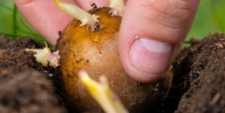
Be sure to buy seed potatoes rather than using those bought for cooking. Seed potatoes are certified disease free and have plenty of starch to sprout as quickly as soil temperatures allow. Most seed potatoes can be cut into four pieces, though large potatoes may yield more, and small less. Each seed piece should be between 1.5 and 2 ounces. Seed pieces this size will have more than one eye.


Each pound of potatoes should yield 8 to 10 seed pieces. Cut the seed 2 to 3 days before planting so freshly cut surfaces have a chance to suberize, or toughen, and form a protective coating. Storing seed in a warm location during suberization will speed the process. Plant each seed piece about 1 to 2 inches deep and 8 to 12 inches apart in rows. Though it is important to plant potatoes in March, emergence is slow. It is often mid- to late-April before new plants poke their way through the soil. As the potatoes grow, pull soil up to the base of the plants. New potatoes are borne above the planted seed piece, and it is important to keep sunlight from hitting the new potatoes. Exposed potatoes will turn green and produce a poisonous substance called solanine. Keeping the potatoes covered will prevent this.

Use sacrifice pastures now to spare best pastures for later

0
Beef Cattle

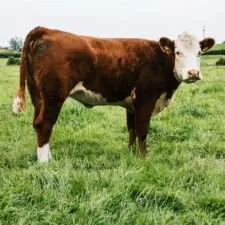
“Cattle producers welcome the rain, but it leads to muddy pastures and proper management is needed for optimum grazing the rest of the year,” says Patrick Davis, University of Missouri Extension livestock field specialist. Davis feels sacrifice pastures may be needed to help in promoting forage production for the rest of the grazing season.

“Cattle producers need to evaluate their pastures, find those pastures that need renovation, and consider using those pastures as sacrifice pastures,” says Davis. Davis urges consultation with your local MU Extension agronomy field specialist to grade pastures and to help make decisions on the pastures that need to be renovated.

“Move cattle to sacrifice pastures for hay feeding until cool-season grass pastures are at proper grazing height, which is approximately 4-6 inches,” says Davis. This strategy helps supply fertility in the form of manure and hay in these areas, which helps in the renovation process. This strategy also reduces the destruction of good pastures, which could affect their productivity throughout the grazing season.

“Proper seeding and management of sacrifice pastures is important to promote grass growth so those pastures can be brought back into the grazing system,” says Davis. He urges cattle producers to consult MU Extension agronomy field specialists as well as MU Extension guides G4650 and G4652 when making plans to reseed sacrifice pastures.

“Forage management is key to profitably of your cattle operation,” says Davis. For more information on pasture management and how to get the most out of your pastures in the upcoming grazing season, contact your local MU Extension agronomy or livestock field specialist.

Time to plant potatoes in Kansas

0

K-State horticulture expert shares tips for successful crop.

For Kansas gardeners, St. Patrick’s Day means something much more than donning a favorite green outfit and heading to local celebrations.

Traditionally, the Irish holiday signals the date for planting potatoes.

“Actually, anytime from mid- to late-March is fine for potato planting,” said Kansas State University horticulture expert Cynthia Domenghini.

“Be sure to buy seed potatoes rather than using those intended for cooking. Seed potatoes are certified disease free and have plenty of starch to sprout as quickly as soil temperatures allow.”

Domenghini notes that most seed potatoes can be cut into four pieces – “though large potatoes may yield more,” she said. Each seed should weigh between 1 ½ to 2 ounces, and likely have more than one eye.

Each pound of seed potatoes should yield 8 to 10 pieces, according to Domenghini.

“Cut the seed 2 to 3 days before planting so that freshly cut surfaces have a chance to suberize, or toughen, which provides a protective coating,” Domenghini said. “Storing seed in a warm location during suberization will speed the process.”

Domenghini recommends planting each seed piece 1 to 2 inches deep and 8 to 12 inches apart in rows.

“Though it is important to plant potatoes in March, they emerge slowly,” she said. “It is often mid- to late-April before new plants poke their way through the soil. As the potatoes grow, pull soil up to the base of the plants. New potatoes are borne above the planted seed piece and it is important to keep sunlight from hitting the new potatoes.”

Domenghini said exposed potatoes will turn green and produce a poisonous substance called solanine. Keeping the potatoes covered will prevent this.

Domenghini and her colleagues in K-State’s Department of Horticulture and Natural Resources produce a weekly Horticulture Newsletter with tips for maintaining home landscapes and gardens.

Interested persons can subscribe to the newsletter, as well as send their garden and yard-related questions to [email protected], or contact your local K-State Research and Extension office.

Just a Little Light: Oreo Memories

0

By Dawn Phelps 


Most grandmas probably have a cookie jar, but I have a special “Oreo Jar” that I had for many years before I was a grandma.  During the years while I lived at Thornberry Acres near Miltonvale before my first husband died, many little hands reached into that jar and pulled out those delicious dark chocolate cookies with the yummy white icing in the middle!  


And during some of the years at Thornberry Acres, “The Oreo Jar” became a part of a hide-and-seek game between me and my youngest daughter Misty.  I had started the Oreo Jar because I enjoyed having an occasional cookie, but my youngest daughter Misty really liked Oreos.  


Then a foreign exchange student named Victoria from Spain came to live with us for a school year.  And Victoria really liked Oreos too, so she and Misty could empty the Oreos Jar in an evening!  


That’s when the “hiding-the-Oreos” game began.  At first, I moved the Oreos around in the kitchen—different shelves, the bread box, high in shelves, or low in shelves.  But Misty always found them. 


Then I moved them to the filing cabinet, the closet, or sometimes on the steps that went upstairs!  And those “moving” Oreos gave us lots of laughs and memories.


The years moved swiftly along, and our girls grew up and were married.  Then the grandchildren came along.  And they really like Oreos too.  So, when they came to our house, little hands and not-so-little hands reached into the Oreo Jar—even the older grandchildren really like Oreos too.  


A couple of my favorite “Oreo Memories” involved Will Thomas, our youngest grandson when he was about three years old.  For about a year, after my present husband Tom and I were married, we took care of Will every Tuesday while his mother Misty was in school.  


Toward evening on those days, either Tom or I would drive Will half-way toward his home in Manhattan to meet his mother.  Will liked to take a snack bag of cookies home with him.   


One day I fixed Will a bag of 8 Oreos—2 for him and 2 for each of his 3 siblings.  Will wanted to hold onto the bag that evening while Tom drove him to meet his mother.  Due to difficulties with keys getting locked into Tom’s car when Misty and Tom met, for a while, Will and the Oreos were forgotten.


Then when Will and his mother were finally on their way home toward Manhattan, Will proudly presented a total of 3 Oreos to his mother for his 3 siblings.


Later that day I talked to Misty by phone.  I asked her if the other kids got their Oreos and she said yes, there were three.  Then we realized that Will had “done the math”—he had eaten 5 Oreos, but he had left one each for his sisters and brother.


Another day I sent a bag of Oreos home with Will.  That day I drove him to meet his mom.  He announced that he planned to give some of the cookies to his mother.


As we rode along, I watched Will in the rearview mirror as he ate the icing out of middles of all the cookies.  He carefully put some of the chocolate cookies back together in the baggie “for his mom,” but only after all the icing was licked clean!


When I saw what he had done, I encouraged him to go ahead and eat the chocolate parts too, telling him his mother would not be disappointed since she did not know he was bringing Oreos home to her anyway.  Will had such good intentions, but he just could not resist that yummy icing—a fun Oreo memory! 


Oreos are difficult for many of us to resist.  They have been around since 1912 when they were first baked on Oreo Way, a street in New York City in the first Nabisco factory.  Originally, dark chocolate and lemon meringue-flavored Oreos were baked, but the lemon ones were eventually discontinued, and the chocolate ones have persisted.  Here are a few more Oreo facts.  


*It takes 120 minutes to make and bake an Oreo cookie.


*In addition to the original dark chocolate flavor, there are now Double Stuf Oreos, mint, thin ones, Mega Stuf, golden, peanut butter, and more.  


*Oreos are used in many ways—to eat with milk, crushed to make a crust, in ice cream, and other ways.  


*Factories in 18 countries bake about 40 billion Oreos cookies each year!  


*50% of people pull or twist them apart before eating them, and more women twist them off than men.


And there you have a little information about Oreo cookies and a few of my special Oreo memories!

[email protected]