Wednesday, January 28, 2026
Home Blog Page 236

Blizzard of 2025

0
Thayne Cozart
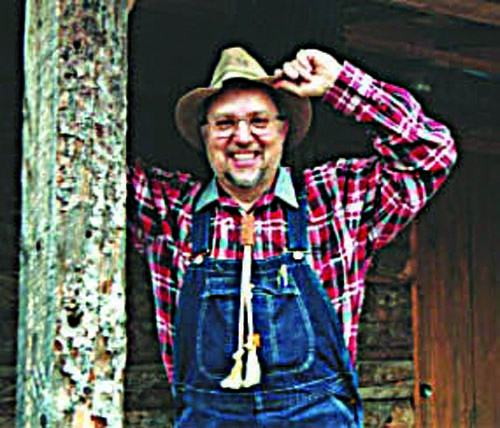
Milo Yield

As I write this column, I’m happy to announce that so far ol’ Nevah and I have survived the Great Blizzard of 2025. The blizzard blew in starting on Saturday. It grew in velocity and ferocity through the night and through the entire day on Sunday.

Winds were so strong from the north that the poor songbirds eating at my bird feeder could not fly north despite their best efforts. They had to fly south. I’d guess the wind speeds were close to 40 mph. The combination of snow and blow cut visibility down to about 100 yards. The temperatures plunged, too, down to well below zero.

When the blizzard blew itself out on Monday, officials said it left 17-inches of snow. I have no idea how to measure the average amount of snow when looking outdoors it ranges in depth from zero to drifts 5-feet high. But, 17-inches is official.

For snow removal, we were lucky. Our son-in-law, ol’ Harley Ryder, commandeered a big skid steer to ride. He cleared our driveways and garage pads in short order, then went into Riley to help with snow removal there.

Now, I’ve resumed writing on Wednesday. We’ve still had no mail delivery and the reason is the mail trucks from the regional mail center in Kansas City haven’t made local deliveries yet.

At coffee this morning, guys in the country reported that the north/south roads have been plowed, but not the east/west roads. There are still unclaimed cars in the ditches in places.

Nevah and I left Iowa more than 20 years ago in hopes that we’d escape such nasty winter weather. Well, it took a while, but that plan blew up in our faces.

This blizzard reminded me of those we had regularly when I wuz a kid. I recall many times when the Yield family wuz snowed in for days. I remember my dad, Czar E. Yield, just sitting 10-gallon metal milk cans in snow drifts to keep the milk cold until the milk hauler could beat the drifts and come get our milk.

I can remember making tunnels under the snow drifts in the road ditches as a kid. I have no idea why the tunnels didn’t cave in on me and smother me, but they didn’t. I also remember we kids attending the one-room school were excited when it snowed because it gave us an opportunity to play the game Fox-And-Geese in the snow.

It’s still cold, but it seems the worst of the Great Blizzard of ’25 is in our rear view mirror. Who knows? Maybe global warming is reversed.

***

I sadly report that one of my best near-lifetime friends has checked into the eternal news room of the sky. Larry Perrine, one of the co-founders of FARM TALK, died last week in Texas, close to Leander, Tex., near his son . He wuz a friend for more than 60 years. I’ve referred to him in my columns by his Milo Yield nickname, ol’ Elpee Peavine.

It would take a book to chronicle all the good times and experiences Elpee and I had, but I will hit just a few high spots of our friendship history. Elpee and I met in college journalism classes at Bea Wilder U II in Stillwater, Okla., and worked in the same office after we graduated. We were both newlyweds. Our first children were born during those years.

After a few years, we both ended up moving and working in university communications at Bea Wilder U I in Manhattan, Kan. After three years there, I moved to Pullman, Wash., to work at Wazzou University. We stayed in touch and managed to work out a family vacation together in Utah.

About that time, we both began to question if academic work wuz our ultimate career choice. We both had entrepreneurial aspirations. After much long-distance consultation and planning, we hit upon the idea of founding a regional agricultural newspaper covering the four-corners area of Kansas, Missouri, Oklahoma and Arkansas. FARM TALK wuz the name we hit upon.

Eventually, we decided upon Parsons, Kan., as home base. We acquired a bank loan that seems ridiculously small by today’s standards. In December of 1973, we both U-Hauled our families to Parsons and hit the ground running the day after Christmas. The first FARM TALK hit the mails on Feb. 4, 1974. This is the truth — we did not take a day off from work until Memorial Day, 1974. Giving credit where it’s due, it wuz Elpee who dubbed me “Milo Yield” and conjured up the “Viewing the Field” name for this column.

Within a few months, FARM TALK had a aggie bizness toe-hold that allowed it to hang on and keep up slow growth through a significant drought and across-the-board commodity price declines that stressed both the paper and its farmer and agribusiness clientele.

Alas, after a lot of the heavy lifting and most of the risk-taking were done, Elpee — a small town kid from Pawnee, Okla. and not a true farm kid — decided there wuz little about aggie journalism that had long-range career appeal for him. So, by mutual and amicable agreement our professional lives parted, but with no lasting effect on our cemented friendship.

As FARM TALK began to thrive, Elpee moved to other journalistic endeavors in he energy sector at Bryan, Tex., Bartlesville, Okla., and eventually permanently to Albuquerque, N.M., where he directed publications for Sandia National Energy Laboratories until retirement.

During all those years, our families managed to share a lot of time together. We vacationed, played 100s of holes of cow pasture pool, did a bit of hunting, caught and ate copious amounts of fish, enjoyed country music shows and dances, laughed until our sides hurt, played nasty practical jokes on each other, played cards and games, and drank plenty of adult beverages and ate like hogs.

Losing Elpee is like losing a brother. But, the neuropathy that pained him so much in his later years, and the pneumonia that ultimately claimed him, are now history. It’s a comfort to know Elpee is in pain free peace. Our memories live on.

Elpee, ol’ buddy, wherever it is you’re casting a lure, teeing it up, or tuning in Merle Haggard, save me a seat.

***

Words of wisdom for the week: “Cherish your friends and savor their friendship. They don’t last forever.” Have a good ‘un.

“The Seven Warning Signs of Cancer”

0

Recently I was working with my son’s scout troop to help them achieve the personal fitness merit badge. This merit badge has many requirements including discussions about healthy habits, diet, and exercise. The scouts keep track of their exercise over a 12 week period and log everything they eat over a few days as well. One of the discussions covers the seven warning signs of cancer.

This is a simple list of concerning symptoms to watch out for and reasons to go see a doctor. Indeed, with each of these I am reminded of patients that caught their cancer diagnoses early enough to get the treatments they needed. While having any of these symptoms certainly does not mean someone has cancer, it would be wise to seek medical attention.

One warning sign is a change in bowel or bladder habits. These could be signs of colon or bladder cancer.

A second sign is abnormal bleeding. Blood in the stool and blood in the urine are symptoms to get checked out soon. Abnormal uterine bleeding, which may include heavy or irregular periods, and bleeding after menopause, deserve more attention as well.

If you experience a sore that does not heal on the skin or in the mouth, or see changes to moles or other skin lesions, then these may be a third sign of cancer that warrant an examination and possibly a biopsy to evaluate for skin cancer.

Abnormal lumps or bumps is a fourth sign. If you experience a breast lump or thickening or change in breast tissue, please get this checked out as it could be a sign of breast cancer. A lump in the testicle could be a sign of testicular cancer. Persistent swollen lymph nodes warrant further attention.

Unintentional weight loss is a fifth reason to see your doctor. While efforts at a healthy diet and exercise are good reasons to lose weight, bad reasons can include thyroid problems, depression, diabetes, and cancer.

Trouble swallowing or ongoing indigestion or heartburn is a sixth sign that could be a sign of cancer of the mouth, throat, esophagus, or stomach.

Finally, a seventh set of symptoms to watch for include a chronic cough or hoarseness that persists for a month or more. These could be a sign of throat or lung cancer, and warrant further evaluation.

This list could be longer and more detailed, and having any of these symptoms can often be caused by benign, common reasons that are nothing to worry about. However, it is important to see your trusted physician or other medical provider if you experience any of the above symptoms. Please, do not delay and wait for a symptom to pass on its own. Your body is giving you a chance to get evaluated and help yourself. Pay attention!

Andrew Ellsworth, MD. is part of The Prairie Doc® team of physicians and currently practices Family Medicine at Avera Medical Group in Brookings, South Dakota. Follow The Prairie Doc® at www.prairiedoc.org, Facebook, Instagram, YouTube and Threads. Prairie Doc Programming includes On

Call with the Prairie Doc®, a medical Q&A show (most Thursdays at 7pm streaming on Facebook), 2 podcasts, and a Radio program (on SDPB), providing health information based on science, built on trust.

KU News: KU Debate opens 2025 with 2 tournament wins

0

From the Office of Public Affairs | http://www.news.ku.edu

Headlines

Editors: Note students from Lawrence, Lenexa, Olathe, Overland Park, Pittsburg, Prairie Village and Topeka.

Contact: Scott Harris, KU Debate, 785-864-9878, [email protected], @KansasDebate

KU Debate opens 2025 with 2 tournament wins

LAWRENCE — The University of Kansas Debate program opened the new year with a bang by winning two college tournaments Jan. 3-6. The KU team of John Marshall, Lawrence, and Graham Revare, Prairie Village, won a tournament hosted by Georgetown University in Washington, D.C., while the team of Claire Ain, Overland Park, and Jared Spiers, Pittsburg, won a tournament hosted by KU in Lawrence.

KU sent four teams to the tournament at Georgetown University to compete in a field involving teams from Binghamton University, California State University-Fullerton, Cornell University, California State University-Long Beach, Dartmouth College, Emory University, Georgetown University, Gonzaga University, Harvard University, the University of Iowa, James Madison University, the University of Kentucky, Macalester College, the University of Michigan, Michigan State University, the University of Minnesota, Northwestern University, New York University, Southern Nazarene University, the University of Texas, the University of California-Berkeley, Wake Forest University and the University of West Georgia. After two days of debating, all four KU teams compiled winning records and qualified for the single elimination debates.

KU’s top duo of Marshall and Revare qualified for the elimination rounds with a 6-1 record in the preliminary debates. Marshall was the first-place individual speaker at the tournament, and Revare was the fifth-place speaker. In the elimination rounds they advanced over another KU team in the round of 32, defeated NYU in the round of 16, Wake Forest in the quarterfinals, Michigan State in the semifinals and Emory in the finals. The pair ran their record on the season to 55-9 and are the top ranked team in the country.

The KU team of Luna Schultz, Houston, and Rose Larson, Milwaukee, qualified for the elimination rounds with a 5-2 record. They defeated Harvard in the first elimination round before falling to the 4th-seeded team from Northwestern University in the round of 16.

The KU team of Zach Willingham, Topeka, and Owen Williams, Lee’s Summit, Missouri, qualified for the elimination rounds with a 4-3 record but were matched up against the KU team of Marshall and Revare, and the higher seeded pair advanced. The KU team of Ethan Harris and Jacob Wilkus, both of Lawrence, also qualified for the elimination rounds with a 4-3 record but were knocked out of the tournament by the 2nd-seeded team from Dartmouth.

The same weekend KU was also hosting a tournament in the ice and snow in Lawrence. Schools competing at the KU tournament included Baylor University, the University of Houston, the University of Iowa, Kansas State University, Kansas City Kansas Community College, Missouri State University, the University of Nebraska, the University of Oklahoma, Trinity University, the University of Texas-San Antonio and the University of Wyoming. KU demonstrated its depth of talent as four additional KU teams advanced to the single elimination rounds at the tournament.

The KU duo of Ain and Spiers went undefeated at the tournament and advanced to the final round where they defeated a team from the University of Houston to win the tournament. The KU team of Carson Bath, Topeka, and AJ Persinger, Lawrence, qualified for the elimination rounds with a 5-1 record and defeated Kansas State University in the quarterfinals to advance to the semifinals where they were paired against the KU team of Ain and Spiers, and the higher-seeded KU pair advanced. The KU team of Connor Brown, Lawrence, and Henry Walawender, Lenexa, advanced to the elimination rounds with a 4-2 record. They defeated a team from Houston in the quarterfinals to reach the semis where they lost to the top team from the University of Houston. The KU team of Nate Boyle, St. Louis, and Averi Harker, Olathe, also advanced to elimination rounds with a 4-2 record. They defeated the University of Oklahoma in the first elimination round but met the higher seeded KU team of Ain and Spiers in the quarterfinals.

In addition to winning the tournament, KU placed three teams in the semifinals and a fourth team in the quarterfinals. KU debaters also won several individual speaker awards as Spiers finished fourth, Brown ninth, Bath 10th, Persinger 12th and Walawender 13th.

“This was a tremendous weekend for KU debate as the entire squad demonstrated their ability and commitment,” said Brett Bricker, KU head debate coach. “We are very proud of the entire team and coaching staff for their efforts that produced these results.”

Scott Harris, David B. Pittaway Director of KU Debate, said, “It is no small task to host a tournament in a blizzard while traveling teams on the same weekend to a snowed-in Washington, D.C. We are grateful for all of the teams who braved the weather to come to Lawrence, for the hard work of the coaching staff to host, judge and coach at two tournaments simultaneously, and to our alumni and the university who provide the support that allow KU Debate to continue to represent the University of Kansas with pride and distinction.”

-30-

————————————————————————


KU News Service

1450 Jayhawk Blvd.

Lawrence KS 66045

[email protected]

http://www.news.ku.edu


Erinn Barcomb-Peterson, director of news and media relations, [email protected]


Today’s News is a free service from the Office of Public Affairs

Grazing crop stubble can extend feed resources

0
K-State beef cattle veterinarians offer tips for producers turning out the herd on crop fields post-harvest.

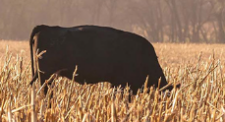
Eating leftovers is a way for people to save money while still getting nutritious food. For beef producers, one way to extend the grazing days is to turn cattle out on crop fields after harvest, according to the veterinarians at the Kansas State University Beef Cattle Institute.

Addressing this topic on a recent Cattle Chat podcast were K-State veterinarians Brad White, Bob Larson and Scott Fritz, who specializes in veterinary toxicology.

“Crop stubble is a great feed resource for cattle, but it is a resource that will decrease in nutrient quality the longer the cattle are in the field,” Larson said. “When cattle are first turned out, there is often a lot of leaves on the plants, but over time cattle will strip those leaves off.”

Larson recommends beef producers monitor the grazing fields and offer supplements to the herd as needed.

White agreed, adding: “The cow herd will likely need to be supplemented with protein later in the winter.”

And while they agree that crop stubble can be a valuable feed resource, there are risks to be aware of, Fritz said.

“In a dry year, drought-stressed forages can accumulate nitrate and can poison the cattle, so it is important to do a field test in arid parts of the country,” he said.

Grazing wet fields

By contrast, Fritz said overly wet fields also pose a risk.

“Cattle turned out on flooded fields can be exposed to mold growth that leads to mycotoxin issues,” he said.

Before turning the cattle out on the crop stubble, Fritz recommends walking through the field to assess the quality of the field and look for grain spills.

“One problem a lot of people overlook is a pile of corn that got spilled in the field when loading the grain cart. If a cow eats 20-30 pounds of grain, she will get acidosis, and if it is a pile of soybeans, the (opposite) happens and they can end up with a neurologic disease,” he said.

Along with inspecting the field for spills, Fritz recommends that producers also evaluate water sources and grass strips.

“Make sure that whether it is surface water or a dedicated underground source, it is functioning before the cows are turned out,” Fritz said.

White added: “It is a good idea to give the water source a flush through, so you know the cattle are getting clean, fresh water.”

The last thing to check for when inspecting the field is the grass strips that might be full of weeds. “When putting up the hot wire around the field, make sure there are no noxious plants in the grass strips,” Fritz said.

To hear the full discussion, listen to Cattle Chat on your preferred streaming platform.

Kansas Fish Consumption Advisories for 2025

0

The Kansas Department of Health and Environment (KDHE) and the Kansas Department of Wildlife and Parks (KDWP) (collectively, “Kansas”) is issuing fish consumption advisories for 2025. The following advisories identify types of fish, or other aquatic species, that should be eaten in limited quantities or, in some cases, avoided altogether because of contamination. General advice and internet resources are provided to aid the public in making informed decisions regarding the benefits and risks associated with eating locally caught fish from Kansas waters.

Definitions/Servings:

Bottom-feeding fish: buffalo, carp, catfish, sturgeon and suckers

Shellfish: mussels, clams and crayfish

Serving size (skinless fish fillets before cooking):

  • Adults and children age 13 and older = 8 ounces
  • Children age 6 to 12 = 4 ounces
  • Children younger than 6 = 2 ounces

Statewide Mercury Advisories for Fish:

There are many health benefits associated with going outside and catching and consuming fish; however, all fish contain some amount of mercury. Consumption of mercury-rich fish can harm the development of fetuses, nursing babies, and growing children. As a result, anyone who routinely eats fish or serves fish to children, including store-bought fish, should carefully consider the type and amount of fish eaten. Therefore, mercury-sensitive individuals (women who are pregnant, nursing, or may become pregnant, and children 17 or younger) should follow the guidelines presented below for eating Kansas-caught fish.

Fishing and Eating Guidelines:

  • Eat smaller portions – a fillet about the size of your palm.
  • Eat fish species with less mercury (see “Preferred Choice Fish” chart below).
  • If you don’t know what type or size of fish you’ve eaten, wait at least one week before eating fish again.
  • When fishing, keep fish shorter than your forearm (fingertips to elbow) or less than 20 inches, as regulations allow. Visit Fishing Regulations / Fishing / KDWP – KDWP (ksoutdoors.com) for more information.
  Preferred Choice Fish   Servings
  Blue and Channel Catfish

Common Carp

Crappies

White Bass, White Perch, Wiper, Striped Bass

Walleye, Sauger, Saugeye

Bullhead Catfish

Drum

Sunfish (Bluegill, Green, Redear, etc.)

   1 or 2 per week     


  Second Choice Fish   Servings
  Buffalo (Black, Bigmouth, Smallmouth)

Flathead Catfish

Bass (Largemouth, Smallmouth, and Spotted)

   1 or 2 per month 

Reduce the recommendations above if you tend to keep fish larger than 20 inches to:

  • Preferred Choice Fish – not more than 1 serving per week
  • Second Choice Fish – not more than 1 serving per month

For specific questions or concerns about mercury in Kansas-caught fish, contact KDHE. For information about mercury in fish caught in other states, store-bought fish, and other types of seafood, visit the U.S. Environmental Protection Agency (“EPA”) and U.S. Food and Drug Administration (“FDA”) EPA-FDA Advice about Eating Fish and Shellfish | US EPA website.

Waterbody-Specific Advisories for All Consumers:

Kansas recommends restricting consumption of bottom-feeding fish to 2 servings per month from the following location because of polychlorinated biphenyls (PCBs):

  • Little Arkansas River from the Main Street Bridge immediately west of Valley Center to the confluence with the Arkansas River in Wichita (Sedgwick County).

Kansas recommends restricting consumption of bottom-feeding fish to 1 serving per month from the following locations because of PCBs:

  • Cow Creek in Hutchinson and downstream to the confluence with the Arkansas River (Reno County).
  • K-96 Lake in Wichita (Sedgwick County).

Kansas recommends restricting consumption of bottom-feeding fish to 1 serving per month from the following location because of arsenic:

  • Mill Creek from Madison Road east of Morrowville to confluence with Little Blue River (Washington County).

Kansas recommends not eating specified fish or aquatic life from the following locations:

  • Antioch Park Lake South in Antioch Park, Overland Park (Johnson County); all fish due to pesticides: dieldrin, heptachlor epoxide, chlordane and dichlorophenyltrichloroethanes (DDTs).
  • Arkalon Park Lakes in Liberal (Seward County); Kansas recommends not eating any aquatic life because the lakes are sustained solely by treated municipal wastewater.
  • Arkansas River from the Lincoln Street dam in Wichita downstream to the confluence with Cowskin Creek near Belle Plaine (Sedgwick and Sumner counties); bottom-feeding fish due to PCBs.
  • Kansas River from Lawrence (below Bowersock Dam) downstream to Eudora at the confluence of the Wakarusa River (Douglas and Leavenworth counties); bottom-feeding fish due to PCBs.
  • Mill Creek from Washington (below 18th Road) downstream to confluence of Little Blue River (Washington County); shellfish due to arsenic.
  • Shoal Creek from the Missouri/Kansas border to Empire Lake (Cherokee County); shellfish due to lead and cadmium.
  • Spring River from the confluence of Center Creek to the Kansas/Oklahoma border (Cherokee County); shellfish due to lead and cadmium.

Waterbodies Affected by Harmful Algae Blooms:

To date, measured algal toxin levels in fish samples collected from waters affected by harmful algal blooms suggest the fish are safe to eat.  However, please take the following precautions:

  • Avoid skin contact with water.
  • Wear gloves when handling wet fish and equipment.
  • Rinse fish with clean water.
  • Remove skin from fillets and rinse with clean water prior to cooking or freezing.
  • Eat only skinless fillets.
  • Do not eat shellfish.

General Advice for Reducing Exposure to Chemicals in Fish:

  • Keep smaller fish to eat (regulations permitting) and let the big ones go.
  • Avoid eating fish parts other than fillets.
  • Trim fat from fillets and/or use cooking methods that allows fat to drip away.
  • Avoid subsistence fishing (relying on wild-caught fish for daily nutritional needs) in rivers within or immediately downstream of large urban/industrial areas.
  • Do not eat fish or aquatic life from wastewater outfalls, waste treatment lagoons or stormwater retention ponds.

Other information from KDHE, KDWP, EPA and the American Heart Association

To view the advisories online – and for information about KDHE’s Fish Tissue Contaminant Monitoring Program –  Fish Tissue Contaminant Monitoring Program | KDHE, KS.

For information about fishing in Kansas – including licensing, regulations, fishing reports and forecasts –  Fishing in Kansas | KDWP.

For information about the health benefits and risks of including fish in your diet, visit Eating fish twice a week reduces heart, stroke risk | American Heart Association.

For technical information regarding the U.S. EPA risk assessment methods used to determine advisory consumption limits, visit EPA Guidance for Developing Fish Advisories | US EPA.