Tuesday, February 3, 2026
Home Blog Page 327

Nebraska water transfer could introduce invasive carp to Kansas rivers and lakes

0

Kansas Gov. Laura Kelly and Attorney General Kris Kobach sent a bipartisan letter to Nebraska Gov. Jim Pillen objecting to a proposed water transfer between the Platte and Republican rivers that Kelly and Kobach say could lead to invasive species of carp in Kansas waterways.

“The introduction of these fish will cause irreparable ecological harm to native species and economic and noneconomic harm to the use and enjoyment of these waters, including sport fishing, commercial fishing, and recreational boating. It should be noted that Milford Reservoir is regarded as Kansas’s premier fishing destination, and many Nebraskans enjoy it every year,” Kelly and Kobach said in the joint letter.

The letter is in response to an application by the Central Nebraska Public Power and Irrigation District and the Platte Republican Diversion Interlocal Agreement Partners made up of several natural resource districts. It is before the Nebraska Department of Natural Resources.

If approved, it would allow 150 cubic feet per second of excess flow from the Platte River Basin into the Republican River Basin through a series of canals and pipelines. The proposal is designed to meet river flow minimums in an interstate water compact with Kansas.

Why Kelly and Kobach oppose it

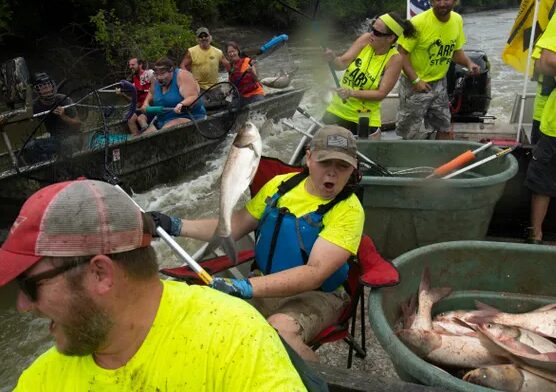
Kansas officials have opposed the idea of the water transfer since it was originally proposed in 2018. They worry that it would make a path for invasive bighead and silver carp that have been documented in the Loup, Platte and Elkhorn rivers.

If these invasive species have a path to the Republican River, it could allow the fish to enter the Harlan County Reservoir in Nebraska and then the Lovewell and Milford reservoirs in Kansas. Milford Reservoir is popular among fishermen regionally.

“As an avid fisherman, I’m one of thousands of Kansans who enjoy our first-class lakes and waterways for fishing,” Kobach said. “I will use every tool available to keep these invasive species from harming Kansas waters.”

The carp have damaged other waterways, and the knowing importation, possession or transportation of the fish is outlawed by the federal government. In Lake Yankton in Nebraska invasive carp invaded and decimated native fish populations.

“After flooding in 2011, the lake was infested with invasive carp, and by 2014, they composed over ninety percent of the fish in the lake, necessitating the use of poison to eliminate all fish in the system,” Kelly and Kobach said.

Why some Nebraskans opposed it

The project has also been controversial in Nebraska, where some natural resource districts said the diversion could lead to water rights not being delivered to its patrons. The dispute made it to the Nebraska Supreme Court in October, where it sided with the proposed water transfer.

“I’m so pleased that the Justices agreed that our project has no potential to harm existing water right holders,”, said John Thorburn, manager of Tri-Basin Natural Resources District (NRD), after the Nebraska Supreme Court decision.  “Our project has always been intended to only divert water that no water user in the Platte Basin can use. We simply want to beneficially use water that would otherwise flow out of Nebraska.”

Proponents say the project will deliver more water to Nebraskans and generate power through hydroelectric generation.

In May, the Nebraska Department of Natural Resources held a hearing on the proposed transfer, where Kansas officials also voiced concern about the transfer.

Though the proposal is under con sideration, there is no set timeline on when a decision will be made on its approval.

As reported in the Topeka Capital Journal
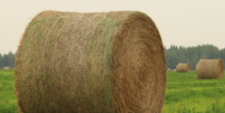
Proper outside large round bale storage reduces hay losses

0

“As hay season continues, I see a lot of large round hay bales being stored outside,” says University of Missouri Extension livestock field specialist Patrick Davis. If hay is not stored properly outside, farmers can see significant dry matter and quality losses. Factors that contribute to these losses include:

  • Hay moisture at baling time.
  • Amount of weather during the storage period.
  • Soil drainage where bales are stored.
  • Space between the bales.
  • Type of hay (grass or grass-legume).
  • Skill of the operator making the bales.

Davis discusses proper outside round bale storage techniques to minimize losses:

“When baling hay, make sure to develop a tight, dense bale at the correct moisture,” says Davis. Large round bales should be baled at less than 18% moisture. Baling at a higher moisture content can lead to excessive heating, which reduces hay quality and is a potential fire hazard. Furthermore, bales should be baled tight with high density to reduce sag during outside storage. Sagging increases spoilage and bale losses. Overall, baling bales at the correct density and moisture level should reduce losses and promote optimum hay feeding efficiency.

“Select a well-drained area when storing bales outside,” says Davis. Furthermore, hay should be stored in open sunlight away from trees and other shaded areas. If possible, store bales on gravel, wood pallets, wood poles or other materials to reduce ground contact. This allows the hay to remain as dry as possible, cutting down on spoilage and losses.

“Proper bale placement outside also cuts down on storage losses,” says Davis. When placing large round bales in rows, they should be in size and pushed together end to end as tightly as possible. Bale rows should be in the direction of the prevailing wind and a minimum of 3 feet apart. These tips allow for proper wind circulation during storage, which helps reduce spoilage and hay losses.

“Hay is a major feed resource for cattle operations,” says Davis. Storage that reduces losses will promote optimum hay feeding efficiency, leading to optimum cattle operation profitability.

For more information on reducing hay storage losses, look at MU Extension guide “Making and Storing Quality Hay” at https://extension.missouri.edu/g4575, and visit with your local MU Extension livestock and agronomy field specialist.

Composting Tips

0

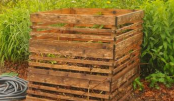
Composting at home provides gardeners with a free source of nutrient-rich soil amendment. Knowing what is in your compost is a great way to ensure
you are not introducing problems into the garden. Here are a few quick tips for success if you’re new to composting.

• Turn the pile at least once a month to rotate
materials from the center and promote decomposition. The pile will heat up as it decomposes and cool as
decomposition slows.
• Create a depression in the top of the pile to allow water to collect and slowly
seep through the layers of the mound.
• When deciding where to establish a compost pile, look for a water source. Water
is essential for efficient decomposition and close proximity to supplemental water
will allow you to keep the pile moist even during periods of drought.
• Smaller materials decompose faster. When possible, shred materials before
adding them to the heap especially “browns” such as dry leaves and twigs.
• Fats and meats should not be added to the compost heap. They will attract
wildlife.
• Grass clippings from a lawn treated with crabgrass killer should not be
composted. If crabgrass preventer or dandelion killer has been used on the lawn,
the clippings can be composted after the third mowing.
• Only add fresh plant material that is disease-free.

Dividing Peonies

0

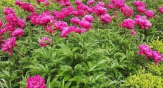
If your peonies didn’t bloom as expected this year it’s possible
they need to be divided. Peonies don’t require dividing often, but
doing so periodically can promote healthier plants. You also get
the benefit of increasing your plant collection.

Cut stems just above the soil surface. Dig up the entire root
system and remove the soil from the roots. Divide the root clump
into small sections using a sharp knife. Each section should have
three to five buds and healthy roots. Sections with fewer buds will
take longer to bloom.

Choose a planting location that receives sunlight for at least half of
the day. Dig a hole large enough that the roots and buds will be
covered by one to two-inches of soil. Plants buried too deep may not flower. Backfill and water thoroughly. Space dwarf peonies at least two-feet apart and
standard peonies four-feet apart.

It may take a couple of years for the divided plants to return to full
bloom productivity. Kansas’ winters have periods of freezing and
thawing which can uproot plants. Protect newly divided peonies, by
covering them with a layer of straw, leaves or compost after the
soil freezes.

Fall Lawn tips

0
F_A

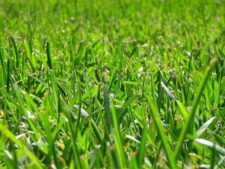
September is the best time to seed cool-season grasses.

Seeding New Lawns

o Use good quality, certified seed; avoid seed with significant levels of
“weed” and “other crop.

o Use recommended seeding rates and distribute well. Seeding at a rate
higher than recommended can cause issues with disease and
environmental stress.

o Good seed to soil contact is critical! Aeration prior
to seeding is one way to promote this. Topdressing
and raking to cover seed are some other methods
of enhancing seed to soil contact. Thatch build-up
will hinder seed to soil contact. See core-aerating
below is thatch is a problem in your lawn.

o Light, frequent irrigation is necessary the first few
weeks after planting and may be required several
times daily depending upon weather. Soil should
remain moist but not waterlogged.

o Minimize traffic on the area until seedlings are
ready to be mowed. Begin mowing once seedlings reach 3-4 inches tall.

Overseeding an Existing Lawn

o Prior to planting, mow the area low (1 to 1-1/2 inches) to reduce
competition with seedlings and help improve seed contact with soil.

o Apply fertilizer based on soil test results or use starter fertilizer at rate
recommended on the bag.

o Water light, but often keeping soil moist but not waterlogged.

Fertilize cool-season grasses.

o Use a quick-release source of nitrogen.

o Apply 1 to 1-1/2 pounds of actual nitrogen per 1,000 square feet.
Core-aerating

o Removes cores of soil to relieve compaction, speed up thatch
decomposition and improve water, nutrient and oxygen movement in soil.

o Soil should be moist but not saturated.

o Holes should be 2-3 inches apart and 2.5 to 3 inches deep.

o Cores can be left on the surface and will break down naturally