Wednesday, February 4, 2026
Home Blog Page 341

Feral Chickens…Seriously?

0

I heard years ago, from a family member living in Florida, that feral chickens were actually a problem there. I didn’t want to believe that, till I read a news story about it, and now recently it was reported on the news again.

The story told about free-roaming feral chickens in Key West Florida. It said “With the population getting out of hand, city commissioners are taking action – not by hunting down the fixings for a massive tailgate party, but by going after their human enablers.” The article went on to tell how fat the chickens were from the popcorn, French-fries and bird food they were fed by tourists. One man whose street had been invaded by the chickens, said “The population has literally exploded; they’re being fed, and when you ask anybody to stop feeding them, it’s like you’re asking them for their firstborn.” When I think of feral wildlife, I imagine destructive feral hogs that wreak havoc in the south, pythons devouring native species in the Everglades, or wild dogs in Australia; you know, beasts that cannot be controlled with a pellet gun and an old-fashioned chicken catcher, but not feral chickens.

This is ridiculous! Why would your solution be to fine those feeding the chickens and not just get rid of the chickens? I have a couple suggested ways of doing that. There have to be chicken farms / ranches in Florida that would love to be given more free egg-layers, so send the city councilmen out at night to collect them from their roosts and simply relocate them.

The second is more of a culinary solution. I would build a fleet of those little carts like the hot dog venders use in New York City. Each would be complete with a Coleman camp stove and a big fiberglass sprayer tank for clean water (this will require cleaning all the herbicide from your tank first.) Your only other investments would be a large frying pan, a couple utensils, a supply of seasonings and condiments, a fifty-pound sack of cracked corn once a week and perhaps a bicycle with which to tow the rig around. Oh, and one of those old-fashioned chicken catchers you can fashion from a piece of heavy fencing wire will also serve you well.

Find a neighborhood with feral chicken problems and get your rig set up early in the morning when the chickens first begin to scratch around. Scatter a little cracked corn around your cart, then simply stand and wait with the chicken

catcher behind your back. As yardbirds get within reach, lash out with the catcher and snatch them up by the leg. Spin around in place, clean and pluck them into a trash container hidden under the counter (after all, you don’t want to offend the customers,) now quickly rinse them, cut them up, bread the pieces and chunk them into your skillet full of lard already smoking over the Coleman, and viola; fried feral fowl! A cooler full of ice might also prove handy on busy days so you can catch several birds at once; otherwise simply catch them as needed.

Don’t be afraid to vary your offering either. For example, Kentucky Fried has Original and Extra Crispy; you can offer both Safe and Extra Risky. Use your imagination when naming your business too, as the more exotic the name, the more attention you’ll grab. Names like Freddy’s Fried Feral Fowl or Bob’s Broasted Banties will certainly suck in the patrons.

Folks, the words “feral” and “chicken” should not go together. Notice this has never been a problem here in the Midwest, where we like our fried chicken and have the common sense to solve problems like this logically… Continue to Explore Kansas Outdoors!

Steve can be contacted by email at [email protected].
PESTS

0

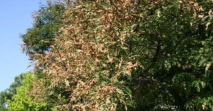
Description: Mimosa webworm larvae are about one-inch long and light green to gray/brown with five longitudinal stripes on the body. The adult moths are silver-grey and have small black spots on the wings.

Life Cycle: There are two generations of Mimosa webworm each year. The firstgeneration moths emerge in early June and lay eggs on the honeylocust leaves. Caterpillars
can be seen from mid-June through early July. The second generation of moths appear
in mid to late July to lay another round of eggs. The larvae from this generation feed
from early to late August.

Damage: Though Mimosa webworms can defoliate trees, healthy, established trees
tend not to suffer greatly. Damage is primarily aesthetic as the larvae create tight webs
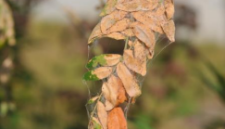
of silk around the leaflets. Foliage in the webs turns brown and is unsightly. Additionally,
the silk hanging from the trees as the larvae lower to the ground is a nuisance.

Control: Chemical control is not typically necessary. Treatment is ineffective if applied this time of year when the webs and brown leaves are already present. For more information about Mimosa webworm visit: KSRE Publication Mimosa Webworm

Roundup-Branded Herbicides: Active Ingredient Changes

0

For decades, herbicide products sold under the trade name Roundup contained the active ingredient glyphosate. Glyphosate-containing products are labeled for non-selective
control of broadleaf and grassy weeds in landscape situations. Now, many Roundup-branded herbicides available to consumers no longer contain the active ingredient glyphosate.

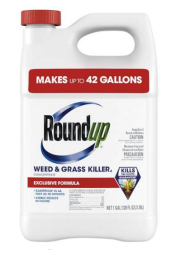
Glyphosate has been replaced with active ingredients, such as diquat, fluazifop, imazapic and triclopyr. Trade names for these products include: Roundup Extended Control, Roundup Weed and Grass Killer – Exclusive Formula, and Roundup Dual Action.

These active ingredient changes have created confusion for consumers regarding where and when these products can be applied. Undesirable injury may occur if these active ingredients are inadvertently applied to landscape beds or vegetable gardens, as they cannot be used in the same manner as products containing glyphosate. It is important to note that these products control different weed species and have different application rates than previous products. This illustrates why reading and reviewing the label of any purchased herbicide is extremely important.

Moving forward, consumers and applicators must be aware of the active ingredients in
the Roundup products they purchase, as they may change. Be sure to carefully read and follow the labels. For more information about this topic, consult the Extension publication “UPDATE ON ROUND-UP BRANDED HERBICIDES FOR CONSUMERS”

Want a personalized license plate? Pick your favorite design option for Kansas.

0

Voting on the plates will close at 5 p.m. Friday, and the winning place will be announced Monday. Personalized license plates are used when a driver wants to have custom text or numbers on their plates, rather than the random collection of letters and numbers on standard license plates.

“We know how passionate Kansans are about license plates, and this initiative aims to give the public a direct say in selecting the next personalized plate design that will be featured on vehicles across the state for years to come,” said David Harper, director of Kansas Department of Revenue’s Division of Vehicles. “We look forward to seeing which design Kansans choose.”

Currently personalized license plates use the “Powering the Future” design, which shows a sunsetting sky with three silhouetted wind turbines and the words “Powering the Future” at the bottom. The tags have been used for all personalized license plates since Jan. 15, 2020.

It’s the first time KDOR will decide on the personalized license plates by vote, and follows the processes set out late last year when backlash of a proposed design led the revenue department to reconsider.

One of the options, which includes a blue and white background with wheat stalks on either side, was the second-favorite design when Kansans voted to select the generic license plates. The other four are new templates.

Last year, the original plain yellow plates were replaced by a graphic of the Statehouse dome. The change of course caused a delay in implementing new license plates, which are expected to go into circulation later this summer.

The online voting is at appengine.egov.com/apps/ks/plates.

As reported in the Topeka Capital Journal