Wednesday, January 14, 2026
Home Blog Page 55

Skunks I have met

0

I haven’t trapped much for a couple years now, mainly because of the lack of fur buyers within driving distance, and the fact that the fur industry does not want coyotes, and thus they are worth next to nothing. According to reports and a few guys I know that trap a lot, the 3 types of pelts most wanted right now are bobcat, badger and surprisingly skunk, and the broader and whiter the stripes on the skunk, the more they are worth

I’ve had some interesting adventures involving skunks in traps, the worst of which led to a drive home in my underwear so I didn’t totally contaminate the inside of my truck, and a literal bath in my shop in the only potion known to remove skunk smell (the recipe I will give later.) Looking back, I can call those encounters interesting now, but at the time my descriptions were slightly different. Skunks are fairly laid-back critters and if caught in an enclosed or covered cage trap can usually be carted away in the trap and unceremoniously dumped somewhere without incident.

Some years ago, as a new trapper I caught a skunk in a large cage trap set for bobcats, possibly a first for both me and the skunk. As I slowly approached the cage, the silly thing ran to the back and began an acrobatics display fit for a circus. First up one side, across the back by its front claws then down the other side it went, twirling like a little black and white ballerina. With great effort and a long stick, I got the cage door propped open, then turned and ran cause’ I knew Pepe’ would be charging the open door for his freedom. At a safe distance I turned to watch, and there it still hung like Spiderman on the inside of the cage. My next plan involved rushing the cage, arms flailing and shouting at the top of my lungs, hoping to scare the critter out the open front door. It didn’t take me long to see how this would turn disastrous and the maneuver was called off in mid-charge. I had other traps to check, so I opted to leave for awhile, then just stop on my way back through and reset the trap after Pepe’ had vamoosed. A half hour later I found it still in the trap, curled up in a fuzzy little black and white ball in the back corner of the cage. I finally just left and the thing vanished sometime overnight.

Another encounter happened just a short distance from town, where I had a large skunk caught in a foothold coyote trap. Despite most people’s thinking, foothold traps usually cause a critter no more than a sore foot for awhile, but this skunk appeared to be stone cold dead. I stood and marveled at its beautiful silky fur as it rippled in the wind, and tried to figure what had caused its demise. It had the trap completely covered so I needed to push it aside to remove it. Both the skunk and the trap were going to stink already, and not anxious to drive home again in my stocking feet or underwear, I found a nice sturdy stick to roll it out of the way. I don’t know who was most surprised, the sleeping skunk when I poked it with the stick or me when it suddenly jumped to its feet! This encounter did not end in disaster (for me) but it gave new meaning to the old cliché’ “Things are not always as they seem.”

I’ve never understood how the term “skunked” came to mean basically getting nothing, as in getting “skunked” on a fishing trip. They are amazing little creatures that are very good at doing what God created them to do. Their fur is soft and silky, their essence is prized by trappers and the perfume industry and they’re actually fun to watch as they waddle along. But if you ever get “skunked” by messing with one, I guarantee you’ll get way more than nothing!

Now for the magic potion recipe; mix together in a large bowl:

1 quart 3% hydrogen peroxide

¼ cup baking soda

2 teaspoons dishwashing soap like Blue Dawn.

Bath, wash the dog and wash your clothes in this mixture and it will remove skunk smell. Continue to Explore Kansas Outdoors.

Steve can be contacted by email at [email protected]

“From Maiden to Mother to Matriarch: Understanding the Transition of Perimenopause”

0

Women experience distinct stages throughout their lives. In literature, these are often described as the maiden, the mother, and the matriarch phases. The transitions between these phases can be challenging times for a woman. Perimenopause is the transition between mother to matriarch.

The prefix peri- means around, about or near, and menopause is defined as the point when a woman has not had a menstrual period for 12 consecutive months. The average age of menopause is 51 years old. Perimenopause typically starts for women in their 40s and lasts between four to ten years. In some cases, it can start as early as 30s or as late as 50s.

During perimenopause, the ovaries start producing fewer hormones. Estrogen and progesterone levels can vary significantly week to week leading to the symptoms associated with perimenopause. Because of these hormonal shifts, lab tests for hormone levels can be unreliable for diagnosis. Elevated Follicle Stimulating Hormone (FSH) and low Estradiol levels in a woman over the age of 45 can suggest menopause, although repeated testing is usually needed to confirm a diagnosis. Thyroid Stimulating Hormone (TSH) is often checked in women, since low TSH can mimic perimenopause or menopause symptoms.

One of the first perimenopause symptoms many women experience is menstrual cycle changes. Menstrual cycles may become more irregular, longer, shorter, heavier or lighter. Hormonal changes can also lead to hot flashes, night sweats, vaginal dryness, sleep problems, mood changes, and ‘brain fog’. Slower metabolism during perimenopause can also lead to weight gain in some women.

While perimenopause is a natural part of aging, there are lifestyle changes and medications that can help minimize its symptoms. Limiting alcohol and caffeine, improving sleep quality, and reducing stress can all help diminish hot flashes. Doing more weight bearing exercises and taking a Calcium with Vitamin D supplement can help reduce the increased risk of osteoporosis and heart disease, which is caused by the decrease in estrogen. Quitting smoking is also an important step to help minimize symptoms of perimenopause and menopause. Discussing with your physician can help you find one of the multiple prescription medications that are available to help reduce symptoms.

Although this transition from mother to matriarch is not always smooth or easy, knowing what to expect can help alleviate anxiety and fear. Making healthy lifestyle choices and maintaining regular doctor visits are key. If you are experiencing symptoms, speak with your doctor about possible treatments and how to best support your well-being through this important life phase.

Dr. Jill Kruse is a hospitalist at the Brookings Health System in Brookings, SD. She serves as one of the Prairie Doc Volunteer Hosts during its 24th Season providing Health Education Based on Science, Built on Trust. Follow The Prairie Doc® www.prairiedoc.org, at Facebook, Instagram, YouTube, and TikTok. Prairie Doc Programming includes On Call with the Prairie Doc®, a medical Q&A show (most Thursdays at

7pm on YouTube and streaming on Facebook), 2 podcasts, and a Radio program (on SDPB, Sundays at 6am and 1pm).

KU News: KU achieves record-high enrollment for second straight year

0

From the Office of Public Affairs | https://www.news.ku.edu

Headlines

Contact: Joe Monaco, Office of Public Affairs, 785-864-7100, [email protected]
KU achieves record-high enrollment for second straight year at LAWRENCE — For the second consecutive year, the University of Kansas has achieved its highest overall enrollment in history, according to annual data released today.

KU’s overall enrollment has grown 1.3% — or 399 students — to 31,169, eclipsing the previous all-time mark of 30,770 set last year. This includes a 1.2% increase at the Lawrence and Edwards campuses (which are counted together) and a 1.9% increase at KU Medical Center.

This year’s record-setting enrollment includes the third-largest freshman class in KU history at 5,040 students, a decrease of 5.3% from last year’s record-high freshman enrollment. Prior to this year, KU had recruited record-high freshman classes each of the previous two years.

“We are pleased to have record-high enrollment for the second straight year and the third-largest freshman class in KU history,” said Chancellor Douglas A. Girod. “These numbers confirm that talented students see the value of pursuing their education at KU and that, once they arrive here, they receive the support they need to earn their degrees in a timely fashion.”

Freshman class size, talent, background

In addition to comprising the third-largest class in KU history, this year’s freshmen are talented and diverse. The class has a record-high average high school GPA of 3.71, with 68% of the class having arrived in Lawrence with college credit earned in high school. Minority students comprise 29% of the class, while out-of-state students account for 42% of the class.

Moreover, these first-year Jayhawks — like those in the previous two record-setting classes — are pursuing fields that benefit the Kansas economy. KU currently has all-time-high undergraduate enrollment in the School of Architecture & Design, School of Business, School of Education & Human Sciences, School of Engineering, William Allen White School of Journalism and Mass Communications and School of Professional Studies.

“Beyond recruiting record-setting numbers of first-year Jayhawks during the past three years, we are proud that these students are prepared to address Kansas’ workforce needs in crucial fields,” Girod said. “KU strives to drive economic growth and prosperity for Kansas, and these freshmen enable us to continue fulfilling that role.”

KU leaders attribute this year’s large freshman class to the university’s academic reputation, course offerings, recruitment strategies, nationwide network of donors and alumni, athletics profile, campus life and financial support from Kansas lawmakers.

Retention and graduation rates

Today’s data also include record-setting retention and graduation rates. This year, KU retained a record-high 87.5% of last year’s freshmen while notching record-high four-year and six-year graduation rates at 56.9 % and 70.3%, respectively.

“The number of freshmen is the metric that often receives attention this time of year, but equally important to overall enrollment is ensuring that we retain and support existing students as they progress toward their degrees,” Girod said. “We are proud to have again achieved record-setting retention and graduation rates, which are the direct result of our ongoing commitment to supporting students through teaching, advising and other key areas.”

Additional highlights

Lawrence and Edwards enrollment is an all-time high 27,212, breaking the record set in fall 2008. KU Medical Center enrollment is an all-time high of 3,957, breaking the record set in fall 2023.
KU has 17,791 in-state students (the most of any university in Kansas), as well as 13,378 out-of-state students (the most of any university in Kansas). Surveys show approximately one-third of out-of-state students join the Kansas workforce after graduation, making KU the state’s predominant net importer of talent to address Kansas’ workforce needs.
KU has a record-high 2,350 veterans, active-duty and military-connected (dependent) students. This is an increase of 4.1% from last year.

-30-

————————————————————————


KU News Service

1450 Jayhawk Blvd.

Lawrence KS 66045

[email protected]

https://www.news.ku.edu


Erinn Barcomb-Peterson, director of news and media relations, [email protected]


Today’s News is a free service from the Office of Public Affairs

Asian Longhorned Tick Identified in Kansas

0

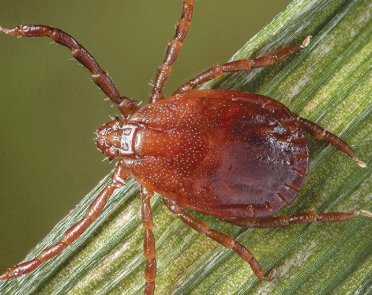
The Kansas Department of Health and Environment and the Kansas Department of Agriculture are alerting the public to the first known occurrence of the Asian longhorned tick (ALHT), Haemaphysalis longicornis, in Kansas. KDHE identified the ALHT after it was found on a dog in Franklin County last week.

ALHT is an exotic, invasive tick species that was first identified in the United States in New Jersey in 2017. Since then, it has spread westward across the U.S. and, according to the U.S. Department of Agriculture, has now been documented in 21 states, with Kansas being the most recent (https://www.aphis.usda.gov/livestock-poultry-disease/cattle/ticks/asian-longhorned/asian-longhorned-tick-what-you-need-know).

“We have been monitoring the spread of the Asian longhorned tick, especially since it was confirmed in neighboring states,” said Kansas Animal Health Commissioner Dr. Justin Smith. “Now that it has been identified in Kansas, we have been in contact with accredited veterinarians across the state to remind them to be alert for this tick and to ensure they understand the risks.”

This prolific tick, which can reproduce without the need for a male tick, has both human and animal health implications. In 2019, an ALHT in Virginia was found to be infected with Bourbon virus, while Connecticut recently identified an ALHT infected with ehrlichiosis, both of which are tick-borne diseases that occur in Kansas but are currently transmitted by the Lone Star tick.

“We’re still learning about this tick and the ecologic role that it currently plays and may play in the future in terms of disease transmission to humans” Dr. Erin Petro, KDHE State Public Health Veterinarian, said. “While the human health implications are uncertain, this tick has serious implications for animal health.”

The ALHT can cause extreme infestations on affected animals, sometimes leading to severe anemia or even exsanguination. Beyond the physical threat, the ALHT also transmits the cattle parasite Theileria orientalis Ikeda strain, which causes bovine theileriosis.

In 2024, KDHE piloted a program to create a passive tick surveillance network of veterinary clinics throughout the state. Through this program, participating clinics submit tick samples from animals in their care to KDHE for identification. This program has been successful in providing information on where various ticks are found across the state and has been especially useful in under-surveyed areas. One of these partners submitted a routine sample which was later identified as ALHT by KDHE and confirmed by the USDA. In both humans and animals, tick bite prevention is key.

To reduce the risk of disease, follow these precautions:

  • Be aware of where ticks are found and using preventive measures when in grassy, brushy, or wooded areas.
  • Dress preventively by wearing long pants tucked into socks and shirt tucked into pants.
  • Treat clothing and gear with permethrin.
  • Use an EPA-approved repellent such as DEET, picaridin, or oil of lemon eucalyptus (OLE) when enjoying the outdoors or being in a tick habitat.
  • After coming indoors, perform a thorough tick check, being sure to focus on the waistband, under the arms, in and around the ears, inside the belly button, back of knees, and in and around the hair.
  • Check pets for ticks, especially around the tail, between the back legs, under the front legs, between the toes, in and around the ears, around the eyes, and under the collar.
  • Shower soon after being in a tick habitat or engaging in outdoor activities. This will help remove any unattached ticks and identify any attached ticks.
  • To remove attached ticks, use a pair of fine-tipped tweezers, grasp the tick near the skin, and apply gentle traction strait outwards until the tick is removed.
  • Help prevent tick-borne diseases and tick infestations on pets by consulting with your veterinarian on use of a veterinary-approved flea and tick preventative.
  • More information on tick bite prevention and controlling ticks in your environment can be found at Preventing Tick Bites | Ticks | CDC.

For more information on the Asian longhorned tick including where it has been found in the U.S., visit the USDA Longhorned Tick Story Map at https://www.aphis.usda.gov/livestock-poultry-disease/cattle/ticks/asian-longhorned/asian-longhorned-tick-what-you-need-know. To find more information on other ticks, their geographic distributions, and the diseases they transmit in Kansas, visit KDHE’s Tickborne Disease Data Stories at https://maps.kdhe.state.ks.us/kstbdhome/.

Elvis’s underwear and troll among Kansas’s trippiest attractions

0

What is Kansas known for? For some, it’s Elvis Presley’s underwear, rocks shaped like mushrooms and a sculpture of a troll hidden beneath a storm grate.

These tourist attractions and others illustrate how Kansas can be “mind-bending in its own weird way,” says the website atlasobscura.com.

“Kansas is full of treasures that are sure to make you do a double take,” said an article featured on that site.

That piece, titled “10 Places to Trip Way Out in Kansas,” highlighted the following oddities.

Park features rocks resembling mushrooms

Rocks resembling mushrooms “seem to arise out of nowhere” at Mushroom Rock State Park northwest of Marquette in Ellsworth County in central Kansas, said atlasobscura.com.

The 5-acre park features “rare Dakota sandstone concretions, up to 27 feet in diameter, deposited 100 million years ago and since exposed by the relentless forces of erosion,” said the website for the 8 Wonders of Kansas Geography, of which the park is a part.

“The park was named, somewhat obviously, for its mushroom rocks, formations that occur when hard rock sits atop softer rock that erodes away over time, leaving the harder rock perched precariously on a soft rock ‘stem,'” said atlasobscura.com.

Museum of Odd items include Elvis Presley’s underwear

The Museum of Odd, maintained by artist Randy Walker in his home at 1012 New York in Lawrence, features celebrity memorabilia that includes Elvis Presley’s underwear and DNA, Charles Manson’s signature, Bob Barker’s toothbrush, a rock Helen Keller touched, and a piece of elephant poop painted to look like Adolph Hitler — and dubbed “Adolph Shitler.”

The museum is open by appointment only.

“Step inside and you’ll find shelves and tables packed with a bizarre blend of trinkets, including hundreds of sock monkeys, bottlecap people, aluminum cans turned into blossoming flowers, toothpick cabinets, and more,” said atlasobscura.com.

sock monkey is a stuffed toy resembling a monkey, traditionally made from socks.

Wichita Troll sculpture hides beneath storm grate

“Without a plaque or any other indicator, the hidden troll lies in wait, chained beneath an unassuming storm grate in Wichita,” said atlasobscura.com. “Known as ‘The Wichita Troll‘ for lack of a proper name, this gruesome sculpture is a well-kept local secret — most visitors walk right over it and never know it is there.”

At night, the website said, “a sickly green light illuminates the 7-foot-tall creature.”

The bronze sculpture was installed in 2007 by Wichita artist Connie Ernbatt at 720 Nims N as part of an effort to revitalize Wichita’s riverside area, the site said.

Here are the other trippiest attractions in Kansas

The other seven trippy Kansas attractions on atlasobscura.com’s list are as follows:

As reported in the Topeka Capital Journal