Thursday, January 15, 2026
Home Blog Page 68

Community Heroes Get Free Admission to Top Kansas City Attractions

0

Making a splash and building big thanks for our local community heroes, SEA LIFE Kansas City and LEGOLAND Discovery Center Kansas City are offering free admission. Visuals and offer details are below.

Healthcare professionals, first responders, and military all can enjoy free admission during their specific appreciation months. September is healthcare appreciation month, October is first responder’s month, and military appreciation month is in November. They also receive 30% off for up to six friends and family members so they can enjoy a memorable day building memories.

Families of the community heroes can enjoy a day at the ultimate indoor LEGO playground where creativity never ends. In addition, guests visiting between September 25 – October 31 can enjoy the Halloween event, Brick-or-Treat as LEGO® Monsters take over LEGOLAND Discovery Center Kansas City and throw a Monster Party they won’t want to miss!

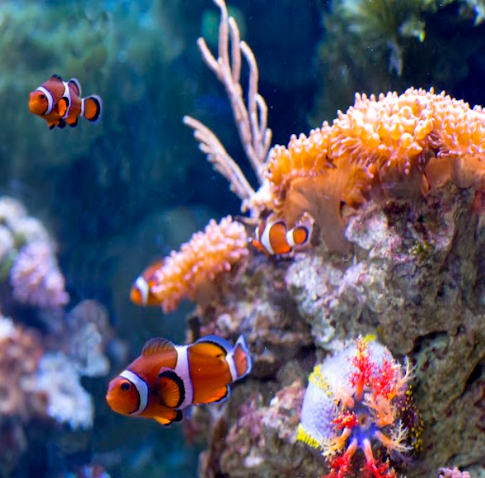
They can also become ocean explorers by discovering thousands of sea creatures, come face to fin to sharks and rescued sea turtles, and touch real sea creatures at SEA LIFE Kansas City.

Offer Details and Timing:

 September – Healthcare Workers

Free admission for healthcare workers is only available at SEA LIFE Kansas City and LEGOLAND Discovery Center Kansas City during the month of September, and tickets are available online at these websites: SEA LIFE Kansas City and LEGOLAND Discovery Center Kansas City. Healthcare workers must show employer ID or pay stub at admissions. Healthcare professionals must purchase a ticket to receive one free admission ticket.

October – First Responders

Free admission for first responders is only available at SEA LIFE Kansas City and LEGOLAND Discovery Center Kansas City during the month of October, and tickets will be available a few days prior to October for first responders at these websites: SEA LIFE Kansas City and LEGOLAND Discovery Center Kansas City.  First responders must show employer ID or pay stub at admissions. First responders must purchase a ticket to receive one free admission ticket.

November – Military Personnel

Free admission for military personnel is only available at SEA LIFE Kansas City and LEGOLAND Discovery Center Kansas City during the month of November, and tickets will be available a few days prior to November for military personnel at these websites: SEA LIFE Kansas City and LEGOLAND Discovery Center Kansas City.  Military personnel must provide military ID or pay stub at admissions. Military personnel must purchase a ticket to receive one free admission ticket.
 

Dept. of Wildlife and Parks warns on increased rattlesnake activity

0

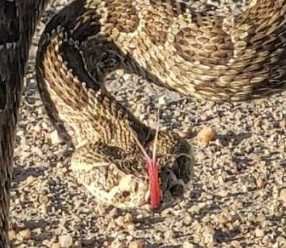
With warmer weather and recent flooding creating ideal conditions, wildlife officials are reporting more rattlesnake activity than usual across Kansas.

Field staff say the uptick comes at a time when many hunting seasons are underway or about to begin, making it especially important for outdoor enthusiasts to stay alert.

Venomous snakes found in Kansas include several rattlesnake species and copperheads. However, officials emphasize that most snakes encountered in the state are nonvenomous and play a valuable role in maintaining balanced ecosystems. Snakebites in Kansas are rarely fatal, thanks to effective medical treatments available at hospitals.

Tips for Staying Safe Outdoors
•  Watch your step, especially in tall grass or brush.
•  Be cautious around logs, rocks, or other debris where snakes may be hiding.
•  Give snakes space if you encounter one—don’t attempt to catch or kill it.

If Bitten by a Venomous Snake
•  Stay calm to slow the spread of venom.
•  Call 911 or get to the nearest hospital as quickly as possible, but avoid driving yourself if symptoms progress.
•  Do not attempt to catch or kill the snake. Antivenoms used in the U.S. are effective for all pit viper bites, including rattlesnakes and copperheads.

Kansas wildlife officials encourage residents and visitors to continue enjoying the outdoors this season—just with added awareness and preparation.

K-State moves into Top 5 of country’s agriculture colleges

0

The university’s College of Agriculture has gained two spots, according to recent Niche.com rankings

Kansas State University’s College of Agriculture has moved up to No. 5 in Niche.com’s annual list of the Best Colleges for Agricultural Sciences, reinforcing its reputation as one of the nation’s premier agriculture programs.

The ranking is determined through a combination of U.S. Department of Education data and millions of student and alumni reviews. For K-State, the recognition reflects the quality of academics, opportunities for student growth and the close-knit community that defines the college.

The university’s College of Agriculture was listed at No. 7 in last year’s rankings.

“Applying to Kansas State University has been one of the most rewarding and impactful decisions of my life,” said Layton Johnson, an agricultural education student. “I first connected with (agricultural education professor Jon) Ulmer at the Kansas FFA state convention during high school, and that conversation gave me the confidence to pursue my degree here. Since then, I’ve experienced an environment where professors know me personally, care about my goals and prepare me for success in and beyond the classroom.”

Dan Moser, the interim Eldon Gideon Dean of the College of Agriculture, said the recognition demonstrates the college’s growing impact.

“We are proud to see K-State’s College of Agriculture ranked in the top five nationally,” Moser said. “This distinction reflects the excellence of our faculty and staff, the achievements of our students and the forward-looking innovation that defines our program.”

A centerpiece of that innovation is the Agriculture Innovation Initiative, which is reshaping the future of agricultural teaching, research and outreach at K-State. The initiative includes state-of-the-art facilities under construction across campus and strategies to attract top-tier faculty and researchers.

Johnson said those investments, combined with a supportive culture, are preparing students like him to lead.

“One of the most valuable aspects of my time here has been the close-knit, supportive learning environment,” he said. “In addition to strong academics, I’ve built lifelong friendships and leadership skills through organizations and activities in the College of Agriculture. K-State doesn’t just help us (as students) meet our goals — it pushes us to exceed them and step into roles that will shape the future of agriculture.”

Niche.com’s top 10 agriculture schools for 2025 are:

No. 1 Cornell University

No. 2 Texas A&M University

No. 3 University of Florida

No. 4 University of Illinois Urbana–Champaign

No. 5 Kansas State University

No. 6 North Carolina State University

No. 7 University of California – Davis

No. 8 Oklahoma State University

No. 9 University of Georgia

No. 10 Purdue University

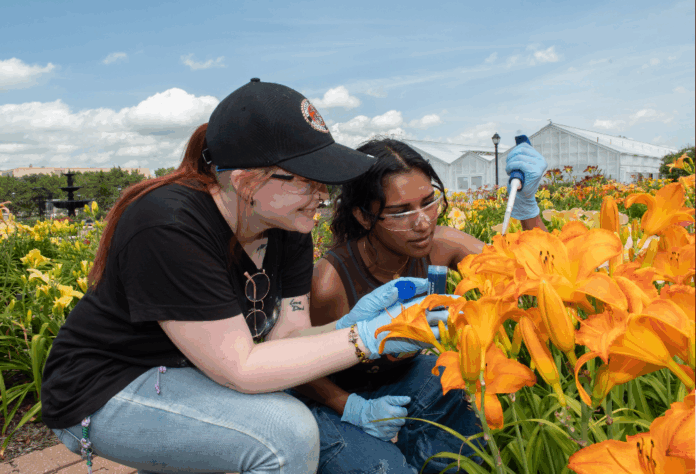
PHOTO: Entomolgy Students – K-State’s College of Agriculture has achieved a Top 5 ranking in Niche.com’s 2025 annual list of the Best Colleges for Agricultural Sciences. Students credit caring faculty and real-world experience among factors that makes K-State stand out. (K-State Extension news service)

Kindness is more than just being nice; It’s good for your health

0

K-State community health specialist touts benefits of intentional kindness.

Holding the door for someone is a nice gesture, but Kansas State University community health specialist Elaine Johannes says there’s a deeper, more impactful practice that benefits both giver and receiver.

She calls it ‘intentional kindness.’

“Being nice keeps social lubricants moving,” said Johannes, the Kansas Health Foundation’s Distinguished Professor of Community Health at K-State. “But being kind is more intentional. It has to do with our relationship with people and the world. It takes a little bit more interaction to be kind and to show that with our acts.”

Listen to an interview by Jeff Wichman with Elaine Johannes on the weekly podcast, Sound Living

Johannes said there is a growing body of research indicating that intentional kindness is a critical component of physical and mental health, as well as economic wellbeing.

“We’ve known for some time that toxic, hostile environments can trigger fight-or-flight responses,” she said. “Those places can be argumentative; it’s not a kind place. When we’re in those spaces, our bodies tense up. Cortisol builds. Our capillaries and veins constrict. Our heart pumps faster. Some people freeze because they don’t know how to get out of that place.”

On the other hand, an environment of kindness can benefit health.

“When we’re around people who treat us kindly, our bodies relax,” Johannes said. “We produce oxytocin – which is often called the love hormone or bonding hormone – which helps improve everything from heart function to breathing.”

Johannes said K-State Extension has recently released a fact sheet titled Kindness Matters that aims to help communities, schools, families and workplaces understand and implement more intentional acts of kindness. The publication can be downloaded online for free.

Johannes said kindness should happen naturally, but also can be planned. She even suggests writing intentional acts of kindness into a calendar, or store on a computer app.

“Yes, kindness can be random, but it can also be scheduled,” she said. “You can put it on your calendar or app — check in with a colleague, grab someone coffee, or take out the office trash. These small, thoughtful acts have ripple effects.”

Kindness Matters, which was written primarily by K-State Extension family and consumer sciences agent Lisa Newman, includes resources and ideas for building kindness into daily habits. From volunteering to active listening, the guide offers practical suggestions for individuals and groups.

One section even explores the economic benefits of working in or investing in businesses and organizations that promote kindness.

Johannes said in cardiac care and cancer treatment units, for example, studies have shown that physicians working in kind environments stay longer and patients actually recover faster.

“Kindness isn’t just about grand gestures,” Johannes said. “It’s about being present, listening, and recognizing the humanity in each other, even strangers.”

She adds: “This is something we can all do. Whether it’s intentional or spontaneous, the act of being kind — to others and ourself — creates healthier, happier communities. And it might just become a habit worth keeping.”

A longer discussion with Johannes is available online on the weekly podcast, Sound Living, produced by K-State Extension.

More information also is available at local K-State Extension offices.

Time to Plant Spring-flowering Bulbs Approaching 

0
Hardy bulbs require a chilling period before they bloom in the spring. These varieties can be planted now through October giving them time to establish roots before winter.
Choose an area with full sun to part shade. Ideally the soil should be sandy loam, but if not, amend it by adding compost to a depth of at least one-foot to promote good drainage. Incorporate fertilizer only if recommended based on a soil test. The soil pH should be between 6.0 and 7.0.
Determine the planting depth based on the bulb size. Bulbs the size of tulips and hyacinths are typically planted six-inches deep while daffodil-size bulbs should be six- to eight-inches deep. In general, bulbs should be planted two to three times as deep as their width. This is determined by the distance from the depth where the base of the bulb will rest to the soil surface after the hole is backfilled.
Space large bulbs four- to six-inches apart. Small bulbs can be spaced one- to two-inches apart. Mass plantings create a more aesthetically-pleasing display when spring blooms emerge.
Backfill each hole halfway and water in to settle the soil. Replace the remaining soil and water again. Though you will not see above-ground growth in the fall, roots are still growing. Keep the soil moist and add mulch after the soil freezes to provide insulation and prevent bulbs from being heaved out of the soil.
Here are some hardy bulbs to consider if you want to have variety in your spring show:
  • Hyacinth
  • Allium
  • Asiatic Lily
  • Crocus
  • Snowdrops
  • Oriental Lily