Tuesday, January 20, 2026
Home Blog Page 120

Fall Gardening

0
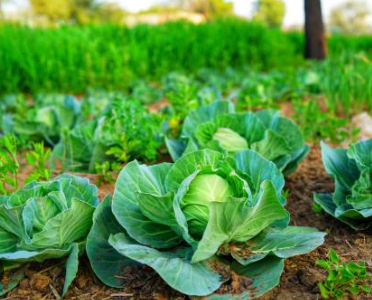
Ready or not it’s time to start planning the fall vegetable garden. Fall gardens may face additional pressures of pests and heat, but the flavor that comes from these late season crops are often better. Fall planting requires attention to the number of days to harvest as well as the crops’ tolerance to frost. Crops may be direct seeded or transplanted into the garden. Growing transplants is a good choice when the temperature is too warm for starting seeds in the ground, if you have grow lights and space available for starting them indoors.
When seeding crops directly into the garden, plant slightly deeper than recommended in the spring to take advantage of the cooler soil temperatures and moisture available. Water more frequently to prevent the seeds from drying out. Overhead watering often causes soil to crust, making it more difficult for young, tender plants to emerge. Prevent this by applying a light sprinkling of vermiculite or compost over the row after seeding or use a soaker hose or drip irrigation right next to the row to allow water to slowly seep into the ground.
Mid-July:
Plant potatoes if you can find seed stock or have saved seed potatoes. Do not use
freshly dug potatoes as they have a built-in dormancy that will prevent growth. Also, grocery store potatoes are often treated so they don’t sprout.
Cabbage, broccoli, and cauliflower can be started from seed at this time. Choose a protected place where the soil can be kept moist and rabbits will not bother them. This will not be where they will grow the entire season but these crops will be transplanted about mid-August.
Late July:
Seed beets, carrots and beans.
Late July to Early August:
Seed spinach and long-season maturing lettuce. Leaf lettuce will be seeded later.
Second Week of August:
Transplant cabbage, broccoli and cauliflower to their final location.
Mid to Late August:
Seed radishes and leaf lettuce. No need to fertilize before planting. Side-dress two weeks after transplanting or four weeks after sowing seed by applying 2 tablespoons of a 16-0-0 or 1 tablespoon of a 27-3-3, 30-3-4 fertilizer, or something similar per plant.
The Kansas Garden Guide is a great resource for additional information about fall gardening.

Carpenter Bees & Beetles

0
Carpenter Bees
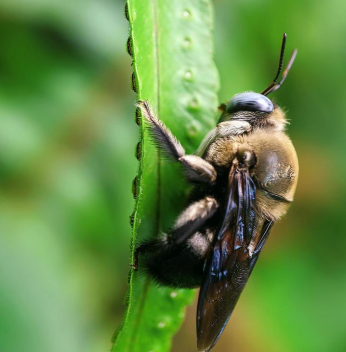
Description: Carpenter bees resemble honey bees however; the abdomen of the honey bee is covered in hairs while the carpenter bee abdomen is smooth and shiny. Female carpenter bees have a black face and a stinger, though they tend not to sting unless provoked. Males have a white face and no stinger.
 
Life Cycle: The life of a carpenter bee lasts one year. Adults overwinter in tunnels they bore into wooden structures. In late spring adults emerge to mate and lay eggs. Female carpenter bees make “bee bread” by combining pollen with nectar. The bee bread is inserted in one of the tunnels and females lay an egg on top of it. That section of the tunnel is sealed and the process is repeated six to ten more times. Larvae hatch from the eggs and reach maturity in five to six weeks. During late summer/early fall the mature bees emerge from the tunnels to eat for a short time before overwintering.
 
Damage: Carpenter bees are reliable pollinators but can be very destructive. Their tunnels are about ½-inch in diameter and five to six inches long through wooden decks, awnings and siding. The secondary damage can be even more destructive as woodpeckers peck gaping holes in the wood in search of the larvae.
 
Control: Carpenter bees tend to prefer soft, unpainted or weathered wood at least a couple of inches thick. Insecticides can be used to treat openings. Sevin can be applied inside the tunnels as a spray or dust. Apply on a cool night when the bees are more likely to be inside their tunnels. Treatment will need to be reapplied after one to two weeks. Carpenter bee traps can be effective for smaller populations, but to control larger populations many traps will be required for any control.
Japanese Beetles 
Description: Similar in appearance to other June bugs, the adult Japanese beetle is 1/4 to 3/8-inch long with a shiny, metallic-green head. The body has bronze wing covers and five clumps of hair that border the sides of the abdomen. The larvae are cream-colored grubs with a light brown head about 1 ¼-inch long at maturity.
 
Life Cycle: Adult female Japanese beetles lay eggs in July beneath wet lawns. Upon hatching, larvae feed on the sod roots and overwinter until the following summer. In June, the larvae pupate and adult beetles emerge to feed above-ground.
Damage: An extremely destructive pest, Japanese beetles feed on every part of the plant. The beetles skeletonize leaves and consume flowers and fruit entirely. Hundreds of varieties of plants can play host to this non-selective pest.
 
Control: Controlling Japanese beetles is a challenge this time of year as new adult beetles emerge from underground daily over several weeks. In small quantities, beetles can be manually removed from plants and dropped into a bucket of soapy water. Check plants daily to look for symptoms. Mornings are the best time to observe as beetles are slower and easier to catch.
There are many traps available that lure Japanese beetles into a container where the pests can be gathered and disposed of. However, some sources caution against using traps as the pheromones used to attract the beetles can draw in even more beetles than would naturally appear. Not all of these beetles may end up in the traps and the result could be greater damage to the plants.
Contact your local Extension agent for recommendations on chemical control options.
 
Blister Beetles
Description: There are several varieties of blister beetles. Colors vary including solid black, black with a gray or cream-colored band, and grayish-brown with yellow stripes. The relatively soft body can be up to one-inch long. They have a broad head with a narrow neck-like structure attaching it to the rest of the body. The wings are soft and the mature adult has long legs. The antennae are about 1/3 the length of the body.
 
Life Cycle: Adult blister beetles lay masses of eggs in the soil during late summer. When the larvae hatch, they search for nests of grasshopper eggs and begin feeding on them. Throughout several molts the larvae develop more prominent legs. The late-stage larvae are the most active and leave the grasshopper nest to pupate underground the following summer. The adult emerges 10 to 20 days later. There is one generation per year.
 
Damage: Blister beetles feed primarily on flowers but will consume leaves as well. Though damage can defoliate a plant entirely, blister beetles can also be great natural predators against grasshoppers. The name blister beetle is derived from the oily substance the insect emits, cantharidin, that is toxic and can leave blisters on human skin if it comes in contact.
 
Control: If removing manually, wear rubber gloves to protect the skin from blistering. Chemical control may be necessary for large populations. Contact your local Extension agent for support.
 
Budworms on Garden Plants
Description: Budworms can be brown, purple, red or green depending on the host plant it’s consuming. It has white stripes on the abdomen that run the length of the 1 ¾-inch body. There are hairs on the body as well. Adult moths are greenish-brown with a
wingspan of about 1 ¼-inches.
 
Life Cycle: There are two generations of budworms each year with the second generation typically being the more destructive. The pupae overwinter several inches beneath the soil surface during mild winters outdoors or in container plants that are brought indoors as well as in the soil of protected patios.
 
Damage: Budworms are common on petunias, geraniums, nicotiana, roses and other
ornamentals. The larvae bore a hole through the flower buds and feed on the petals. Buds may drop prematurely or, if not, the resulting bloom will show damage from the feeding. Larvae also drop black feces on the buds.
 
Control: Manual removal can be effective if plants are monitored regularly. Winters with
temperatures that drop below 20 degrees F can kill overwintering pupae if they are not in protected environments.
Contact your local Extension agency for recommendations on chemical controls.

How ‘spectacular views’ can be found in the 11 most scenic towns in Kansas

0

There is more to Kansas than sprawling fields of sunflowers and wheat, according to WorldAtlas.

That website described the Sunflower State as a “natural gem that should be explored,” steeped in beauty while displaying stunning scenery that includes parks, forests, waterfalls, bison and black squirrels.

WorldAtlas last week posted the following list of the 11 most scenic towns in Kansas.

Alma known as the ‘City of Native Stone’

A community of about 800 in Wabaunsee County in northeast Kansas, Alma has the nickname “City of Native Stone,” WorldAtlas said.

Alma is surrounded by vast open fields and agricultural lands that invite “no-frills adventures,” including the more-than-400-acre Plumlee Ranch, which is home to a large herd of bison, the site said.

Those seeking less-remote alternatives may play at Wabaunsee Pines Golf Course, which features “18 tricky holes” accompanied by stunning views of the Flint Hills, or use the tables, picnic shelters or campsites at Alma-McKnight Park, it said.

Atchison is revered for its natural surroundings

A community of slightly less than 11,000 people in Atchison County in northeast Kansas, Atchison is regionally recognized as the home of aviator Amelia Earhart, WorldAtlas said.

Atchison is also known for its natural surroundings, including the tranquil International Forest of Friendship arboretum, the calm waters of Lake Warnock and the community’s “river walk” along the banks of the meandering Missouri River, the site said.

Visitors may also enjoy the view from atop the Amelia Earhart Bridge, which crosses into Missouri, it said.

Colby recognized as ‘Oasis on the Plains’

A community of slightly less than 5,600 people in Thomas County in northwest Kansas, Colby is known as “the Oasis on the Plains,” WorldAtlas said.

Colby features an abundance of green space amid arid landscapes, including Fike Park, which offers playgrounds, walking trails and picnic areas, the site said.

The city’s Villa High Park features a fishing pond, picnic spaces, walking paths and great opportunities to watch birds, it said. Colby also offers the nine-hole Meadow Lake Golf Course.

Cottonwood Falls has ‘cascade with a 40-foot drop’

A community of slightly less than 900 people in Chase County in east-central Kansas, Cottonwood Falls is the site of Chase Lake Falls, “a spectacular cascade with a 40-foot drop,” WorldAtlas said.

“A relatively manageable 0.9-mile trail loops near the falls, allowing you to explore and admire from a safe distance,” the site added.

It said Cottonwood Falls is surrounded by the undulating landscape of the Flint Hills and stands on the southern side of the Cottonwood River, which offers fishing, campsites and picnic tables.

Leavenworth was ‘first city of Kansas’

A community of slightly more than 3,700 people in Leavenworth County in northeast Kansas, Leavenworth is known as the “first city of Kansas,” WorldAtlas said.

The community lies along the west bank of the Missouri River, providing visitors with majestic views of that waterway as well as a chance to hike or jog along the 0.7-mile Leavenworth Landing Riverfront Trail, the site said.

“Also, Wollman Park has a relaxed setting that makes it a go-to for group outings and picnics with family or friends,” it said.

Marquette’s rugged hiking trails a draw

A community of about 600 people in McPherson County in central Kansas, Marquette often hosts visitors who have come to tackle the rugged hiking trails at nearby Kanopolis State Park, WorldAtlas said.

The park features more than 30 scenic trails “crisscrossing a dry wilderness area punctuated by undulating hills and craggy bluffs,” shadowed by the scenic Smoky Hills, the website said.

The Kanopolis Lake Campgrounds offers both developed campsites and primitive ones, while hikers and bikers may explore the scenic landscape and view native wildlife using the 2.3-mile Loder Point Nature Trail, it said.

Marysville has large black squirrel population

A community of slightly less than 3,500 people in Marshall County in northeast Kansas, Marysville is known for its thriving black squirrel population, which is found primarily in Black Squirrel Bark Park, WorldAtlas said.

The Big Blue River runs through Marysville, where people can often be found walking or jogging on the nearby Blue River Rail Trail, the site said.

Marysville Park sits in the heart of the community, offering amenities that include camping, picnic shelters, benches and a large playground, it said.

Norton renowned for its prairie dogs

A community of slightly more than 2,700 people in Norton County in northwest Kansas, Norton is one of the state’s “most scenic towns,” WorldAtlas said.

Prairie Dog State Park near Norton is known for its prairie dog town, which has an estimated 300 prairie dogs, according to the travelks.com website maintained by the Kansas Department of Commerce.

The Norton area is also the site of the Keith Sebelius Reservoir, Norton Wildlife Area, Prairie Dog Creek and the nine-hole Prairie Dog Golf Course, WorldAtlas said.

Tonganoxie site of parks, trails and gardens

A community of just under 5,600 people in Leavenworth County in northeast Kansas, Tonganoxie is the site of the 15-acre VFW Memorial Park, which offers wooded sections, flower gardens and exercise trails, WorldAtlas said..

That park links to Chieftain Park, “another lovely escape with a half-mile walking trail and amenities like ball fields, playgrounds and a horseshoe pit,” the site said.

It added that Tonganoxie is located near Leavenworth State Fishing Lake, a scenic, 160-acre reservoir stocked with fish that include largemouth bass and black crappie.

Wamego’s features colorful tulip gardens and more

A community of slightly more than 4,800 people in Pottawatomie County in northeast Kansas, Wamego stands on the banks of the Kansas River, WorldAtlas said.

The city’s 12-acre Wamego City Park features colorful tulip gardens, a calm pond and a “postcard-worthy Dutch windmill,” the site said.

It told of Mount Mitchell Heritage Prairie Park, four miles south of Wamego, features tallgrass prairie and walking trails, with visitors also being able to enjoy quiet outdoor space surrounding the Beecher Bible and Rifle Church in that area.

Wilson hailed for its ‘backcountry beauty’

A community of slightly more than 850 people in Russell County in north-central Kansas, Wilson is the site of the annual Wilson After Harvest Czech Festival, which takes place July 25 and 26.

Visitors may swim, boat and water ski at nearby Wilson Reservoir, a part of Wilson State Park, which provides “rugged dry land with rocky outcrops perfect for hikers and nature photographers,” WorldAtlas said.

The Post Rock Scenic Byway, extending 18 miles north from Wilson through the Smoky Hills offers “backcountry beauty” that includes “spectacular views of valleys, hills, creeks and other landscapes,” it said.

As reported in the Topeka Capital Journal

How to brace the garden to resist heat stress

0

K-State horticulture expert shares tips to protect plants.

As Kansas temperatures rise, some garden plants will need to be protected, said Kansas State University horticulture expert Cynthia Domenghini.

“It is tempting to automatically water plants on hot afternoons, but this is not always what’s best,” Domenghini said.

Vegetable gardens need about one inch of water per week, she said. During a heat wave (above 90 degrees Fahrenheit) it may be necessary to water daily, or every other day.

“Before adding water to your garden, insert your finger 1-2 inches into the soil and check for moisture. If the soil is wet, hold off watering,” Domenghini said.

To prepare plants in advance of a heat wave, consider adding several inches of straw mulch around the plants.

“This will help reduce evaporation from the soil and will regulate the soil temperature, keeping plant roots cooler,” Domenghini said. “Make sure the plants are well-watered prior to the heat wave.”

She suggests watering as early as possible in the morning to reduce evaporation. Watering early also helps to prevent plants from drying out.

“Drip irrigation is ideal, but regardless of the method, avoid watering the leaves. Keep the source of water as close to the soil as possible,” Domenghini said.

Domenghini and her colleagues in K-State’s Department of Horticulture and Natural Resources produce a weekly Horticulture Newsletter with tips for maintaining home landscapes and gardens. The newsletter is available to view online or can be delivered by email each week.

Interested persons can subscribe to the weekly newsletter, or submit their garden and yard-related questions, by sending email to [email protected]. More information also is available at your local K-State Research and Extension office.

Read and Heed

0
lee pitts

When I was 12 my father transitioned from being a long-haul truck driver to being a heavy equipment operator because driving his semi on long trips was interfering with his drinking. His offspring took this news hard because we all looked forward to his absence.

Despite his uncountable flaws there was one thing my old man was good at: he could drive anything with a steering wheel or levers. He started by operating a backhoe, then a bulldozer and finally a truck crane. As part of his training he was given a pamphlet with the signs he needed to learn to operate a crane such as boom up, spool out, etc. I thought it would be neat to memorize these signs, although I never got a chance to use them as a writer or a rancher.

Far more important to me would have been a pamphlet that showed the hand signals your wife uses to help hubby back a trailer. So I’ve put together a list that all husbands should memorize to keep harmony in the home. Men, from personal experience I’d say you should hang this list on a wall in your tack room or shop and refer back to it before you embark on any trailering experience with your significant other.

#1- Shaking Her Fist at You- This implies that you just ran over your wife’s gardening bucket, broke the handle on her small shovel and flattened the bucket.

#2- The Okay Sign- You probably think this means you have backed the trailer into its ideal location but then you would be wrong… again. Your wife is trying to tell you from afar that zero is the number of animals you will able to load or unload in your trailer’s present location.

#3- Jumping Jacks- When your wife is waving her arms over her head while jumping up and down it doesn’t mean she’s exercising. It means “Whoa Nellie” because you just backed into your antique loading chute that was only being held together because the termites were holding hands.

#4- When She Covers Her Face and Tries To Hide Her Identity- This signal is usually used when you’re trying to unload or load cattle at the auction yard and it’s necessary for you to back your trailer into an alley. After about your fifteenth try your wife is so embarrassed that she trying to hide her identity and wants to go into the witness protection program.

#5- The You’re Out Sign in Baseball- You’ve high-centered the trailer and in the process you tore out all the wiring that ran under the trailer thereby requiring twelve hours to fix the trailer lights and still the turn signals will come out backwards.

#6- Your Wife Is Raising Her Fist Above Her Head And Shaking It At You- No, she’s definitely not giving the “Black Power” sign like those American athletes did years ago at the Olympics. I have first hand experience with this signal and it indicates that you just put a huge dent in her beloved 25 year old truck that she drives to work everyday and everyone compliments her for having such a beautifully restored pickup. Not any more they won’t.

#7- When She Keeps Tapping Her Wristwatch And Steam Appears to Be Coming Out Of The Top of Her Head- No, she’s not attempting to communicate with you with smoke signals. She’s really mad and is asking, “Where did you learn to back a trailer ya big dummy and is there any chance you might get the trailer in its appropriate spot before nightfall?”

#8- Your Wife Appears To Be Stirring a Bowl of Cake Batter- I borrowed this signal from the crane operator’s pamphlet only I’m assigning it a different meaning. What she’s saying is, “You’d make a better short order cook than a truck driver.”

#9- Slashing Her Throat- This usually happens at a bull sale when you’re trying to load out with all your friends watching and people are waiting in line behind you to load out. It means, “Let’s put a merciful end to this nonsense and let me drive so we can both avoid further humiliation.”

WARNING: The signs your wife uses may vary and it behooves you to learn the many variations.

Happy trailering everyone!