Friday, January 23, 2026
Home Blog Page 162

Summer is coming: Remember your sunscreen

0

Summer is knocking on the door, which for many folks means picnics and swimming and gardening and other outdoor activities.

That also means sun. Lots and lots of sun.

Ashley Svaty, a family and consumer sciences specialist at K-State’s Northwest Research-Extension Center in Colby, said it’s “critically important that we think about protecting our skin’s health.”

“There is a statistic (from the American Academy of Dermatology) that it only takes one blistering sunburn during childhood or adolescence to nearly double a person’s chance of developing melanoma,” Svaty said. “So even when we’re younger, we have to be mindful of the sun’s rays, and as adults, we have to be role models and help protect those kids and babies.”

Researchers say that a little sun is good for the body and mind: 20 minutes of sunshine helps in producing vitamin D, supports bone health, relieves blood pressure and promotes good mental health.

But too much sun can lead to longer-term, negative health effects.

“We need to protect ourselves when outside,” Svaty said. “I understand if we work in a field, or those that have outdoor jobs. Seek shade as much as you can, but if you can’t find shade, wear a white brim hat and sunglasses to protect those eyes, and wear UPF (Ultraviolet Protection Factor) protective clothing.”

Another common term associated with sunscreen for the skin – SPF – stands for Sun Protection Factor. Sunscreens are sold with varying levels of SPF, but Svaty said the level that one buys – as long as it is 30 SPF or higher – is less important than routinely re-applying protection every two hours while outdoors.

“The big thing to remember is that you can get as high of an SPF as you want, but remembering to re-apply that every two hours is critically important,” Svaty said. “The majority of people don’t put enough sunscreen on the first time, and then they don’t re-apply later. SPF 30 or higher is fine, but remember to re-apply every two hours.”

Svaty noted a few extra things to keep in mind:

  • The type of sunscreen one uses – spray, lotion or other – doesn’t matter. It’s a personal preference.
  • Cover as much skin as possible when outside. SPF clothing is one good way to do this, while remaining comfortable.
  • Use sunscreen all year round. The sun’s reflection off snow in the winter can be equally damaging to skin.
  • Remember vulnerable spots when applying sunscreen, touch as top of head, tips of ears and back of neck.
  • Discard expired sunscreen and keep a fresh tube year-round.

More information on sun protection is available online from the American Academy of Dermatology and the American Cancer Society, or speak to a board certified dermatologist.

Snakes on the plains: Watch out for these venomous vipers in Kansas

0

What types of venomous snakes slither around in the Sunflower State?

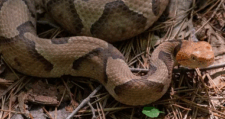
The copperhead and massasauga rattler are among four native venomous snakes present in Kansas, with the others being the prairie rattlesnake and timber rattlesnake, said the website of the Kansas Department of Wildlife and Parks.

“Western diamond-backed rattlesnakes were introduced, but are not widespread and have been recorded in only a few central-Kansas locations,” that site said.

It said another type of venomous viper, the northern cottonmouth, is “rare” in the Sunflower State, as only two specimens having been recorded — both in the Spring River drainage area in the state’s southeast corner.

Venomous snakes in Kansas all share this distinctive feature

The KDWP website said all venomous snakes found in Kansas are pit vipers, meaning they have heat-sensitive pits in front of each eye to help locate prey.

  • Kansas is home to four native venomous snakes: the copperhead, massasauga rattlesnake, prairie rattlesnake and timber rattlesnake.
  • All venomous snakes in Kansas are pit vipers, possessing heat-sensitive pits to locate prey.
  • If bitten, keep the bite below heart level and seek immediate medical attention; do not apply a tourniquet or attempt to remove venom.
  • Snakes are an important part of the ecosystem and are generally shy unless provoked.

The pain was excruciating when a venomous snake bit Grady Kornelson in 2018 in south-central Kansas.

“On a scale of one to 10, it was a nine,” he told the Hutchinson News.

Kornelson received five doses of antivenom and spent a weekend in a hospital after being bitten on a forearm as he was getting out of the water just after dark on a Friday in a cove at Cheney Reservoir.

Hospital staff told Kornelson he’d been bitten by a copperhead, though a Kansas Department of Wildlife and Parks official suggested it may have instead been a massasauga rattlesnake.

What types of venomous snakes slither around in the Sunflower State?

The copperhead and massasauga rattler are among four native venomous snakes present in Kansas, with the others being the prairie rattlesnake and timber rattlesnake, said the website of the Kansas Department of Wildlife and Parks.

“Western diamond-backed rattlesnakes were introduced, but are not widespread and have been recorded in only a few central-Kansas locations,” that site said.

It said another type of venomous viper, the northern cottonmouth, is “rare” in the Sunflower State, as only two specimens having been recorded — both in the Spring River drainage area in the state’s southeast corner.

Venomous snakes in Kansas all share this distinctive feature

“Venomous snakes are generally shy and aren’t looking for a fight, but they will bite in self-defense if you step too close, step on or provoke them,” the KDWP website said.

It said venomous snakes tend to be well-camouflaged, “So watch where you walk, and don’t go barefoot or wear flip-flops or sandals, even on established trails or around campgrounds.”

Many people each year are bitten by harmless snakes “and experience nothing but small scratches that readily heal,” said “A Pocket Guide to Kansas Snakes.”

The guide — written by Joseph T. Collins, Suzanne L. Collins and Travis W. Taggart — is on its sixth edition after initially being published in 2011.

What should you do if a venomous snake bites you?

Deaths from snake bites in the Sunflower State are rare, the pocket guide said.

“There is only one documented fatality in Kansas since 1950,” it said.

The KDWP website encourages anyone who thinks he or she has been bitten by a venomous snake to “keep the site of the bite quiet and below the level of your heart.”

The pocket guide encourages those in that situation to stay calm., treat for shock and go by vehicle to the nearest hospital or other medical facility.

It said such victims must NOT do the following things:

  • Use a tourniquet. If the tourniquet is tied too tight, that may cause the loss of a limb.
  • Make cuts through or near the site of the bite.
  • Try to suck venom from the site of the bite, as “You might have a tooth cavity or gum sore and this would place venom into that wound.”
  • Allow antivenom to be administered to them unless they first get tested to determine if they’re allergic to it.
  • Try to kill or capture the snake, as that would only give it another chance to bite.

Killing or capturing the snake is also unnecessary, the KDWP site said, “because a single type of antivenom is used to treat all pit viper bites in the U.S.”

When and where do snakes hang out?

Kansas is home to 42 different native species of snakes, which are active during the warmer months between late March and November — the same time period when people are most active outdoors, the KDWP website said.

“Most snakes are found in rural or semi-rural areas where there is suitable habitat and prey,” it said. “They may be found in woodlands and shrubby areas; brush, log or rock piles; around water; in tall grass; around rocky outcrops or ledges; or even under ornamental shrubbery and gardens.”

Snakes are a vital part of the food chain, the pocket guide said.

“They are small, shy animals that are frightened by people,” it said. “Understanding their role in nature and their unassuming presence are vital to dispel the myths and fears people have of snakes.”

Snakes can’t regulate their body temperature internally, so they’ll be more active at night during times of hot weather, retreating to shady areas or under rocks and logs during the day, the KDWP website said.

“When it’s cooler, they tend to be more active during the day,” it said.

What’s the largest rattlesnake in Kansas?

The venomous timber rattlesnake is found in the eastern fourth of the state, the KDWP website said.

The timber rattler is the largest rattlesnake in Kansas, capable of growing up to 5 feet, 3 inches in length, the pocket guide said.

That species feeds on small mammals and smaller snakes, it said.

Prairie rattler feeds on lizards, mice, rats, pocket gophers

The prairie rattlesnake is found in the western half of the state, the KDWP website said.

It is capable of growing up to 4 feet, 9 and a half inches long, the pocket guide said.

It said the prairie rattler feeds on lizards, mice, rats and pocket gophers.

Massasauga rattler is the state’s smallest rattlesnake

The massasauga rattlesnake is found in the eastern two-thirds of the state, the KDWP website said.

It is capable of growing up to 2 feet, 9 and a half inches long, the pocket guide said.

It said the massasauga rattler feeds on frogs, lizards, rodents and other snakes.

Copperhead is particularly fond of rodents

The copperhead is found in the eastern third of Kansas, the KDWP website said.

It is capable of growing up to 3 feet, 4 inches long, the pocket guide said.

It said copperheads are particularly fond of rodents but also feed on insects, frogs, toads, lizards, small birds and other snakes.

As reported in the Topeka Capital Journal

K-State lab remains vigilant toward protecting food systems

0

American agriculture must remain vigilant at every stage of food production to protect from threats throughout the system. Fortunately for American consumers, researchers at K-State and other universities are addressing many of these threats.

The University is part of national plant biosecurity effort. 
MANHATTAN — Americans trust the safety and security of their food.
Kansas State University plant pathologist Jim Stack says our trust is well-founded, pointing to a series of checks and balances that help to ensure that the food we eat arrives safely and on time at the dinner table.
Consider this: Farm crops — be they wheat, corn, soybeans, sorghum or many others — face daily challenges in the farmer’s field due to such threats as insects, diseases, weeds and weather events.
If the crop passes the test, it’s on to harvest with heavy machinery, then storage in bins and distribution through any of several channels — truck, ship, train and even airplane. Then there is processing and packaging the food, retail storage and marketing, and then it’s off to a kitchen where Americans have the ultimate responsibility to chill, clean and cook the product safely.
“Most of the foods in Kansas grocery stores were not grown in Kansas; they were produced elsewhere and transported into Kansas,” Stack said. “That is true for most U.S. states and many countries globally. Our foods are grown in multiple locations and transported to multiple locations. This creates the significant risk of transporting pests and pathogens with their foods and their containers.”
Because there are threats throughout the system, American agriculture must remain vigilant at every stage of food production. Fortunately for American consumers, researchers at K-State and other universities are addressing many of these threats.
Plant experts dot the United States
Stack is the director of the Great Plains Diagnostic Network, one of five regional centers under the National Plant Diagnostic Network, established in 2002 by the National Institute of Food and Agriculture and the U.S. Office of Homeland Security. The network was formed to enhance agricultural biosecurity by detecting potential disease outbreaks or bioterrorist threats.
Kansas State University software engineers developed a lab management information system, called Plant Diagnostic Information Systems, that is used by many states throughout the nation. Today, the network has plant diagnosticians — including pathologists, entomologists, weed scientists and other plant specialists — who share information across the country to keep America’s food and fiber system as safe as possible.
“If countries want to participate in global trade, there is a set of rules that they must abide by,” Stack said. “Those rules are the basis of phytosanitary policy. The World Trade Organization designated the United Nations Food and Agricultural Organization to be responsible for these rules, under the International Plant Protection Convention.”
The International Plant Protection Convention is a 1951 treaty between participating nations — the U.S. included — that aims to secure actions that prevent and control the introduction and spread of plant pests.
“Trading partners are required to put clean material into the global marketplace,” Stack said. Some ways to determine if you’re doing that include incorporating best production practices, field surveillance and diagnostic testing.”
Annually, the Great Plains Diagnostic Network, which has its headquarters on K-State’s Manhattan campus, processes 1,500 samples of suspected diseases, unidentified insects, or unusual symptoms on plants and farm crops.
“Diagnostics is the process of identifying not only what the organism is, but also understanding why the disease or infestation is happening,” Stack said. “We use a lot of technology to do that. One of the positive results of having phytosanitary policies is that we’ve been cleaning up the plant material that is traded around the planet.”
No margin for error
Detecting plant pests and pathogens requires precision and accuracy, Stack said.
“Most international and federal response plans are linked to the name of the organism. If you don’t get the name right, you don’t have a legal right to respond to a suspected outbreak,” he said.
An incorrect diagnosis, in other words, might lead to the introduction, establishment and spread of a pest or pathogen.
“In 2010 in Australia, they discovered a new rust disease in a nursery in New South Wales that they called myrtle rust,” Stack said. “They quarantined the nursery to contain and eventually eradicate the pathogen.
“But a secondary analysis indicated that it was not myrtle rust but rather guava rust; however, the response plan was for myrtle rust. While the discrepancy in the name was being resolved, the nursery was not precluded from trading its plants. While waiting to get a correct identification, the pathogen spread from New South Wales to Queensland and other places.”
The disease turned out to be myrtle rust after all — putting an estimated 70% of Australian flora at risk.
“That’s just one example,” Stack said. “There are multiple examples like that in countries around the world. We spend a lot of time and effort to get it right the first time.”
Fending off a destructive wheat disease
Kansas State University scientists have had their eye on a particularly troubling disease that is capable of taking out entire wheat fields. Recently retired plant pathologist Barbara Valent initiated research projects at K-State that are considered the world’s most comprehensive studies on wheat blast.
Valent’s research team was the first to discover a source of resistance, called 2NS, for wheat blast disease. Her group also pioneered sophisticated microscopic techniques that allow them to watch and record how the disease develops cell-by-cell and hour-by-hour in amazing detail.
Prior to her retirement in late 2024, Valent had worked on understanding blast disease for more than 40 years; in 2022, she was recognized with membership into the National Academy of Sciences — the first scientist at K-State to earn the honor for original research conducted at the university.
Stack and fellow K-State faculty members Giovana Cruppe and Sanzhen Lui are continuing that work in K-State’s Biosecurity Research Institute, a biosafety level-3 agriculture facility on K-State’s Manhattan campus.
“We are looking at the likelihood of detecting this pathogen by the methods that are commonly used in seed inspection,” Stack said. “And — I’ll just cut to the conclusion — it’s very, very unlikely to detect the pathogen that way. Unless it’s a full-blown epidemic, you’re probably not going to detect it.”
The team of plant biosecurity scientists began developing different protocols to see if they could more accurately detect the presence of the wheat blast pathogen in a shipment of seed.
“We ended up with the conclusion that you could have up to 100 kilograms of infected seed in a 20-metric-ton harvest wagon, and you would not detect infected grain with traditional methods,” he said.
In other words, if even half of 1% of a shipment of seed goes undetected for wheat blast disease, that shipment could cause widespread devastation anywhere those seeds are planted.
“That seed is being shipped across the world, potentially into the United States,” Stack said. “Because of that, if we’re not vigilant, we’re likely to experience more outbreaks.”
Additional work in Stack’s lab includes studies with bacterium and the emergence of new diseases that could potentially affect agricultural crops as well as plant toxins that could be lethal to livestock if ingested.
Vast network is always on alert
Stack said that the National Plant Diagnostic Network has provided diagnostic services to about 97% of the more than 3,000 counties in the United States since its inception 20 years ago, including the territories in the Caribbean and Pacific.
“We span seven time zones and have about 75 active labs, plus partners in satellite labs. And the labs at the Department of Agriculture in some states are part of the network,” he said. “We also have a few industry labs that see value in this system.”
Stack said that the combined power of the network is critical because the consequences of a late detection or an inaccurate identification are quite serious, not just domestically but also internationally.
“The result of disease introductions into our food systems is potentially the reduction of production, or at least lost potential,” Stack said. “You take a crop like wheat in Kansas … half of that is for export. Or think of corn and the diseases we are dealing with. About 80% of Kansas’ corn production is in southeast Kansas to support the livestock industry. If we can’t produce enough corn or produce it profitably, it will hurt both crop and livestock producers.
“Plant diseases cause ripple effects that we need to take into account. We need to be all over this.”


Mediterranean grilled chuck roast with garden grilled vegetables

0

Beef. It’s whats for dinner! Dive into this marinated, grilled chuck roast paired with flavors of the Mediterranean. Served with seasonal grilled vegetables.

Ingredients:

Marinade:

Cooking:

  1. Combine marinade in a small bowl. Place beef Chuck Steak and marinade in food-safe plastic bag; turn to coat. Close bag securely and marinate in refrigerator 6 hours or as long as overnight, turning occasionally.
  2. In a medium size bowl toss zucchini & mini bell peppers with 1 teaspoon olive. Place vegetables on grid over medium heat. Grill 3 to 5 minutes on each side. Remove from grill and set aside. Once slightly cooled slice zucchini into 1/4inch slices and set aside.
  3. Remove steak from marinade, discard marinade. Season each side of roast with 1/2 Tablespoon of spice mix. Place on grid over medium, ash-covered coals. Grill, covered, 3 to 4 minutes (over medium heat on preheated gas grill, 3 to 4 minutes) for medium rare (145°F) to medium (160°F) doneness, turning occasionally.
  4. Remove from the grill and season with salt, as desired. Serve alongside grilled vegetables.

Safe Handling Tips:

  • Wash hands with soap and water before cooking and always after touching raw meat.
  • Separate raw meat from other foods.
  • Wash all cutting boards, utensils, and dishes after touching raw meat.
  • Do not reuse marinades used on raw foods.
  • Wash all produce prior to use.
  • Cook steaks and roasts until temperature reaches 145°F for medium rare, as measured by a meat thermometer, allowing to rest for three minutes.
  • Cook Ground Beef to 160°F as measured by a meat thermometer.
  • Refrigerate leftovers promptly.

For more information on degree of doneness and other cooking tips visit: https://www.beefitswhatsfordinner.com/cooking/determining-doneness

For more information on safe food handling and beef safety, see: https://www.beefitswhatsfordinner.com/cooking/food-safety

Assessing herd performance

0
Operational goals relating to calving.

When an athlete is aiming to improve their performance, they begin with a starting measurement, and as they train, they continue to assess their abilities to measure progress. For cattle producers, that scorecard may include pregnancy percentages, the number of calves weaned and, in some cases, death loss.

This was a topic of discussion on a recent Cattle Chat podcast hosted by faculty at Kansas State University’s Beef Cattle Institute. K-State veterinarian Bob Larson joined with K-State beef extension specialist Jason Warner to set goals for cow-calf operations.

“This is a good time of year to review your records and if the numbers aren’t where you want them to be, you can make management adjustments under the guidance of your veterinarian, nutritionist or another advisor,” Warner said.

Two areas that Warner tells producers to focus on are the number of live calves born compared to the number of cows exposed to bulls at the start of the breeding season; and the number of cows that became pregnant early in the breeding season.

A top priority for Larson is to have calves born early in the calving season.

“The goal is to have 65% of the calves born in the first 21 days, and 85 to 90%% of the calves born within the first 42 days of the season,” Larson said. “If that happens, I know that the cows were in good body condition at the start of the breeding season and the bulls were fertile.”

As far as the percentage of live calves weaned relative to the number of pregnant females, Warner says the goal is at least 90%.

“The national average is between one to two percent for calf death loss and that will vary from year to year within the same operation,” Larson said. “If the producer is calving out a high percentage of heifers, that can influence the calf death loss percentage.”

To hear the full discussion, listen to Cattle Chat on your preferred streaming platform.