Saturday, January 24, 2026
Home Blog Page 183

Good Grazin’

0
lee pitts

Researchers say Americans are dramatically changing our eating habits. For example, did you know that only 15% of our meals require the use of an oven? And the traditional three-meal-a-day regimen is disappearing faster than a cowboy’s wages. The fastest growing segment of our new diet is just that… fast food.

Pillsbury coined a phrase to describe this new breed of eaters, they call them “Chase and Grabbits” and they currently represent 26% of all eaters. These are young urbanities who live alone or with roommates. If married, they’re childless and both spouses work. They simply don’t have the time, money or desire to eat three traditional meals at home.

It’s not just cows that graze these days as “grazing” has become the hottest trend amongst those of us who like to eat, which includes most of us. Grazing might be new to urbanites but it’s nothing new to cowboys. I’ve been on a lot of ranches and I gotta say I’ve only seen a handful of obese cowboys and I think I know why. Have you ever seen a Thermos or a lunch bucket tied to the saddle of a real cowboy? I haven’t. Most cowboys I know eat two meals a day. They might eat a big breakfast in the morning before heading out for the day or they might skip breakfast and have big noonday meal.

(Let’s get something straight right off the bat. In my neck of the woods the meal you eat at noon is called lunch but elsewhere it’s called dinner which we eat at supper, which I’ve never eaten in my life because I eat dinner. Got it? Good, I’m glad we got that straight.)

I call this trend to eating two meals a day the ‘Starve and Gorge Diet’. Neither my wife or I have ever been fat. My Doctor said that a man my age (73) should weigh what he weighed in high school, which was 155 pounds and that is what I weigh now. One of the keys to my being thin is I spent a lot of time at my Grandparent’s home and my wonderful Grandma, bless her beautiful soul, was not what you’d call a great cook. Her three favorite ingredients were salt, ketchup and burnt. I swear she sometimes served up meals that would have killed a hog and I attribute this as to why my Grandpa and I were thin our entire adult lives.

As for my wife, she’s always maintained a fabulous figure and she does it by watching her carbs and skipping breakfast. And sometimes she even skips dinner if she has eaten a large meal at lunch. She doesn’t snack during the day and by following this diet she is in perfect health.

The Indians are also sporadic eaters and they say that we English uninvited interlopers are the only people on earth who look at their watch to see if they are hungry. They make a good point. How many times have you promptly sat down to your evening meal when you just weren’t all that hungry but your wife had set the table for two with food for five and you had to eat every crumb or else your wife got hurt because you “didn’t like her cooking?” And the next day when you weighed yourself the scale groaned.

I used to travel with a guy who lived by the Starve and Gorge Diet and he usually ate only one meal a day that he usually got some poor sucker to pay for. (Me, in most cases.) Although he was skinny the proprietors who owned the all-you-can-eat buffets that are popular in New Mexico cringed when they saw him coming and tried to hang up a closed sign before he could enter. One such owner said that my buddy was the 12 best customers he ever had. He’s the only person I know who ate the 72 ounce steak at the Big Texan in Amarillo thereby getting it for free.

I thought of trying to do the same thing one time when I was in Amarillo and was so hungry I could eat a saddle blanket but my frugal nature prevented it because if you don’t eat the steak and all the fixins in one hour you have to pay for all of it.

Lettuce Eat Local: Suddenly Sandwiches and Salads Aren’t So Simple

0

Amanda Miller
Columnist
Lettuce Eat Local

It seems like such a simple category on the surface. A salad is, you know, a salad! Like a sandwich is a sandwich, right?

Like my 16-month-old daughter loves to say, “Nnnnnno!” While a quintessential version of those foods might have popped into your head as you read them, another second’s consideration reveals a glaring number of alternatives. 

A salad is not just lettuce decorated with bits of raw vegetables and laced with a dressing, just as a sandwich is not just coldcuts and cheese between slices of mayo-spread bread. In fact, even those definitions could be turned into a hundred different iterations each. Is it romaine or a spring mix? Tomatoes and cucumbers, or carrots and green onions? Is the dressing creamy, tangy, herby, sweet? 

All these questions are still just the tip of the iceberg (lettuce). We haven’t touched on croutons, nuts, cheeses, beans, eggs, meats, fruits, or any of the myriad options that can get tossed on a bed of greens — and we’re in the salady-salad zone yet, yet we dare not forget about coleslaws, potato salads, pasta salads, or even jello “salads.” (I personally do not allow that last one to fit here [or anywhere, technically], but I promise I’m still Mennonite.)

What constitutes a sandwich is also something I’ve heard debated often in foodie circles. The premise again seems clear-cut, until you slice it a little differently. Sure, grilled cheese, muffaletta, turkey bacon ranch all work: hot, cold, meat or not, veggies or not, sauce or not. Stuff sandwiched between two slices of bread. 

But somehow it feels uncomfortable if you say you’re having sandwiches and then serve up burgers, even though they’re basically the same idea as pulled pork or hot ham & cheese. Hot dogs are in that same family…or are they, because is a hot dog a sandwich? Or what if you’re having an open-faced sandwich: is that an oxymoron if there’s only one piece of bread? And what if you take some regular sandwich fillings, and roll them into a tortilla; is a wrap a subcategory, or a whole new thing? 

Oh, the questions.

To make matters even worse, there are salad sandwiches. Go to a deli and ask for the chicken salad, and you could get a salad with chicken, or a sandwich with chicken salad. Or possibly even a chicken salad on salad. 

Fortunately, these are not the most pressing questions in life (unless of course you’re getting a panini, which is a pressed grilled sandwich). Yet they are timely, as we are ushering in the yearly salad + sandwich season. Spring and summer, with their warmer temperatures and newly growing produce, call out for lighter, fresher fare, found ideally in the vast variety of salads and sandwiches. Brian could eat a sandwich every day for lunch and be happy, and I could eat a salad every day for lunch and be happy, so the complementarity in our tastes and on our plates is sublime. 

Brian will eat a little of the salad, and I’ll just eat the rest out of the bowl; depending on the day or type of salad, Benson will eat a little, and Kiah will gladly get all the dressings within reach out of the fridge for us. I’m iffy on sandwiches, with the single exception of chicken salad sandwiches, which I love so much that they’re usually my birthday meal, but as long as I don’t get too creative with the definition, Brian and Benson are good to go with sandwiches. 

So whip up some salads and sandwiches this week, whatever on earth that means. 


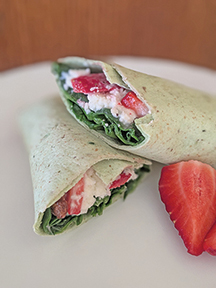
Strawberry Salad Sandwiches (Sorta)

Of course I went with the idea of a salad sandwich that is actually neither. You know that iconic spring salad with strawberries and poppyseed dressing? Suddenly it sounded delicious to me as a sandwich, but not on bread, so this was born — and honestly I was very gratified with how tasty it was. A key to making craveable salads and sandwiches is achieving some different textures and pops of flavor, which the nutty almonds and salty cheese do for us, with the earthy notes of spinach tortillas embellishing the chew of fresh spinach. This is far too “generous” for the definition of a sandwich for my husband, which is fine because he had nachos instead (a chip salad?).

Prep tips: add chicken or turkey if you’d like, or perhaps some avocado.

1 large spinach tortilla

a handful of fresh spinach

½ cup ricotta or cottage cheese

¼ cup crumbled feta

several strawberries, quartered

a handful of candied almonds

a drizzle of poppyseed dressing

Layer ingredients down the center of the tortilla, then roll and enjoy. 

April is National Gardening Month

0

Gardening adds years to your life and life to your years.

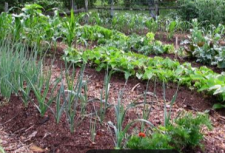
April is National Gardening Month and a good time to plant a garden, said University of Missouri Extension horticulturist David Trinklein. For those who lacked the motivation in the past to garden, consider these benefits:

Economic

Vegetable gardening is an excellent way to save on the food bill. The National Gardening Association estimates that a well-maintained vegetable garden yields an average return of $0.88 per square foot of garden area. For a modest-sized garden of 500-700 square feet, this equates to a return of $440 to $616 in the first year alone.

You don’t have to spend a lot of money to benefit economically from gardening. A recent study by a well-known seed company showed that $50 spent on gardening supplies can yield $1,250 worth of produce annually. A national survey conducted several years ago documented this twentyfold return on investment. Simply put, if vegetable gardening does not reduce your food bill, you are doing something wrong.

Health

Digging, hoeing, raking and other gardening activities are great forms of exercise. The average gardener burns between 300 and 400 calories per hour while gardening. You would have to walk about 4 miles at a fairly brisk pace to use up the same number of calories. Also, research shows that gardening reduces stress that can lead to various health problems.

Gardening offers nutritional benefits as well. “Eating fresh vegetables and fruits is known to be important for good health,” Trinklein said. “The availability of fresh, inexpensive produce from the family garden is conducive to maintaining good dietary habits and, at times, forces greater vegetable consumption. It has been documented that children are much more likely to consume vegetables they grew themselves than those purchased from a supermarket.”

Psychological

By allowing people to connect with nature, gardening tends to restore our spirits and make us feel good about ourselves, Trinklein said. Simply being surrounded by growing plants and blooming flowers is a way to become immersed in another world and a diversion from the stresses and demands of life. Working with plants tends to draw one’s attention from other problems in life and gives people the opportunity to achieve a level of serenity and enjoyment that often escapes us in our technology-based society, he said.

Planting and caring for a flower or vegetable garden also imparts a sense of accomplishment without unreasonable expectations often placed upon us by society. This is one reason many hospitals and health care facilities now offer plant (horticultural) therapy, which recognizes the healing power of plants.

Environmental

Gardens benefit the planet in many ways. They reduce our “carbon footprint” by growing food locally instead of having it shipped in from distant locations. “Plants take in carbon dioxide as they manufacture food, thus helping to reduce the concentration of greenhouse gases,” said Trinklein. Gardens help to minimize soil erosion by slowing rainfall runoff and allowing it to infiltrate more slowly into the ground. Additionally, gardens serve as a food source and gathering place for many types of wildlife, such as butterflies and birds.

Social

Working together strengthens the bonds between people. Gardening represents a universal language that can strengthen family relationships and is a wonderful way for generations of family members to interact, Trinklein said. “The most valuable product from a garden just might be the joy derived from working with family and friends,” he said.

Gardening can also help bring communities closer together, negating differences that might exist between different groups. Trinklein notes that research has shown that community gardens and urban forests lead to lower levels of crime and domestic violence in cities. Even corporate America is considering the advantages of surrounding people with plants as it emphasizes the importance of landscaping places of business.

Educational

Gardening is a learning experience; every year, gardens provide different challenges to solve. Gardening can encourage children and adults alike to be more curious about their surroundings and nature. “It is a great way to teach youngsters the joy that can come from work and that positive results are not always instantaneous,” Trinklein said. Gardens make us more aware of our senses through stimulation of sight, smell and touch. They have the ability to motivate people in many different ways and serve as a creative inspiration, he said.

According to Trinklein, gardens and gardening remind us of everything that is good about life – the beauty of nature, the feeling of pride and sense of accomplishment for having done something productive and the realization that our efforts are helping to improve ourselves, our society and our environment. “For those of you who are gardeners, best wishes for the upcoming growing season – relish it while it lasts,” he said. “For those who are not, there is no time like the present to start.”

Horticulture 2025 Newsletter No. 05

0
KSU horticulture

1712 Claflin, 2021 Throckmorton Plant Science Center
Manhattan, KS 66506 (785) 532-6173

Online access: https://hnr.k-state.edu/extension/horticulture-resource-center/horticulture-newsletter/documents/2025/april2025/Newsletter%20005.pdf

ANNOUNCEMENTS:
K-State Garden Hour
Wednesday, April 2, 2025 12:00 PM – 1:00 PM
Maximize your garden’s productivity! Join Abbey Draut, Sedgwick County Food Crops Horticulture Agent, as she shares proven methods for increasing vegetable yields. Learn how to optimize soil health, select high-performing varieties, and implement effective care techniques to boost your harvest. Whether you’re a beginner or an experienced gardener, these practical tips will help you grow more food in your garden this season.

Register to attend this free webinar here:
https://hnr.k-state.edu/extension/consumer-horticulture/garden-hour/

Garden Spotlight
Send in your garden stories! Last year our Hort Newsletter featured six different gardeners/garden programs.

We love learning about our fellow Kansas gardeners and want to feature your home/community/school garden in our newsletter so we can all grow together.

Email [email protected] to find out more.

VIDEO OF THE WEEK:
Squirrels are Nuts!
(KSRE Wildlife Management)
Dr. Joe Gerken and Dr. Drew Ricketts, Extension specialists and faculty members in the Wildlife and Outdoor Enterprise Management Program at Kansas State University, discuss tree squirrel biology, damage caused by the 3 species that occur in the eastern Great Plains, and practical solutions for preventing property damage caused by squirrels.

GARDEN CALENDAR
Planting
asparagus
crowns
mid-March to mid-April
beets
seed
late-March to early-April
bok choy
seed/transplant
late-March to early-April
broccoli
transplant
late-March to early-April
cabbage
transplant
late-March to early-April
carrots
seed
late-March to early-April
cauliflower
transplant
late-March to early-April
chicories
seed/transplant
late-March to early-April
collards
seed/transplant
late-March to early-April
kale
fennel
kohlrabi
lettuce
seed/transplant
seed
seed
seed
mid-March
mid-March to early-April mid-March to early-April
mid-March to early-April
leeks
transplant
mid-March
mustard
seed
late-March to early-April
onion
parsnips
peas
sets/plants
seed
seed
mid-to late-March
mid-March to early-April
mid-March
potatoes
seed
mid-March to early-April
radish
rhubarb
seed
crowns
mid- to late-March
March to April
rutabaga
seed
mid- to late-March
spinach
seed
mid- to late-March
Swiss chard
seed/transplant
late-March to early-April
turnip
seed
mid- to late-March
Pruning
Ornamental Grasses
Blackberries and Raspberries
Deciduous trees
Summer-Flowering/Non-Flowering Shrubs
Scouting
Iris Leaf Spot
Apply fungicide for Peach Leaf Curl prior to bud swell
Pear Rust
Turfgrass
Cool season grasses:
Control broadleaf weeds
Aerate lawn now through April
Warm season grasses
Control broadleaf weeds

GARDEN SPOTLIGHT
Honoring Chuck Marr
Dr. Chuck Marr was hired as a Vegetable Crop Specialist for K-State Research and Extension in 1970. He served our state for 36 years in that role. He was an active member of the community and supported gardeners in many capacities throughout his retirement as well.

Chuck passed away in December of 2024. In honor of his legacy, we are re-publishing the interview with Chuck about the Manhattan, KS community garden. Please enjoy Chuck’s lasting wisdom for all things horticulture.

Manhattan, Kansas Community Garden

FLOWERS
Easter Lily Care
Easter lilies should be watered when the soil feels dry to the touch. If the container has a decorative sleeve, remove this to allow water to drain out the bottom. Provide bright, indirect light and daytime temperature of 68 degrees F or less to prolong blooming.

Remove the flower stalk when blooming is over. Easter lilies can be moved outdoors to an area with dappled shade after the danger of frost has passed. Continue to provide water, as needed, until the top growth dies back.

Plant the Easter lily in a sunny location with well-drained soil. Add organic matter to the planting site to improve drainage. The planting hole should be deep enough to allow the bulb to sit six inches deep. Space lily bulbs 12-18 inches apart. Backfill soil over the top of the bulbs. Water well and add mulch over the surface.

Apply fertilizer at least two-inches away from the stem once per month during the summer using a complete (such as: 10-10-10) fast release.

New growth may develop later in the summer but may be delayed until next spring.

Dormant lilies should be covered in the fall with four inches of straw or three inches of other mulch such as pine needles or wood chips. Uncover in the spring to allow new growth to emerge.

Spring-Flowering Bulbs
Blooms for some bulbs are approaching their peak. During this time fertilizer is not beneficial since the roots are beginning to die back.

Tulip flower stalks should be removed as they wilt to prevent seed development. Though daffodils may look nicer with the spent flowers snipped, it is not required for the health of the plant.
Leaves should be left intact to generate energy, stored in the bulb, for future growth. When the leaves have declined, they can be gently pulled away from the bulb.
Once the leaves die back, bulbs can be transplanted, if necessary. Dig up each bulb carefully and either replant it right away or dry it for two to three weeks. Place dried bulbs in a mesh bag and store them in a cool, dry location until it is time to plant in the fall.

Perennials – Spring Care
Spring is a great time to add perennials to the landscape. Choose the right plant for the right place by evaluating the site conditions compared with the plant needs. Perennials should be planted in the ground at the same depth they were in the container. Carefully separate the existing roots and water thoroughly after planting. Monitor regularly for water until established.

In spring, roots are actively growing which makes this a great time to rejuvenate existing plants by dividing. Most perennials will benefit from being divided every few years. Dig up the entire plant and divide the root ball into smaller sections. Replant and water thoroughly. Note: peonies, irises and daylilies are not divided during spring.

Uncover perennials that were buried under a layer of mulch through the winter. Keep a layer of mulch over the surface of the soil, but leave a gap between the mulch and the stem of the plant.

Newly planted perennials will benefit from a starter fertilizer, which is usually rich in phosphorus, to boost initial growth. Once established, add a one-inch layer of compost to the perennial garden each year. Additional fertilizers are not usually necessary but can be added if indicated from soil test.

VEGETABLES
Cauliflower
Cauliflower transplants can be set in early to mid-April. Space plants 1.5 to 2 feet apart in rows 3 feet apart. Use a starter fertilizer when planting and every two to three weeks thereafter. Cauliflower requires water during dry periods.

When the heads are the size of a quarter, pull a few leaves over them and secure with a rubber band (blanching). This will shade the heads from the sun and prevent them from turning yellow.

Environmental stress during transplant can negatively affect the development of cauliflower heads. “Buttoning” is a term to describe heads that stop developing beyond one inch in diameter. Temperature fluctuations, inconsistent moisture, nutrient deficiencies and root bound transplants can all be susceptible to this condition. Row covers can be used to help regulate air and soil temperature as well as reduce infestations of insects.

Heads will be ready for harvest when they are five to six inches in diameter and still tight. As the head begins to separate, the flavor and texture declines significantly.

FRUIT
Fertilizing Fruit Trees
Before applying fertilizer in the spring, a soil test should be completed if one hasn’t been done for several years. The best time to fertilize established fruit trees is when they enter the bloom period. Nitrogen is typically the focus which can be applied with a lawn fertilizer. Choose a high nitrogen fertilizer without herbicides or preemergence included.

Young trees require less fertilizer than established trees.
1-2-year-old tree = ¼ cup
3-4-year-old tree = ½ cup
5-10-year-old tree = 1 – 2 cups
More than 10 years old = 2 – 3 cups
Spread the fertilizer on the soil surface, away from the trunk, but beneath the canopy and water in well.

TURF
Lawn Maintenance
Following best practice recommendations in every aspect of gardening can help save you time and money. The lawn is no different. Here are some guidelines for proper lawncare:
Mowing height is dependent on turf variety, usage and time of year. Improve drought resistance by mowing at the taller end of the recommended range for your turf variety.
No more than one-third of the height should be removed at each cutting. If the lawn has become overgrown you will need to cut it gradually over several days.
Maintain a sharp mower blade to give a clean cut for the blades.
Use a different mowing pattern each time to prevent soil compaction and wear from the mower wheels.
Cultivate the soil around trees to prevent grass from growing close to the trunk so mowing equipment will not risk damaging the bark.
Water in the early morning.
Wait as long as possible between watering.
Soak the soil to a depth of 6-8 inches when watering.
Fertilize only to maintain moderately green color during favorable weather. Over-fertilizing increases water and mowing needs.
Do not fertilize when heavy rain is expected.
Time fertilizer based on variety:
Fescue and bluegrass – September and November (optional in May)
Bermudagrass and Zoysiagrass – between May and August
Buffalograss – June
MISCELLANEOUS
Transplanting
Before removing transplants from their protected environment and planting them into the garden, allow time for them to acclimate. This process is called “hardening off”.

Two weeks before the transplant date decrease the amount of water the seedlings are given. Gradually increase exposure to sun and wind but avoid damaging winds, rain and temperatures.

Prepare the soil by breaking up hardened clots. Don’t work the soil when it is wet.

Water the transplants just before transplanting. Dig the hole for each plant slightly deeper and wider than the container it’s in. Position the plant in the hole and backfill to cover the entire root ball. Press the soil surface firmly around the stem of the plant. Starter fertilizer can be used at planting.

QUESTION of the WEEK
“Where can I find gardening information specific to my region?”
I’m so glad you asked! K-State Research and Extension (KSRE) has talented Extension agents across the state ready and willing to support you in a variety of areas. Our horticulture agents are intune with local resources, weather and all things gardening for your area of the state. They are also great at responding to questions in a timely manner.

If you don’t know who your local Extension agents are check out this link:
KSRE Statewide Locations

Contributors:
Cynthia Domenghini, Instructor and Horticulture Extension Specialist
Kansas Garden Guide

Division of Horticulture
1712 Claflin, 2021 Throckmorton
Manhattan, KS 66506
(785) 532-6173

For questions or further information, contact your local extension agency.
This newsletter is also available on the World Wide Web at:
http://hnr.k-state.edu/extension/info-center/newsletters/index.html

The web version includes color images that illustrate subjects discussed. To subscribe to this newsletter electronically, send an e-mail message to [email protected] listing your e-mail address in the message.
Brand names appearing in this newsletter are for product identification purposes only. No endorsement is intended, nor is criticism implied of similar products not mentioned.
K-State Research and Extension is committed to making its services, activities and programs accessible to all participants. If you have special requirements due to a physical, vision or hearing disability, or a dietary restriction please contact Extension Horticulture at (785) 532-6173.


Cynthia Domenghini, Ph.D.
Instructor; Horticulture Extension Specialist
Department of Horticulture and Natural Resources
Kansas State University
1712 Claflin Rd.
Manhattan, KS 66503
785-340-3013
[email protected]

If you haven’t tried to grow Bok Choy you should give it a whorl!

0

If you haven’t tried to grow Bok Choy you should give it a whorl! This is an excellent tasting vegetable. Bok choy, also known as pac choi, is a cool season vegetable that can be grown in both spring and fall in Kansas. The vase-shaped plants have thick crunchy stems and spoon shaped leaves. The crunchy stems can be eaten like celery, and the young leaves are often used fresh in salad mixes.


Variety considerations. You can find varieties that have green or white stems and green or red leaves. Variety options also range from 4 to 6 inches tall to 15 to 18 inches tall. Varieties that have good heat tolerance or bolt resistance would be good choices.


When to plant. Bok choy can be direct seeded or transplanted. Transplanting allows for an earlier harvest and mitigates the impact of hot temperatures, especially in the fall. Plant seeds or set plants in the garden in late March to early April, before the danger of frost has passed. Plant fall plants in early August or direct seed in late July.


Spacing. Depending on the variety, bok choy should be spaced between 4 and 12 inches apart to allow for full size head development. If planting from seed, thin seedlings to the desired spacing and use the seedlings for salads.


Crop rotation. If possible in your garden space, do not plant bok choy in an area where turnips, mustards, kale, cabbages, or other leafy greens have been planted in the previous 3 to 4 years.


Care. Bok choy requires consistent moisture and temperature for a good quality crop. If temperatures fluctuate, the plant is more likely to bolt, especially in the spring. You can use clean straw mulch to help maintain even soil moisture and temperature around the plants. If insects are a problem, try using a row cover to protect the plants.


Harvesting. It can be harvested young for salad greens or harvested at full size for cooking. If harvesting leaves, remove the oldest, outermost leaves first, cutting the stalk near the base of the plant. If harvesting the whole plant, cut below the main rosette of leaves, just at the soil level.