

IRS Issues Warning to Taxpayers About Popular Fuel Tax Credit

In an effort to protect taxpayers from potential litigation, jail time and other unsavory outcomes of tax fraud, the Internal Revenue Service (IRS) and the Coalition of Scam and Scheme Threats (CASST) released new measures surrounding how to claim the Fuel Tax Credit.
Why It Matters
Taxpayers have consistently misused a few key tax credits, enough to the point that the IRS released statements on potential scams related to false tax credit claims last year.
The Fuel Tax Credit is one of the more popular tax credits that is often misused. People who are misled to claim tax credits they are ineligible for, or who claim these tax credits anyway in the hopes of securing a higher refund, are at risk for serious consequences from the IRS.
These latest changes come right in time for taxpayers to prepare for the 2025 tax-filing season.
What To Know
The IRS, in partnership with the CASST, has introduced a new form that tax filers will have to fill out in order to initiate the process of claiming the Fuel Tax Credit. According to a statement from the IRS this week, the form is called the “Statement Supporting Fuel Tax Credit (FTC) Computation – 1” and is meant “to educate taxpayers on eligibility requirements for claiming the credit.”
People who are legitimately filing for the Fuel Tax Credit should include this new statement along with the other designated forms: Form 1040 and Form 4136. The information requested in this statement is designed to be used only by legitimate filers. Such information includes business information and the type of machinery used to complete eligible work.
What Is the Fuel Tax Credit
An eligible business can claim the Fuel Tax Credit as a “refundable credit for fuel used in a specific work-related activity,” per the IRS website. These kinds of eligible activities are not commonly done by most taxpayers, so few people should realistically qualify. Eligible activity includes vehicle fuel used for farming purposes, off-highway business use, commercial fishing and certain types of buses, as detailed by the IRS. Ineligible activity is fuel used for work commutes, for example.
Who Qualifies for the Fuel Tax Credit?
People who qualify for the Fuel Tax Credit are most often business owners. Farmers and people who own businesses that operate vehicles or other machinery that would use eligible fuel sources, like aviation or diesel fuel, are most likely to qualify for this business tax credit.
What People Are Saying
Danny Werfel, IRS commissioner, said in a statement: “Since its creation, this special group across the tax community has been working to take extra steps to protect taxpayers and the tax professional community. This effort includes expanding outreach and education on emerging scams, developing innovative approaches to identify potentially fraudulent returns at the point of filing and creating infrastructure improvements to protect taxpayers as well as federal, state and industry tax systems. CASST partners have already worked together on important changes to protect taxpayers and tax professionals in the 2025 filing season, but this needs to be an ongoing effort given the continued expansion and threats from scams.”
What Happens Next
Consequences for falsely claiming the Fuel Tax Credit include fines up to $5,000 for each return. This penalty will be assessed to each spouse on a return where a married couple is filing jointly, per this week’s IRS statement.
Audits and jail time are also on the table if you are found culpable of tax fraud. Taxpayers should seek help from a reputable tax professional to ensure all of their information is filed correctly. Anyone who believes they may be a victim of a scam or who unintentionally files an incorrect return should notify the IRS immediately.
Gardening boosts your immune system

We tend to think about our immune system more during the cooler months, as they coincide with cold and flu season. Research shows that gardening can naturally boost the immune system, making it a great way to stay healthy year-round.
Three ways gardening helps our bodies fight off illness and infection are:
1. Increased movement
The Centers for Disease Control and Prevention recommends adults get 2.5 hours of moderately intense movement per week, and time in the garden can count toward that goal. Gardening combines strength training, aerobic exercise and stretching, all of which are fantastic for keeping our bodies strong and improving overall wellness.
2. Microorganisms in the soil
Healthy soil promotes healthy plants and people! Soil contains beneficial microorganisms, also called microbes. Regularly working with soil can introduce a variety of beneficial microbes to our bodies, which helps strengthen our immune system and ward off illness. This is true whether you are working outdoors or have moved your gardening indoors due to winter weather. These health benefits can extend to your loved ones as well. Studies show that children who learn and practice the skill of gardening have stronger immune systems and are less likely to develop asthma and allergies.
3. Better diet
Growing our own fruits and vegetables often leads us to eat more of these healthy foods packed with vitamins, minerals and fiber. You get to control how your produce is grown and can eat it at its peak ripeness, when it contains the most nutrients. Key nutrients to boost immunity include:
- Vitamin C. Sources include bell peppers, strawberries, kiwi, broccoli, garlic, citrus fruits.
- Vitamin D. In addition to getting adequate exposure to sunlight, sources include mushrooms, eggs, fatty fish, fortified dairy.
- Vitamin A. Sources include sweet potatoes, cantaloupe, spinach.
- Zinc. Sources include beef, oysters, yogurt.
Whether you garden for health or for fun, it is good to know that gardening can benefit your life in many ways. If you want a simple and tasty way to incorporate these ideas, give this smoothie recipe a try!
Immune-boosting smoothie
- ½ cup chopped leafy greens, such as spinach, kale, romaine lettuce, etc.
- ¼ cup fresh or frozen pineapple chunks
- ½ cup fresh or frozen mango chunks
- 1 large ripe banana
- 1 cup orange or apple juice or coconut water
- Optional: flax seed, chia seeds, ginger, ground turmeric and/or avocado.
Directions
Combine all ingredients in a blender or food processor. Blend on high until the mixture is smooth and creamy. Serves 2.
USDA Announces 2025 Enrollment Periods for Crop and Dairy Safety-Net Programs
Producers Can Enroll in the 2025 Agriculture Risk Coverage and Price Loss Coverage Programs.
Beginning Jan. 21 and Dairy Margin Coverage Beginning Jan.29 WASHINGTON, Jan. 13, 2025 – The U.S. Department of Agriculture (USDA) announced the 2025
enrollment periods for key safety-net programs – Agriculture Risk Coverage (ARC) and Price Loss Coverage (PLC) as well as Dairy Margin Coverage (DMC). Agricultural producers can submit applications to USDA’s Farm Service Agency (FSA) for ARC and PLC for the 2025 crop year from Jan. 21 to April 15 and for DMC for the 2025 coverage year from Jan. 29 to March 31.
ARC and PLC provide financial protections to farmers from substantial drops in crop prices or revenues and are vital economic safety nets for most American farms. Meanwhile, DMC provides producers with price support to help offset milk and feed price differences.
“Our safety-net programs provide critical financial protections against commodity market volatilities for many American farmers, so don’t delay enrollment,” said FSA Administrator Zach Ducheneaux. “If you’re getting coverage through the Agriculture Risk Coverage or Price Loss Coverage programs, avoid the rush and contact your local FSA office for an appointment. Even if you are not changing your program election for 2025, you
still need to sign a contract to enroll.”
“And at $0.15 per hundredweight for $9.50 coverage, risk protection through Dairy Margin Coverage is a relatively inexpensive investment in a true sense of security and peace of mind.”
The American Relief Act, 2025 extended many Farm Bill-authorized programs for another year, including ARC and PLC as well as DMC.
ARC and PLC
Producers can elect coverage and enroll in ARC-County (ARC-CO) or PLC, which provide crop-by-crop protection, or ARC-Individual (ARC-IC), which protects the entire farm. Although election changes for 2025 are optional, producers must enroll through a signed contract each year. Also, if a producer has a multi-year contract on the farm it will continue for 2025 unless an election change is made.
If producers do not submit their election revision by the April 15 deadline, their election remains the same as their 2024 election for commodities on the farm from the prior year. Farm owners cannot enroll in either program unless they have a share interest in the cropland.
Covered commodities include barley, canola, large and small chickpeas, corn, crambe, flaxseed, grain sorghum, lentils, mustard seed, oats, peanuts, dry peas, rapeseed, long grain rice, medium grain rice, safflower seed, seed cotton, sesame, soybeans, sunflower seed and wheat.
USDA also reminds producers that ARC and PLC elections and enrollments can impact eligibility for some crop insurance products including Supplemental Coverage Option, Enhanced Coverage Option and, for cotton producers, the Stacked Income Protection Plan (commonly referred to as STAX).
For more information on ARC and PLC, producers can visit the ARC and PLC webpage or contact their local USDA Service Center.
DMC
DMC is a voluntary risk management program that offers protection to dairy producers when the difference between the all-milk price and the average feed price (the margin) falls below a certain dollar amount selected by the producer.
DMC offers different levels of coverage, even an option that is free to producers, minus a $100 administrative fee. The administrative fee is waived for dairy producers who are considered limited resource, beginning, socially disadvantaged or a military veteran.
DMC payments are calculated using updated feed and premium hay costs, making the program more reflective of actual dairy producer expenses. These updated feed calculations use 100% premium alfalfa hay.
For more information on DMC, visit the DMC webpage.
More Information
Producers can apply for ARC, PLC and DMC through the FSA at their local USDA Service Center.
FSA helps America’s farmers, ranchers and forest landowners invest in, improve, protect and expand their agricultural operations through the delivery of agricultural programs for all Americans. FSA implements agricultural policy, administers credit and loan programs, and manages conservation, commodity, disaster recovery and marketing programs through a national network of state and county offices and locally elected
county committees. For more information, visit fsa.usda.gov.
USDA touches the lives of all Americans each day in so many positive ways. In the Biden-Harris administration, USDA is transforming America’s food system with a greater focus on more resilient local and regional food production, fairer markets for all producers, ensuring access to safe, healthy and nutritious food in all communities, building new markets and streams of income for farmers and producers using climate smart food and forestry practices, making historic investments in infrastructure and clean energy capabilities in rural America, and committing to equity across the Department by removing systemic barriers and building a workforce more representative of America. To learn more, visit usda.gov.
What am I buying? A guide to meat labels
K-State assistant professor discusses protein labeling.
“Gluten-free water” – she’s not sure what that means, but it was an actual claim that Kanas State University assistant professor of sustainable meat science Erin Beyer saw on a water bottle in Australia back in 2015.
While Beyer is not quite sure how a label this “interesting” was approved, she does know that many other claims printed on protein products can be difficult for consumers to navigate. To help clear up confusion, Beyer recently joined the Agriculture Today radio program to discuss the definitions of heavily used terms like “natural” and “certified organic,” and provide context for consumers.
“There is more label information today than I think there ever has been,” she said. “The most basic labeling system for commodity products, though, is the Uniform Retail Meat Identity Standards.”
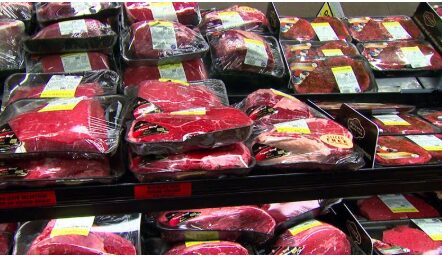
Commodity markers – usually accompanied by a barcode and scale label – allow buyers to identify a cut of meat’s species, the wholesale area which it originated and whether it’s a steak or a roast. The meat industry classifies cuts thicker than 2 inches as roasts.
“The traditional label that comes on all commodity meat products helps people purchase products for their intended uses,” Beyer said. “So, it’s a system used that helps most buyers know they should not grill their roasts and should have a low, slow-type cooking method instead.”
Outside of commodity labeling, the branded meat sector has become more popular over the past couple decades and now encompasses more than 75% of the market, according to Beyer. Certified Angus Beef stands amongst the most popular brands, and its merchandise must pass through 10 parameters to qualify for CAB status.
“Like with any branded program, you can look those specifications up online and learn more about them,” she said. “A branded meat program usually is associated with premium meat or something in which purchasers have more trust that is higher quality than commodity.”
She added: “Is that always true? Maybe not so much. However, they do separate themselves with their brand specifications.”
However, consumers may find it challenging to discern natural products from “naturally raised” meat. Beyer said the key to understanding the differences lies in the phase of meat production they accompany.
“Natural meat is minimally processed post-harvest, has no artificial preservatives and contains all-natural ingredients like water and salt,” she said. “Naturally raised is about the animal process, meaning it has never experienced antibiotics, growth promotants or additional hormones.”
Beyer notes that most meat sold in stores falls under natural classification, however, not all processors take the time to get their goods approved for the label.
On the same note, the USDA prohibits giving certain livestock species – like poultry and swine – additional hormones, which may puzzle shoppers who see the designation “raised without added hormones” on beef and lamb products.
“There are hormones in all animal products,” Beyer said. “We produce hormones as living beings just like animals produce hormones, so nothing is ever hormone-free, yet processors can tag meat as raised without added hormones if they did not receive hormone implants.”
Moreover, a certified organic marker takes the requirements for claims like ‘raised without added hormones’ and ‘natural’ a step further by including that producers must raise meat animals using organic methods while feeding organic ingredients.
“Organic methods are a little vague, but those parameters actually start at the last trimester of gestation for our red meat species and the first day of life for poultry,” Beyer said.
Beyer reminds protein purchasers, however, that certified organic and other claims do not mean that these goods differ in nutritional content nor change in food safety versus products without those labels.
More information about food product labeling is available online through the USDA.
