Tuesday, February 3, 2026
Home Blog Page 335

Appropriate Rodeo Attire

0
Thayne Cozart
Milo Yield

This is the season for county fair and state fair rodeos across the nation. Rodeo participants are a bunch of tough customers, even the amateur ones. Of course, their hopes are for fame and fortune. But, regardless of those goals, they all want to uphold the western tradition of rough and tumble — showing no signs of pain or weakness.

Which brings me to this rodeo story. I heard it long ago, but it’s just as pertinent today as it was back in the day. Here’s the story.

The event wuz the bull riding. The nasty-tempered bulls were from a well-known rodeo contractor. The crowd had worked its way into a frenzy. It wuz loud and wild. No riders had made the 8-second mark. The bulls were clearly winning over the riders.

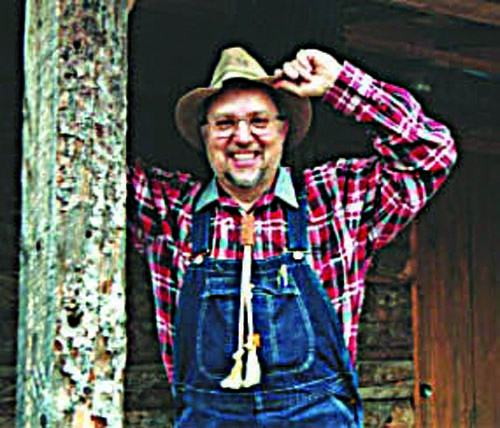
One contestant back behind the chutes wuz ol’ Skye High, a seasoned rodeo veteran. He wuz the last rider scheduled that session. He wuz appropriately cowboy dressed for the occasion: white starched, pearl-button shirt, creased blue jeans and black Stetson hat.

As he watched the action take place, he watched as one rider got knocked unconscious from a bull horn. Another, contestant got stepped on, bloodied up enuf to leave the arena on a stretcher. At that point, Skye dashed to his dressing room and changed into a bright red shirt. When he got back behind the chutes, someone asked him about the shirt change and Skye said it wuz because if he got injured, he wanted the red shirt to camouflage any blood that might appear so as not to upset any squeamish folks in the crowd.

As Skye continued to watch, he saw his drawn bull come into the holding pen. It’s name wuz The Widow Maker. Ol’ Widow put everyone in the pen over the fence. He repeatedly tested the fence with a ton of bovine muscle. He never quit pawing the ground.

When the workers got him into his chute, ol’ Widow threw a spectacular bovine conniption fit. He bellowed. The slung slobbers in every direction. He jerked the rigging out of a chute workers hands.

About that time, Skye told the chute officials he’d be right back and he dashed to his dressing room and slipped out of his blue jeans and into a pair of brown jeans.

You can easily figger out his reason.

***

At the Old Geezer’s Coffee Klatch this morning, the conversation somehow turned to handling cattle horseback. My height-challenged friend, ol’ Bob Doff, volunteered that in his early years he had a job working at a commercial cattle feedlot close to Beloit, Kan.

He said that on one miserably cold and rainy winter morning his first task of the day wuz to ride the pens on horseback looking for cattle that might have health problems. He paired up with another employee and began going from pen to pen. The horses were gentle, familiar with the pen-riding routine, and perfectly comfortable with their riders opening and closing pen gates without dismounting.

So, Bob said when he wuz relaxed when he entered one pen. But, then, when he leaned forward to close the gate, for some reason his steed started acting up and accidentally backed its haunches into an electric fence. And, Bob said, “That’s when I got unrelaxed and the rodeo started.”

He related that the horse came unglued and started some serious bucking. Bob said he hung on for dear life and, luckily, didn’t get unceremoniously dumped into the feedlot muck and mire.

And, he noted, it wuz his one and only saddle bronc riding experience.

***

By the time you read this column, the 2024 Paris Olympics will be finished. The good ol’ U.S.A. came through again with a stellar overall performance. As I watched the Olympic events, my mind wandered to why the world doesn’t host an Aggie Olympics every once in a while.

Teams of country folks from around the globe could compete to determine the world’s best at doing the hard and skillful task of growing food — both manually and mechanically.

Some of the Aggie Olympic manual events I can envision would be: Building 100 yards of barbed wire fence from scratch; setting up a half-mile of gated irrigation pipe; the 100-pound square hay bale toss and stack; picking a 25-yard row of strawberries; scooping 100 bushels of wheat; digging a 25-yard row of potatoes.

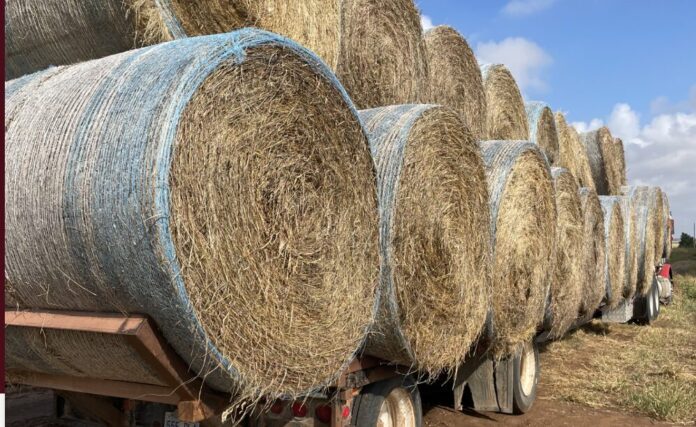
Some of the Aggie Olympic mechanical events I can envision would be: Team working 50 head of cattle through a mechanical cattle chute; accuracy spraying herbicide with a drone; planting the straightest 6-rows of corn using global positioning; Stacking the most big round bales of hay on a standardized flat-bed semi-truck; a timed event to mechanically harvest 1,000 pounds of pecans.

I think you get the drift of an Aggie Olympics. You can probably figger out better events yourself.

***

Two elderly farmers met at the grain elevator and were discussing their health problems.

One old guy said that he’d recently gone to an audiologist to test his possible loss of hearing. He knew his hearing had probably suffered from all his days of driving a tractor.

He told his friend, “I’d never recommend that hearing doctor I went to. He’s a quack. He recommended that I get Heron eggs. That’s nuts. Who ever needs Heron eggs?”

***

Words of wisdom for this week: If your doctor advises you to burn off some fat, do as he says. Put a thick, prime steak on the grill, turn up the heat and enjoy yourself.

Have a good ‘un.
Heifer Dancing

0
lee pitts

It seems to me that each succeeding generation is waiting longer to get married and have kids. My wife had a great-grandmother who got married and had a child at 14. On The other hand, I have a nephew who is 42 and still looking.

Young folks are finding out the hard way that college is the best place to find a mate due to the diversity, quality and number of members of the opposite sex. But if you leave college unattached your prospects for finding a date, outside the family of course, are limited to bars, the gym, and the Internet.

In the 1800’s lots of young adults met their mates at community dances that all the cowboys looked forward to even if they danced like flat-footed, heavy-handed arthritic apes. On the night of the dance cowboys from far and wide would take their weekly bath, sprinkle on a few drops of eau de toillette, ride their horse an hour away only to find there was no fiddler and no women to dance with cheek to cheek. In that case a few of the cowboys would willingly put on an apron or tie a bandana to their sleeve to indicate they’d be dancing the female part. Such hoedowns were known as heifer dances but I don’t think the concept would work in today’s LGBTQ+ society.

Another traditional place people are looking for a mate is at a bar but I don’t think finding a life-partner while in an inebriated condition is wise. Such prospects are always uglier, older and far less interesting in the light of day. I have a recently-divorced friend who recently reentered the dating scene and he said the date he had with a lady he met at a bar, “Was like a year in solitary confinement.”

People must really be desperate to resort to speed dating or weed dating. In speed dating you pay a fee and then ask questions for five to ten minutes of several prospects to find out if they know how to tie a fly or shoot a shotgun. With weed dating you volunteer at a community garden hoping to meet someone you like. If you get into an argument with a potential candidate over whether a zucchini is ripe you switch rows until you find someone more compatible. This might work in an urban setting but it seems to me weed dating won’t go over with the cowboy crowd because women you meet in the urban community garden are more apt to be vegan and wouldn’t be the type you’d want to take home to mama if you live in Hico, Texas, or Cherry County, Nebraska.

Then there’s the gym. I know you won’t believe this after getting a gander at my glorious glutes and abs but I’ve never paid to go to a gym in my life. I’ve heard the gym scene is highly competitive and I can see where all that Spandex and heavy breathing could lead to romance but I’ve never heard of a single instance where a man met a women at a gym, got married and lived happily ever. But I have heard of at least two instances where it led to divorce.

Finally, there’s the Internet. People don’t realize this but this experiment has been tried before in America back in the 1800’s. A lonely Basque sheepherder might correspond with someone selected by an aunt back in the old country and then the sheepherder would pay for the shipping and then wait to see what stepped out of the stagecoach.

It’s the same way with Internet dating today which seems to be very popular. The problem with Internet dating is that someone can misrepresent who, or what, they are. There ought to be warnings on some of the prospects like, “bring a leash.” Thank goodness today it’s catch and release and shipping fees to send one back are much cheaper if the article is not as represented.

I know one fellow who was told his blind date was 42-24-38. Then he found out that 42 was her age, 24 was her IQ and 38 was the number of days she’d been released from the detox center. He learned real fast why they’re called blind dates because with your first look you wish you were blind.

Drought, dry conditions pushing crops and hay

0

Drought and dry conditions in the western two-thirds of the state have dryland crops burning up, and alfalfa headed into dormancy, according to the Kansas Department of Agriculture-USDA Market Service, Aug. 6.

Although movement picked up a bit, demand remained very light as feed yards are still not buying. Even despite the setbacks to the hay crop, there is still large amounts of old crop hay available. Premium and supreme quality hay is more in demand but seems to be hard to find. Prices are based on averages and given on a per-ton basis, unless otherwise noted.

Southwest—Demand light. Trade activity is slow. Dairy alfalfa prices are steady. Grinding alfalfa price mostly steady and ground and delivered alfalfa price steady. Alfalfa: Dairy, $1.15-$1.25/point RFV. Good, stock or dry cow $120. Fair/good, grinding alfalfa, large rounds $100-$110, large square 3×4’s and 4×4’s $105-$115. Ground and delivered locally to feed lots and dairies $155-$160. Sudan large rounds and large squares $60-$70. Teff, small squares $9/bale, large rounds $130-$140. Wheat straw: large rounds and large squares $95-$110 delivered. For the week ending Aug. 3, 4,121 tons of grinding alfalfa and no dairy alfalfa was reported bought or sold.

South central—Demand light. Trade activity is slow. Dairy alfalfa prices are steady. Grinding alfalfa price mixed. Ground and delivered steady, and alfalfa pellet price steady to $5 lower. Alfalfa: Dairy $1.15-$1.25/point RFV. Good, Stock cow, none reported. Fair/good grinding alfalfa, large rounds $115–$125 delivered, 3×4 and 4×4’s $115-$125 delivered. Alfalfa ground and delivered $150-$160. Alfalfa pellets: Sun cured 15% protein $250-$260, 17% protein $265-$275, Dehydrated 17% protein: $370-380. Grass hay: Bluestem, large rounds and large squares $120-$130. Brome, rounds and squares $100-$120. For the week ending Aug. 3, 9,156.5 tons of grinding alfalfa and 950 tons of dairy alfalfa was reported bought or sold.

Southeast—Demand light. Trade activity is slow. Bluestem and brome hay price, largely unchanged. Alfalfa: horse or goat, none reported. Dairy, none reported. Good, stock cow, new crop $130. Fair/good grinding alfalfa, none reported. Bluestem grass hay, old crop small squares $180-$200, large round, $130-$140, large square, 3×4 and 4×4’s $130-$140. Brome, medium 3×3 squares $150-$175, large rounds $130-$140, large 3×4 and 4×4 squares $130-$140. For the week ending Aug. 3, 510 tons of grass hay was reported bought or sold.

Northwest—Demand light. Trade activity is slow. Grinding alfalfa prices are steady. Premium horse alfalfa, small squares, $310, good small squares $290. Alfalfa fair/good old crop, 3×3 squares, $120, Fair/good grinding alfalfa, $100 per ton. Sudan large rounds none was reported.

North central/northeast—Demand light. Trade activity is slow. Dairy alfalfa price is steady, grinding alfalfa steady, ground and delivered steady, and grass hay $5-$20 lower. Alfalfa: Dairy $1.15-$1.25/point RFV; Horse hay, premium small squares $12/bale; Stock Cow good, 3×4’s $145-$150; Fair/good, grinding alfalfa, large rounds $85-$95, large square 3×4’s none reported. Alfalfa ground and delivered $150-$160. Bluestem grass hay, small squares, $8-$9/bale, large rounds, $90-$100, large 3×4 and 4×4 squares, $130-$135. Brome, small squares, $10-$14/bale, large rounds, $110-$120, large squares, $125-$135. Wheat straw, large rounds, $60-$70. For the week ending Aug. 3, 782 tons of grinding alfalfa and 188 tons of dairy alfalfa was reported bought or sold.

Crush facility opens doors for canola growers

0

Canola is not a new commodity, but opportunities may help sway growers to consider it in their rotation as Scoular Grain has expanded its operation in northwest Kansas.

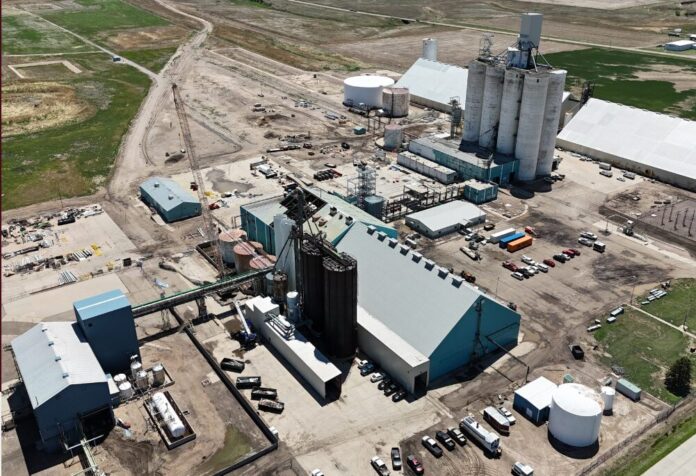
Scoular Grain’s canola and soybean crush facility (pictured above), located 5 miles west of Goodland at Caruso, is on track to launch full operations this October. Jeff Frazier, Scoular Grains market development manager, said one opportunity for growers to expand their marketing portfolio could include canola. Canola is planted in early September through October, depending on the region, he said. Canola planted this fall would be harvested in summer 2025.

Canola can be harvested two ways, he said. Farmers can cut it with a combine similar to wheat, or it can be swathed and about a week later picked up with a combine.

“One of our key initiatives is we want to eventually grow the program to 400,000 acres as we have a capacity for 11 million bushels a year,” Frazier said, adding that the company plans to be patient. “It is more important to us to get it right. Education is paramount, and that starts with letting producers know about potential benefits.”

Jeff Frazier is Scoular Grains market development manager. (Courtesy photo.)

Canola for the 2025 crop year currently offers a delivered crush bid of $11.20 a bushel, which is much higher than wheat. Dryland canola produced about 30 bushels per acre in 2024. Under ideal growing conditions, researchers say it has the potential to reach 60 bushels per acre.

Frazier said Scoular’s approach has been to work with growers and outline opportunities and answer questions.

That includes an arrangement so that if a producer cannot grow a crop due to circumstances beyond their control, typically called an “act of God,” Scoular will not force the farmer to buy off the open market to fulfill a contract. If the grower, as a starting point, wants to commit to delivering 5,000 bushels, that might be the right approach for him.

“We understand there is a lack of crop insurance to cover canola, so we want to provide our growers with ways to avoid risk and worry,” Frazier said.

The company will also have unloading sites at several towns in Kansas, including Cullison, Wellington, Coolidge and Horace. Growers can also develop their own on-the-farm storage or work with third-party elevators. The company has made a long-term investment in the processing plant because the venture is going to be “more of a marathon than a sprint,” Frazier said.

“We are in it for the relationship and we won’t be a fly-by-night operation,” he said.

Scoular retrofitted the facility so it can handle both soybeans and canola.

“We have a large footprint in soybeans, and crushing soybeans provides stabilities,” Frazier said.

Being located near Goodland made sense when Scoular purchased the facility from ADM several years ago. Frazier liked the idea that farmers in that region can have marketing options for their crops.

Renewable diesel and renewable markets have grown in importance, Frazier said.

“The renewable market is not going away any time soon,” he said. “With other commodity prices depressed, right now canola can be a viable option.”

He also believes that producers can benefit from canola to boost soil health, and he noted that a Kansas State University study that said wheat following canola has been known to push yield 10 to 20% when compared against continuous crop wheat.

For more information, he encouraged producers to visit the company’s website at www.scoular.com.