Wednesday, February 4, 2026
Home Blog Page 348

How 21 Kansas cities got their unique names

0

Four men who founded Cawker City in 1870 in north-central Kansas played poker against each other to win the right to name it.

The winner, Col. E.H. Cawker, named the city after himself.

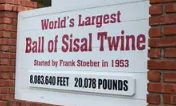
A community of about 450 people in Mitchell County, Cawker City is perhaps best known for being home of the world’s largest ball of twine.

It is among numerous incorporated cities in Kansas with names that are interesting and unique. Following are 20 others.

Topeka means ‘a good place to dig potatoes’

The name of the state’s capital city — Topeka, located in Shawnee County in northeast Kansas — comes from an Ioway Tribe word meaning “a good place to dig potatoes.” That name was chosen by founders of the city, which has a population of about 126,000.

Cherokee got that name by mistake

A city of about 600 in southeast Kansas, Cherokee’s residents incorporated it under that name because they thought it was located in Cherokee County, the city’s website says. Actually, the city of Cherokee was — and still is — in Crawford County.

Dexter was named after a horse

Dexter, a city with a population of about 225 in Cowley County in southeast Kansas, was named after a famous and successful racing trotter horse owned by Robert Bonner of New York, says the city’s website.

Grenola was created by combining ‘Greenfield’ and ‘Canola’

Grenola, population 151, was formed after the Atchison, Topeka & Santa Fe Railway built a railroad halfway between the rival communities of Greenfield and Canola, which stood three miles apart in Elk County in southeast Kansas. Residents of those communities responded by establishing a new town along the railroad, naming it “Grenola” and moving there, Frank Wilson Blackmar wrote on page 796 of a an encyclopedia of the state’s history published in 1912.

Great Bend got that name for being located at a ‘great bend’ in a river

Great Bend, a city of about 15,000 people in Barton County in central Kansas, received that name because it is located on a “great bend” in the Arkansas River, says page 145 of a Kansas Historical Society report published in 1916.

Council Grove got that name after an agreement was reached at a council there between American settlers and the Osage Nation, allowing settlers’ wagon trains to pass westward through the area on the Santa Fe Trail, said the website of the National Park Service. Pioneers gathered at a grove of trees, so their wagons could band together for their trip west, it said.

Osawatomie was named by combining ‘Osage’ and ‘Potawatomi’

Osawatomie, city of about 4,300 people in Miami County in east-central Kansas, got its name by combining the names of the Osage and Potawatomi tribes, says the city’s website.

Argonia was named after heroes in Greek mythology

Argonia, a city with a population of about 450 in Sumner County in south-central Kansas, was named after the “Argonauts,” a group of heroes in Greek mythology whose mission was to find the legendary Golden Fleece, the city website says. Argonia residents in 1887 elected Susanna Madora Salter as the first woman mayor in the U.S.

Gas got its name from its area’s abundance of natural gas

Gas, a city of about 475 people in Allen County in southeast Kansas, got its name from the abundance of natural gas found in the area where it’s located, says the city’s website.

Junction City got that name because it’s located at a junction of two rivers

Junction City, a city of about 23,000 in Geary County in north-central Kansas, got that name because it was established at the junction of the Republic and Smoky Hill rivers, where the Kansas River is formed, according to the website of Junction City Main Street, an organization created to spur economic development in that city’s downtown area.

Liberal was where an early settler became known for giving away water

Liberal, a city of about 20,000 in Seward County in southwest Kansas, got that name after an early settler there became known for giving away water to thirsty travelers, who would respond, “That’s very liberal of you,” said the city’s website. Liberal is known for taking part each Shrove Tuesday in a friendly competition with the city of Olney, England, in which women of both communities run 415 yards down the streets flipping pancakes.

Olathe’s name came from Shawnee Tribe word for ‘beautiful’

The name of Olathe, which has a population of about 141,000 and is located in Johnson County in northeast Kansas, comes from the Shawnee Tribe word for “beautiful,” says the city’s website.

Kanorado combines ‘Kansas’ and ‘Colorado’

Kanorado, a city of about 150 in Sherman County in northwest Kansas, was given that name — a combination of “Kansas and Colorado” — because it is located right along the Kansas/Colorado state line, according to the “Travel Kansas” website.

El Dorado means ‘a place of fabulous wealth or opportunity’

“El Dorado,” exclaimed one of its founders, Joseph Cracklin, upon first seeing the site of that community, which is now home to about 13,000 people in Butler County in south-central Kansas, says the city’s website. “El Dorado” is Spanish for “a place of fabulous wealth or opportunity.”

Abbyville was named after baby Abby

Abbyville, population 83, is in Reno County in south-central Kansas. It is named after Abby McLean, the first baby born there.

Neodesha named after Osage Tribe word meaning ‘where waters meet’

The name of Neodesha, a city with a population of about 2,300 at the confluence of the Verdigris and Fall rivers in Wilson County in southeast Kansas, comes from an Osage Tribe word meaning “where waters meet,” says the city website.

Emporia was named after an ancient coastal city in northern Africa

Emporia, a city of about 24,000 people in Lyon County in east-central Kansas, was named after a flourishing ancient market center that was located on the northern coast of Africa and had been founded by the Greeks, says the website of that city’s Chamber of Commerce.

Stockton got that name in an effort to attract a railroad

Stockton, a city with a population of about 1,480 in Rooks County in north-central Kansas, got that name because stock raising was its only industry at the time and residents thought being named “Stockton” would help attract a railroad there, says a website detailing the history of that county. “The hope that the town would become a livestock center never materialized,” the site said. “However, the coming of the railroad would prove to be essential in maintaining Stockton as a viable community.”

Paxico got anglicized version of name of Native American medicine man

Paxico, a city of about 210 people in Wabaunsee County in northeast Kansas, was given a name that was an anglicized version of “Pashqua,” which was the name of a Native American medicine man who lived in the area on the banks of Mill Creek, says the Travel Kansas website.

Alton received that name to replace ‘Bull City’

historical marker at Alton, population about 100 in Osborne County in north-central Kansas, tells how Hiram C. Bull and Lyman T. Earl set out from Cawker City and established that community in 1870, with a coin toss resulting in its initially being named Bull City instead of Earlville. Bull and two other men were killed in 1879 by Bull’s pet elk. Some residents subsequently sought torename the city “Alton,” after Alton, Illinois. The historical marker says, “So after a legal petition to change the name failed, a fraudulent petition was sent to Washington. D.C., with the signatures cut from a popular road petition and pasted to the name change petition.” The city’s name was then changed, it says.

As reported in the Topeka Capitol Journal
Foraging for good value, but alfalfa losing ground doing so

0

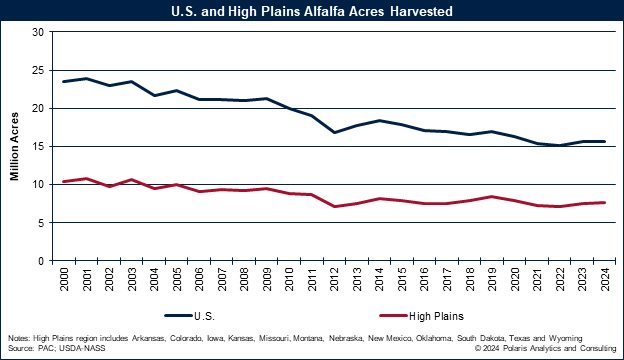
Land planted to alfalfa across the United States for 2024 has been pegged at 15.6 million acres, according to the U.S. Department of Agriculture’s National Agricultural Statistics Service survey of farmers in early June, as reported in the June Acreage report that was released June 28. If realized, plantings will essentially be unchanged from 2023, hovering near the historical low as shown in the following chart. However, since 2000, alfalfa area has shed nearly 10 million acres.

Alfalfa plantings in the High Plains region have been consistently around 7.7 million acres since 2012 and are expected to total 7.6 million for 2024, which would be an increase of 1.4% from 2023. Alfalfa area across the High Plains averaged about 10 million acres from 2000 through 2005 before steadily declining to its current level.

The area planted to alfalfa in the High Plains region represents nearly one-half of the U.S. total. Across the region, Montana and South Dakota represent more than 45% of the area planted to alfalfa.

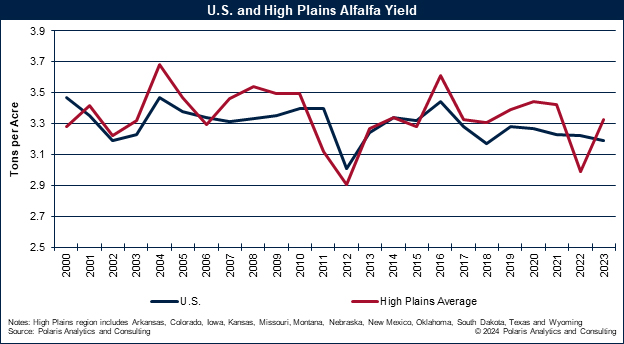
Alfalfa yield across the U.S. varies from one year to the next, dropping as much as 11.5% during the 2012 drought year and 7.6% in the rebound year of 2013. However, alfalfa yield has been trending lower since at least 2000. The U.S. alfalfa yield was 3.2 tons per acre during 2023.

In the Northern Plains, alfalfa yield has trended lower since 2000. For 2023, the alfalfa yield across the Northern Plains was 3.3 tons per acre. Alfalfa yield is shown in the accompanying chart.

With area shrinking and yield dragging lower, alfalfa production has been falling. U.S. alfalfa production exceeded 80 million tons in 2000 and has trended lower to 50 million tons since 2021. High Plains alfalfa production has dropped from 30 million tons to around 20 million since 2021.

Alfalfa crop value has been encouraging

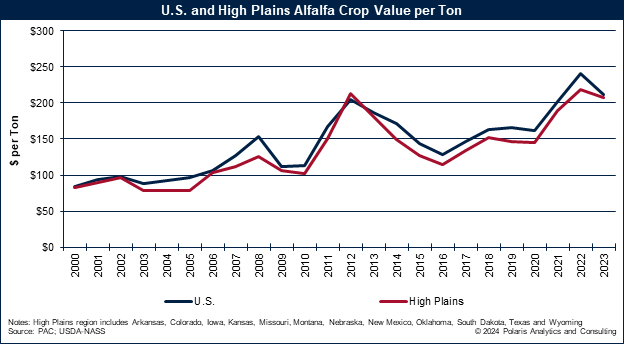
Despite falling area and yields, resulting in lower production, alfalfa’s bright spot has been its improved value. During 2022, alfalfa values peaked at $240 per ton, using USDA-NASS data. For 2023, the value fell 12% to $212 per ton.

Alfalfa values across the High Plains generally lag the national level, averaging $207 per ton during 2023, a drop of 5.6% from the record level during 2022. Alfalfa crop values are shown in the following figure.

Given the results of the USDA-NASS survey of farmers who expect to harvest alfalfa from 15.6 million acres during 2024 and using a trend yield of 3.2 tons per acre, production will increase 1% to 50.4 million tons. For the High Plains, production could increase 1.1% to 21.5 million tons.

The high value reported for alfalfa is needed to offset higher costs farmers have experienced with fuel, irrigation, inputs (seed, fertilizer and pest control), transportation and higher interest rates. While some of these costs have eased, many remain at elevated levels, and the impact hits the bottom line as higher costs have a compounding, accumulative effect.

Absorbing costs over the long run impacts what farmers plant and how well they treat what they plant. With plentiful supplies of corn and other feed ingredients available to the market, livestock producers may forgo using alfalfa, substituting with other feed components. As substitution ensues and less alfalfa is consumed, the crop value could retreat further.

Despite changing alfalfa crop patterns, alfalfa remains an important crop for agriculture

Alfalfa is a valuable livestock feed for dairy cows, beef cattle, calves and other livestock. Alfalfa’s attributes are beneficial to the soil and crops that follow where it was planted and harvested. Production may have slipped, but alfalfa’s value has held ground and will continue to be an important and meaningful crop across the High Plains.


WASDE’S old crop ending stocks caught eye of analyst

0

he July World Agricultural Supply and Demand Estimates report was in line with most production expectations, according to one analyst.

Naomi Blohm, a senior market adviser with Total Farm Marketing by Stewart-Peterson, expects more production adjustments in the August report. She also noted an unexpected change in old crop ending stocks for corn and soybeans.

Corn

The July 12 report noted that U.S. corn outlook is for larger supplies with great domestic use and exports and slightly and lower ending stocks of 1.877 billion bushels. Corn beginning stocks were lowered 145 million bushels by mostly reflecting a greater use forecast for 2023-24. Exports were raised 145 million bushels based on current outstanding sales and shipments to date.

“The eyebrow-raising point that made the trade stop in its tracks was how the U.S. Department of Agriculture reduced old crop ending stocks,” Blohm said.

A month ago the estimate was for 2.022 billion bushels.

Corn production for 2024-25 is forecast to go up 240 million bushels as a result of greater planted acres and higher projected harvested acres, WASDE stated. The yield was unchanged at 181 bushels per acre.

Total corn use was raised 100 million bushels with increases in both feed and residual use and exports based on larger supplies and lower expected prices. With use rising slightly more than supply, ending stocks were down 5 million bushels. The season-average farm price received by producers was lowered 10 cents to $4.30 a bushel.

Global corn stocks, at 311.6 million tons, are up 0.9 million tons.

In 2024-25, the report calls for larger corn exports for the U.S. with reductions for Russia and the EU.

Soybeans

Soybean production is projected at 4.4 billion bushels, down 15 million bushels on a projected lower harvested area, according to WASDE. The harvested area, forecast at 85.3 million acres in the June acreage report, is down 0.3 million acres. The soybean yield forecast is unchanged at 52 bushels per acre. With slightly lower beginning stocks, reduced production and unchanged use, ending stocks for 2024-25 are projected at 435 million bushels, down 20 million bushels from June.

Old crop ending stock were also reduced, and now they are at 345 million bushels, down from 350 million bushels in June, Blohm said.

The U.S. season-average soybean price for 2024-25 was forecast at $11.10 per bushel, down 10 cents from a month ago, the report stated. Soybean meal and oil prices are unchanged at $330 per short ton and 42 cents per pound, respectively.

Global soybean beginning stocks for 2024-25 are being increased slightly with higher stocks for China, but mainly offset by lower stocks for Argentina, Brazil and Paraguay due to revisions for 2023-24. China has revised its soybean imports for 2023-24 by 3 million tons to 108 million tons on larger-than-anticipated arrivals expected in the fourth quarter of the marketing year.

With slightly higher beginning stocks, lower global production and relatively small changes to use in 2024-25, global soybeans stocks were reduced 0.1 million tons to 127.8 million tons on lower stocks for Argentina, Brazil, Paraguay, Russia, the European Union and the U.S., but mostly offset by higher stocks for China.

Because of the reduction of old crop ending stocks for corn and soybeans, Blohm said, new crop ending stocks came in below the average trade estimate heading into the July 12 report.

“The trade got excited about this this news; however, then reality set in. Corn carryout is set to be at 2 million bushels for another year, and soybean carryout continues to hedge higher,” she said. “This news allows us to have the need to put a weather premium back into the market quickly should Mother Nature have a trick up her sleeve come August.”

Wheat

Winter wheat production was forecast at 1.34 billion bushels, which was an increase from the previous month, the WASDE report stated. All wheat producer, according to a producer survey, was also raised from 134 million bushels to slightly over 2 billion bushels.

With larger supplies, exports in the latest report are forecast at 825 million bushels, an increase of 25 million bushels. Projected 2024-25 ending stocks are raised 98 million bushels to 856 million bushels, which is up 22% from a year ago and the highest in five years. The projected 2024-25 season-average farm price was reduced 80 cents a bushel to $5.70 a bushel on higher stocks.

Overall the global wheat outlook for 2024-25 is calling for larger supplies and consumption as supplies were increased 6.9 million tons to about 1.06 billion tons, primarily because of larger beginning stocks and higher production most notably with the United States, Pakistan and Canada. Those countries are also expected to increase their exports.

Other notables

Oat production was forecast up 15 million bushels, reflecting higher area in the acreage projection report and an increase in yield to a record 70.9 bushels per acre, according to WASDE. Barley production was lowered 11 million bushels on slightly lower area of harvested acres expected. Yield was projected at 74.2 bushels per acre. Sorghum production was reduced 15 million bushels based on the most recent report to a July total of 373 million bushels with a projected yield of 69.2 bushels per acre.

The all-rice yield was forecast at 7,645 pounds per acre, an increase of 10 pounds from the previous month.

Pets Make The Best People

0
lee pitts

“Our perfect companions never have fewer than four feet.” Colette

I think I’m growing allergic to people. I never answer door when the nice folks from Jehovah’s Witness come around, I hardly ever pick up the phone because I can barely speak above a whisper, my wife has to fetch my prescription drugs for me because I’m fearful of catching something in the drugstore, I can’t stand being in a crowd (a crowd being three or more people), and as Andy Rooney once observed, “I have more friends than I have time to keep.” I also have the problem that I can’t remember anyone’s name. (I engraved a name badge for my wife.)

I wasn’t always a hermit but the COVID crises changed me. My doctors warned me that if I caught the dreaded disease there was a good chance it would kill me so I avoided people all together. Heck, I wouldn’t even talk to people on the telephone thinking the nasty virus could be carried over telephone or cable wires.

I was always kind of a loner and a recluse anyway who preferred the company of animals and during the two year COVID crises I relearned something I’ve known all along… pets make the best people.

One of the reasons I like dogs so much is they don’t have cell phones. At least not yet, anyway. Pets don’t invite you to lunch and then spend the entire time staring at their cell phones and then sticking you with the tab. That’s another great thing about pets, like me, they easily get bored with idle conversation. And dogs won’t act like they’re your friend and then try to ransom your computer like one scumbag recently did to me. Maybe a cat might try something like that but never a dog or a duck. Yes, I used to have two pet ducks named Chester and Charley and I miss them terribly. If you can watch a duck or a Berkshire hog go about its daily routine and it doesn’t bring a smile to your face then you are a very hard-hearted person indeed.

Whereas humans have mixed emotions and can love and hate you at the same time, animals can’t do that. They either love you or hate you. Period! And you’ll know right away. They’ll either try to scratch your eyes out or bite your arm off, or they’ll rub up against your leg looking for a gentle pet. That’s why they’re called ‘pets’.

Pets are apolitical too. At one time I figured all dogs were Republicans and all cats were Democrats or Progressives but I changed my mind when I met a Toy Poodle who was obviously a liberal, always looking for a handout and wouldn’t do a bit of work like a Border Collie or a police dog will do. I’m quite sure the Toy Poodle was an animal rightist too. So much for my theory that all dogs are Republicans.

I also like the fact that pets can keep a secret. Even though the canaries and parakeets I’ve owned tweeted or twittered non-stop they never spread nasty rumors. Pets are also very good listeners. You can share your innermost thoughts with them and they don’t charge $500 an hour like a psychiatrist would. I’m carrying around a lot of emotional baggage but I’ve never had to see a shrink for my depression and I attribute that to spending hours and hours on the couch with my pets, not some psycho-doc. Even my turtle, who I rarely see, has been good for my emotional well-being. We’ve stayed close over the years because we’ve stayed apart.

I’ve never once had a pet ask me to borrow money or my weedwhacker. Pets won’t steal you blind, they’re great at fetching things and even if they know you have no intention of leaving anything to them in your will they’ll still be your loyal friend. They’ll take a hard kick to the head trying to help you corral some cows, they’re the best theft deterrent system ever built and will do everything in their power to protect you. Even though we might make pets sleep outside, or we cage or tether them and perhaps even cook and eat them, pets will still be your best friend right up until their final breath.

Rounding Up Grazing Cattle

0

“It’s summer cattle roundup time in the Flint Hills of Kansas.”
Cowboys and cowgirls are gathering short-season, double-stocked, intensely grazed native grassland pastures.
It’s a different scenario than as recent as just a few decades ago. In years gone by, cattle were grazed on Flint Hills grassland full season about five months.
Generally, lightweight cattle, quite often steers, were turned out on lush, fast growing, high protein pastures in late April.
Stringent stocking rates were followed so cattle did not overgraze the grasslands providing there was sufficient moisture for prairie growth.
Cattle were grazed throughout the summer and gathered in late September or early October, the prime grass growing season. Depending on a number of quite variable conditions, cattle weight gains determined profitability of the grazing operation.
Different pasture operators have their own goals, with a gain of three pounds per day often considered sufficient for profit. Of course, the more the better.
Change in rangeland management philosophy came when ranchers determined grasslands didn’t have sufficient time to recover from full season grazing. When native prairie is grazed into the ground so to speak, there’s very little grass remaining.
It takes time for regrowth of the grass and the root system. Because it was autumn, conditions were often reduced such the prairie was not sufficiently recovered for the next grazing season.
Range management specialists developed an intensive early stocking program that transformed both the calendar and the cash flow on ranches.
The traditional season-long program had cattle on the grass for 150 days at a stocking rate around four acres per animal.
In contrast, intensive early stocking takes advantage of the fact that the greatest gain is in the first part of the season. After mid-July, the grass quality declines as nutrients are transferred to the roots.
By doubling and even tripling the traditional stocking rates, cattle are ready to move to feedlots after grazing just 90 days. Studies found the more intensive approach resulted in the production of an additional 35 pounds of beef per acre.
So many ranches shifted to intensive early grazing with cattle coming off grass in July. Prairies then have ample time to recover for bountiful grazing the next year.
That’s why summer cattle roundups have become commonplace.
Reminded of Isiah 60:7: “And yes, a great roundup as I engulf in splendor.”
+++ALLELUIA++
XVIII–31–7-29-2024