Thursday, February 5, 2026
Home Blog Page 364

WASDE raises red meat and poultry production

0

Total United States red meat and poultry production forecast for 2024 was raised based on the latest World Agricultural Supply and Demand Estimates.

Beef production was unchanged as lower expected processing was largely offset by higher dress weights.

For 2025, the red meat and poultry production forecast is raised on higher expected beef production and higher expected placements in the fourth quarter of 2024. Dressed weights are expected to remain relatively high in 2025.

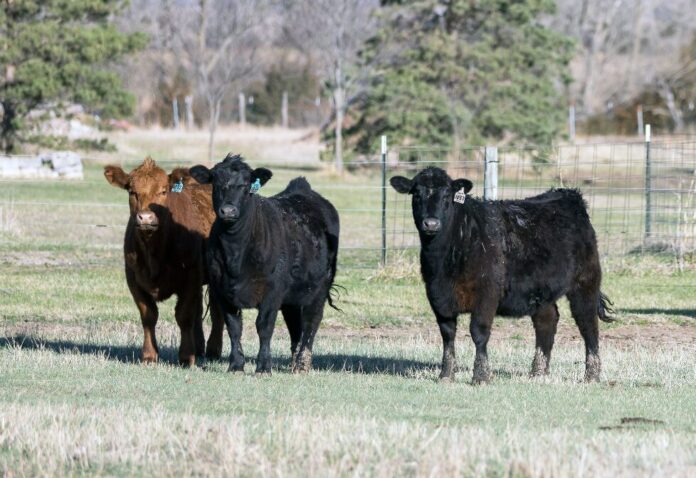
Also, the cattle price forecast has been raised. The 2025 steer price was $186 per hundredweight, which is up $5 from what was projected at the beginning of 2024. The price is based on the five-area weekly weighted average direct slaughter cattle report compiled by the U.S. Department of Agriculture.

Glynn Tonsor

Glynn Tonsor, a professor in the department of agricultural economics at Kansas State University, said the latest report was not a surprise to him, and he continues to anticipate higher cattle prices.

Cattle operators need to focus on their own costs, he said.

“Many cow-calf operators will begin contemplating herd rebuilding and expansion and hence should know their breakevens and know what expected return on their investment would be from rebuilding and expanding,” Tonsor said. “Feedlot operators are likely to face reduced supplies of incoming animals for a couple years leading to adverse margins making cost management even more important and ongoing discussions with your lender essential.”

He also noted that the nation’s cowherd is not showing any signs of rebuilding.

Cattle inventory report

Recently, the USDA said it was not going to issue a cattle inventory report in July.

“USDA provides a host of valuable reports and data series, but all must appreciate that provision is not free (Public, tax-based budgets are real.) and that the quality of said reports when available often hinges on validity of information provided by producers to USDA,” Tonsor said. “As for other outlets, general media and industry analysis can provide insight, but many build upon the tradition of USDA providing respected, unbiased information.”

Pork, poultry

Pork production was raised in the second quarter on a more rapid pace of processing and slightly higher dressed weights.

Pork prices were estimated at $54.97 per hundredweight at the beginning of 2024 and have been trending upward, but the WASDE projects the price to be at $59 per hundredweight beginning in 2025.

Broiler production was raised on higher bird weights and recent hatchery data. Turkey production was also raised on recent hatchery data. Egg production was lowered based on recent discoveries of highly pathogenic avian influenza in commercial laying flocks.

Broiler prices, which were at 128 cents per pound at the beginning of 2024, are expected to be 126 cents per pound beginning in 2025.

Dairy

Milk production forecasts for 2024 and 2025 were unchanged from the previous month, with slight adjustments to the cow inventories offset by slower growth in milk per cow.
For 2024, butter, cheese, whey and nonfat dry milk price forecasts were raised from the previous month based on recent price strength. The all-milk price forecast is now estimated at $21.60 per hundredweight. Strong demand for dairy products is expected to carry into 2025, and prices were raised for cheese and whey.

The 2025 all-milk price forecast is estimated at $21.50 per hundredweight.

It’s A Gray Area

0

Henry Ford once said that you could have any color of car you wanted as long as it was black. Fast forward to today and it seems like the automotive industry is saying you can have any color of truck you want as long as it’s white.

I watch a monthly internet truck auction and I bet that 98% of the used trucks they sell are white. I’m talking bucket trucks, welding trucks, flat beds, veterinarian pickups, plumber’s trucks even over the road tractor-trailer rigs. They’re all white! Twenty-five years ago most of the trucks were some tint of silver causing me to wonder if the executives of the automotive industry are color blind?

It wasn’t always this way. Nearly 60 years ago I learned to drive in a Chevy short-bed that was gold. My father traded it in for a GMC that was cherry-red. My Grandpa’s truck was also red. One of the best looking trucks I’ve seen, even to this day, was a 1952 Chevy pick-up painted light blue with baby moon hubcaps that was frequently seen around town. But the best looking truck I’ve ever seen was the first truck I ever bought, a 1970 Chevy El Camino SS 396 that was painted a dark metallic brown with tiny gold flecks that made it sparkle like a diamond. The roof was a beige vinyl that blended beautifully with the dark brown.

Normally I’m not a big fan of brown but this rig was a real head-turner and I don’t know why I sold it, other than the fact that we needed the money for the down payment on our first home. My wife sold her beautiful blue Camaro for the same reason and looking back I wish we hadn’t bought the house and kept those vehicles instead, even if it meant we had to live in them!

My last two pickups were a two-tone combination that you don’t see much any more. The first was painted a dark blue on the top with the bottom being silver and after that we bought a one ton that was tan on top and white on the bottom. At least it was white after we washed the truck on rare occasions, the rest of the time it was more of a manure brown. It could change color rapidly too, especially if the cattle were eating washy feed.

I’ve only owned one white truck and it was my Grandpa’s company Econoline we named Herbie. This was also the only Ford I ever owned. I paid Grandpa $600 for it and used it mostly to haul my sheep, so I suppose you could call it a “Ewe Haul”. Actually it a two tone because the side mirrors were both held on by blue masking tape.. As much as I hate to say this Herbie was probably the best truck we ever owned.

It’s no coincidence that as more and more trucks were white, people became a lot less friendly. This was because when people drove colorful rigs you always knew who was approaching and had time to decide if it was friend or foe which determined whether you waved or not. Now that trucks are all white you never know who’s coming until it’s too late to wave.

I worked at an Atlantic Richfield gas station that eventually became Arco and it was always fun to try and identify our incoming regular customers by the color. of their cars. There were orange Vegas, yellow Pintos, blue Nash Ramblers and older olive drab DeSotos, Edsels and Studebakers. Ford even had a color in the 60’s they called Anti-Establish-Mint.

From what I’ve observed lately it seems like Detroit has now decided that the next wave of color will be gray. How exciting! The problem is all the white and gray vehicles on the road are so boring people are falling asleep at the wheel. They’re having terrible wrecks and the occupants are ending up in the back of a black or gray hearse to haul them to the bone orchard. I suppose the car execs think they’re being really bold and adventuress by picking gray to follow white. I wonder what they are going to call their new favorite color, Mortuary Gray, Funeral Parlor Dull or Meat Wagon Monotonous.

Day 10, Kansas Wheat Harvest Report

0
Kansas Wheat

This is day 10 of the Kansas Wheat Harvest Reports, brought to you by the Kansas Wheat Commission, Kansas Association of Wheat Growers, Kansas Grain and Feed Association and the Kansas Cooperative Council.


As the calendar flips over to July, the combines keep rolling across western Kansas, albeit getting a late start on Monday due to lingering moisture from rain over the weekend. Better than expected final yields can mean of one of two things to western producers — either that they are actually cutting fields they expected to zero out due to drought or they are seeing yields above last year or the county average in fields that caught spotty rains or winter snows. While yields are highly variable, test weights, protein and optimism remain strong.


Officially, the Kansas wheat harvest is 80 percent complete, well ahead of 39 percent complete last year and 49 percent on average, according to the USDA’s National Agricultural Statistics Service crop progress report for the week ending June 30, 2024.


Wheat harvest is nearly complete in Ness County, according to Gary Gantz, president of D.E. Bondurant Grain Co. Inc.in Ness City. The Gantz family has operated the last remaining private grain elevator in Kansas for nearly four generations and reported this year’s wheat crop is nearly double what they took in last year.


Great stands going into winter had area farmers feeling optimistic for a good crop, but a lack of moisture over the winter and into the spring put a damper on final results. Still, Gantz said most folks are “happy with the way things have shaken out” with average yields at about 30 bushels per acre, adequate test weights from 57 to 60 pounds per bushel and strong average protein at 12 percent. Standout varieties for the year include KS Western Star and KS Hamilton.


This year’s wheat crop is also performing better than expected in far western Kansas, according to Clay Schemm, who farms with his parents in Wallace, Logan and Greeley counties.


“I would not say it’s a great year, by any means, but definitely above what we had anticipated. We anticipated a pretty rough year,” he said. “I’d say we’re looking at an average to maybe slightly below average year on the wheat yield.”


Harvest started in the area on June 20. With four or five days left, showers overnight on Sunday, June 30, meant combines were getting a late start on Monday, July 1. Whether or not a field got a good stand during the dry planting season is making the difference between yields.


“We were really dry last fall; it was hard to get the wheat up and get a good stand,” Schemm said. “If you were able to get that decent stand, the wheat seemed to have enough legs under it this year to finish off. The wheat that had trouble last fall has been yielding — across the farm — lower than the wheat that did get that decent fall stand.”


The places that did catch spotty rains or winter snow are yielding up to 45 bushels per acre, but average yields are closer to 35 to 40 bushels per acre. Quality is also variable, but test weights are excellent at a 62 to 63 pounds-per-bushel average and average protein is strong at 12 to 13 percent.


He noted area farmers have not had issues with Wheat Streak Mosiac Virus (WSMV) this year because they did a good job keeping volunteer wheat under control and choosing resistant varieties like KS Dallas.


Scattered rains and accompanying humidity also kept producers from starting cutting until early afternoon in Hamilton County. Jason Ochs, who farms near Syracuse, reported he started cutting on June 21, but was delayed the following week by rain. Rain chances every night is stretching out a normal two-week harvest window, but the bigger theme of this year’s harvest is variability — within and between fields.


When local farmers say wheat is yielding better than expected, that may be only 20 bushels per acre on fields they didn’t even expect to cut. Others are seeing yields up to 60 bushels per acre.


“We’ve covered the bases for sure,” Ochs said. “We have short-rated wheat that never came up last fall. We’ve zeroed wheat out that just didn’t get the rains. We’ve had fields that caught on fire that we didn’t get cut. We have fields that are hailed out 80 to 90 percent. And yields are ranging up to well above 50 bushels to the acre. I have a really big spectrum.”


Across the county, Ochs guessed most people will end harvest above the county average of 30 to 32 bushels per acre across their entire operations. Test weights indicate good quality, coming in at or above 60 pounds per bushel. Proteins are ranging from 11.8 to 13 percent.


Ochs delivers his wheat to Scoular Grain in Coolidge. Ellie Katzer, senior originator at that location, reported seeing good quality wheat so far with yields higher than anticipated. The rains have not hit test weights and quality has hung on with the lingering harvest. Test weights are averaging 60 to 61 pounds per bushel. Average protein is 12 percent, but the range is from 8 to 15 percent.


The elevator took in their first load on June 12 but harvest did not kick into full gear until June 17. Katzer expects to harvest to have a “long tail” and finish up in mid-July.


“Everyone is pretty content with harvest this year,” she said. “It’s nice to see good quality, and there are some good yields out there.”


The return of heat advisories on Monday is likely to dry up lingering moisture from the weekend and keep the combines running for the rest of the holiday week. Stay tuned for the next Kansas wheat harvest report on Tuesday, July 2.


The 2024 Harvest Reports are brought to you by the Kansas Wheat Commission, Kansas Association of Wheat Growers, Kansas Grain and Feed Association and the Kansas Cooperative Council. To follow along with harvest updates, use #wheatharvest24 on social media. Tag us at @kansaswheat on Facebook, Instagram and Twitter to share your harvest story and photos.


###


Written by Julia Debes for Kansas Wheat

Soft Red Winter Special Edition Harvest Report 2024

0
Kansas Wheat

For audio version, visit kswheat.com.

This Hard White Wheat Special Edition of the Kansas Wheat Harvest Reports is brought to you by the Kansas Wheat Commission, Kansas Association of Wheat Growers, Kansas Grain and Feed Association and the Kansas Cooperative Council.


Hard white (HW) winter wheat varieties continue to be popular among some western Kansas farmers for their high yields, disease resistance and quality. Kansas Wheat continues to work with the grain handling industry and Federal Grain Inspection Service (FGIS) to revise the grain standards to facilitate the movement of hard white wheat in domestic and international markets and lessen the burden on grain handlers.


Hard white wheat had been growing in export demand, primarily to Nigeria out of the Texas Gulf, but the past several years of drought-stricken production shortfalls have impacted that business for Kansas farmers.


Eric Sperber from Cornerstone Ag in Colby, who has been trading hard white wheat since the late 1990s, said, “We’ve never matched up demand with supply. Either there’s more demand and not enough supply, or more supply and not enough demand.” He said, “Unless we can get Nigeria back, it’s hard to market hard white wheat.”


Although Sperber anticipates less than 10 percent of their receipts to be hard white wheat this year, down from years past, he’s pleased with the excellent quality and quantity of wheat in the area.


Wheat coming into his location, both hard red and hard white, have test weights of 60+ pounds per bushel, protein averaging about 12 percent, and variable yields that will likely end up above average overall. Most farmers in his draw area of Rawlins, Thomas, Sheridan and Logan counties have been “pleasantly surprised” by this year’s wheat harvest.


Hard white wheat makes up 16.3 percent of planted acres in west central and southwest Kansas. Joe is the top seeded hard white wheat variety, making up 8.4 percent of planted acres in southwest Kansas and 7.9 percent in west central Kansas. Overall, hard white wheat was seeded on 4.3 percent of Kansas’ 7.7 million acres, accounting for 331,100 acres seeded to hard white wheat in the fall of 2023. KS Big Bow, being the most recent HW release and projecting to be a Joe replacement with higher yield potential, better disease package and milling and baking quality.


Overall, the quality of this year’s hard white wheat crop is excellent, in line with the quality of this year’s hard red winter wheat crop.


The Millershaskis from Lakin in Kearny County are growing both Joe and KS Big Bow, hard white wheats from the Kansas Wheat Alliance, this year.


Gary Millershaski reports that their “test weights have been unbelievable, 60 to 65 pounds per bushel.” They have very good sized berries and clean samples.


They have not tested for protein because the elevators in the area do not pay for protein.


In February, the crop looked fantastic. Kyler Millershaski said he was excited to topdress because it was looking so good.


They got a really good stand on all their acres last fall, and even had snow cover over the winter.


But, then the spigot turned off and they received no more moisture until late May.


“I had higher hopes,” Kyler said. “It’s disappointing.”


Even with the lack of moisture in the spring, their farm will average approximately 28 bushels per acre, down from an average in the mid-40s.


They received a major hailstorm, which resulted in one field being a total loss and a few others with yields of only 10 to 20 bushels per acre.


They haven’t had any issues with wheat streak mosaic virus, even though some of their neighbors have it.


“Joe has been such a good staple for this area,” Gary said, referencing its wheat streak resistance.


Like Millershaskis’ operation, the Suppes’ in Lane County see farming as a family affair.


Ron, his son Shane, nephew Jace, and a skilled group of hired hands started cutting their hard white winter wheat crop on June 18. With dry weather, they expect to finish in the next seven days. They were using stripper headers, which maximize the use of straw left behind for moisture conservation and weed management.


This year they planted Joe and KS Big Bow and have been pleasantly surprised by their resilience to the spotty weather they have had. They gave some credit to timely rains during the grain filling period.


The family was happy to report an average of 50 bushels per acre and proteins at 12.5 percent. Their wheat crop this year faced some pressure from wheat streak mosaic virus which put a damper on yields, but was not a huge factor due to the advancements made by wheat research.


“It’s the genetics shining through,” said Jace as he reflected on this season’s challenges.


Stewart Whitham, who farms near Leoti, in Wichita County said there was a tremendous amount of variability potential in this crop, just a few weeks before getting started cutting.


Over the course of the weeks leading up to harvest, grain filling weather was ideal, which allowed for his crop to be “better than expected.”


Whitham’s crop of KS Big Bow had average test weights of 62.7 pounds per bushel, with protein averaging 13.2 percent.


U.S. Wheat Associates produces an annual Crop Quality Report that includes grade, flour and end-product data for all six U.S. wheat classes. The 2024 Annual Wheat Quality Report will be available at uswheat.org.


The 2024 Harvest Report is brought to you by the Kansas Wheat Commission, Kansas Association of Wheat Growers, Kansas Grain and Feed Association and the Kansas Cooperative Council. To follow along with harvest updates on Twitter, use #wheatharvest24. Tag us at @kansaswheat on Facebook, Instagram and Twitter to share your harvest story and photos.


###


Written by Amelia Schatz for Kansas Wheat

Wheat Scoop: Gone with the Wind

0
Kansas Wheat

For audio version, visit kswheat.com.

Deb and Ken Wood share their farming story through tornado recovery to retirement and beyond


The lives of one Kansas farm family was forever changed after a large and violent long-track tornado tore across north central Kansas on May 25, 2015. Ranking as one of the most violent tornadoes of the season with an EF4 rating and estimated winds of 180 miles per hour, the funnel was on the ground for more than a staggering 90 minutes, bending railroad tracks and snapping trees three or four feet wide in half.


The worst damage was to a single farmstead one mile southwest of Chapman, where the home and all the outbuildings were completely blown away as the operation’s matriarch hid in the basement underneath pillows. But what could be only a story of devastation is also one of hope, community and resilience for Ken and Deb Wood, who shared their story with Aaron Harries, Kansas Wheat vice president of research and operations and host of the Wheat’s on Your Mind podcast.


Today, Ken is a retired wheat farmer, who has served on the boards of the Kansas Association of Wheat Growers and the National Association of Wheat Growers. He still serves as a board member for the National Wheat Foundation. Deb works as a family resource management agent for K-State Research and Extension in Salina.


The day the tornado struck wasn’t expected to be a very severe weather day. Ken was away in Hays for KAWG meetings and Deb went to and came home from work like normal. Their farmstead was picturesque, located in a river bottom with a traditional farmhouse, nine outbuildings and all the machinery you would expect on a working farm – minus the combines that were stored at a different location. Ken had all his corn and about half of his soybeans planted and he recalled he was three weeks to a month out from wheat harvest.


Deb came home like any other day, got a bite to eat and had the news on. There was a storm building east of Bennington, but it was Kansas and May, so thunderstorms and tornadoes are just part of the normal weather broadcast.


“There’s tornadoes around Kansas all the time, so I didn’t think too awful much of it until things started getting closer,” Deb said. “Looking back, if I knew then what I know now, I would have put as much stuff into my vehicle as I possibly could have and gotten the heck out of Dodge.”


Ken stayed in Hays for supper. He got an alert on his phone that there was some severe weather developing, but he just watched as it developed like a normal storm. He got on the road and headed for home, but the longer he drove, the more he realized the storm was developing into something dangerous.


In Kansas, tornadoes typically move from the southwest to the northeast or due north. This night’s tornado moved west to east, took a right turn, went south across I-70 and hit the Wood’s farmstead out of the northwest as a monster.


“When you live in Kansas, you spend a lot of time in the basement when there’s a warning,” Deb said. “Most of the time, I go downstairs and I just kind of sit there, listen to the radio and wait for it to be over with. I had done that and then I had gone back up as I was getting texts from people. And that’s when I started worrying.”


Deb quickly gathered what she could – some medicine, work clothes and, importantly, Ken’s work boots. Then she ducked under a desk in the basement, taking pillows off the bed in the room and stuffing them around her. Still, it didn’t occur to her that the storm would take everything else.


Then the storm hit. The glass broke. The subfloor was totally blown away. And the entire house was gone.


“There was nothing left at the farm and I mean nothing left,” Deb said. “There was just nothing. It just chewed everything up into little pieces.”


The glass all broke, it ripped off the subfloor totally. The house’s center beam broke into two and a wall landed on Deb. Then it started raining and then it started hailing. Still, Deb kept her cool.


“I called Ken to let him know we’d taken a direct hit, but I was fine, but I couldn’t get out,” Deb remembered.


A local fireman who had lost part of his own farming operation in a 2008 tornado that hit nearby Chapman was first on the scene. Deb could hear him calling for her, so she started hitting on top of the wall. He removed what he could but had to wait for help to get her out entirely.


Ken got the call when he was in nearby Abilene. He raced down the road but was stopped on his normal route on Old 40 Highway because there were poles across the road. When a deputy came flying around the corner and heading north towards I-70, Ken got behind him and followed him all the way – not stopping at a single stop sign, only slowing when they hit a heavy hailstorm.


By the time Ken got home, it was still light enough to see the damage. Deb had very deep bruises on her back, but no broken bones. Although they had no house, no clothes, no food, the community immediately rallied together. Ken and Deb stayed that night at Ken’s brother’s house, but neither slept a wink.


The next morning brought help that did not stop – from family, friends, neighbors, the community, former co-workers, the KARL program, the wheat family. Anyone and everyone who could offer help did. Two former teachers of Ken offered to rent them a two-story farmhouse west of Junction City that was fully furnished. The couple moved in with half a trash bag full of clothes and a pan of lasagna from a neighbor and lived there for 10 months. Although, the fridge was already so full of offerings that the lasagna barely fit.


In addition to the farmhouse and yard, the couple lost irrigation pivots, bins, other buildings and a couple of pieces of equipment. But one of the hardest chores was cleaning up all the acres where debris was scattered like crumbs.


“It literally just chewed stuff up and so there was a lot of stuff that was spread out over the fields,” Ken said. “Little pieces. You’d find a handle off a truck, and there was a lot of things that you couldn’t tell what they were.”


In addition to picking up individual pieces of debris, Ken and his helpers burned wheat stubble and then had to mine the debris hidden under the stubble. It couldn’t be done all at once, so it was done one smoky, dusty terrace at a time.


Within just a few weeks, it was time for wheat harvest. Luckily, Ken was no stranger to borrowing trucks or tractors from his brother or neighbors. And wheat harvest felt like a return to something normal.


“That was the first thing that felt like I was doing something that’s not picking stuff up and not tornado-related,” Ken said. “Although harvest was a real trip, cutting around stuff out in the wheat fields, that was what got me back into the right frame of mind to at least start a plan.”


The couple navigated insurance and deciding where and how to rebuild their farmstead. The home builders broke ground at the end of September and they moved into their brand-new home the first weekend of the next April.


Their story does not end there. When health issues popped up, Ken made the difficult decision to retire. One of the neighbors who stepped up after the tornado and brought out a loader to help out had a son coming home and wanted to expand his operation. So Ken and Deb made the calls – first to their landlords and then to others – it was time to turn over the operation to a new generation.


“One weekend, that’s about all I did was call people and let them know,” Ken said. “As it turned out, I’ve been way healthier than I was expecting to be from this whole deal, so I could have kept going. But once you make the decision, I’ve been at peace with it pretty much.”


While COVID-19 disrupted retirement travel plans, the Woods have found themselves as busy as ever. Deb now helps share her story about taking an inventory of both everything in the machine shed and in the house, but also putting together a grab-and-go box with all the policy and phone numbers needed if the worst happens. And Ken found he missed serving on wheat industry boards, so he quickly applied when a spot opened up for the board for the National Wheat Foundation.


“Now I’m probably busier than I want to be, but it’s self-inflicted,” Ken said. “So I’m good with that.”


Through it all – farming, tornadoes, rebuilding a home, retiring – Ken and Deb know one truth above all else – it’s the people around you that matter most.


“I feel like we’ve come out on the other side stronger and more resilient,” Deb said. “All of the people that helped us get through the recovery; we couldn’t have done it without them. Building those relationships and keeping in touch with people and having that community – it really helps you get through things like this.”


Listen to Ken and Deb’s full story on the podcast or find other episodes of “Wheat’s On Your Mind” at wheatsonyourmind.com.


###


Written by Julia Debes for Kansas Wheat