Saturday, February 7, 2026
Home Blog Page 381

Skinner’s Magic Show

0
lee pitts

It’s getting really hard to find good help in agriculture, especially milkers, shepherds and cowboys. It’s getting so hard in the dairy industry that dairymen are now using robots and teaching cows to milk themselves. That’s right, dairy cows are voluntarily entering enclosures because they’re getting some cow candy as a reward and while they’re standing there eating, a robot attaches a milking machine that milks them three times per day.

Dairymen might have found a way to relieve their labor headache but the sheep and beef industries haven’t been so lucky, although I got a glimpse of the answer 45 years ago.

Bull sales were really different a half century ago than they are now. Instead of 500 bulls in one sale a producer might have 70 bulls to sell and it took three hours to do it. Then along came a World Champion Auctioneer named Skinner Hardy who owned an auction market north of Bakersfield, California. He had a yearly all-breed bull sale in which he’d sell as many as 650 bulls in one afternoon. To get all the bulls sold Skinner did something radically different, instead of taking five minutes per bull he sold one every 31 seconds! As a ring man I knew that I’d never gone that fast before on anything that didn’t have wings and a fuselage.

After the sale the auction crew knew we’d been a part of something new and exciting but we never envisioned that four decades later production sales from Montana to Texas would sell as many as 5,000 head of cattle in one afternoon!

Word spread rapidly about Skinner’s sale and the next year we had sale committees from across the country at ringside to see Skinner’s magic show. Because Skinner was also a highly-sought-after purebred auctioneer across the country he sped them up too and the “magic of momentum” was born. And who would’ve ever guess that selling bulls faster would result in higher prices? I think it was because the buyers didn’t have time to chew on their pencil, ask their buddy for advice and wonder if the wife would approve.

I had my own reasons for wanting to go fast that day. I knew a bowl of Joan’s berry cobbler awaited me at the end of the sale and I had to drive five hours to a sale the next day.

As the announcer for a large video auction company for 20 years I know that video sales would have never been possible if we hadn’t sped up the pace because we had to buy satellite time that was very expensive. I’ll never forget the time we sold our first lot for a million dollars and it took all of 30 seconds to do it! And those ZX Ranch cattle topped the market!

The real reason we were able to sell bulls that fast was because Skinner had a great crew in what is often referred to as the “back end”. These were the cowboys on horseback, swinging gates and getting the cattle to and from the sale ring so the front end was able to sell them that fast. These folks are the unseen heroes in any successful auction and Skinner had the best. His secret was yard man Ron Evans and his mostly-female crew who worked every Monday in exchange for paltry wages and a chance to ride their horses.

After the sale I remember sitting in the coffee shop gobbling down Joan’s cobbler when some exhausted members of Skinner’s cowgirl crew came in for a quick cup of coffee before heading back out to load up the bulls. To show my gratitude for what they’d done that day I bought them all a bowl of Joan’s cobbler and congratulated them on a job well done. To a person they all looked at me funny.

“What? Did I say something wrong?” I asked.

To which their leader replied, “No, it’s just that I’ve been doing this for 25 years and that’s the first time this has happened.”

‘What, you’ve never had a free bowl of Joan’s cobbler before?”

“No, I never got a compliment before.”

I learned a lesson that day and one that could cure any labor problems we might have in the future: Sometimes the best cowboys are cowgirls.

Kansas lawmakers pass targeted economic incentives to fund a Chiefs or Royals stadium

0

Legislators in Kansas have passed a bill that would finance billions of dollars worth of construction costs for a professional sports stadium for either the Chiefs or the Royals, and the governor is expected to sign it.

Gov. Laura Kelly’s chief of staff Will Lawrence told lawmakers that Kelly would sign the bill if it wasn’t meaningfully changed from what was presented at a committee meeting on Monday. The House and Senate passed the bill without amendments, meaning an incentive package is likely to be offered to the Kansas City sports teams.

“Our members saw a vision and a future for Kansas that literally will bring hundreds of thousands if not millions of people to see the Chiefs,” said House Speaker Dan Hawkins, R-Wichita.

Jackson County, Missouri, voters rejected a proposed renewal of a three-eights cent sales tax in April. Kansas lawmakers sprang into action to workshop a bill that would target the franchises. The original proposal failed earlier this session after it didn’t get a vote as legislators focused on passing tax cuts, but lawmakers returned Tuesday for a special session. After tax cuts passed Tuesday, they turned their attention to the Chiefs.

Proponents and opponents

Before the floor debate, a joint committee heard testimony from both sides of the debate. Legal representatives for the Chiefs and Royals, as well as lobbyists from Scoop and Score, a 501c4 dedicated to moving the Chiefs to Kansas, spoke in favor of the proposition.

Opposed were some of the most influential conservative groups in the state, Americans for Prosperity Kansas and the Kansas Policy Institute.

The proposal allots 70% of funding for stadium projects with a revamped version of Sales Tax and Revenue (STAR) bonds, which would use sales taxes from the stadiums and in the surrounding business districts to pay off the bonds. It only uses state sales taxes unless a municipality gets involved and foregoes some local sales taxes for the project.

The Kansas Department of Commerce would have to approve the project after an independent economists assesses the financial impact. The state’s Legislative Coordinating Council would ultimately approve any deal, which would have to be made within a year. If negotiations aren’t done within a year, the Legislature can extend talks another year.

The bill also allows funds earmarked for attracting a sports franchise that are currently funded by revenues from sports gambling and from lottery revenues in excess of $71.5 million per year. The bonds would need to be paid out over a 30-year period.

House Debate on Star Bonds

Rep. Sean Tarwater, R-Stilwell, served as the carrier of the bill, and was tasked with describing it’s provisions and answering questions from other lawmakers. He said this is an opportunity to save the sports teams from a potential move out of state, and to take it out of the hands of Missouri — which lost the St. Louis Rams, Kansas City Kings and other professional sports teams.

Tarwater also pointed to STAR Bond’s success in large-scale sports projects, as well as the revenue generated by the Chiefs and the civic pride in retaining the teams.

“The number one tourism project that we paid for with STAR Bonds is that racetrack up in Wyandotte County, and the number two is the stadium up there, and number three is all up in the same area. Well that area was a field when it first started,” Tarwater said. “We produce over $100 million in just sales tax, there are 100 new companies that were created that are now up there. There are 5,700 every-day jobs. There are houses and apartment complexes and all kinds of construction and it started with a STAR Bond.”

Several Democratic supporters couched criticisms of the process while still maintaining support for the bill.

House Minority Leader Vic Miller, D-Topeka, who ultimately voted for the bill, said he didn’t like the lack of transparency in the bill. He proposed an amendment that would make the deal public before approval. Under the bill, the deal will only become public after it is approved by the Legislative Coordinating Council. Tarwater said that’d allow others to undermine Kansas’s deal, and the amendment failed.

Rep. Boog Highberger, D-Lawrence, also noted that the lead lobbyists advocating for the move Scoop and Score don’t disclose their donors. He likened it to the 2022 legalization of sports gambling that had a last-minute change that diverted 80% of revenues from sports gambling to a fund to attract a professional sports team, the same fund that’ll partially finance bonds in this bill.

Rep. Jason Probst, D-Hutchinson, stood in support of the bill but protested how efficient the legislative process is when there are money and donors involved.

“It is amazing to me the speed with which we can solve problems when they’re oriented around wealth, when they’re oriented around business. We can come up with a solution and we can buy every lobbyist in the building and we can create a virtual armada of lobbying effort to get this done,” Probst said. “But I never see anything that even comes close to this kind of effort, to this kind of solidarity on anything that actually affects the human condition — when we have discussions about homelessness or hunger or childhood poverty.”

Fiscal conservatives also raised issue with the project, noting a historical precedent of poor returns on public investments in stadiums.

“You take the serious business press and they’re all over what a scandal public subsidies to stadiums actually are, that as far as a notion that it has a good return on investment, that it meets a good economic development criteria is basically laughable,” said Rep. Paul Waggoner, R-Hutchinson.

The bill passed with 84 votes, a two-thirds majority. Overall, the votes for and against didn’t have a strong partisan bias, with both parties having a similar percent of their caucus voting for either side.

Senate debate on STAR Bonds

After the House debate, the Senate passed the bill after about two hours of debate. Fewer opponents raised concern in the Senate, but Sen. Molly Baumgardner, R-Louisburg, did have several pointed questions for the bill’s carrier Sen. J.R. Claeys, R-Salina, on potential use of eminent domain, potential renovation costs interrupting the bond schedule and the lack of time to review the bill.

Several dissenters also spoke out after the vote: Sen. Mike Thompson, R-Shawnee, saying the loose framework and lack of legislative oversight could be an issue, Sen. Alicia Straub, R-Ellinwood, called it a gamble and Sen. Marci Francisco, D-Lawrence, was concerned about the transfer of lottery funds in excess of $71.5 million could lose value over time.

The vote was 27-8, with most of the dissenters being Republicans.

Next steps

Kelly commended the legislature after the House and Senate approved the bill. Kelly can’t officially sign it into law until after the legislation is formally delivered to her, which could take several days.

“The bipartisan effort to invite the Chiefs and Royals to Kansas shows we’re all-in on keeping our beloved teams in the Kansas City metro,” Kelly said in a statement. “Kansas now has the opportunity to become a professional sports powerhouse with the Chiefs and Royals potentially joining Sporting KC as major league attractions, all with robust, revenue-generating entertainment districts surrounding them providing new jobs, new visitors, and new revenues that boost the Kansas economy.”

Now the sports teams and the Kansas Department of Commerce can commence negotiating on a potential stadium. Korb Maxwell, a lawyer representing the Chiefs, said the Chiefs position remains that they’re going to review all options available before making a decision, but was pleased with the decision Kansas lawmakers made in creating a path for the team to negotiate.

As reported in the Topeka Capital Journal

Physician alarmed by concerning health trends in rural America

0

More people live in rural areas than you might think.

“More than 15% of the U.S. population, 46 million people, live in rural areas,” said Dr. Bruce Scott, president-elect of the American Medical Association. “That means when you add it all up, the people and the families living in those small towns, farms and ranches across the country, you’re talking about a population that exceeds the people living in America’s largest 20 cities combined.”

Scott spoke at the National Rural Health Association’s Annual Conference in New Orleans, Louisiana, recently. He’s very concerned for the health of those living in rural America.

“Rural health is America’s health, and we need policymakers to understand that,” Scott said. “The American Medical Association is deeply concerned about the ever-widening health disparities between urban and rural communities.”

Health concerns

Scott said disparities are at the root of why rural Americans suffer from disproportionately high rates of heart disease, cancer, stroke, respiratory illness, diabetes and unintentional injuries. Physicians are strained by a number of issues, and he touched on the increased consolidation across health care, a broken Medicare payment system, barriers to care and health crises impacting both patients and physicians.

Scott said according to some studies, death rates in rural America are 20% higher than in urban areas. Some of the common health disparities driving such poor outcomes in these areas include economic pressures and the lack of job security.

“Sometimes they’re limited in access to healthy food and good living conditions,” he said. “Many of these individuals live below or are at the poverty level.”

AMA is focusing on the worsening health care worker and physician shortage in primary care and specialists in rural areas.

“We need to reverse these trends for all individuals to live a long, healthy and active life,” Scott said.

Scarcity of physicians

Scott said there are roughly 30 physician specialists for every 100,000 residents in rural areas compared to 263 specialists per 100,000 people in urban communities.

“But it’s not just specialists that are in short supply,” Scott said. “More than 130 rural hospitals have closed between 2010 and 2021, and many more are on the verge of closure today. Further reducing the access to health care is widening inequities.”

Last year, 65% of rural communities had insufficient access to primary care physicians, including pediatricians.

“There are insufficient residency spots for training doctors in rural areas to make up and take off some of the pressure of the physician shortages,” Scott said. “History has shown us that residents, 80% of the time, tend to wind up practicing within 80 miles of where they’ve done their residency, so residency location becomes very important.”

Medical schools are also receiving fewer applicants from those in rural areas. Those applicants are most likely to return to practice in rural areas, and Scott said even those considering practicing in rural areas must consider their student loan debt.

“Many of them are choosing not to return to rural areas to practice where the wages tend to be lower,” he said.

Burnout

One study showed that the shortage of qualified physicians could reach nearly 90,000 by 2036.

“Burnout is impacting almost two out of every three physicians,” he said. “A recent study by Mayo found that one in five physicians hopes to retire or leave clinical practice in the next two years. One in three plans to reduce the hours that they’re practicing.”

All of those things compound the access problem, particularly in rural areas.

So what about solutions? Scott believes there needs to be a stronger physician workforce built.

“That begins with supporting the physicians who are in practice today,” he said. “AMA is focused on fixing the systemic issues of our healthcare system that are known to be driving physician burnout and contributing to early retirement and physicians leaving practice altogether.”

Medicare reform can help, AMA president-elect says

Problems associated with the Medicare physician payment system and the administrative burdens that take physicians away fromcaring of patients lead to burnout, and Dr. Bruce Scott said they’re emblematic of a broken and unsustainable health care system.

“Physicians have known for some time that our Medicare payment system that reimburses physicians for care for Medicare patients was falling behind,” said Scott, president-elect of the American Medical Association. “This is creating severe financial stress for physicians, particularly those in private practice, like me, who are also the backbone of the health care safety net in rural areas.”

When adjusted for inflation, the payment rate to physicians for Medicare patients has dropped 29% since 2001. Scott said the AMA has been working on reductions of the payment cuts.

“We were successful in reducing the cuts, but we still faced over a 2% cut in those years,” he said. “During the same period of time, practice costs have risen substantially.”

Employees are feeling the sting of inflation at rural practices, and they are asking for increased wages.

“Making matters worse is that the private payers and the other insurers are well aware of the downward spiral of the Medicare payment system,” Scott said. “And as a result, what they’ve done is linked their payment to the Medicare payment structure.”

When doctors lack the resources to take care of patients, they’re often faced with having to make difficult choices, such as not investing in the latest, newest equipment or reducing the number of employees. Some have had to stop accepting new Medicare patients or limit the number, while others have stopped taking them at all.

“In any of these cases, it’s the patients who lose,” Scott said. “The AMA and the other leading state and national physician organizations have been pushing Congress for years, but even more so today, to reform this broken Medicare system. We need a system that is sustainable, predictable and provides at least an annual inflation update that encourages patients’ choice rather than consolidation. We need Congress to act.”

Administrative burdens are another major drive of physician burnout, according to Scott. These burdens take physicians away from caring for patients. Physicians spend on average two hours on administrative work for every one hour that they spend taking care of patients, he said. That time could be better spent taking care of patients, particularly when there is a shortage of physicians.

Third-party payers

Prior authorization requirements and third-party payers to get approval for care of patients is high on the list of burdens for physicians.

“On average, physicians complete 45 prior authorizations per week, and it’s worse in primary care,” Scott said. “The prior authorization process is overused, overly burdensome and wastes physicians’ time, but I’m even more concerned about the fact that prior authorization hurts patients.”

About a third of physicians have reported prior authorizations have led to serious adverse events for patients and their care because of delays or patients abandoning care.

“I can tell you that I experience this every day in my practice, as I have to get on the phone and justify to an insurance person who rarely has gone to medical school, has never seen the patient and  sometimes can’t even say otolaryngology, much less tell me what the appropriate care is for my patients,” Scott said.

AMA is fighting for legislative fixes that will increase incentives for physicians to work in rural areas and to expand the number of residency spots, particularly in primary care. Scott said there also needs to be a change in the visa rules to allow qualified international medical graduates to continue to practice in America.

Scott said during the COVID-19 pandemic, telehealth and remote patient care was an essential tool for physicians to provide care to patients, particularly in rural areas where transportation can be a challenge. AMA is working to make the pandemic telehealth flexibilities permanent.

Public Health Advisories for Kansas Lakes Due to Blue-Green Algae

0
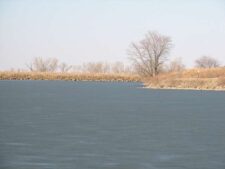
McPherson State fishing lake by: Steven Rodriguez

The Kansas Department of Health and Environment (KDHE) and the Kansas Department of Wildlife and Parks (KDWP) have issued a public health advisory due to blue-green algae.

A harmful algal bloom (HAB) may look like foam, scum or paint floating on the water and be colored blue, bright green, brown or red. Blooms can develop rapidly; if the water appears suspicious or there is decaying algae on the shore, avoid contact and keep pets away. These toxins can be absorbed by ingestion, inhalation of aerosols and even skin contact. Symptoms vary depending upon the type of exposure (e.g. direct contact, ingestion, inhalation) but can include rash, vomiting, diarrhea, fever, sore throat, and headache. If you, or your pets, come into contact with algae rinse the area with clean, fresh water. Suspected HAB-related health incidents, whether human or animal, regardless of season, should be reported at kdhe.ks.gov/1163.

Active Advisories

Warning

  • Harvey County East Lake, Harvey County
  • Overbrook City Lake, Osage County
  • Webster Lake, Rooks County (Added June 14)

Watch

  • Lake Shawnee, Shawnee County
  • Lovewell Lake, Jewell County
  • Woodland Park Pond (Mount Hope), Sedgwick County
  • Marion Lake (Reservoir), Marion County

Hazard status indicates that a harmful algal bloom is present, and extreme conditions exist.

When a hazard is issued, KDHE recommends the following precautions be taken:

  • Signage should be posted at all public access locations.
  • It is recommended that either a portion of the lake or the entire lake or zone, be closed to the public.
  • In some cases, the adjacent land should be closed as well. Actual setback distances will be determined on a site-specific basis, if necessary.
  • When partial closures (i.e., beach or cove) are issued, the remaining lake or zone area will carry a warning status.

Warning status indicates that conditions are unsafe for human and pet exposure.  Contact with the waterbody should be avoided.

When a warning is issued, KDHE recommends the following precautions be taken:

  • Signage should be posted at all public access locations.
  • Inhalation of spray or aerosols may be harmful.
  • Lake water is not safe to drink for pets or livestock.
  • Lake water, regardless of blue-green algae status, should never be consumed by humans.
  • Water contact should be avoided.
  • Fish may be eaten if they are rinsed with clean water and only the fillet portion is consumed, while all other parts are discarded.
  • Do not allow pets to eat dried algae.
  • If lake water contacts skin, wash with clean water as soon as possible.
  • Avoid areas of visible algae accumulation.

Watch status means that blue-green algae have been detected and a harmful algal bloom is present or likely to develop. People are encouraged to avoid areas of algae accumulation and keep pets and livestock away from the water.

During the watch status, KDHE recommends the following precautions be taken:

  • Signage should be posted at all public access locations.
  • Water may be unsafe for humans/animals.
  • Avoid areas of algae accumulation and do not let people/pets eat dried algae or drink contaminated water.
  • Swimming, wading, skiing and jet skiing are discouraged near visible blooms.
  • Boating and fishing are safe. However, inhalation of the spray may affect some individuals. Avoid direct contact with water, and wash with clean water after any contact.
  • Clean fish thoroughly with potable water and eat fillet portion only.

Advisories are Lifted when cell densities and toxin concentrations dissipate to levels below the Watch thresholds.

KDHE investigates publicly accessible bodies of water for blue-green algae when the agency receives reports of potential algae blooms in Kansas lakes. Based on credible field observation and sampling results, KDHE reports on potentially harmful conditions.

If you observe a scum or paint-like surface on the water, small floating blue-green clumps or filaments in the water, or if the water is an opaque green, avoid contact and keep pets away. These are indications that a harmful bloom may be present. Pet owners should be aware that animals that swim in or drink water affected by a harmful algal bloom or eat dried algae along the shore may become seriously ill or die.

For information on blue-green algae and reporting potential harmful algal blooms, please visit kdhe.ks.gov/HAB and check out our interactive story and informative video.

Side-Dressing: Mid-season Boost for ‘Hungry’ Plants

0

To many, the term “side-dressing” might conjure up images of a savory dish that accompanies turkey at Thanksgiving or other festive meals. To gardeners, however, the term refers to the practice of placing fertilizer in a band along-side rows of plants, or around the perimeter of individual plants after they have started to grow in an attempt to boost lagging soil fertility.

Garden plants remove nutrients from the soil as they grow. This especially is true for species considered to be “heavy feeders” such as tomato and sweet corn. Additionally, excessive rainfall tends to reduce soil nutrient levels due to leaching. Fortunately, there are several ways to counter this reduction in soil nutrients and to maintain better plant growth throughout the summer. Side-dressing is one of the solutions to the problem and can give garden plants a needed boost in growth and productivity.

The fertilizer element nitrogen is very critical for good plant growth. In fact, There is more nitrogen in plants than any other element, with the exception of carbon, hydrogen and oxygen. In addition to being taken up by plant in large quantities, nitrogen is the mineral element most quickly leached from the soil. The leaching occurs because a portion of the nitrogen applied as fertilizer is converted by soil microbes to nitrate (N03) which has a negative charge. Since soil colloids (particles) also contain negative charges, they tend to repel the N03 instead of holding onto it. This high level of mobility leads to nitrate leaching when soil moisture conditions allow for the downward movement of soil.

Side-dressing with a nitrogen fertilizer or a complete fertilizer high in nitrogen usually is beneficial for many garden crops about four to six weeks after planting. Compounds such as ammonium nitrate, urea, ammonium sulfate and calcium nitrate contain high levels of nitrogen and are often used for the purpose of side-dressing. If these fertilizers are not available, a complete fertilizer high in nitrogen can be used. Beware, however, of lawn fertilizers. Most are high in nitrogen but may be “weed and feed” in formulation. The herbicides contained by the latter should not be applied to garden plants.

As mentioned above, side-dressings are normally applied close to the soil surface. The soluble forms of nitrogen found in compounds such as ammonium nitrate or urea move into the root zone easily as a result of rainfall or irrigation. If mulch has been applied, pull it back and apply the side-dressing beneath it along the row. Push the mulch back into its original place after the fertilizer has been applied.

Ammonium nitrate and similar fertilizers are applied at a rate of about one pound per 100 feet of row (or 100 square feet of bed area). Side-dressings should be placed at least six inches away from the main plant stem to avoid burning. A strip along each side of the row is considered ideal. If the planting has not been mulched, incorporate the fertilizer application lightly into the soil with a garden hoe or rake. Garden fertilizers lower in nitrogen (e.g. 12-12-12) should be applied at about three pounds of fertilizer per 100 feet of row or square footage of bed.

Another method to avoid nutritional problems caused by leaching involves the use of slow (or timed) release fertilizers. As their name implies, slow-release fertilizers release the nutrients they contain over time, making it possible to fertilize only once during the growing season.

The most popular slow-release fertilizers used today release their nutrients by osmotic action in resin-coated types, or by bacterial action in organic types. Although the initial cost of some of these slow-release materials might be higher, the need for extra labor is eliminated. Slow-release fertilizers vary greatly in analysis, rate of release and use. Some are formulated to be effective for several weeks to months; others last for an entire growing season. Read and follow label directions carefully when using slow-release fertilizers. Using excessive amounts can lead to soluble salts injury, since there is no way to leach slow-release fertilizers from the soil.

Blood meal and cottonseed meal are among organic slow-release choices that are good source of nitrogen for side-dressing. The nitrogen content for blood meal is about 12 percent while that of cottonseed meal is about seven percent. Therefore, one would side-dress with blood meal at the rate of about two pounds per 100 feet of row, while cottonseed meal should be applied at about three pounds per 100 feet of row (or 100 square feet of bed area).

Plants are good indicators of their nutritional status. Therefore, watch how plants grow to gauge their need for additional fertilizer. Response to nitrogen sources normally occur within about one week after application, given soil moisture is adequate. Thus, applications can easily be made at the time growth seems to be slowing. Applying excessive fertilizer (especially nitrogen) can be counterproductive. For example, tomato should not be over-fertilized with nitrogen early in the life of the plant. The result will be lush vegetative growth and poor fruit set. Additionally, blossom-end rot problems may increase later. Instead, wait until plants begin setting fruits before applying additional nitrogen.

The following table lists general recommendations for the timing of side-dress applications to popular garden vegetables:

Table 1 Credit: Gregg Eyestone, Kansas State University Extension

Asparagus Before new growth begins in spring or after harvest
Cabbage, cauliflower, broccoli Three weeks after transplanting
Carrots, beets, turnips, parsnips and lettuce Side-dressing normally not needed if soil is fertilized adequately before planting
Cucumber, cantaloupe, pumpkin One week after blooming begins; repeat three weeks later
Onions (mature) Two to four weeks after planting
Peas, beans After heavy blooming and pod set
Peppers, eggplants After first fruits sets
Potato (Irish) When plants are 4 to 6 inches tall
Rhubarb When plants are 2 to 10 inches tall
Spinach, kale, mustard and greens When plants are about one-third grown
Sweet corn When plants are 8 to 10 inches tall; again one week after tasseling
Sweet potatoes, watermelons, herbs Side-dressing not recommended. Excessive amounts of nitrogen will reduce yields or lower quality, or both.
Tomato When plants begin to set fruits; repeat every two to three weeks

Avoid applying excess nitrogen to flowering annuals, especially those that are not flowering. The result is likely to be lush vegetative growth and poor, delayed flowering. However, many species of flowering annuals (e.g., petunia) benefit from side-dressing with nitrogen every six to eight weeks during the growing season. The same compounds recommended for vegetables can be used on flowering annuals.