
Sunday, February 8, 2026
Home Blog Page 405

Ag Marketing Genie

0
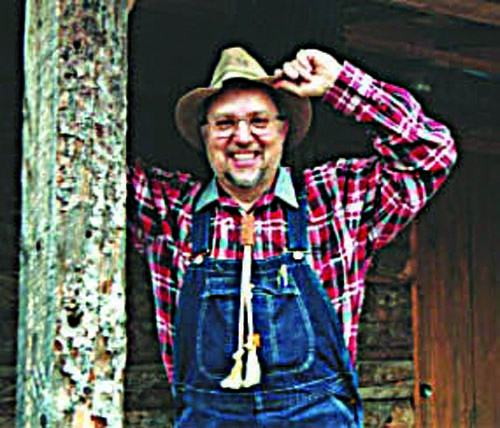
Thayne Cozart
Milo Yield

Farmers and ranchers are faced with a perpetual dilemma — how to decipher the agricultural markets in ways that hopefully will provide enuf profit from their enterprises to keep them in bizness year after year into future generations.

Alas, deciphering the ag markets is easier said than done and I’ve never known a farmer or rancher who thought he or she had a perfect insight into the markets.

And, to help farmers decipher the ag markets is an entire phalanx of self-declared marketing gurus who, eagerly, for a healthy sum of money, will provide a farmer with marketing advice of all types — personal visits, phone calls, newsletters, podcasts, social media connections, charts, graphs, historic data, brokerage services, etc.

And, yet, after availing themselves of all the offered marketing advice, farmers and ranchers too often still find themselves on the short-end of the assured profit margin.

All the above brings me to this ag marketing story, the nugget of which wuz provided by my height-challenged friend, ol’ Bob Doff. Here’s the story.

A beleaguered, cash-strapped farmer wuz mending a washed-out water gap in a pasture fence when he saw a piece of glass shining through the surface of the mud and muck. When he pulled it out, it wuz a bottle made out of glass so dark he couldn’t see through it to see its contents.

So, to his great surprise he found that the metal bottle top would unscrew easily. Now, imagine his greater surprise when he opened the bottle and before his eyes a magic, smiling genie appeared out of a smoky cloud.

The tiny genie surprised him further when it spoke these words. “Thanks you, kind Sir, for releasing me from my bottle prison. I’ve been washing downstream for months and finally ended up buried in the mud. I thought I was a goner. As thanks for releasing me, I have the power to grant you any one wish. What will your wish be?”

The astounded farmer replied without much thought, “My fondest wish would be to always make a nice profit from any technique I use in the agricultural commodity markets!”

The genie’s smile evaporated into a frown and wrinkled brow. He replied to the farmer, “Do you, Sir, realize how difficult it will be for me to grant you that particular wish? The ag markets are infinitely puzzling from the infinite number of constantly moving parts and factors such as global production, droughts, floods, storms, monopolistic corporations, insider trading, incompetent regulatory agencies, universal greed, ineffective farm bills, government environmental policies, global trade relationships, transportation problems, energy supply and cost, input inflationary prices, constantly changing consumer preferences, and population trends. Those are just starters. Do you see the problem for me? Would you even consider making a simpler wish that I could grant you?”

That put the poor farmer in the horns of a dilemma. Now, he felt sorry for the genie. So, he pursed his lips and said, “Well, I’d settle if you could tell me how to understand women.”

At those words, the genie almost burst into tears, and he replied: “You, Sir, are a tough one. After considering your second wish, I’ll grant you your first wish. From this day forward, I guarantee that any way you use the ag markets will assure you of a commodity price equal to the government’s monthly published 100% parity price. That way every acre of your farm will produce disposable income for you.”

I call that a wishful thinking story with a serious moral to it.

***

I’m finishing this column on Wednesday, May 15, and the previous few days have been eventful. First, all the local Yield family members, including the two great grandsons, met Saturday for an early Mother’s Day meal at the Cupalahunert Restaurant & Brewery. That wuz good eatin’ and a lot of fun.

Then Sunday afternoon Nevah and I drove to Yates Center, Kan., and overnighted with her twin sister and brother-in-law, who stuffed us with steak and trimmings. We spent the evening playing cards and laughing a lot.

Monday, after breakfast, we continued our trip down to Parsons to attend the memorial service for our son-in-law’s mother. She lived a long and productive 89 years.

While in the Parsons area, we met a number of treasured friends and even squeezed in time for a short visit with my old friend and compatriot Markus Parkus and his wife.

Our drive through the Flint Hills coming and going wuz simply beautiful and inspiring. The Flint Hills are now at their most appealing. Thanks to an abundance of rain this spring, the tallgrass prairie is verdant and from the road looks like a million acre golf course with plenty of rocky hazards. After the severe drought the past few years, it was refreshing to see all the ponds brimming full.

And, the wheat fields we saw are headed out and look very promising for a good harvest. Sadly, a few fields we saw had been inundated and ruined by recent flood waters.

***

Seldom a day goes by that I don’t receive by regular mail or email several solicitations to make a political donation. To me, it seems any donations made at this time are wasted. Name me a voter who doesn’t already know everything there is to know about Biden, Trump, and even Kennedy? I don’t think any amount of money, or any method of persuasion, will change the mind of any voter. That’s why I shred all the donation mail and, appropriately, make garden compost out of it.

***

I’ve finally got all my garden planted. Now, I’ve got to put my effort into maintaining what I’ve got planted. My gardening words of wisdom for the week are: “When weeding, the best way to make sure you are removing a weed and not a valuable plant is to pull on it. If it comes out of the ground easily, it is a valuable plant.” Have a good ‘un.


KU media advisory: Airborne electromagnetic survey of aquifer conditions planned in northwestern Kansas

0

From the Office of Public Affairs | http://www.news.ku.edu

Media advisory

Contact: Jim Butler, Kansas Geological Survey, 785-864-2116, [email protected]

Airborne electromagnetic survey of aquifer conditions planned in northwestern Kansas

LAWRENCE — Beginning in late May and continuing for much of June, residents of northwest Kansas may see a low-flying helicopter towing a large hexagonal frame. This unusual arrangement is part of a project to map groundwater conditions in the Ogallala aquifer in Northwest Kansas Groundwater Management District No. 4.

Through funding from the Governor’s Office and the Kansas Water Office, GMD4 and the Kansas Geological Survey, working with Aqua Geo Frameworks LLC of Fort Laramie, Wyoming, have planned the helicopter flights to develop a better understanding of the Ogallala aquifer. AGF has performed more than 20,000 miles of similar airborne electromagnetic surveys in Nebraska, Colorado and Wyoming, but this will be the first of its kind flown in Kansas.

Scientific equipment will hang below the helicopter 100 to 200 feet above ground. The equipment is designed to map geologic structures and groundwater resources to depths of approximately 1,000 feet below land surface. The helicopter will be flown at about 50 mph by pilots who are specially trained for low-level flying and have a great deal of experience with airborne electromagnetic surveys. Flights will not occur over residential areas and other buildings, livestock feeding operations or wind turbines.

The Ogallala aquifer is the major water resource for agricultural, industrial and municipal use in GMD4. Intensive pumping of the aquifer over the last 60-plus years has resulted in large groundwater level declines in Sherman, Thomas, Sheridan and Cheyenne counties. The information obtained in these flights will allow GMD4 and the Kansas Geological Survey to better assess the nature and continuity of water-yielding materials in the aquifer.

The ultimate objective of the project is to obtain information that will assist GMD4 in developing strategies for charting more sustainable paths for the Ogallala aquifer in the district.

For further information about the planned survey, contact Shannon Kenyon, GMD4 manager (email or 785-462-3915), Jim Butler of the Kansas Geological Survey (email or 785-864-2116), or Jared Abraham of Aqua Geo Frameworks (email or 303-905-6240). A video describing previous airborne electromagnetic surveys in Nebraska is available on the GMD4 website.

The Kansas Geological Survey is a nonregulatory research and service division of the University of Kansas. KGS scientists study and provide information about the state’s geologic resources and hazards, including groundwater, oil and natural gas, rocks and minerals, and earthquakes.

-30-

————————————————————————


KU News Service

1450 Jayhawk Blvd.

Lawrence KS 66045

Phone: 785-864-3256

Fax: 785-864-3339

[email protected]

http://www.news.ku.edu


Erinn Barcomb-Peterson, director of news and media relations, [email protected]


Today’s News is a free service from the Office of Public Affairs

KU News: Well-Fit Center for Youth Wellness and Fitness will take STEM approach to help children thrive

0

Contact: Alicia Marksberry, [email protected]

Well-Fit Center for Youth Wellness and Fitness will take STEM approach to help children thrive

LAWRENCE — The Achievement & Assessment Institute (AAI) has announced the opening of Well-Fit | Center for Youth Wellness and Fitness. The center is based on the principle that youths should be provided knowledge and skills through STEM learning and in-person programming to improve physical wellness and fitness.


Led by Trent Herda, associate professor in the University of Kansas Department of Health, Sport & Exercise Sciences and director of the Neuromechanics Laboratory, Well-Fit builds upon Herda’s research interest in examining the effects of exercise and physical activity on skeletal muscle composition, motor skills and overall health.


“I want to give children the opportunity to gain insight and knowledge on healthy growth and development and a better understanding of the positive benefits of exercise, physical activity and proper nutrition. We’re not really meeting those needs right now,” Herda said. “We’ve found that attacking this problem through STEM programming could be really effective.”


The center will use three different approaches to accomplish its goals: online educational content, in-person exercise programming and research.


The online branch of the center is represented through Sci-FIIT Academy, an online educational component to improve physical fitness and wellness. The content is delivered via interactive and engaging STEM learning. Courses are developed to be used by afterschool programs and KU’s Sports Skills and Physical Activity Camp. Herda hopes to eventually see this online programming accessible to children via school districts.


“This type of education doesn’t necessarily have to be delivered by a P.E. instructor. There’s a lot of STEM learning that happens in the classroom and is self-paced. Physical fitness and wellness are at the intersection of science, technology, engineering and math,” Herda said.


The in-person programming is done through the Sports Skills & Physical Activity Camp at KU, which provides children the opportunity to develop their sports and physical fitness skills, as well as Jayhawk Performance, a youth strength and conditioning program at KU. Both programs are within the KU health, sport and exercise sciences department.


Research is conducted through both the online and in-person programs and through collaborations with the Center of Children’s Healthy Lifestyles and Nutrition (CHLN) and laboratories at KU Medical Center.


“Strong collaborations have developed with members of CHLN. We’re working on pediatric neuromuscular projects now that five years ago I never even would have dreamed about,” Herda said.


Much of Well-Fit’s in-person programming will occur in the new Youth Exercise and Sport Center (YES Center), located in renovated space inside Robinson Center. The new athletic space features 25 yards of synthetic turf, 17 yards of rubber flooring, five squat racks, resistance training equipment, plus additional equipment for sprinting speed, agility and power development.


Joining Herda at Well-Fit is Quincy Johnson, Well-Fit associate director and program coordinator for Jayhawk Performance, and Ken Murfay, program coordinator for the Sports Skills and Physical Activity Camp. Both Johnson and Murfay are currently faculty members within the KU health, sport and exercise sciences department.


“Dr. Herda, Dr. Murfay and I are each passionate about the health, physical fitness and wellness of youth populations and are looking forward to sharing our expertise and serving Lawrence and the surrounding communities,” Johnson said.


Regarding the program he leads, Johnson said the vision for Jayhawk Performance is to provide safe, sound and affordable strength and conditioning programs for local youth athletes that are in alignment with the tenets of widely accepted long-term athlete development models.


For Neal Kingston, AAI director, offering Well-Fit a home within AAI aligns closely with the institute’s goal of supporting applied research and unique approaches as it relates to its mission of improving the lives of children and adults.


“Well-Fit’s mission to provide fitness and wellness knowledge through STEM learning is an innovative and exciting way to help improve the lives of children,” Kingston said. “I saw Trent’s presentation on the platform and thought AAI would be a great home for it and would benefit both AAI and Trent’s research.”


“This is definitely different from what my day-to-day research life has been up to this point, but I am all in,” Herda said. “I’m most excited about getting children enrolled and getting them learning about daily healthy habits to really improve their long-term health.”


-30-


————————————————————————


KU News Service

1450 Jayhawk Blvd.

Lawrence KS 66045

Phone: 785-864-3256

Fax: 785-864-3339

[email protected]

http://www.news.ku.edu


Erinn Barcomb-Peterson, director of news and media relations, [email protected]


Today’s News is a free service from the Office of Public Affairs

The tomato is a beloved and beautiful fruit that disguises itself as a vegetable.

0

So many options! The tomato is a beloved and beautiful fruit that disguises itself as a vegetable. Botanically speaking, tomatoes are defined as fruits because they form from a flower and contain seeds (like a strawberry, for example). They’re most often utilized like a vegetable in cooking, however, thus nutritionists typically consider tomatoes to be a vegetable.

With more than 10,000 tomato varieties available, planting the perfect tomato can be challenging. All varieties will benefit from mulch!


Tomatoes perform best with regulated soil moisture. Mulch provides many benefits in the garden including maintaining moisture levels, suppressing weeds and moderating soil temperatures. Exposed soil may develop a crust on the surface from repeated wet then dry conditions. A crusty soil surface restricts air flow and inhibits water absorption. A layer of mulch can prevent the soil from crusting over.


Straw mulch is a popular choice for tomatoes. Avoid using hay as it introduces weed seeds. A thin layer (2-3 inches) of dry, herbicide free, grass clippings can be used. If the lawn was treated with quinclorac (Drive), the clippings should not be used as mulch.


KU News: Law students serve Kansans pro bono and new research about online PE classes

0

From the Office of Public Affairs | http://www.news.ku.edu

Headlines

KU Law students make 2024 honor roll for pro bono service
KU Law defines pro bono work as uncompensated, law-related work that benefits the public, such as through a nonprofit organization or government agency. The students’ services included working for legal aid offices like Kansas Legal Services and Legal Aid of Western Missouri, prosecutor’s offices including the U.S. Attorney’s Office, the Disability Rights Center of Kansas and the U.S. Department of the Interior.


Study: Students found online physical education ‘awkward,’ which can help educators design better PE classes

High school students who experienced schooling during the pandemic have multiple preferences for how they would like to have PE classes conducted. This information could help educators design classes that ensure more participation and more physical activity throughout the students’ lives.


Full stories below.


————————————————————————


Contact: Emma Herrman, [email protected]

KU Law students make 2024 honor roll for pro bono service
LAWRENCE – Forty-five University of Kansas School of Law students provided more than 1,580 hours of free legal services during the 2023-2024 academic year, with 26 of them earning a spot on KU Law’s Pro Bono Honor Roll.


The students’ services included working for legal aid offices like Kansas Legal Services and Legal Aid of Western Missouri, prosecutor’s offices including the U.S. Attorney’s Office, the Disability Rights Center of Kansas and the U.S. Department of the Interior. Students also represented individuals in the KU Court of Parking Appeals, prepared tax returns for members of the community and served as court-appointed special advocates for children in foster care.


“Lawyers have special responsibilities to our clients and society,” said Meredith Schnug, clinical associate professor and associate director of the Legal Aid Clinic. “By engaging in pro bono service, law students have a unique opportunity to serve their community while gaining valuable hands-on experience.”


KU Law defines pro bono work as uncompensated, law-related work that benefits the public, such as through a nonprofit organization or government agency.


Last year, the American Association of Law Schools (AALS) established a Pro Bono Honor Roll. Schools within the AALS may nominate and recognize one student annually for this honor. This year, KU Law nominated Kylie Hance, Class of 2025. In her time at KU Law, Hance has completed more than 394 hours of pro bono service by participating in the law school’s expungement clinic, traffic court and Volunteer Income Tax Assistance (VITA) program. Last summer, she devoted her time to serving Kansans through the Low Income Taxpayer Clinic at Kansas Legal Services.


“My pro bono opportunities helped me discover an interest in tax law,” Hance said. “It is important work that allows people to have access to services they would not otherwise receive. I hope to continue to be involved in other pro bono work as I move forward in law school and my career.”


The following students completed 15 hours or more of pro bono service during the 2023-2024 academic year. Students are listed by name, graduation year and hometown:


Cecilia Bailey, 2025, Springfield, Missouri
Elm Beck, 2024, Kansas City, Kansas
Amanda Brauninger, 2025, Tulsa, Oklahoma
Kaitlyn Cairns, 2025, Andover
Dane Caster, 2025, Inman
Kate Duggan, 2025, Overland Park
Emily Featherston, 2024, Overland Park
Matt Firnhaber, 2024, Olathe
Matthew Goldhammer, 2026, Salina
Shannon Greene, 2024, McLouth
Kylie Hance, 2025, Leawood
Keegan Heany Fredrick, 2026, Fredericksburg, Virginia
Rachel Holt, 2026, Omaha, Nebraska
Will James, 2025, St. Charles, Missouri
Skylee James, 2025, San Diego, California
Keirn Kinnan, 2026, Lenexa
Hayley Koontz, 2024, Benton
Grace Lahr, 2025, Scottsdale, Arizona
Jude Lane, 2026, Siloam Springs, Arkansas
Caitlin McPartland, 2024, Prairie Village
Evan Norkey, 2026, Olathe
Liz Oltjen, 2026, Leawood
Bethany Pace-Danley, 2024, Denver, Colorado
Josie Pennington, 2024, Neosho, Missouri
Kathleen Rothfelder, 2025, Westminster, Maryland
Tanya Singh, 2025, Manhattan

In addition, 17 students were honored with Pro Bono Distinction for completing 50 hours or more of pro bono service throughout their law school career. Collectively, members of the Class of 2024 completed 2,436 hours of pro bono service during their time in law school.

Students who received Pro Bono Distinction were recognized at the law school’s Hooding Ceremony on May 11:


Vincent Amiri, 2024, Leawood
Elm Beck, 2024, Kansas City, Kansas
Brooke Brownlee, 2024, Shawnee
Jc Carter, 2024, St. Charles, Missouri
Emily Featherston, 2024, Overland Park
Matthew Firnhaber, 2024, Olathe
Jamie Gallagher, 2024, Oak Lawn, Illinois
Emily Gay, 2024, Grimes, Iowa
Shannon Greene, 2024, McLouth
Hayley Koontz, 2024, Benton
CyLeigh Maroney, 2024, Guthrie, Oklahoma
Caitlin McPartland, 2024, Prairie Village
Bethany Pace-Danley, 2024, Denver, Colorado
Josie Pennington, 2024, Neosho, Missouri
Makaela Stevens, 2024, Scott City
Chloe Thompson, 2024, Dodge City
Alden Vogel, 2024, Lenexa

-30-

————————————————————————

The official university account for X (formerly Twitter) is @UnivOfKansas.

Follow @KUnews for KU News Service stories, discoveries and experts.


————————————————————————


Contact: Mike Krings, 785-864-8860, [email protected]

Study: Students found online physical education ‘awkward,’ which can help educators design better PE classes

LAWRENCE — High school students who do not want to feel like they are on display, especially during physical education classes, found themselves in that situation when the pandemic forced education online. A study from the University of Kansas demonstrates that students largely found online physical education classes awkward and had a number of preferences for how they experience the classes — both of which influence their confidence in being physically active.


“A lot of studies before were focused on students who chose to do PE online,” said Ken Murfay, assistant teaching professor of health, sport & exercise sciences in KU’s School of Education & Human Sciences. “With the pandemic there was a lot more synchronous learning where people were online together. We wanted to see what they preferred and one of the things that affects our physical activity is our emotional state at the time of the event.”


Murfay led a qualitative study in which authors interviewed 40 high school students who took part in online PE classes during the pandemic. In addition to finding online PE awkward, they shared preferences that can help educators design classes that boost students’ physical activity self-efficacy by ensuring teachers, peers and people with varying skill levels lead demonstrations.


The COVID-19 pandemic forced a class that is inherently in-person to online settings. Similarly, previous research in physical education had largely not addressed online versions of the class.


The study, co-written by Sarah Pyszczynski of KU and Heather Erwin of the University of Kentucky, was published in the Journal of Teaching in Physical Education.


One main theme of the study’s findings was students found online PE awkward. When on camera, respondents saw themselves more than they would in person, which often led to feelings of insecurity or that others were watching them too.


“You’re looking at yourself on camera and probably judging yourself more than you would in person,” Murfay said. “Your mind can take things to a bad place pretty quickly in that situation.”


Students expressed several preferences in how they wished to take part, if required to do online PE. They largely preferred asynchronous learning, in which they were not doing activities at the same time as others, or in which they could do assignments on their own and record them by video or in a log.


They also expressed if they were required to be on camera, they only be required to show their faces or only see themselves and the instructor, but not the rest of the class.


Respondents also displayed several themes in how they prefer demonstrations to take place. In an online setting they were nearly evenly split on whether they prefer to watch a teacher demonstrate activities or watch an online video.


For in-person settings, students were split again on whether they preferred to see a teacher, who some considered the professional who had more expertise demonstrate activities, or if they’d rather see a student or someone closer to their own skill level lead demonstrations.


Very few expressed a preference for watching video demonstrations in person.


Of respondents who said they prefer seeing students demonstrate activities, the majority reported they’d rather see a student of the same or lower skill level than their own “in the wild.” For example, seeing a student perform an exercise in the weight room would more likely make them think they could do the same.


The findings’ importance lies in how they can help educators design classes that boost students’ physical activity self-efficacy — that is, their confidence to be physically active. Not only will that boost participation in class, but research has shown that individuals who have higher physical activity self-efficacy tend to be more physically active, which can help maintain a healthy body weight and increase chances of people being physically active throughout their lifetime, Murfay said.


The study results can also help educators design better courses for both in-person and online settings, especially should the latter be required again. Murfay, who has published research that found physical education instructors influence students beyond their school years, said future research can further delve into use of technology in PE classes and the social comparisons that students make in classes, including whether students compare themselves to peers of higher, lower or similar skill levels.


“In any educational environment, you want students to be comfortable,” Murfay said. “And you often have to go out of your way to do that. In the online environment, students felt like they were on display, and it’s a PE best practice to not have students on display like a situation of having only one soccer game happening with one ball, rather than having several games going simultaneously.


“For best results, the findings show we should mix it up — having teachers and students of all skill levels demonstrate.”


-30-


————————————————————————


KU News Service

1450 Jayhawk Blvd.

Lawrence KS 66045

Phone: 785-864-3256

Fax: 785-864-3339

[email protected]

http://www.news.ku.edu


Erinn Barcomb-Peterson, director of news and media relations, [email protected]


Today’s News is a free service from the Office of Public Affairs