Monday, February 9, 2026
Home Blog Page 408

After spotty April rains, Kansas wheat still has the blues 

0

Conditions can change quickly in the wheat fields of Kansas.

Rewind to the white Christmas of 2023 when Saline County posted 1.53 inches of moisture during December. Standing water and ice graced the greening landscape just after New Year’s Day, and by the state’s birthday on Jan. 29, patches of snow were everywhere.

But when tax day arrived in mid-April, wheat crop conditions in Kansas ranged generally from hopeful to doubtful.

“A month ago, I had high expectations for this crop. My optimism has diminished immensely,” wrote Gary Jorgensen, a seed salesman from Alliance Ag & Grain of Spearville, Kansas, in an April 16 email to a friend.

“Oh there are good fields. Some look great,” he continued. “Yet, with the growth they have and no significant rain in the forecast, it’s only a matter of time. We all hurt to see someone suffer and succumb to a slow, but inevitable, death. That’s how I’m feeling about this crop.”

Making it worse, Jorgensen added that he is seeing some fields with evidence of barley yellow dwarf and wheat streak mosaic viruses.

Crop ratings plummeted as conditions became more dusty.

“This isn’t a pessimistic outlook from me, but a realistic observation,” Jorgensen wrote.

As April came to a windy and stormy end, the prognosis only changed in places lucky enough to receive a proper spring drenching, such as a number of southeast Kansas cities being placed in flood warnings on the 27th and parts of Clay County that were gifted with 3 to 4 inches of rain.

“That would’ve been great around here,” said Jason Gans, who farms in southern Ottawa County with his father, Billy, and brother, Jacob Gans.

“It’s still bone dry,” he said. “You could track a person in the dust. We got just a sprinkle, maybe 10 to 15 hundredths. Friday it was 35 of 40 hundredths, but it was dry by noon,” he said Sunday, April 28. “The wheat’s still hanging in there, but it needs a long drink. That wheat’s pretty dang resilient.”

Fields most everywhere else have the blues, a common description for an outbreak of chronic thirst.

“My kids have a 4-H wheat plot near U.S. (Highway) 24 and U.S. 81 (in Cloud County),” said Jay Wisbey, agricultural Extension agent for Saline and Ottawa counties. “We got an inch and a half there late last week, but we still have cracks in the soil. When we got that rain, most of Ottawa County got less than three quarters, some less than a half inch.

“It’s worse out west, said Vance Ehmke, a farmer and seed dealer in Amy, near the Lane and Scott county line.

“There’s some good wheat around, but it’s getting worse,” he said. “April is normally our wettest month of the year, and we got absolutely nothing. North Lane and north Ness (counties) are really, really bad.”

Even with moisture, the crop is beyond much repair.

“Two inches of rain wouldn’t do it a bit of good; maybe increase yield one to two bushels (an acre), up to three or four,” Ehmke said. “The die has been cast.”

Photos submitted for this report are telling. One scene of a lush field roughly a mile north of Interstate Highway 70 on Old Highway 81 shows healthy plants with wheat heads rising above the foliage.

“We’ve got a whole variety of wheat fields, some better than others, where they’ve had more moisture,” Wisbey said. “There is some great looking wheat, but even that field’s gonna need rain. We haven’t gotten enough yet.”

Forecasts have provided decent chances for precipitation every seven to 10 days in north-central Kansas. Case in point was that on May 2, the online Weather Underground posted a 70% chance for rain in Minneapolis, Kansas, and an 80% chance for Glasco in Cloud County.

Rain is crucial, the Extension agent said, especially for farm and ranch ponds.

“We need every rain that can come through at this point,” Wisbey said. “There is not a farmer around who is going to complain about rain.”

In Lane County, “Eighty percent of the wheat looks fine for now, and 20% looks terrible,” said Louise Ehmke, Vance’s wife.

The wheat price rallied about 60 cents a bushel as April wrapped up.

“It’s a little better; still kind of discouraging,” Gans said.

As the Monday, April 29, markets neared closing, the price bounced from $6.26 to $6.31 a bushel at grain terminals in Salina, while the country elevator price at Delphos Co-op was from $6.10 to $6.11.

“It’s still more than two dollars a bushel less than a year ago at this time (2023 new crop wheat price: $8.50 a bushel),” Wisbey said. “Price always matters, but if you don’t get any rain, you don’t get any bushels.”

Wheat tour pegs Kansas production at 290.4 million bushels

0
courtesy: Kansas Wheat

The latest edition of the Wheat Quality Council’s Hard Red Winter Wheat tour gave nearly 70 people from all aspects of the industry an opportunity to get a peek at the crop’s potential.

After three days of touring Kansas’ traditional wheat production region—by consensus—they put the wheat crop at 290.4 million bushels with an estimated yield of 46 bushels per acre. Tour attendee Aaron Harries, vice president of operations at Kansas Wheat, said the 2024 crop is drought-affected.

An average Kansas crop produces about 310 million bushels, he said. A year ago, fewer than 200 million bushels were produced. A picture of central Kansas wheat near Hutchinson.

“It’s certainly light years ahead of what we had last year,” Harries said. “The difference is there won’t be nearly as many abandoned acres. We approached 30% (abandonment) last year. “The other key difference is that more of it will be harvested this year because we were in a much better starting point last fall.”

The drought was so pronounced in late 2022 the crop did not come up. “This year we started with good stands in a lot of places,” Harries said. “Unfortunately, it’s just gone downhill this spring, but it looks like we’ll have a better harvest.”


Winter moisture helped

Wheat growers have some optimism because of winter moisture, but they know the lack of moisture in recent months hurts other crops they are planning to plant this spring.

“They think beyond wheat crops, obviously, and in central Kansas, and a lot of places, there’s just no subsoil moisture,” Harries said. “From Lindsborg west over toward Great Bend and northwest, that’s some of the worst of the drought conditions.”

Pockets of good wheat

The best wheat appears generally to be along the U.S. Highway 36 corridor in northern Kansas, from the reports filed by the observers on that route, he said. Another notable area was the Interstate 135 corridor in central Kansas. That looked decent, he said, but he noted that in pockets of Saline County and Ottawa County, farmers have in past years produced yields of 70 to 80 bushels per acre. Unfortunately, 2024 won’t be one of those years.

Harries noted that on the second day of the tour he took the path of Kansas Highway 27 that included Syracuse and Johnson City and other southern counties, and although it was drought-impacted, it was notable that a year ago those were areas had high abandonment.

“Some of it looks better than it has any business looking,” Harries said. “Another common theme throughout the tour was a tip of the cap to the wheat breeders because we’ve got some pretty good genetics out there that are holding up to the pressure of what we’ve been through.”


Pest pressure

Stripe rust has been widespread but has not appeared to have impacted the crop like it could have. Some producers opted to spray, while others were hesitant because of the costs in comparison to the income potential. Wheat streak mosaic was not as prevalent as most on the tour thought it might be. Where it was showing up was in localized areas and not on a regional basis, he said, and growers were treating it.

“A bit of a surprise there was quite a bit in north central Kansas,” he said.

He added that those on the tour did see a lot of freeze damage in almost every part of the state. Temperatures were cold enough March 25 and 26 that it did impact the crop. Normally that would not have occurred, but the crop was probably seven to 14 days ahead of schedule  and, because it had entered an advanced growth stage, it made fields more susceptible to the cold.

“It’s going to shave a little bit off the yield, and it’s hard to calculate that kind of damage yet,” he said.

Harries said the tour was a success because of diverse representation from multiple sectors in the industry and included officials from the U.S. Department of Agriculture.

Boat safe this summer with these top tips

0
Boat

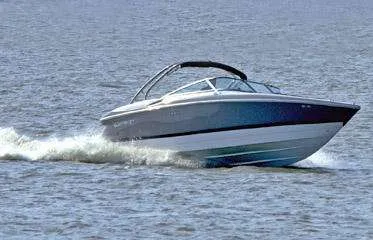
With the kickoff to summer rapidly approaching, Nebraska Game and Parks reminds boaters to brush up on safety rules in preparation for peak boating season.

Follow these 10 tips reduce the risk of incidents and help ensure a safe and enjoyable day on the water.

Take a boater safety course — Though it’s only a legal requirement for those born after Dec. 31, 1985, consider completing the Nebraska boating safety course to learn the top things you need to know about navigating Nebraska waters, what to do in an emergency and more. Find an in-person or online class at OutdoorNebraska.gov; search for “boater education.”

Check equipment — Before you launch, ensure your boat or kayak is in good running condition and all essential equipment is present, including a life jacket for every person on board. Paddlers of kayaks or canoes also should physically inspect their planned take-out point to make sure it is accessible.

Tell someone your plans — Before leaving home, let someone know where you are going and when you expect to return. Consider carrying a cellphone in a waterproof pouch, as well, in case an emergency occurs.

Wear a life jacket — Make your life jacket a statement piece and wear it, as it does no good stowed away if an emergency occurs. Children under age 13, those using personal watercraft and those being towed on skis or similar device must wear a U.S. Coast Guard-approved personal flotation device; it’s required by the law. Life jackets also are required for all paddleboard users, no matter their age.

Be wary of surroundings — According to the National Safe Boating Council, nearly a quarter of all reported boating accidents in 2022 were caused by operator inattention or improper lookout. Pay attention to other boats, personal watercraft, swimmers, stumps and other hazards. Speeds in excess of 5 mph are prohibited if within 30 yards of any other vessel, swimming area or dock. If padding a kayak or canoe, be aware of possible debris below the surface or under bridges.

Have all required safety equipment — Life jackets, throw cushions, fire extinguishers and bailing devices are required on most boats. An engine-cut-off device or switch also is a good idea.

Avoid alcohol — Nearly one-third of all recreational boating fatalities occur when someone is Boating Under the Influence, a criminal violation enforced in Nebraska. Always designate a sober driver.

Watch the weather — Storms can pop up quickly in Nebraska. Check the weather in advance and monitor it during the day, if necessary.

Avoid hypothermia — Even though temperatures are rising, the water still can be cold. Hypothermia is caused by exposure to cold weather or water. Take caution to prevent hypothermia.

Keep it legal — Make sure you’ve registered your boat and, if a nonresident, purchase an Aquatic Invasive Species stamp at OutdoorNebraska.gov. Also remember anyone operating a motorboat or personal watercraft in Nebraska must be at least 14 years of age. Learn more about Nebraska’s boating regulations at OutdoorNebraska.gov; search “Go boating.”

National Safe Boating Week is May 18-24 and serves as the annual kick-off of the Safe Boating Campaign, a global awareness effort that encourages boaters to make the most of their boating adventure by being responsible.

Morbid Affairs

0
lee pitts

Recently a telemarketer phoned to discuss what he called my “end of life options”. Subsequently, I have left very specific instructions for my wife. I don’t want a funeral, memorial service, an obituary, or any suggestion as to where you should donate your money. Frankly, I find funerals to be morbid affairs and I try not to go to them. They either turn out to be uncomfortable family reunions or pageants to enrich the mortician where people stand up and lie about you.

I’ve made it a point to never look at a cadaver in an open casket ever since I was a small tyke and saw my great-grandfather in one. I still have nightmares about it. Everyone said how great he looked. “Didn’t the mortician do a wonderful job?” they asked. Everyone commented about how peaceful he looked but who were they kidding? The old geezer looked deader than a tuna sandwich and I’ve never looked at a dead person in a casket since that day.

There are several reasons I don’t want a funeral but chief amongst them are I won’t be there to smell the flowers or hear the beautiful songs and all the lies someone says about me. And quite frankly I’m a little worried about the turnout. I don’t know who said it first but it’s not very comforting to know that the main thing that will decide the size of your funeral is the weather. Having a funeral would be a big gamble for me and I worry that the only four people present would be me, my wife, the padre and some guy impatiently waiting on a backhoe just hoping it’s a short service and he can get the hole filled and knock off a little early. I suppose I could hire professional mourners but that’s a little like going to everyone else’s funeral while you’re alive hoping they will reciprocate and come to yours. Think about that logic for a second. It ain’t gonna happen!

I read about one option that interested me at first. When some rich guy back east died he requested that all his assets be divided equally amongst those who came to his funeral but I don’t think that would work the way I wanted because many people would show up just to make sure I was dead. I certainly don’t want them inheriting any of my money. I liked what a tribe of Indians and Egyptian Pharaohs did when they were buried with all their possessions. Who says you can’t take it all with you?

A traditional burial wouldn’t be very green of me. Did you know that every year we bury 64,000 tons of steel, four million gallons of embalming fluid and 1.6 million tons of concrete in cemeteries? Not to mention all the new suits that are purchased and worn only once.

I briefly considered cremation but ever since I was seven and had my bed burn up beneath me when my electric blanket caught on fire I have been deathly afraid of flames. So why would I want my body to be cooked at 2,000 degrees for two hours? Besides, think of all pollution caused when the flames torched this old bag of BS.

There is also the option of being buried at sea but while I’ve always loved looking at the ocean, I’ve never really liked being IN the ocean. The one time I went on a charter fishing boat I discovered that they don’t bring those big old boats back to shore just because some wimp is barfing his brains out over the starboard side.

Considering the cost of a funeral I think I’ve finally come up with a cheap alternative. I call it a “cowboy funeral”. I want a friend to dig a deep hole in some out-of-the-way place and another cowboy friend to throw my body into it. Initially I wanted to be shrouded in one of my favorite woolen Pendleton blankets but then I considered where I might be headed and decided I’d already be warm enough. Plus, why ruin a nice blanket?

I’m sure being buried like this is against some law but hey, I’m the one who did it and deserve any punishment that’s due. If the bureaucrats don’t like it they are welcome to come and get me.

Hopscotch

0
john marshal

Next week local students in Kansas will be free to enroll in schools beyond their home district. In urban counties, the change tempts visions of land rush fever, parents hustling their offspring into the wagon at daybreak to new schools before they are filled, enrollments closed, chance lost. In the rural regions, unlikely.

The state’s open enrollment law, passed two years ago, is effective June 1. Kansas students may attend schools outside their own school district as long as space is available. (Students have long been allowed to attend school outside their district of residence, but with school board permission.)

The notion of open enrollment surfaced years ago but was recently brushed off in the early 2020s as legislators squabbled over new ways to increase their control of local schools.

There were repeated thrusts toward consolidation of rural districts with the thinnest enrollments (under 100). This notion lost steam at the prospect of children alone at isolated country crossroads, facing even longer bus rides.

The focus turned to money and a legislative obsession with vouchers, a shell game to sluice public funds into private schools. This grew to the notion of scholarships (state aid) for students attending private schools, including those affiliated with religious orders. This escalated with quarrels over “woke” subjects in curricula, dirty books in classrooms and libraries, greater scrutiny of class material and crusades to give parents more clout over what subjects are taught.

These simmering debates mostly involved, by implication, crowded districts in the state’s urban northeast and Sedgwick County in south central Kansas.

* Up popped Senate Bill 339, passed by wide margins in the House and Senate. Next year students will be counted for per-pupil aid to the district in which they are schooled, not where they live. This seems redundant because “border districts” in the rural west and southeast have long been allowed to enroll nearby students from border states ‒ and vice-versa ‒ and count them for aid.

In reality, the new law is tuned to urban counties where districts (and borders) are tightly packed.

Consider Sedgwick County, its ten districts and 74,650 students. Enrollments range from 800 (Cheney USD 268) to Wichita 259 with the state’s largest enrollment, 44,247.

Northeast metro counties include Johnson, six districts and a combined enrollment of 92,776; Wyandotte, four districts, 29,193; Shawnee, five districts, 26,081; and Douglas, three districts, 12,940.

These five counties contain ten percent of the state’s 286 school districts and 52 percent of statewide public school enrollment (457,123). This is where the students are, a prime focus of Senate Bill 339.

In Sedgwick County, students or parents in Clearwater USD 264 (enrollment 1,109) or Derby 260 (6,872) may want to hopscotch into Butler County and enroll in Andover (enrollment, 5,618) ‒ or vice-versa.

Academics and sports can be fierce and attractive variables among neighboring schools. The new law may stimulate recruiting of star talent ‒ all within the rules, of course. In Johnson County, rivalries simmer among the schools in Shawnee Mission (26,047), Olathe (28,162) and Blue Valley (21,823).

At the same time, each student, star or otherwise, is worth roughly $6,000 in

base state aid and $2,000 or more in supplemental funding.

*

Interest can vary among mostly rural districts in the other 100 counties. For example, some students who live in Emporia 253 (4,211 enrolled) already attend school nine miles south in Olpe (South Lyon County USD 252, enrollment 509), known for its high academics and championship sports programs.

Seventy percent of Kansas school districts (198) have enrollments under 1,000; of those, 136 are less than 500. Nine districts, eight in the west and one southeast, have enrollments under 100. Most of these schools are in the open rural spaces, distant towns and cities. The bus routes are long and broad.

On the western High Plains, land of the lonely wait, freedom to hopscotch schools seems an odd notion, only to swap today’s long ride for tomorrow’s.