Wednesday, February 11, 2026
Home Blog Page 435

Confused farm guard dog

0
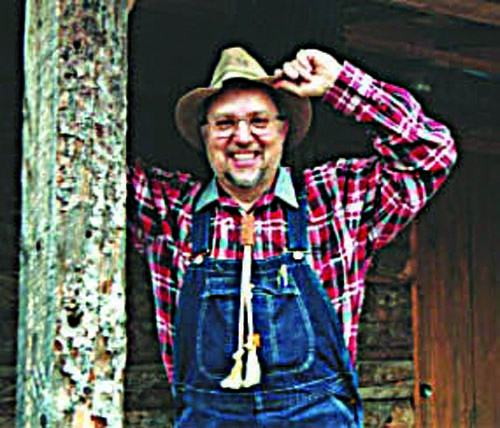
Thayne Cozart
Milo Yield

Back in the mid to late 1900s rural salesmen were as common as fleas on a dog. They traveled the dusty or muddy rural backroads every day, stopping at farm houses along the way, peddling seed, feed, minerals, tools, lubricants and full array of rural needs. They even targeted the farm housewife with brushes, brooms, vacuums, cleaners, soap, beauty products, and a host of other household needs.

Sometimes — if their product line wuz needed by the farmer, rancher, or housewife — these salesmen were welcomed with open arms. Other times — or, more often than not — they were seen as uninvited, persistent, persuasive, or pushy pests who imposed on productive daylight time.

Those were also the bye-gone days when about every farmstead had a nondescript cur dog serving as the enthusiastic guard dog of all the premises and property belonging to its master.

These guard dogs were the bane of rural salesmen because all of them had plenty of bark as warning, but some of them also included bite in their protection arsenal. Arriving at a farm home was akin to sales Russian roulette. The salesman just never knew what to expect.

All the above is precursor to this story about the experience of one rural salesman, ol’ Huck Stirr. He’d been in the rural sales game for many years, switching from product to product every few years. At the time of this story, he wuz peddling a well-known brand of garden seeds and products.

It wuz in the spring, just before garden planting time. Huck wuz working a new unfamiliar territory. It had been a pretty unproductive sales day when he arrived at a home he’d never visited before. From the road, it looked promising. The house wuz freshly painted and neatly landscaped. The front yard sported a white picket fence with a gate and sidewalk to the wooden front porch. He could also see a freshly-tilled garden spot in the backyard.

Inwardly, he hoped the husband wasn’t home and that he could make his sales pitch to the housewife, who he figgered wuz Chief Gardener.

So, Huck gathered up his sales kit, took a deep breath, mustered up a smile and headed to the house. He opened the gate and headed up the sidewalk. He wuz about half-way to the porch when out from under the porch charged a huge cur dog. It wuz all teeth — snarling loudly and going full-bore when it launched itself towards Huck’s throat.

But then, just as Huck braced himself for the impact and mentally prepared himself for the worst possible outcome, the beast did a complete backflip and meekly scrambled back under the porch.

As Huck shakily arose off the sidewalk, the man of the house ambled out the front screen door and stood there with his hands of his hips.

Before he could say a word, Huck yelled, “Sir, what’s the story on that massive guard dog? I thought I wuz a goner.”

The farmer drawled, “Well, Mister. I’ve had him tied up for years and I just unsnapped his chain this morning and he ain’t figgered it out yet!”

***

Ol’ Huck’s story has an important moral to it if you stop to think about what happened.

How many of us are like that guard dog — held back by unseen restraints from doing what are capable of doing? It’s easier to not go beyond familiar custom and routine, so we never know the full extent of our capabilities.

***

I heard about a young farmer whose marriage went into the dumpster when his wife asked if she could have a little peace and quite while she cooked the evening meal.

Her hubby obliged her by taking the battery out of the smoke alarm.

***

We still need runoff in this area badly, but we still welcomed two nice showers this week — one with a quarter-inch of rainfall and the other about one-half inch. The showers were good for my garden and my reseeded portion of our lawn.

***

I read this week that scientists are making progress toward using genetic manipulations to re-create animals that have been extinct for tens of thousands of years. That’s interesting science, but I have a better idea for spending those research dollars.

I suggest that geneticists redirect their efforts toward re-creating humans who have lost their common sense. There is increasing evidence that more and more humans no longer have common sense.

For instance — the folks who protested their cause by blocking the Golden Gate bridge is San Francisco have clearly lost their common sense. Same with those blocking streets in New York City. So have those wayward folks who were caught chanting “Death to America.”

If those folks had a lick of common sense, they’d realize that America is one of the few nations on this spinning globe in which they could hold such protests.

Personally, I’m proud that rural folks have steadfastly maintained their common sense — and use it daily.

***


Words of wisdom for the day: “Remember, just because you went to college doesn’t make you smarter than anyone else. Common sense doesn’t come with a degree.”

Have a good ‘un.

Lettuce Eat Local: Turning Less Sour On Lemons

0

Amanda Miller
Columnist
Lettuce Eat Local

There were three different-sized jars of lemon juice in the fridge, along with a container of blended lemon pulp, a pint of lemon syrup, and a little plastic deal crammed with lemon zest. Lemon halves, looking awkward and forlorn since having been robbed of their zest and juice, were floating in my water glass, steeping in my tea, cleaning out my sink’s disposal. These spent lemons were even packed into two of their own jars, either soaking in honey-water to make lemonade or in white vinegar to make cleaning solution. I’ve got ideas for charred jalapeno honey lemon vinaigrette, lemon poppyseed crepes, cream cheese lemon spread. 

At this point you might assume I’m on the American Lemon Board or something. But no, I’m just a person with a lot of lemons.  

It all began at a place far, far away, at a time long, long ago. Or rather, in my kitchen a few months back. A friend asked me to bake the cakes for her daughter’s wedding, both the sheet cakes for the guests and the actual wedding cake, and they wanted lemon. 

Have I ever done wedding cakes before? No. Should I have said yes? Possibly not. I will be the first to admit that while I do a decent job making food taste good, making it look good at the same time is not one of my fortes. I’m happy with knowing and staying within my limitations for the most part, content with an average level of aesthetic pleasantness for my dishes. “Good enough” isn’t, however, a good enough goal for wedding cake. 

So there was some practice involved, especially since there were also some fairly constricting allergies to bake around. Needless to say, many lemons were harmed in the process — and also some mandarins and limes, since there’s a chance that for some of the trial batches I remembered the “cake” part and forgot the “lemon” part until I was already started. Awkward.

And now I throw in the Plot Twist. I’m pretty finicky about lemons. I can drink lemon things all day long (lemon in my water, lemony hot tea, Chick-Fil-A sugarfree lemonade), but eating lemon things typically has no appeal for me (lemon bars, chicken with lemons, lemony pasta salad). I know a splash of acid can hypothetically be that step that takes a dish to perfection, but I’m not convinced; often if I begrudgingly add it as per directions, I regret it, wishing I had substituted lime or vinegar or skipped it altogether. 

Ironically, Brian doesn’t like many desserts, but his favorite ones are lemony. 

Having been somewhat saturated in lemons recently, however, may be turning me less sour on them. I came to appreciate the way my hands smelled so bright and fresh after zesting eventual dozens of lemons, and while I still wouldn’t necessarily choose lemon as a cake flavor, it ranks above vanilla for me now. The lemon cream cheese frosting was straight up delicious, which is a double surprise, since only within the last decade have I learned to not spurn cream cheese as well. 

I still doubt I’ll be making lemon meringue pie or lemon piccata chicken anytime soon (unless it’s for the meringue or the capers, both items I love), but that lemon almond coffeecake was surprisingly tasty, I wasn’t mad I added lemon juice to a dilly veggie saute, and I can sense a tahini-ginger-lemon sauce coming on. 

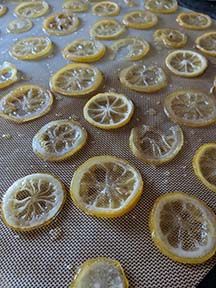
The best thing about lemons recently, though, in addition to having managed the wedding cakes “good enough,” was making candied lemon slices as the garnish. Sour turned sweet, which is kind of how my lemon journey is going. 


Candied Lemon Slices

These were kind of an afterthought as for the sheetcakes, but I’m so glad I did them. I quartered the slices and put one on each piece; they worked beautifully both as a simple yet elegant garnish and as an indicator of flavor. Candying them basically couldn’t have been easier, and their prep had neither the danger of zested knuckles or getting acidic juice into scratches on my hands. Some of the slices had gotten too thick or too thin, and I found myself consuming them as quality control as I laid them out to dry. I’ll definitely be doing them again with lemon desserts — if I happen to make any. 

Prep tips: keep the resultant lemon syrup! It’s an added bonus of the recipe. 

1 ½ cups sugar

1 ½ cups water

3 lemons, sliced thinly

Add sugar and water to a wide-bottomed saucepan; bring to a simmer and whisk to dissolve. Add lemon slices, gently stirring to ensure submersion, and simmer for 30-45 minutes. Remove from heat, and carefully remove slices with a tongs or fork. Arrange in a single layer on a silicone mat/parchment paper and let dry overnight. Use within a day or two. 


“Dry skin? Join the club”

0

An exceedingly common question I get in clinic, especially in the heart of a South Dakota winter, is how to remedy dry skin. And the questions arent just in clinic; my own kids, family, friends, everyone seems to have an occasional problem with dry and irritated skin.

Dry skin is something we are all familiar with; if your dry spots come with a rash or anything else unusual, it may be worth showing it to your primary care provider, as it could be something else entirely. Eczema, a common inflammatory skin condition, often goes along with and is made worse by dryness.

Soothing your dry skin doesn’t have to be fancy or expensive. There are a handful of tricks we can all use to help ourselves when it comes to dryness. The first advice is to avoid things that cause your skin to become drier. For many, that means to bathe less. That’s right; I said it: bathe less.

Every time you bathe or shower, it washes away natural oils on the skin. Often our instinct when our skin becomes irritated is to wash it more, but in this case more is not better. Of course, I’m not asking you to forego hygiene entirely. But most people can probably bathe every other or every third day. This is especially true of babies and kids who struggle with eczema – cut down the daily baths.

When we do bathe or shower, we can modify factors that will worsen dry skin. The hotter the water, the drier the skin afterward, so try lowering the temperature a bit. Less time spent in the bath or shower can help. And be mindful of the soap or cleanser you use – to reduce dryness, use less soap and a gentler soap. For kids who love the tub, skip the bubble bath and just put some gentle soap on a washcloth at the end of the bath when it is time to wash up.

After that bath or shower, how do you choose from the hundreds of creams or lotions out there claiming to soothe dry skin? The dermatologists I know love products with petroleum jelly (i.e. Vaseline®) for dry skin; remember, I said this didn’t need to be fancy! Stick with fragrance-free products and keep it simple. Whatever you choose, slather it on as soon as the skin is dry.

Dry skin affects many of us, but I hope these tips will help the next time you find yourself irritated with this common condition.

Kelly Evans-Hullinger, M.D. is part of The Prairie Doc® team of physicians and currently practices internal medicine in Brookings, South Dakota. Follow The Prairie Doc® at www.prairiedoc.org and on Facebook featuring On Call with the Prairie Doc® a medical Q&A show providing health information based on science, built on trust, streaming live on Facebook most Thursdays at 7 p.m. central.

Local Spotlight – Martin Hoskinson on Traveling Nurses

0

It’s always so wonderful to see and explore entirely new areas to us. For the adventurous soul, traveling is one of the true pleasures that sustains us. Now just imagine if it was part of your job, to travel to these new places. Such is the life of Haven, Kansas local, Martin Hoskinson. This past week, I conducted an interview with this continental traveler, discussing the ins and outs of his career as a traveling nurse. If you’re anything like me, you’ll find plenty of interesting information on this wonderfully rewarding occupation. Keep reading for more!

Upon talking to Martin, I discovered he’s been working as a traveling nurse for some time now. His last placement was in the heart of the West, smack dab near the 4 corners. Working out of New Mexico, Hoskinson had quite a few culture shocks. For one, “the majority population was Native American”. Apache, Navajo, and more call these regions their native ancestral homes, and the culture is vastly different than that of rural central Kansas. Hoskinson talked about those indigenous populations being some of the nicest people he’s come across and recalls the variances in dwellings, historical sites, and weather patterns. “Coming back to Kansas, I thought I was going to die (from the difference in humidity)”, Hoskinson said, “It’s a whole other climate”. During his time working as an ICU nurse at San Juan Medical Center, Martin worked with many other traveling nurses as well as staff nurses (non-traveling). He explained that traveling nurses typically were more experienced in a variety of afflictions due to their traveling experience. But like in any field, some come in less experienced than they should.

As you can imagine, there are a lot of good benefits to being a traveling nurse. One of them is sightseeing. In the 4 corners, Hoskinson got to see all the cliff dwellings, the natural beauty of New Mexico, and things that don’t exist much in Kansas, like mountains. Furthermore, traveling nurses get paid per diem for food and lodging costs depending on the location. Needless to say, there are great aspects to living as a traveling nurse.

You may be asking yourself, how does one become a traveling nurse? The first step, become a nurse. Just kidding, but there are quite a few steps involved. Martin for one was a nurse at St. Francis for 20 or 25 years as an ICU nurse. Sitting at the top of the pay scale, he decided to become a traveling nurse. First, he had to get an agency that would find these opportunities for him. Hoskinson has 3 agencies that he works with currently that secure him contracts in various locations. Recruiters from each of these agencies look for occupations that suit Martin based on where he wants to go and how good the pay is, etc. Such was the case when looking for his next contract. “I wanted to go to Alaska”, Hoskinson said, but he was told that there weren’t many opportunities available at the moment. So instead he began looking at other northern areas of the contiguous United States. There are many available contracts and they go incredibly fast, so if you find one you like, you have to jump on it immediately.

Overall, life as a traveling nurse is quite interesting and adventurous. It takes a love of travel, the ability to adapt, and a great work ethic to make traveling in the medical field a prosperous career. Martin Hoskinson has certainly done that for himself as he plans to find the next adventure/work experience. For those of you who know Martin for his work with Haven Signs, don’t worry, he will be passing on the business to his son, who will continue to do a wonderful job with the family trade. That’s all for our local spotlight, I hope you enjoyed

learning about this most interesting occupation at least half as much as I did. Last but not least, thank you to all the nurses who continue to work to help the people they do.