Saturday, February 14, 2026
Home Blog Page 469

Kansas taxpayers: Get your tax refund faster and avoid costly mistakes with these tips!

0

Kansas taxpayers: Get your tax refund faster and avoid costly mistakes with these tips!

As the April 15 filing deadline approaches, the Internal Revenue Service reminds Kansas taxpayers how they can speed up potential tax refunds by preventing common errors on their federal tax returns.

Collect all tax-related paperwork

Taxpayers should collect all key documents, including Forms W-2 and 1099, as well as any supporting paperwork for tax deductions or credits such as educational credits or mortgage interest payments. Additionally, having the previous year’s tax return accessible is advisable as it may be required.

Use electronic filing
The IRS advises taxpayers and their tax advisors use electronic filing methods such as IRS Free File or alternative e-file service providers. The Direct File pilot is available for some taxpayers in 12 states. Electronic filing minimizes mathematical errors and identifies potential tax credits or deductions for which the taxpayer qualifies. It’s essential for taxpayers to carefully review their tax returns to ensure accuracy. Opting for electronic filing and selecting direct deposit is the fastest and safest way to receive a refund.

Ensure filing status is correct

Tax software serves to prevent errors in selecting a tax return filing status. For taxpayers unsure of their filing status, the Interactive Tax Assistant on IRS.gov can assist in choosing the correct status, particularly when multiple statuses might apply.

Make sure names, birthdates and Social Security numbers are correct

Taxpayers must accurately provide the name, date of birth and Social Security number for each dependent listed on their individual income tax return. The SSN and individual’s name should be entered precisely as indicated on the Social Security card. In cases where a dependent or spouse lacks a SSN and is ineligible to obtain one, an assigned  Individual Tax Identification Number (ITIN) should be listed instead of a SSN.

Answer the digital assets question

Everyone who files Forms 1040, 1040-SR, 1040-NR, 1041, 1065, 1120 and 1120S must check one box answering either “Yes” or “No” to the digital asset question. The question must be answered by all taxpayers, not just by those who engaged in a transaction involving digital assets in 2023. Taxpayers must report all income related to digital asset transactions. See IRS.gov Digital Assets | Internal Revenue Service for details on when to check “yes” and how to report the income.

Report all taxable income

Keep in mind that most income is subject to taxation. Failing to accurately report income may result in accrued interest and penalties. This includes various sources of income such as interest earningsunemployment benefits and income derived from the service industrygig economy and digital assets. For further details, consult Publication 525, Taxable and Nontaxable Income.

Make sure banking routing and account numbers are correct

Taxpayers have the option to request direct deposit of a federal refund into one, two or even three accounts. Provide correct banking information: If expecting a refund, ensure the routing and account numbers provided for direct deposit are accurate to avoid delays or misdirected refunds. Additionally, taxpayers can use their refund to buy U.S. Savings Bonds.

Remember to sign and date the return

When submitting a joint return, it is required for both spouses to sign and date the return. If taxpayers are preparing their taxes independently and filing electronically, they need to sign and authenticate their electronic tax return by inputting their adjusted gross income (AGI) from the prior year. Taxpayers can refer to “Validating Your Electronically Filed Tax Return” for guidance if they have any inquiries.

 Ensure address is correct if mailing paper returns

Taxpayers and tax professionals are urged to choose electronic filing whenever possible. However, for those who must submit a paper tax return, it’s essential to verify the accurate mailing address either on IRS.gov or in the instructions provided with Form 1040 to prevent processing delays.

Keep a copy of the tax return

Upon readiness to file, taxpayers should create duplicates of their signed return and any accompanying schedules for their personal records. Maintaining copies can help them prepare future tax returns and figure mathematical computations in the event of filing an amended return. Typically, taxpayers should retain records supporting income, deductions or credits claimed on their tax return until the period of limitations for that specific tax return expires.

Request an extension, if needed

Kansas taxpayers requiring more time to file their taxes can easily request a six-month extension until October 15, thereby avoiding late filing penalties. This extension can be requested either through IRS Free File or by submitting Form 4868, Application for Automatic Extension of Time to File U.S. Individual Income Tax Return, by April 15. It’s important to note that while an extension provides extra time for filing, tax payments are still due on April 15 for most taxpayers.

Alternatively, taxpayers can seek an extension by making a full or partial payment of their estimated income tax and indicating that the payment is for an extension. This can be done using Direct Pay, the Electronic Federal Tax Payment System (EFTPS), or a debit/credit card or digital wallet. By doing so, taxpayers avoid the necessity of filing a separate extension form and receive a confirmation number for their records.

Hosta: New Light on a Shady Character

0

Once considered a “green filler” for shady areas, hostas are now the stars of shady landscapes because of the plethora of cultivars now available to the gardening public. Hostas are low-maintenance, hardy perennials that are easy to grow. Available with impressive leaves that come in a variety of sizes, shapes, colors, and variegation, it is little wonder why the National Garden Bureau chose hosta as its “Perennial of the Year” for 2024.

Hosta (singular) is the common name given to any number of species, inter-specific hybrids and cultivars belonging to the genus Hosta. Hostas are native to the Orient, where they were discovered growing in the wild in Japan, China, and Korea as early as the 8th century. Hostas traveled to Europe by the late 18th century because of European settlements in China. Hosta plantaginea is thought to be the first member of the genus brought to Europe, with Hosta ventricosa arriving soon thereafter.

For many years, hostas were classified in the genus Hemerocallis (along with daylily), but plant taxonomists ultimately realized hosta was distinct and should be put into a genus of its own. In 1812, the name “Hosta” was given to this plant’s new genus in honor of Australian botanist Nicolas Thomas Host. Unfortunately, this name had been assigned to a genus in the family Verbenaceae and, according to the rules of naming plants, the same name cannot be given to two different plants. The error was corrected in 1817 when the genus name Funkia was given to hosta. This designation prevailed until 1905 when the governing body for plant nomenclature changed it back to Hosta. Over one hundred years later, it is not uncommon to see the term Funkia parenthetically inserted behind hosta in magazines, catalogs, or on the internet.

It is estimated there are 70 species and over 7000 registered cultivars in the genus Hosta. They range in size from miniatures (e.g. ‘Baby Bunting’ and ‘Tiny Tears’) which are only several inches in diameter at maturity to “giants” such as ‘Sum and Substance’ and ‘Emperor Wu’ which approach a height and spread of 48 inches. Within those extremes, hostas usually are placed into one of five different categories according to height or leaf color.

The five major height categories defined by the American Hosta Society Size include mini (less than 6 inches tall), small (7-10 inches tall), medium (11-18 inches tall), large (19-28 inches tall), and giant (more than 28 inches tall).

The five major leaf color categories include green, blue, gold, medio variegated (light center, dark margin), and marginal variegated (dark center light margin). A few cultivars are viridiscent, meaning they change from light in color to darker shades during the growing season. Others are lutescent and change from green to yellow during the growing season. A very few change from yellow to white, a trait know as albescence. Additionally, hostas can be classified according to their leaf shape (e.g., strap, lance, egg, heart and circular) and leaf surface (e.g., flat, rugose, cupped-rugose, wavy undulate, contorted, piecrust or furrowed).

Like daylilies, hostas bear a compound inflorescence known as a scape. Individual flowers on the spike are lavender, purple or white, depending upon cultivar. Some flowers (e.g., cultivars of H. plantaginea) are delightfully fragrant, adding further appeal to this attractive perennial plant.

Although hostas are considered shade plants, most do not thrive in deep, heavy shade. An ideal scenario for most cultivars is several hours of morning sun followed by afternoon shade, or broken patches of sun/shade that might be characteristic of the exposure under a large, open tree. Hostas have fairly aggressive roots that compete well with the roots of most tree species. As a general rule, the blue-leafed cultivars require shadier exposures while the green- and yellow-leafed cultivars can tolerate more sun. However, most of the sun-tolerant cultivars will exhibit some leaf-edge burn if exposed to afternoon the afternoon sun and heat characteristic of a Midwest summer day.

Some hosta cultivars require years to develop into a mature clump. Therefore, they represent a long-term installation in the garden and adequate soil preparation is a sound investment. Hostas prefer a rich loam soil high in organic matter that is slightly acidic in nature. Good drainage also is important. Deeply incorporating about four inches of organic matter is a good way to prepare average soil for hostas. Well-rotted manure, compost, leaf mold or peat are good sources of organic matter.Since hostas have fairly deep, aggressive root systems, the hole in which they are to be planted should be about 12 inches deep and 1½ times in diameter the mature diameter of the cultivar being planted.

Hostas are readily available as dormant divisions, but gardeners can hasten their establishment in the landscape by purchasing plants that are already started in nursery containers. Upon planting, remove the hosta from its container and free any tangled roots. Place the plant in the planting hole so that the roots will be covered with soil to the same level they were in the nursery container (remember that soil settles upon being watered). If dormant divisions are planted, the roots should be soaked in water for about 30 minutes before planting. In both cases, water thoroughly after planting has been accomplished.

Fertilizing remains somewhat of a controversial topic among hosta experts. Some insist that hostas growing in soils containing sufficient amounts of nutrients do not need additional fertilizer, while others maintain supplemental fertilization is beneficial. The latter group suggests the addition of a granular, complete fertilizer (e.g., 12-12-12 or 5-10-5) early in the spring, followed by two additional applications, each approximately six weeks apart. Apply according to label directions and the stature/vigor of the cultivar being fertilized. It is important not to fertilize hostas after the middle part of July to avoid stimulating late-season growth which can prevent the plant from hardening for the winter.

Hostas require about an inch and a half of water per week during the summer. Burned leaf tips are a tell-tale sign of insufficient amounts of moisture as are drooping leaves. If supplemental irrigation is required, water early in the morning to allow leaves to dry as quickly as possible. Hostas are easily increased by dividing the clump early in the spring when the shoots start to emerge from the soil. Most cultivars, however, should not be disturbed for about five years after planting to allow the clump to become established.

Slugs and snails are especially fond of hostas and the shady, moist environment in which most are planted. They typically chew small, round holes in the leaves of plants on which they feed and leave a dried trail of slime as they move from one spot to another. Poison baits containing iron phosphate, metaldehyde, or measurol have been shown to be effective in controlling slugs and snails as has been placing pans filled with beer in the garden. The odor of beer is attractive to these pests which will crawl into the pan and drown. Deer also love hostas and represent a more formidable challenge to control. Repellents, electrical fences, guard dogs and motion detectors have all been used to control deer, to greater or lesser effectiveness.

Other than for foliar nematodes, hostas are relatively disease free. Hosta Virus X (HVX) is a virus that has been getting a lot of publicity as of late. On cultivars with light-colored leaves (e.g., ‘Gold Standard’) symptoms include blue or green markings. These markings usually follow the vein of the leaf out into the surrounding tissue, resulting a mottled appearance. A lumpy or puckered appearance to the leaf may also be present. Symptoms on cultivars with dark-colored leaves are more difficult to detect and may appear as light-colored mottling instead of colored streaks. HVX is spread by mechanically transferring it from an infected plant to a health one, especially during propagation. There is no cure for this disease and gardeners should rogue out any suspect plants from their collection.

As mentioned above, there are over 7000 hosta cultivars from which to choose. The American Hosta Society polls its membership each year to determine their favorites and the following table represents the 15 most popular large-size cultivars from a recent (2022) poll. For the entire list as well as the names of popular smaller hostas, please visit the following website: https://americanhostasociety.org/resources/popularity-poll/

Cultivar Description
H. ‘Lakeside Paisley Print’ Heart-shaped leaves with very wide, wavy, green margins.
H. ‘June’ Medium-sized leaves; gold center and blue-green margins.
H. ‘Liberty’ Blue-green leaves with wide, streaked, yellow margins which fade to creamy-white.
H.‘Guardian Angel’ Large, thick, blue-green leaves display a white center.
H. ‘Sum and Substance’ Large, glossy chartreuse leaves changing to gold; upright.
H. ‘Rainbow’s End’ Mostly yellow leaves with dark green margins. Centers brighten to creamy-white in summer.
H. ‘Sagae’ Large chalky blue-green leaves with neat gold margins.
H. ‘Coast to Coast’ Huge leaves emerge gold in spring and turn lighter gold later.
H. ‘Victory’ Shiny green leaves with white margins that have a dramatic grooved texture.
H. ‘Key West’ Bright gold, very large heart-shaped leaves form a clump up to 6 feet across.
H. ‘Paradigm’ Gold leaves with streaked, blue-green margins; variegation pattern that intensifies later in the spring.
H. ‘Earth Angel’ Large, heart-shaped, blue-green leaves with wide, creamy-white margins that are creamy yellow in spring.
H. ‘Brother Stefan’ Thick, heavily corrugated and puckered green leaves with a brilliant gold center.
H. ‘Goodness Gracious’ Glossy heart-shaped dark green leaves with distinctive, wide yellow margins.
H. montana ‘Aureomarginata’ Huge bright-gold leaves with green center. Holds color well.


Other excellent, attractive cultivars exist that should not be ignored just because they do not appear on the popularity poll. When in doubt, look for a cultivar that has won an award given by the American Hosta Society such as the Eunice Fisher Award or the American Hosta Growers’ Hosta of the Year Award.

Hosta Fun Facts:

  • Hostas are native to Japan, Korea, and China.
  • Hostas were first imported and grown in Europe in the late 1700s and, by the mid-1800s, they were grown in the United States.
  • Today, hostas are the most widely grown ornamental perennial in the United States.
  • Common names for hosta still used by some in commerce include Plantain Lily and Funkia.
  • Attractive to hummingbirds, butterflies, and bees, hosta flowers come in a range of colors including white, lavender, and purple.
  • Hostas are extremely hardy and grow in zones 3–9. They do not grow well in very warm states because of their need for several weeks of dormancy under 40°F each winter.
  • Hostas flowers are edible, and some varieties are grown as a leaf vegetable and are especially popular in Japanese cuisine.
  • Hosta has been nicknamed the “Friendship Plant,” since mature clumps are easily divided and can be shared with friends.

Pheasants Forever and Quail Forever Promote Team Members to Farm Bill Biologist Managers in Kansas

0

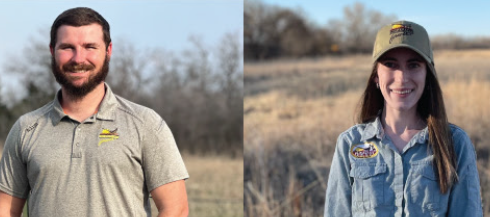
Pheasants Forever and Quail Forever are happy to announce Davis Ostermeyer and Brenna Riley will both be serving as Farm Bill wildlife biologist managers in Kansas. Together, they will foster relationships with local, state, and national government agencies and programs, help conserve wildlife habitat on private lands, and lead the current biologist team to further success in The Sunflower State.

“We can’t wait to see how these two will flourish in their new roles,” said Eran Sandquist, Pheasants Forever and Quail Forever’s director of conservation delivery for the Midwest region. “This position is new in Kansas, and I am confident they will exceed expectations to do a spectacular job at helping their team thrive.”

For nearly the last five years, Ostermeyer has been employed by PF & QF in Kansas. First, he served as a private lands habitat specialist followed by his role as conservation delivery specialist for the Flint Hills ecoregion. He attended Truman State University and received a bachelor’s degree in biology.

“I’m really looking forward to working with the great Farm Bill wildlife biologist team in Kansas,” Ostermeyer said. “I plan to step into this position with all of my knowledge and experience as a biologist, as well as my passion for the Pheasants Forever and Quail Forever mission.”

Riley has worked for Pheasants Forever and Quail Forever since 2022 as a Farm Bill wildlife biologist in Kansas and was previously an assistant professor of biology at Kansas Wesleyan University. Additionally, she has B.S. and M.S. degrees in biology from Fort Hays University.

“I’ve had the unique experience of watching the biologist team in Kansas grow,” Riley said. “I’m incredibly excited for the chance to facilitate this growth and face new challenges for habitat conservation.”

For more information about Pheasants Forever and Quail Forever in Kansas, please contact Davis Ostermeyer at dostermeyer@pheasantsforever.org / (757) 412-7257 or Brenna Riley at [email protected] / (785) 515-8400.

About Pheasants Forever and Quail Forever

Pheasants Forever and Quail Forever make up the nation’s largest nonprofit organization dedicated to upland habitat conservation. This community of more than 420,000 members, supporters and partners is dedicated to the protection of our uplands through habitat improvement, public access, education and advocacy. A network of 754 local chapters spread across North America determine how 100 percent of their locally raised funds are spent — the only national conservation organization that operates through this grassroots structure. Since its creation in 1982, the organization has dedicated more than $1 billion to 580,000 habitat projects benefiting 26.5 million acres.

Supporting habitat conservation on private lands throughout The Sunflower State


Bringing back native grasslands after wildfire

0

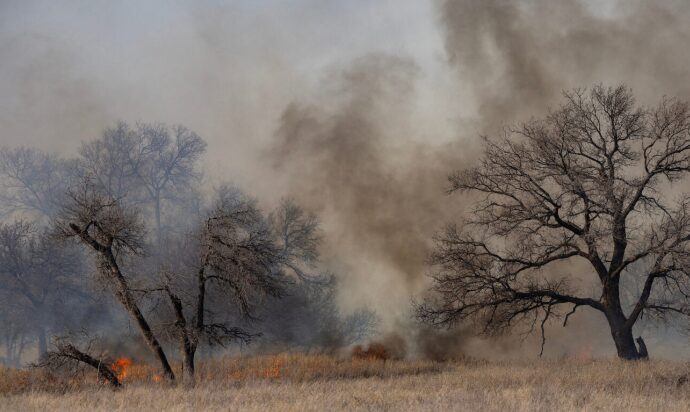
The first blades of green grass have already shown up in native grasslands blackened in the wake of the Smokehouse Creek Fire or other fires in the Texas Panhandle over the past month.

But green grass doesn’t equate to available grazing for ranchers. True recovery will take time, according to Morgan Treadwell, Ph.D., Texas A&M AgriLife Extension Service range specialist, San Angelo, and Jeff Goodwin, Ph.D., director of the Texas A&M Center for Grazinglands and Ranch Management, both in the Texas A&M Department of Rangeland, Wildlife and Fisheries Management.

“This isn’t just an ecological recovery; it’s a construction recovery – lost fences and water infrastructure – and even a mental recovery, too,” Treadwell said. “So, it is time to take a big step back and evaluate our purpose as stewards of rangelands and allow time for rest and recovery.”

Top tips to keep in mind

While Treadwell and Goodwin know this isn’t the first fire for many ranchers, the two experts offered a few tips to keep in mind:

– Keep livestock off burned pastures where possible until adequate forage recovery has occurred.
– Find lease land for animals or designate a sacrifice pasture or trap pasture if fences remain intact and there are unburned areas to graze.
– Destock and cull animals. The market is high, so if there are no fences, water or grass, send key seedstock to feedlots or sell now and buy back when the land is recovered.
– Collect hay donations where there is room for cattle to stay during range recovery. Isolate those hay areas to avoid heavy traffic in recently burned areas and the consequences of potential undesirable weed establishment.
– Assess fence needs.
– Assess water/poly line needs.
– Build a list of priorities in rebuilding infrastructure.
– Keep detailed daily records and receipts of expenses, animals euthanized and replacement material purchased.

Grasses will recover stronger, with time

Ecologically speaking, native perennial grasses are very resilient against fire, Treadwell said. This wildfire was unique in that it moved very quickly pushed by extreme high winds and extreme gusts, which pre-heated the fuel ahead of the fire. However, these factors provide optimism because the duration and dosage of heat wasn’t prolonged.

Rangeland takes time to grow grass after a fire, she said, and rainfall is needed to jumpstart natural recovery processes.

“The green grass that is already showing is a great sign, but we need to make sure those root systems below ground are strong,” Treadwell said. “We need to make sure plant crowns have every opportunity to recover and start developing, growing leaf tissue and beginning the photosynthesis process all over again.”

Recovery time will depend on moisture and the nutrient contents in the soil that support grass growth. Take the stress off recovering pasture by letting it rest. There is no cookie-cutter timeline for how long to stay off the pasture. Treadwell said it is completely contingent on rainfall and soil composition.

“We have to put our stewardship hats back on and make sure that we take care of the land so it can take care of us, yet again,” she said.

Destruction provides opportunity

When ranchers begin building back their herd, Treadwell said they should keep the next fire in mind – because it is not an “if” situation, but rather a “when” situation. Wildfires are starting to resemble historical fire frequencies, and in the Panhandle, that was every two to five years.

Building back smarter and including recovery space is important, she said. Here are a few tips to think about when the rebuilding begins:

– Fire-friendly fences are a must, and that means coming back with all steel.

“Everyone loves a good cedar post, but you can lose them quickly, even with a low-intensity fire, because they hold embers and will smoke forever,” she said. “Build back with steel where possible, and work with neighbors in prioritizing all steel perimeter fencing.”

– For water development, use of non-buried polyline does not make sense in a fire-prone ecosystem.

– Mark where donated hay is dropped because that will be the first place where introduced or invasive species may show up.

– Take inventory and keep detailed records of when you start to see recovery occur. When possible, identify the species of grasses that are responding the quickest – it will give you an idea for forage production later in the year.

– Plan the build back — do you want to lay out the same fencing structure and same pastures? This is a challenge, but also an opportunity to improve efficiency; now is the time to reconfigure pastures in relation to water, varying terrain or soil types, and to use roads and existing infrastructure more strategically from a wildfire mitigation standpoint.

– Strategic location of pastures. Think about building trap pastures that can protect the headquarters more — concentrating animal grazing around the headquarters can create a cost-effective fire break.

“Strategic thinking should guide how we come back,” Treadwell said. “For example, take time to pinpoint vulnerable areas — maybe that is the southwest area of your ranch where the prevailing winds come from. Start buffering or mitigating the next fire approaching on that vulnerable side.”

Fire is fire and native perennial grasses benefit

Treadwell said fire is fire, whether that is in a prescribed fire or wildfire — in the end, fires are beneficial and completely synergistic to grasslands.

“This fire is an opportunity to build resiliency and strength into our ranching livelihoods by way of stewarding our native perennial grasses,” she said. “Resetting brush density is an advantage that our producers will reap the benefits from for years and generations to come with proper grazing management.”

Fire suppresses encroaching trees, cactus and brush, stunting undesirable species. Pastures allowed to recover should flourish in terms of native plant communities and diversity of native grasses, especially following rains, she said. This is a natural process and the very disturbance that built native grasslands full of fertile soils.

Fire also makes the soil more productive, she said. Soils are full of organic material due to historic fires injecting more nutrients from above-ground biomass through combustion.

“It has a massive fertilizer effect for future grasses, and it all starts below ground,” she said. “Right now, above ground, we are seeing direct effects of fire, but below ground life is flourishing and thriving. We just have to be patient and give nature time for those effects to transition above ground.”

Additionally, such a widespread impact on invasive trees and brush will also positively affect recharge in aquifers and stream systems.

Moving forward with intention

Treadwell said now is the right time to plan ahead.

There are many tools in the toolbox, she said. Proactive prescribed fire is one of the tools, but it is not for everyone. Cattle and livestock are the next best thing to reduce the fuel loads and create a footprint that will complement existing fire breaks, like roads encircling headquarters and mechanically thinning or removing woody plants near structures.

“Read the system, the landscape,” she said. “No two years will ever be the same. Fuel accumulation for this fire occurred in a relatively short timeframe. We grew a lot of grass, and it cured quickly, and before we knew it, we were in a record-breaking fire season.”

The ability to pivot, to adapt, to read the landscape and proactively address potential dangers takes knowledge, experience and science, she said.

“We must be aware of the challenges Mother Nature is setting us up for before we are dealing with them, because when we are reacting to them, we don’t have flexibility to manage the situation. But if we are proactively reading them ahead of time, then we have room to adapt and respond in a way that is more successful in the long-term.”

Reading the landscape in terms of fuel accumulation is key. If grass growth is booming, it may mean grazing fuel loads down to manageable levels.

Landowners managing for wildlife should develop mutually beneficial relationships with grazing neighbors to flash graze deferred landscapes and actively manage potential fuels for a fire-ready response.

“I’m not saying overgraze or overstock, but we have to create some defendable spaces in these native plant systems that allow us to live in them and manage them,” Treadwell said.

Courtesy of: AgriLife Extension offers range restoration tips after Panhandle wildfires.

Coloring Outside The Lines

0
lee pitts

In my younger years I fantasized about becoming fabulously wealthy as an artist. There was only one thing standing in my way… I couldn’t draw. Oh, that’s not entirely correct as I could draw farm animals but I simply couldn’t draw people. My men all had faces that resembled Berkshire hogs, a breed known for being especially ugly, my women all had horse faces and my children all had countenances that only a nanny goat could love. I also couldn’t draw clouds and no matter how hard I tried they invariably ended up looking like exploding bags of flour.

I’d have to say that my artistic masterpiece was probably a wood carving I did using my mother’s brand new coffee table as my pallet on which I carved my troop number using my Cub Scout knife. I made the mistake of signing my name on the masterpiece and I’ve never made that faux pas again, no sirree.

I take solace in the fact that my artistic efforts will one day be fully appreciated because Van Gogh sold only one painting while he was alive. Of course, when he died his pieces sold for what are called “dead men’s prices”.

I didn’t fail as an artist for lack of trying. Did you know that the average kid between the ages of two and eight spends 28 minutes of their day coloring? I easily tripled that. I attribute any artistic shortcomings to the fact that I was a deprived kid who had only the pack of eight Crayolas®. And please note that I included the ® thingy and that’s because I wrote the word Crayola® without it once and got a nasty letter from Binney and Smith threatening legal action. I was quite honored to receive such a letter to think that the people who made Crayolas® actually read my column. That company got bought out by Hallmark in 1984 and ever since then they don’t seem to be so uptight about the ® thingy because I’ve never received such a letter from them. Just for fun, let’s see if Hallmark reads my column or takes legal action this time… Crayola, Crayola, Crayola.

I was jealous of the kids who had the 64 piece set of Crayolas® and attributed my shortcomings in the art department to not having the other 56 colors. I probably should be getting reparation payments for being deprived of the full color spectrum.

I enjoy painting with oils and I’ve done two pieces that deserve the space they take up on our walls. One is of a Hereford cow and the other is of a sea otter and her pup. The rest of the wall space in our house is covered with cowboy art. I have originals from people you’ve heard about like Will James, Joe Beeler and two pen and inks from Edward Borein. Then there are all my originals from artists who are still alive including Phil Tognazzini, Vel Miller and Jerry McAdams, who all happen to be friends of mine. My favorite all time cowboy artist is Tim Cox and years ago I asked Tim and his wife Suzie if I could use a favorite of mine on the cover of one of my books called Essays From God’s Country. Not only did they give permission they also gave me a large artist proof of the piece which takes center stage in our home.

My favorite dead artist is Georgia O’Keefe and her work borders on modern art which I usually hate. I agree with Al Capp who drew a comic called Lil’ Abner when he said modern art was, “A product of the untalented, sold by the unprincipled to the utterly bewildered.”

Some of the stuff being called “art” these days is a real travesty. Like the ten foot round circle of manure that was shown at the San Francisco Art Institute that was taken down after only one day because it stunk up the place… both artistically and aromatically. Then there was the air conditioning vent that wasn’t even entered in the show that got top prize at a different modern art show.

I shouldn’t leave you with the impression that I have zero artistic talent. I love airbrushing some of my leather creations but as for drawing the human form I agree with the anonymous art critic who said, “His illustrations were horribly executed and the artist should be.”