Sunday, February 15, 2026
Home Blog Page 476

K-96 naming bill continuing through process

0

HAVEN, Kan. — With the help of State Representative Joe Seiwert, a house bill (HB 2481) that passed that side earlier in the session has a hearing Wednesday in the Senate Transportation Committee.

This bill would designate K-96 between the east and west city limits of Haven as the PFC Henry Lee Fisher Memorial Highway.

Assuming the bill finishes going through the process, a fundraiser to raise money for the signs on K-96 will be held Thursday, May 9 at Baker Ballroom from 6 to 9 p.m. There will be a live performer, catered dinner, and a silent auction.

KDOT does all of the work and maintenance but the family must pay for the signs.

If you want to give toward the signs, call or text Jake Feil for more information at (620) 314-9570.

Below is the testimony of Jake Feil, Fisher’s nephew, as prepared for hearings in Topeka.

Henry Lee Fisher was born on May 31, 1947 in Haven, Kansas to Kermit and Chlodine Fisher. He was the second oldest of four children.

The Fisher Family were lifelong Haven residents and all four kids graduated from Haven High School with Henry graduating in 1965.

Kermit Fisher, Henry’s father, proudly served in the Army during WWII so both of his boys chose to follow in his footsteps and serve their country. Upon graduating high school, Henry enlisted along with two high school buddies.

Henry was rejected the first time due to a hernia that was found during his physical.

Perhaps he could have walked away right then but he chose to return to Haven, have the hernia repaired, and went back and enlisted.

Henry joined the Army and became part of the 16th Infantry- 1st Infantry Division and was eventually sent to the frontlines of Vietnam.

Sadly, he would never return home as PFC Henry Lee Fisher was killed in action in Vietnam on June 18, 1967. He was just 20 years old.

Like many of his ancestors before him, Henry Lee Fisher chose to serve his country and to defend the freedoms that we all enjoy to this day. It was a calling for him to serve his country. He gave the ultimate sacrifice doing just that.

To my knowledge there have been only (2) Haven residents that were killed in action while serving in our military, but just one of those lived his entire life there and that is my uncle, Henry Lee Fisher.

I never got the chance to meet my uncle Henry. I grew up on stories of him told to me by my grandma and my mother. I’ve been proud of him since the day I heard the very first story.

Henry had a chance to avoid Vietnam but he felt so strongly about serving that he went back after his hernia surgery. That to me shows just what kind of man he was.

Being a lifelong resident of Haven, it is only fair that we memorialize his great sacrifice. I am here today to ask the committee to designate the portion of 96 highway from the eastern city limits of Haven to the western city limits of Haven the PFC Henry Lee Fisher Memorial Highway and have a suitable sign erected at or near both the eastern city limits and western city limits of Haven.
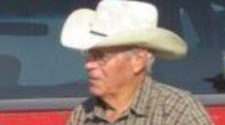
Howard Miller and Sig Collins, Cheney Lake Watershed

0

“Go to the source.”

That’s good advice in lots of situations. Today we’ll learn about a water project that represents an innovative rural-urban connection that is helping improve the environment by working from the source.

Howard Miller is outreach coordinator for the Cheney Lake Watershed in south central Kansas. He grew up on a dairy farm in this region before joining the watershed staff.

The Cheney Lake Watershed covers 633,000 acres within five counties that include the north fork of the Ninnescah River. The Ninnescah flows southeast into Cheney Lake, which supplies more than 60% of the drinking water for the 350,000-plus residents of Wichita. More than 99% of the watershed is used for agricultural purposes.

In 1993, farmers on the Reno County Conservation District board were observing two problems at Cheney Lake. One was that the lake was having increased blue-green algae blooms in the water. This was not a health hazard, but it did cause taste and odor problems.

The second problem was siltation into the lake. As soil eroded into the lake, its capacity was reduced and water levels fell. Boat owners and fishermen complained that their boat docks were left high and dry, and they had to walk to the water.

These Reno County farmers wanted to do something to remedy the situation, but they weren’t finding allies.

“No one would listen to us,” said Marion Krehbiel, one of those farmers.

At a conservation district meeting, the Reno County folks spoke to one of the farmers on the Sedgwick County conservation district board. They asked, “Would you talk to the City of Wichita water department about this?” He did so and a dialogue ensued.

These farmers talked to Wichita city staff about practices the farmers could implement upstream in the watershed that would benefit water quality and quantity in Cheney Lake. Eventually they agreed to work together.

“In 1994, our project was formed in partnership with the City of Wichita and the Environmental Protection Agency,” Miller said. “The City of Wichita has been a constant and great partner to work with since the city pays farmers for practices they implement on their farms that improve the quality of the water in Cheney Lake.”

The idea was simple: Go to the source. Rather than spending money to build a bigger water treatment plant in Wichita, for example, they could figure out ways to improve the environment at the water source and invest funds there.

Meanwhile, the Kansas Department of Health and Environment began implementing a similar program called WRAPS – Watershed Restoration and Protection Strategies. “We still have EPA dollars to help pay farmers through the Kansas WRAPS program administered by KDHE,” Miller said.

Around the same time, K-State Research and Extension developed a statewide team of watershed specialists providing education and technical assistance for conserving water resources elsewhere in the state.

Cheney Lake Watershed, Inc. has a Citizens Management Committee of local producers who set goals to reduce nutrients and sediment that reach the lake from agricultural sources. Sig Collins is committee chair. Those producers come from rural communities in the region with populations such as Pretty Prairie, 660; Arlington, 435; Castleton, 227; Sylvia, 215; Partridge, 209; and Plevna, population 85 people. Now, that’s rural.

“The City of Wichita provides funding to help farmers reach our watershed goals,” Miller said.

These goals include educational efforts and funding in the most vulnerable acres of the watershed, encouraging practices that will have the greatest reduction in sediment and nutrient runoff. These include such practices as reduced tillage, cover crops, grass plantings, relocation of livestock feeding areas, and a strong emphasis on soil health in both cropland and rangeland.

For more information, see www.cheneylakewatershed.org.

Go to the source. That idea has worked well for the City of Wichita and the farmers with whom they are partnering upstream.

We commend Howard Miller, Sig Collins, and all those involved with Cheney Lake Watershed, Inc. for making a difference by implementing soil and water conservation strategies to benefit the lake and urban water consumers. We can go to this source for best practices.

Modern-Day Horsemanship To Feature Bridle-Less Riding And Liberty Training At EquiFest Of Kansas

0

Horses Are Not Pets

0

Glorious

0
john marshal

LINDSBORG ‒ The Midwest Art Exhibition remains the consummate launch for the annual Messiah Festival of the Arts. Their convergence this week marks the end of winter, the kiss of spring.

The 124th annual Exhibition, Kansas’ longest-running art show, continues through April 21 at Lindsborg’s Birger Sandzén Memorial Gallery. Among features this year are a retrospective by Hutchinson painter Don Fullmer and paintings by Patricia Scarborough of Geneva, Nebraska. There are mobiles by Scott Brown of Hutchinson, recent acquisitions to the Gallery’s permanent collection, and early drawings by Sandzén.

Founded in 1899, the Exhibition continued in various buildings on the Bethany College campus and has been at home in the Sandzén Gallery since it opened in 1957.

The Exhibition was added to the (1881) Messiah Festival by organizers Carl Lotav, who headed the Bethany College art department; G. N. Malm, Lindsborg author, businessman, professional designer and artist; and Birger Sandzén, the legendary artist and Bethany College faculty member.

The Sandzén Gallery has become an immutable institution and, for many, a quiet setting that advances beauty ‒ stories, paintings, sculpture ‒ a place that offers a sense of continuity, even security. It is an institution firmly rooted in liberty, in free expression, boundless scope and range, the sheer joy of expression, and with doors open to all.

*

The Exhibition and Messiah Festival of the Arts meet during Holy Week for an eight-day celebration of faith, music and art, now a time-honored regional tradition.

” Music and visual arts have been at the core of the life of Lindsborg, almost since the first Swedish-American immigrant pioneers established the community in 1869… ” wrote A. John Pearson, the late historian and archivist, in 2010. “Those pioneers came to the New World primarily for religious freedom of worship and expression — which at the time was unattainable in their part of Europe. With them they brought intense sensitivities and appreciation for music and the fine arts.”

In December 1881 the immigrants established a Messiah oratorio tradition, the large chorus and orchestra known as the Bethany Oratorio Society or, commonly, The Messiah Chorus.

For more than a century, the heart of this Festival lay in Handel’s “Messiah”, a beloved classic in western culture; this marriage of text and music, with performances on Palm Sunday and Easter Sunday, told in three parts the story of the Nativity, Christ’s Passion and Resurrection, and the promise of Redemption; on Good Friday, Bach’s “Passion According to St. Matthew”. Each unfolds in a masterful intertwining of solo voices, chorus, and orchestra.

The “Messiah” and “St. Matthew Passion” are now the underpinnings of a Festival Week that lasts two weeks.

This year, events on the Bethany campus begin March 18 with the Bethany College juried student art exhibition and conclude with Oratorio events at Presser Hall: “St. Matthew Passion”, 7:30 p.m. Good Friday (March 29) and Handel’s “Messiah” at 3 p.m. on Easter Sunday,

Experiences in between include a Messiah soloists’ recital at 7:30 p.m. March 26 at Presser Hall; honors students’ recitals; and downtown, Lindsborg Collects, an exhibition (through March 31) from local collections at the Smoky Valley Arts and Folklife Center; a Jazz Walk at 7 p.m. March 22; and Våffeldagen March 23.

*

The Midwest Art Exhibition, Messiah Week and its component events remind us that through art we experience a certain freedom, permission to capture a moment in the flurry of being alive. We realize passion in music and in visuals that catch the fluidity of life in mid-stride and stop it long enough for us to hold on.

Art offers a release from our own narrow circumstance. It takes us away to compelling places and pursuits to experience their cadences and continuities. It is an opportunity to see and hear what truly matters, what is valid, who can love and be loved, what can be trusted.