Sunday, February 15, 2026
Home Blog Page 483

Will the drastic temperature drop at the end of February cause damage to fruit trees that have bloomed?”

0

Determining how much damage will be done to fruit trees as a result of the cold depends on bloom stage, length of the cold period, how low the temperature was and type of fruit.

During dormancy, fruit tree buds are hardy to winter temperatures. As the buds develop and swell, they lose their hardiness and become more susceptible to cold injury.

Washington State University published a chart that shows the effect of cold temperatures on fruit trees during varying stages of flowering. You can reference that chart here: https://cpg.treefruit.wsu.edu/critical-temperatures/

Here is an example to help you understand how to read the chart. For apricot trees in their first bloom period, 10% of the buds would be damaged/killed after 30 minutes at 24 degrees F. 90% of the buds would be damaged/killed at 14 degrees F for 30 minutes at that same flowering stage.

Gardening for Life

0
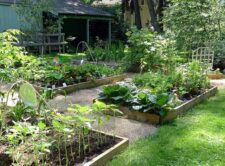
Photo credit: Lori L. Stalteri
The wellness benefits of gardening are available for all ages. Varied abilities among gardeners means adaptations to traditional practices are necessary. There are many tools and tricks to make this possible. Keeping gardeners safe, regardless of age, is key to a successful growing season.

Be realistic about what can be accomplished each day. If you’re gardening with a child, plan to spend plenty of time exploring and learning alongside him/her. If time is of the essence, save these tasks for more experienced helpers or independent gardening.  Hire a crew or seek other help to complete tasks in a timelier manner.

Make a list of the tasks that need to be accomplished each day and complete them in an order that varies the movements. Spending hours kneeling and weeding is going to put strain on joints which can result in long-term damage. Instead, spend 15 minutes weeding each day followed by a task that requires different movement and posture.

Minimize maintenance. Select plants recommended for your area. Use automatic irrigation or a soaker hose to reduce the amount of time spent watering. Limit the garden size. Supplement your harvest by visiting the farmers market. You can grow less and do good by supporting local farmers.

Observe the garden from a different perspective. Identify ways to improve accessibility such as increasing the raised beds to standing height. If there is a body of water, is it fenced to protect young children? Is the pathway level and safe to walk on? Is there a section of the garden that steals your joy? Change it!

Ensure proper maintenance of all tools. Keep pruning tools sharp so less effort is required to make each cut. Keep wooden handles free from splintering. Here is a resource from K-State to assist with keeping tools clean and sharp: https://bookstore.ksre.ksu.edu/pubs/mf3288.pdf

Use lightweight tools such as those made with plastic, carbon, fiber or aluminum handles. Handle the tools prior to purchasing to ensure they are a good fit. Most gardeners tend to prefer lightweight tools with a long handle. This prevents bending over to work and adding strain to the back. Short-handled tools may be a better fit for gardening while seated. The handle of the tool can be thickened to improve grip by wrapping it with layers of tape or adding a foam pad.

A universal cuff is an adaptable device that can be added to most hand-held tools as a grip aid. Gardeners who lack a strong grip can use a hand cuff to assist them in holding tools including the garden hose. The arm cuff supports the hands and wrists to decrease strain while performing tasks such as cultivating and digging.

Kneeling pads/benches can protect joints while also reducing soil compaction. Rolling garden seats allow the gardener to sit while weeding and planting. It can be pulled through the garden to provide a place to rest as well. A bag installed on the side of the kneeling bench or seat can offer a place to store hand-held tools so they are easy to find. Pulling a wagon or other wheeled cart is helpful for gathering debris and transporting plants while reducing the strain to your body and the risk of tripping.

Invest in a good pair of gloves that will accommodate any gardening task. This will protect you from cuts and the potential for infection.

Store tools in a central location. Avoid leaving tools out where they can become a trip hazard. Unplug power tools and never leave tools unattended when gardening with children. It is important for young gardeners to learn tool safety which includes supervision.

Keep pathways smooth and level to reduce fall risks. Use contrasting path materials, sound or plants to define areas of the garden.

Bring the garden to you. Bountiful gardens can be grown in many ways. Window boxes, raised beds and a multitude of container types facilitate gardening while standing or seated. Keep the size of planters less than three feet across to reduce the need for reaching. All points in this size planter can be reached with short handled tools.

Rest and relax. Place a comfortable seat in a shaded area of the garden. On days that are predicted to be warm, do garden work in the early morning hours. Take frequent breaks, wear a hat and sunscreen. Bring your phone with you to the garden, especially if you garden alone, in case help is required. Bring a book to the garden to encourage you to take a break and do some reading in the shade.

There are many considerations to make when designing a garden that is safe for everyone. If you are planning to establish an accessible garden we have resources to help.

Spend Less and Save More at the Grocery Store

0

Do you ever wonder how some people spend so little money at the grocery store each week? You can do it too! The following are a few easy ideas for saving time and money at the grocery store.

Plan Your Meals

  • Take time on the weekend to plan your snacks and meals for the week.
  • Make a grocery list of the foods you will need for your weekly snacks and meals.
  • Check your cupboards and refrigerator as you make your grocery list.
  • Plan your menu around store specials, coupons, and in-season fruits and vegetables.

Shop Wisely

  • Eat before you shop so you are not hungry.
  • Only buy the foods on your grocery list.
  • Compare prices of different brands and sizes.
  • Buy generic or store brands to save money.
  • Check for the expiration dates and use-by dates.
  • Remember that convenience items save time but not money.
  • Use the nutrition label to help make wise food choices.
  • Check out your local farmers market and compare prices.

Don’t Forget

  • Take your groceries home and put them away as quickly as possible.
  • Make sure you store groceries properly to prevent foods from spoiling.
  • Eat sensible portions.
  • Use leftovers for another meal.

AgrAbility strives to help farmers take charge of their health with webinar series

0

Experiencing symptoms from chronic pain is a daily occurrence for many. Symptoms such as fatigue, sleeplessness, stress, and fear are often side effects of chronic pain and can be difficult to manage each day. For farmers and farm families, these symptoms can slow progress on and off the farm, making everyday tasks an extra chore or sometimes impossible.

Illinois AgrAbility emphasizes the importance of learning techniques and providing opportunities to help individuals in the agriculture industry. The Take Charge of Your Health: Chronic Pain Self-Management webinar series is a six-week series weighing heavily on cognitive behavioral techniques for managing pain. The series begins on March 18 and runs consecutive Mondays from 1 to 3:30 p.m. through April 22.

The chronic pain management webinar series is grant-funded and a partnership between University of Illinois Extension, Illinois AgrAbility, Age Options, and specialists from Illinois Extension family life and health teams.

Expanded versions of weekly topics can include:

  • Balancing activity with rest.
  • Learning tools for overcoming worst-case thinking.
  • Working effectively with health care professionals.
  • Creating action plans for problem-solving and decision-making.

“Many experience their chronic pain in silence, so this webinar series is an opportunity for those looking for some relief options to try within their current lifestyles,” says Haley Jones, AgrAbility program coordinator. “Sign up, find resources, and start on a journey to take charge of your health and get back to the responsibilities on the farm.”

The virtual series is free, but registration is required at go.illinois.edu/AgrPainSeries by March 11. Participants will receive a hard copy of “Living a Healthy Life with Chronic Pain” as an additional resource. For series questions, contact Haley Jones, AgrAbility program coordinator, at [email protected], 217-244-2948.


The Four States attempts to end time change

0

Daylight saving time will start at 2 a.m. Sunday, March 10, when Four State residents will “spring forward” — moving their clocks ahead one hour.

Not long after, on March 19, the season changes and Spring will have officially “sprung.”

As we leave winter behind, many state legislatures would also like to leave behind time change altogether. The question is, If we stop changing our clocks back and forth each year, which way do we leave them?

Federal law currently allows states to “opt out” of daylight saving time (DST) and return to standard time. This would make the “fall back” section of the year (from November to March), the permanent year-round time.

The only two states to observe standard time year-round are Arizona and Hawaii, where residents there never adjust their clocks.

However, what federal law doesn’t allow states to do is make daylight saving time permanent.

According to the National Conference of State Legislatures report on Daylight Saving Time — here is where the Four States stands regarding efforts to keep daylight saving time all year long (though Congress would need to act before states can make any official change).

ARKANSAS

In December 2022, State Representative Johnny Rye introduced a bill in the Arkansas House that would adopt year-round daylight saving time. But, nearly a month later in January of 2023, he withdrew the bill and recommended “its effects be studied by a committee on governmental affairs.”

In March 2023, State Representative Stephen Meeks introduced a bill to the Arkansas House to adopt standard time year-round, eliminating DST. However, the effort failed in the House.

KANSAS

The last time Kansas lawmakers put forward a daylight saving time bill was in 2019. That bill would have kept the state off DST, but the bill died in 2020.

In 2021, Kansas lawmakers went a different route by introducing House Bill 2060 , which would make DST permanent in the “Sunflower State.” HB 2060 died in May 2022.

Kansas lawmakers have also proposed moving to DST year-round, but those proposals have all failed.

MISSOURI

In 2021, lawmakers in Missouri proposed House Bill 848 that would have the Show-Me State permanently use daylight saving time, if three of eight bordering states follow suit. The Missouri House approved the plan, but the state Senate failed to vote on the measure before the session ended.

In 2023, there were two House bills under consideration that would make DST permanent: House Bill 157 and House Bill 265 — both of which failed.

Despite different versions of this bill making progress in past sessions, current members are not confident that DST will ended in Missouri this year.

According to a recent article in Columbia Missourian , Representative Darin Chappell, a Republican from Rogersville, and Representative Michael Burton, a Democrat from Lakeshire, both said there is little hope that the Missouri Senate will prioritize a bill like this during the current session.

OKLAHOMA

An Oklahoma bill to “lock the clock” and permanently establish daylight saving time in the state was more recently introduced by Senator Blake Stephens, a Republican from Tahlequah.

Senator Stephens authored Senate Bill 1200 , which would allow the state to stop changing clocks if a federal law allowing the time change is made. The bill advanced out of the state’s Senate Agriculture and Rural Affairs Committee in late February.

Like many states with similar bills going through the motions, this is not the first time the Oklahoma Legislature has considered a bill aiming to have a permanent DST. During last year’s legislative session, Senator Stephens co-authored a similar bill ( Senate Bill 7 ) that passed the state Senate but was never heard in the House.

Uniform Time Act

In 1966 Congress passed the Uniform Time Act — requiring state governments that choose to observe daylight saving time to begin and end the practice on federally determined dates.

“Under the Uniform Time Act, States may choose to exempt themselves from observing Daylight Saving Time by State law,” the U.S. Department of Transportation website reads . “States do not have the authority to choose to be on permanent Daylight Saving Time.”

This year’s DST will end at 2 a.m. Sunday, November 3.