Monday, February 16, 2026
Home Blog Page 494

Kansas House rejects 15-year-olds with farm permits driving to church

0

Rural legislators rejected a bill to legalize teenagers with farm permits driving to church because their colleagues wanted the age set at 15 instead of 14 years old.

The bill started as an attempt from Kansas lawmakers to fix an oversight in a law from two years ago, but one legislator warned they were opening “a can of worms” by debating restrictions on teenage drivers.

Multiple rural Republicans who supported setting the age at 14 joined with an explanation of vote by Rep. Troy Waymaster, R-Bunker Hill, who called the version of the bill at 15 “anti-agriculture.” After that, more than two dozen legislators, mostly rural Republicans, flipped their votes to “no.”

That resulted in a coalition of mostly Democrats and rural Republicans voting down House Bill 2523 on Thursday in a 48-72 vote, even though the chamber gave it initial approval on Wednesday.

Lawmakers were trying to fix an oversight

Rep. Tim Johnson, R-Basehor, said House Bill 2523 “corrects something that we started two years ago.”

“It fixes confusion between farm permits and restricted licenses in regards to allowing our young drivers to drive back and forth to religious events and church events,” he said.

Johnson was referring to the Legislature’s 2022 Senate Bill 446, which allowed 15-year-olds with restricted licenses — but not teens with farm permits — to drive to religious activities. That law was inspired by a Salina pastor and father of six children who told lawmakers that he wished his teenage daughter could drive her siblings to youth group on Wednesday nights.

“We missed the fact that there is also the farm permit,” Johnson said.

That means under current law, teens with restricted licenses can drive to church at age 15 but youths with farm permits have to wait until they turn 16.

As originally proposed, HB 2523 would have allowed children with farm permits to drive to church at age 14. But the House Transportation Committee changed it to 15.

House debated whether to set the age at 14 or 15

Rep. Tory Marie Blew, R-Great Bend, sparked debate with a proposed amendment to change the bill back to 14. It ultimately failed in a 54-67 vote.

“I believe if you can have a farmers permit at 14, then you should be able to drive to a religious organization,” Blew said.

Rep. Shannon Francis, R-Liberal, said lawmakers were opening a “can of worms” with the discussion of ages when drivers can take to the roads. Setting the bar in this bill at 15 was intended to be a compromise, he said.

Rep. Jo Ella Hoye, D-Lenexa, called youths hormonally imbalanced and said that while she supports the bill for 15-year-olds, going to 14 is “going too far and, I think, putting young Kansans in danger.”

Rep. John Carmichael, D-Wichita, opposed both the 2022 bill and the new iteration.

He said that “14-year-olds have no business driving across the state at night without any parental supervision, driving 75 miles an hour on an interstate highway, whether they’re going there for the purpose of school, church, Boy Scouts or anything else. It’s not only dangerous for the child, it’s dangerous for anybody that’s in the car with him or her and it’s dangerous for the people in the car that they may hit head-on in the middle of the night.”

Rep. Leo Delperdang, R-Wichita, likewise worried that farm kids on the outskirts of the state’s largest city could now drive on busy urban roads to reach suburbs on the other side. Rep. Jerry Stogsdill, D-Prairie Village, pointed to rush-hour traffic in the Kansas City metro.

“There are a lot of adults out there that have no business driving on 435, let alone 14-year-olds,” Stogsdill said. “This is insanity for urban areas here, and you’re really putting those kids at risk.”

Blew was dismissive of criticism that the amendment would allow 14-year-olds to drive across cities or counties to attend a church event.

“Last I checked, we don’t legislate parenting,” she said. “So parents are going to be the ones letting their kids do what they’re supposed to be doing.”

Rep. Eric Smith, R-Burlington and a Coffey County undersheriff, told his colleagues that he was thinking of accidents he has worked and kids with farm permits.

“You have to remember that these kids don’t have experience,” he said. “They haven’t been tested, and when they are tested, they often don’t know what to do.”

“We’ve got to keep parameters on this a little bit, I’m begging you,” Smith added.

Rep. Adam Smith, R-Weskan, who introduced the original bill, seemed surprised at the debate.

“Sometimes it’s the simplest bills that you kind of get wrapped around the axle on,” he said.

He said he was trying to simplify and create consistency, as the statutes are complicated on what drivers are permitted to do.

“A lot of these kids do have a lot of experience,” Smith said of driving tractors or farm trucks in the pasture before age 14.

Blew also seemed surprised by the debate.

“Welcome to the wild west,” she said. “We do things differently in western Kansas.”

As reported in the Topeka Capital Journal

Hilmar Cheese Plant To Open This Fall

0

The Hilmar Cheese plant in Dodge City is set to begin production by the end of the year, according to Director of Site Development Jeff Brock, a 22-year veteran engineer from the company. Construction began during the fall of 2022.

The $630 million project has the capacity to handle 260 tanker trucks of milk per day and has 450,000 square feet under its roof, Brock said. It’s projected to bring in $560 million to the local economy, fill 250 local jobs, and generate 1,000 peripheral jobs in departments like research and development, quality assurance, human resources, maintenance, production and supply chain.

What began in 1984 as a co-op in Hilmar, CA, now is the largest cheese and whey corporation in the world, with plants that process 14 million pounds of protein every day.

Proposed bill would impact deer hunting in Barton, rest of Kansas

0

“If we lose our reputation as a trophy white-tail deer state, the value for every one of those landowners goes down.” That was the message from Kansas Department of Wildlife and Parks (KDWP) Secretary Brad Loveless to the Kansas House Committee on Agriculture and Nature Resources Budget Monday in Topeka. Loveless expressed concerns about House Bill 2672 which would establish transferable landowner appreciation permits for the hunting of white-tailed deer.

“The potential impact resulting from the widescale issuance of transferrable antler-deer permits on the Kansas white-tail deer herd and associated hunting industry would be catastrophic,” Loveless testified, “based on other states that have experienced sharp declines in the quality of deer herds due to overharvesting.”

As introduced by Rep. Ken Corbet, a Republican from Topeka, the bill would allow one appreciation permit for every 80 acres of land owned, with a 10 permit maximum. The permit would be valid for any white-tailed deer during hunting season when legal weapons are used. Corbet said the permits are a way to give back to farmers.

“Wildlife does do a lot of damage,” he said. “You expect these farmers and landowners, which they do, they raise, feed, and take care of all the game in the state for free, except for maybe this appreciation tag, for you all to enjoy, both consumptive and non-consumptive.”

Corbet said KWDP owns all game in Kansas but 97 percent of the land is privately owned so there is not always access to the game. He said passage of the bill could open up millions of acres of land that has never been hunted. Loveless said the people of Kansas own the animals and without KDWP regulations, healthy populations would be difficult to sustain.

Taylor Nikkel, director of the Stockgrowers Division for the Kansas Livestock Association agreed that a maximum of 10 permits for each landowner is too many.

“We would recommend the committee work with the Kansas Department of Wildlife and Parks to establish a minimum and maximum permit threshold that allows landowners to recuperate lost farm income attributable to deer damage while maintaining an adequate deer population across the management units,” Nikkel said.

Concerns were raised about whether the wording of the bill meant 80 continuous acres or if landowners could combine properties to reach the total, and where hunters could hunt on that land.

“If each permit holder is only allowed to hunt on the specific 80 acres that is tied to their permit, then complications could arise for not only that permit holder but the landowner,” Nikkel said. “We believe the permit should allow the recipient to hunt on all the landowner’s property, not just the 80 acres associated with the permit.”

The bill proposes that landowner appreciation permits may be transferred but not sold to any resident or non-resident with a valid hunting license with a written request and approval.

In a letter to Corbet ahead of Monday’s meeting, Director of the Budget Adam Proffitt said KDWP estimates lost revenue exceeding $700,000 in lost permit sales. KDWP conservatively estimated that 10,680 appreciation permits could be transferred. If 70 percent of that figure went to non-residents, KDWP would lose $3.36 million each in the Wildlife Fee Fund. KDWP also receives federal funding based on the number of licenses sold each year. Based on the 10,680 figure, that would amount in the loss of $940,801 beginning in fiscal year 2026.

The committee recommended passage of the bill with amendments making the 80 acres contiguous and capping the number of appreciation permits at two instead of 10. The cost of each appreciation permit was amended from zero dollars to $25.

As reported in the Great Bend Post

Don’t trash the ashes

0

Recycle today for a better garden tomorrow

The phrase “waste not, want not” goes back to a time when the essentials of life were difficult to obtain, but it continues to be good advice today, says University of Missouri Extension horticulturist David Trinklein.

It applies even to ashes produced this time of the year by wood-burning fireplaces and stoves. “When collected and spread on the garden, wood ashes are an excellent and free source of calcium and other plant nutrients,” Trinklein said.

Ashes are the organic and inorganic remains of the combustion of wood. Their composition varies due mainly to the species of wood. As a rule, hardwood species produce three times more ashes and five times more nutrients than softwood species, he said.

Since carbon, nitrogen and sulfur are the elements primarily oxidized in the combustion process, wood ashes contain most of the other essential elements required for the growth of the tree used as fuel. By weight, wood ashes contain 1.5%-2% phosphorus and 5%-7% potassium. If listed as a fertilizer, most wood ashes would have the analysis of 0-1-3 (N-P-K). Calcium content ranges from 25% to 50%.

Because of the high calcium content, it’s probably best to think of wood ashes as a liming material to adjust soil pH rather than a regular fertilizer to supply an array of nutrients, said Trinklein.  The ideal pH range for most garden plants is about 6.0 to 6.5. When soil pH falls below this range, certain essential mineral elements become less available to the plant. Since garden soils tend to become more acidic as plants take up nutrients, periodic adjustment to decrease soil acidity (increase pH) is necessary.

Most wood ashes have an acid neutralizing equivalent of about 45%-50% of calcium carbonate (limestone). In other words, it takes about twice the weight of wood ashes compared with limestone to cause the same change in soil acidity. For example, if soil tests indicate you need 5 pounds of limestone per 100 square feet of garden area to raise the soil pH to an acceptable level, you would need 10 pounds of wood ashes to make the same change, Trinklein said.

Apply small amounts of wood ashes to the garden on a yearly basis to supply other nutrients such as phosphorus and potassium. Trinklein recommends a soil test every two to three years where light applications are made on a regular basis. Excessive application of wood ashes can lead to a buildup of pH above the optimum range. This can result in other nutritional problems because of reduced nutrient availability at high pH values.

Wood ashes not applied to the garden immediately should be stored under dry conditions. Ashes piled outdoors lose most of their potassium in a year’s time due to leaching from rains. Additionally, weathered wood ashes’ ability to act as a liming agent also is greatly reduced.

Because of the fine nature of wood ashes, they cannot modify soil structure and, therefore, are not considered a soil conditioning agent. The carbon compounds that act as a soil conditioner when sawdust, leaf mold or compost are applied to garden soil, for the most part, have been consumed by the fire.

Wood ashes are highly alkaline. As a safety precaution, wear protective glasses, gloves and a dust mask when spreading on the garden. Ashes from burning cardboard, trash, coal or treated wood of any type may contain potentially harmful materials and should not be used on the garden.

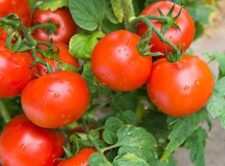
It’s February: Are you thinking about tomatoes…yet?

0
growth tomatoes

K-State horticulture expert gets you ready for planting this year’s crop

It’s still nearly three months before Kansas gardeners begin to put tomato plants into the ground. Kansas State University horticulture expert Cynthia Domenghini says that’s an opportunity for gardeners to set themselves up for a bountiful season.

“Most of the varieties available to home gardeners are indeterminate,” Domenghini said.

Indeterminate plants are traditional tomatoes that never stop growing. They are capable of producing fruit throughout the season unless disease stops production or frost kills the plant.

Domenghini said gardeners will benefit from choosing tomato varieties with strong disease resistance characteristics.

“Gardeners with limited space will likely prefer indeterminate or determinate types to stretch out the harvest season,” Domenghini said. “If there is space, you may want to grow a combination of all three, with the determinates used to produce a large harvest for canning or tomato juice, and the remainder for fresh eating.”

In Kansas, tomatoes are generally planted in early- to mid-May, or when daytime temperatures are above 70 degrees Fahrenheit and the state has passed the frost-free date. In some areas, such as the northwest part of the state, conditions might not be right for planting tomatoes until the middle of May or a bit later, according to Domenghini.

Even though indeterminate varieties produce fruit throughout the season, “our hot Kansas summers often cause a dry spell in production,” Domenghini said.

Tomatoes are less likely to set fruit when night temperatures remain above 75 F and day temperatures are above 95 F. Hot, dry winds make the situation worse, Domenghini said.

Tomato trials

Each year, Kansas Master Gardeners plant and rate a number of tomato varieties. Domenghini noted that a subsequent trial is conducted by a colleague with the University of Missouri extension service.

Results of trials conducted by Kansas’ Master Gardeners vary by county. Interested persons are encouraged to contact their local extension office for more information on varieties that perform well in their area.

Domenghini said the University of Missouri trials also give valuable information on varieties that perform well in this region. The data from Missouri’s extension service showed that the top 10 varieties (based on pounds of fruit harvested per plant) are:

  • Amish Paste.
  • Beefmaster.
  • Beefsteak.
  • Big Beef.
  • Celebrity.
  • Chef’s Choice.
  • Early Girl.
  • Florida 91.
  • Jet Star.
  • Summer Pick.

Domenghini and her colleagues in K-State’s Department of Horticulture and Natural Resources produce a weekly Horticulture Newsletter with tips for maintaining home landscapes and gardens. The newsletter is available to view online or can be delivered by email each week.

Interested persons can also send their garden and yard-related questions to Domenghini at [email protected], or contact your local K-State Research and Extension office.