Tuesday, February 17, 2026
Home Blog Page 509

As drought tightened cattle production, 2023 markets soared

0

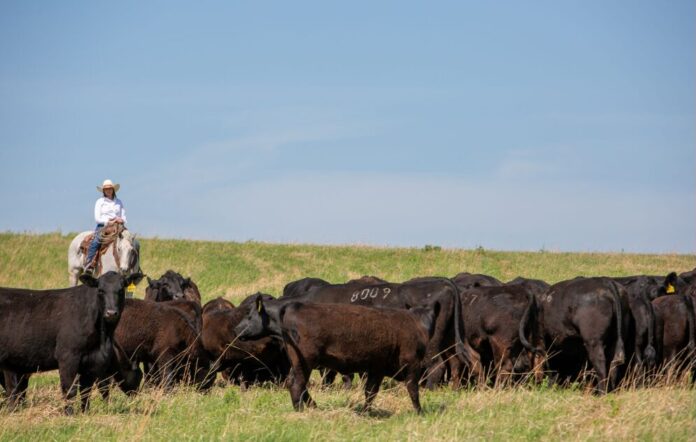
Cattle market prices are as high as they’ve been in a decade. That’s good news for producers who have been able to maintain their herds in recent years, but a missed opportunity for those who weren’t.

Throughout most of the year, both futures and cash markets for steers, calves and more marked a vast improvement over 2022. By the last week of November, prices for medium and large No. 1 steer calves weighing 500 to 600 pounds) were above $270 per hundredweight, more than $80 per hundredweight higher than the same time in 2022 and more than $100 higher than the average from 2017 to 2021.

James Mitchell, assistant professor and extension economist in the Department of Agricultural Economics and Agribusiness at the University of Arkansas System Division of Agriculture, said that the benefits of high prices largely fell to those with access to good grazing and forage.

“It was an exciting year in terms of markets for cattle,” Mitchell said. “Cattle prices leading up to the fall were as high as we’ve seen them in 10 years—that had lots of people excited about the future. On the production side, it was exciting depending on who you asked.”

A wide swath of droughty conditions has made its way down the middle of the United States over the last several years—affecting first the Northern Plains states such as Montana and Idaho in 2021-2022, then the Southern Plains of Kansas and Texas and finally the Southeast in 2023.

“About three-quarters of Arkansas was heavily affected,” Mitchell said. “The southeastern United States has been hit incredibly hard by drought. All of our neighbors to the east—Tennessee, Mississippi, Alabama, Georgia, Kentucky, Florida—are in a pretty tough spot, still very much in a drought. So for them, here’s not much they can do with these high prices, because they don’t have any grass or forage. There was nothing they could really do this winter, in terms of retaining calves.

“So you’ve got significant portions of cattle-producing states suffering through drought, forcing them to shrink or liquidate their herds because of a lack of forage,” he said. “When you have three consecutive years of that, you’re going to have a tightening of beef cow availability, which means you’ve got fewer calves being born each year. So you have tighter and tighter supplies, which of course leads to higher prices—assuming demand holds steady.”

In January, the U.S. Department of Agriculture reported that the total U.S. beef cattle inventory was at its lowest since 1962, declining more than 3% from the previous year to 28.9 million head. The inventory reported an entire cattle inventory of 89.3 million. Mitchell said he believes the forthcoming USDA Cattle Inventory report, expected in January 2024, will reflect a fourth consecutive year of contracting cattle supply in the United States.

Of course, there’s almost nothing that can’t price itself out of the market. At a certain point, Mitchell said, consumer resiliency will give way to more competitive pricing for—in this case—other animal proteins, such as poultry, pork and fish.

“People consume less of something when it gets more expensive—it’s just a law of economics,” he said. Mitchell said that rebuilding the country’s beef cattle inventory will be a multi-year process—one that can’t really even begin under the persistence of drought.

“Pastures are going to have to recover before we see any discussion of expanding cattle numbers,” he said. “Even if that does occur, it’s going to take a couple of years for that expansion to be noticed. We don’t have the cows; it’s going to take a year to develop heifers, another year for them to give us calves, and so on. So we’re looking at a few more years of declining cattle numbers.

“An important thing that’s different from 2014-2015, is that it’s going to be more expensive to buy back in and expand herds,” Mitchell said. “Interest rates are higher than they were 10 years ago. We expanded the herds very rapidly in 2014, we did that with low interest rates—so capital was inexpensive. That should lead to more careful calculation in terms of how we decide to expand herds.”

Bayer faces $2.2. billion verdict

0

A jury in the Pennsylvania court of Common Pleas ordered Bayer to pay $2.2 billion on Jan. 26. to a man who claimed his lymphoma resulted from use of Bayer’s Roundup herbicide.

John McKivision’s claimed his non-Hodgkins lymphoma came from using Roundup for yard work at his house over a period of several years. The verdict includes $250 million in compensatory damages and $2 billion in punitive damages.

Bayer plans to appeal the verdict, the latest in a string of losses after an earlier string of wins for the chemical company, and the biggest single verdict yet.

In a statement, Bayer said it disagreed “with the jury’s adverse verdict that conflicts with the overwhelming weight of scientific evidence and worldwide regulatory and scientific assessments, and [we] believe that we have strong arguments on appeal to get this verdict overturned and the unconstitutionally excessive damage award eliminated or reduced.”

Bayer said previous damage awards have been reduced by 90% or more.

Since Bayer paid $63 billion to acquire Monsanto in 2018, about 165,000 claims have been filed in the United States against the company for personal injuries allegedly caused by Roundup. They have all come from the lawn and garden side of the Roundup business; Bayer has already announced it is discontinuing glyphosate, the effective ingredient in Roundup, from its lawn and garden division, although it remains available to farmers.

In 2020, Bayer tried to consolidate all its outstanding Roundup cases. It settled most of them for about $9.6 billion but failed to get a settlement covering future cases. More than 50,000 claims remain pending.

Bayer’s legal troubles led its new American CEO to publicly say the company was considering separating out its crop protection business from its other units, but the company has since walked back that speculation, saying only that it is focusing on internal reorganization.

KU News: KU to stage ‘Sweeney Todd, ’ opening Feb. 16

0

From the Office of Public Affairs | http://www.news.ku.edu

Headlines

KU to stage ‘Sweeney Todd,’ opening Feb. 16

LAWRENCE — Before the Broadway national tour begins, a local production of “Sweeney Todd: The Demon Barber of Fleet Street, a Musical Thriller” will explore the psyche of the villain and bring Stephen Sondheim’s brilliant melodies to the community with the help of KU’s Opera and Symphony Orchestra. The show will open Feb. 16 at the University of Kansas. Kansas cast and crew members include students from Hays, Hutchinson, Lawrence, Newton, Olathe, Overland Park, Topeka and Wichita.


Study examines strategies to improve effect of parking time on last-mile deliveries

LAWRENCE — A newly published paper from a University of Kansas researcher explores solutions designed for urban and rural environments to help companies minimize the additional time that parking can add to delivery schedules. “With more people ordering online and e-commerce increasing, there will be more and more deliveries that need to be made. That’s going to further exacerbate this challenge of parking,” said author Sara Reed, assistant professor of business analytics, whose work appears in Transportation Research Part E: Logistics and Transportation Review.


University announces winner, finalists for Courtwright Award for Undergraduate Research Excellence

LAWRENCE – Logan Edmondson, a senior in behavioral neuroscience from Fairway, is the recipient of the Courtwright Award for Undergraduate Research Excellence through KU’s Center for Undergraduate Research. Finalists for the award are from Lawrence, Liberal and from Kansas City, Missouri.


KU Law graduate wins national writing prize

LAWRENCE – A recent graduate of the University of Kansas School of Law has won second place in a national writing competition for her paper on cryptocurrency regulations in international trade. Allie O’Neill, originally from Reston, Virginia, finished second in the 23rd annual Andrew P. Vance Memorial Writing Competition, which encourages students to explore current issues relevant to customs and international trade law.


Full stories below.


————————————————————————


Contact: Lisa Coble-Krings, Department of Theatre & Dance, 785-864-5685, [email protected], @KUTheatre

KU to stage ‘Sweeney Todd,’ opening Feb. 16


LAWRENCE — Before the Broadway national tour begins, a local production of “Sweeney Todd: The Demon Barber of Fleet Street, a Musical Thriller” will explore the psyche of the villain and bring Stephen Sondheim’s brilliant melodies to the community with the help of KU’s Opera and Symphony Orchestra.


“Sweeney Todd” is a co-production of the University of Kansas Department of Theatre & Dance and School of Music. It is directed by Stella Markou, associate professor of voice & opera in the School of Music.


“It has been an extraordinary experience working with KU’s talented students, design, music and management teams as we have created an alternate dream world between horror and reality. Sondheim’s brilliant orchestration and sardonic use of text is a perfect foundation that catapults my vision of exploring even a darker side of humanity and its cruel injustices,” Markou said. “Although our anti-hero Sweeney is transfixed in a questionable journey of redemption through revenge, I promise our audiences a unique and unforgettable rendering of this Tony-winning and national touring production.”


Following an unjust exile, Sweeney Todd, a social outcast obsessed with revenge, returns to London in search of his family. Soon his barbershop becomes a front for murder, with help from his creative accomplice, Mrs. Lovett.


Performances are in the Crafton-Preyer Theatre at Murphy Hall. “Sweeney Todd” will be staged at 7:30 p.m. Feb. 16, 20 and 21 and at 2:30 p.m. Feb. 18. Tickets are available for purchase on the KU Theatre production website, by calling 785-864-3982 or in person from noon to 5 p.m. weekdays at the box office in Murphy Hall.


A talk with Paul Laird, a KU professor of musicology who has published extensively on the topic of musical theatre, will begin 45 minutes before each performance in the Crafton-Preyer Theatre.


The Friends of Theatre & Dance are hosting a pre-show reception and inviting all KU staff members at 6 p.m. Feb. 16 in the Design Gallery hallway at Murphy Hall. Staff members interested in mixing and mingling prior to the show should RSVP by email to Jack Rischer by Feb. 7.


The creative team

Markou, who is also the coordinator of voice at KU, is a nationally recognized director of opera and musical theatre. She also is on faculty for the Festival of International Opera. Her directing and productions have garnered top recognitions. “The Clever Artifice of Harriet and Margaret” (2021) and “The Pirates of Penzance” (2019) won first place in the NOA’s opera competition, and her production of “The Medium” (2021) won first prize in The American Prize competition. Learn more about Markou.


The show’s maestro is Creston Herron, who serves as the director of orchestral activities for KU and serves on the faculty of the Interlochen Arts Camp as the coordinator of orchestras. Herron has enjoyed national recognition as a conductor and educator with ensembles earning numerous national titles under his direction. Learn more about Herron.


Joining them on the creative team are theatre & dance department faculty members Dennis Christilles, scenic designer; Ann Sitzman, lighting designer; and Jenna Link, stage manager. Knox McClendon, a senior in theatre design from Topeka, is the costume designer.


Reed Schenkel, recent alumnus of the School of Music, will perform as Sweeney Todd.


Kansas and Kansas City area cast members (complete cast list online):

Grace Steiner, second-year doctoral student in voice from Hays, as Mrs. Lovett; Colin Bradt, senior in theatre & voice from Lawrence, as Anthony Hope; Eli Panek, master’s student in music from Kansas City, Missouri, as Judge Turpin; Zach Newkirk, freshman in journalism from Overland Park, as Beadle Bamford; and Brandon Heflin, sophomore in microbiology and pre-medicine from Olathe, as Tobias Ragg. Ensemble members: Parker Bennett, sophomore in theatre & voice from Kansas City, Missouri; Seth Bruey, sophomore in theatre performance from Newton; Callee Harris, junior in psychology and social welfare from Hutchinson; Cooper Holmes, sophomore in theatre performance from Overland Park; Samuel Leopold, freshman in voice from Wichita; Caden Moffitt, freshman in journalism from Overland Park; Canton Schenk, sophomore in theatre from Topeka; Natalie Sledd, junior in voice from Kansas City, Missouri; Dymphna Watkins, sophomore in music composition from Overland Park; Elizabeth Wellman, sophomore in dance from Lawrence; and Ella Widen, sophomore in voice and speech, language & hearing from Topeka.


-30-

————————————————————————

The official university Twitter account has changed to @UnivOfKansas.

Refollow @KUNews for KU News Service stories, discoveries and experts.

————————————————————————


Contact: Jon Niccum, KU News Service, 785-864-7633, [email protected]

Study examines strategies to improve effect of parking time on last-mile deliveries


LAWRENCE — Parking is often a hassle. But what if your job relies on it, as it does for any number of delivery-based occupations?


“With more people ordering online and e-commerce increasing, there will be more and more deliveries that need to be made. That’s going to further exacerbate this challenge of parking,” said Sara Reed, assistant professor of business analytics at the University of Kansas.


Her paper “Does parking matter? The impact of parking time on last-mile delivery optimization” analyzes strategies that could improve routing such activities. The results show how in urban environments, where customers are close together, short parking windows affect optimal routing decisions, modeled by CDPP (Capacitated Delivery Problem with Parking.) However, in rural environments where parking is more readily available, a parking solution that serves each customer individually may be sufficient.


It appears in Transportation Research Part E: Logistics and Transportation Review.


Reed, who co-wrote the paper with Ann Melissa Campbell and Barrett Thomas of the University of Iowa, said that delivery jobs entail a dynamic combination of walking and driving.


“Our research is thinking about this from a tactical perspective of how parking time should be factored in when doing the routing,” she said. “And if we do include parking time, how does that change delivery routes? Companies should be interested because if they’re not including it, are they really representing what their drivers are doing? Are they estimating the delivery times correctly?”


By modeling this problem on a grid, which is usually representative of an urban environment, Reed showed that searching for parking only has to be 1.6 minutes to affect the structure of the optimal solution.


“That’s not much time,” she said. “A recent study in Seattle finds that drivers typically spend 5.8 minutes – and that is a whole lot more than one minute.”


This accounts for 28% of the total trip between parking locations being consumed by parking, according to the researchers. Even if delivery drivers practice illegal methods (double parking, stopping in restricted areas), parking still takes time due to safety concerns, avoiding conflict with traffic and cooperating with other drivers.


“A lot of people assume delivery drivers double park. But in recent years, some companies require the driver to pay the fine, which disincentivizes them from doing that. In particular with crowdsourced deliveries, the company doesn’t always pay for it,” Reed said.


The crucial component of “where” the delivery takes place factors into how this information can be processed.


“The paper itself looks at the challenge of parking on the urban to rural continuum,” she said.


“In urban areas, we expect customers to be dense, whereas in rural areas, customers are farther apart. Parking challenges are also different. We expect it to be difficult to find parking in urban areas. Rural areas, not so much. What we show is in rural areas, driving to every customer is the best way to route the vehicle. But along that continuum, where does parking time make an impact? For an urban environment, it only has to be 1.6 minutes.”


Reed’s previous paper, “Impact of Autonomous Vehicle Assisted Last-Mile Delivery in Urban to Rural Settings,” determined that this technology reduces the completion time of delivery tours and provides the most cost-effective business model.


Working on that piece inspired her latest publication.


“It became very clear that not a lot of people were thinking about parking in traditional delivery practices,” she said. “What sparked my interest is that this is a way to improve things right now. If the company has a sense of how difficult it is to find parking in an area, including parking time in routing can improve operations today versus relying on some sort of ‘futuristic technology.’”


As for Reed’s own future endeavors, this new paper represents a key component of her ongoing research agenda involving last-mile delivery.


“Another line of my work considers how drivers could utilize real-time information on parking availability from sensors.


There’s been some studies and pilot programs that have implemented this in cities. With better technology, parking enforcement will accompany that, and parking will continue to be an operational challenge for companies,” said Reed, who is now in her third year at KU while specializing in transportation logistics.


Ultimately, she said she believed insights into how parking affects last-mile delivery is not only important from a business perspective but from an urban planning one as well.


She said, “We want to account for what can be done to make parking better for companies and better for society.”


-30-

————————————————————————

Subscribe to KU Today, the campus newsletter,

for additional news about the University of Kansas.


http://www.news.ku.edu

————————————————————————


Contact: Erin Wolfram, Academic Success, 785-864-2308, [email protected]

University announces winner, finalists for Courtwright Award for Undergraduate Research Excellence


LAWRENCE – A University of Kansas student who is researching the effects of lay eschatological messaging on temporal horizons is the recipient of the Courtwright Award for Undergraduate Research Excellence through KU’s Center for Undergraduate Research.


Logan Edmondson is a senior in behavioral neuroscience from Fairway. He is mentored by Mark Landau, professor of psychology.


“Misinformation is a growing threat in online discourse, especially discourse surrounding climate change,” Edmondson said. “My project examines the motivational consequences of exposure to sensationalized messaging about this issue. The long-term goal of this research is to influence how existential issues are presented by the media and inform policy related to the spread of misinformation.”


A poster titled “The Effects of End-Times Discourse on Temporal Horizons” about his research will be presented at the Society for Personality and Social Psychology’s 2024 annual conference.


The Courtwright Award for Undergraduate Research Excellence was established at KU Endowment in 2020 through the contributions of David (class of 1974) and Chris Courtwright (class of 1983). The Courtwright Award seeks to recognize undergraduate students with majors in the College of Liberal Arts & Sciences whose research and creative work stand to make meaningful contributions to their fields of study.


Courtwright Award finalists are selected from applications for the Undergraduate Research Awards each semester. This is the sixth iteration of this award.


Summer/fall 2023 finalists:

Jenna Bellemere, a senior in anthropology and women, gender & sexuality studies from Lawrence, “Becoming, Teleology, and the Transition Narrative,” mentored by Marta Vicente, professor of history.
Brandon Nguyen, a junior in chemistry with a minor in mathematics from Liberal, “Reactivity of Manganese(III)-Hydroxo Complexes with Acidic Phenols,” mentored by Timothy Jackson, professor of chemistry.
Allyson Scribner, a senior in psychology with minors in applied behavioral science and visual art from Kansas City, Missouri, “Little Free Art Mart,” mentored by Francisca Maria Velasco, professor of visual art.

-30-

————————————————————————

Don’t miss new episodes of “When Experts Attack!,”

a KU News Service podcast hosted by Kansas Public Radio.


https://kansaspublicradio.org/when-experts-attack

————————————————————————


Contact: Emma Herrman, School of Law, [email protected], @kulawschool

KU Law graduate wins national writing prize


LAWRENCE – A recent graduate of the University of Kansas School of Law has won second place in a national writing competition for her paper on cryptocurrency regulations in international trade.


Allie O’Neill, class of 2023, finished second in the 23rd annual Andrew P. Vance Memorial Writing Competition, which encourages students to explore current issues relevant to customs and international trade law. The competition, sponsored by the Customs and International Trade Bar Association (CITBA) and the University of Miami School of Law, was open to students enrolled in a juris doctor or master of laws program at any U.S. law school during the 2022-23 school year.


O’Neill’s paper explores digitizing the international trade and finance industry by utilizing the technology enabling cryptocurrency and blockchain, the implications of lack of regulation as financial technology (fintech) matures and a proposal for multilateral regulation in the global sphere as the underlying technology continues to evolve from white paper states to futuristic quantum. This field has interested O’Neill since her undergraduate days studying both economics and finance.


“My interest in emerging tech began when I was studying abroad in Dublin,” O’Neill said. “I was exposed to the concept of environmental sustainability and governance, which introduced me to sustainability concepts and frameworks. There are so many implications when it comes to the underlying technology in fintech and what it touches from intellectual property to copyright infringement to trade, criminal law and more.”


O’Neill is the fifth KU Law student in 16 years to take first or second place in this national competition. She received a $500 prize from the CITBA.


“The award is very validating because I didn’t expect anything from it,” O’Neill said. “It makes me want to write another paper because technology is constantly developing. Anything you write after three months is outdated.”


Originally from Reston, Virginia, O’Neill attended KU for both her undergraduate and law degrees. After her graduation from KU Law in May 2023 and her bar passage, O’Neill moved to Texas to serve as an associate at the regional corporate headquarters of JP Morgan Chase & Co, where she focuses on artificial intelligence and emerging tech, learning operational risk, strategy and governance.


“I want to stay in this space as long as I can,” O’Neill said. “JP Morgan is a bank, but it’s also a tech company. I have the unique opportunity to experience an interconnection between business, tech and law. It’s very niche.”


Past KU Law winners of the Andrew P. Vance Memorial Writing Competition:

2018: Elliot Brewer, class of 2019, second place
2016: Cody Wood, class of 2017, first place
2007: Justin Waggoner, class of 2008, first place
2007: Owen Grieb, class of 2008, second place.

-30-

————————————————————————


KU News Service

1450 Jayhawk Blvd.

Lawrence KS 66045

Phone: 785-864-3256

Fax: 785-864-3339

[email protected]

http://www.news.ku.edu


Erinn Barcomb-Peterson, director of news and media relations, [email protected]


Today’s News is a free service from the Office of Public Affairs

KU News: KU, Kansas State faculty receive Higuchi-KU Endowment research achievement awards

0


From the Office of Public Affairs | http://www.news.ku.edu

Headlines

KU, Kansas State faculty receive Higuchi-KU Endowment research achievement awards

LAWRENCE — Four faculty members at two Kansas universities were named recipients of the Higuchi-KU Endowment Research Achievement Awards, the state higher education system’s most prestigious recognition for scholarly excellence. The annual awards are given in four categories of scholarly and creative achievement.


Dole Institute announces early spring programming
LAWRENCE — The Robert J. Dole Institute of Politics at the University of Kansas has announced the the first half of its spring 2024 programming lineup, featuring a series on world leaders in wartime; the return of visiting fellows from the Bipartisan Policy Center in Washington, D.C.; the annual A Conversation on Race program; a student-led program on the 2023 Kansas Speaks opinion survey; and the annual Easter Egg Roll.


Neptune-like exoplanets can be cloudy or clear — new findings suggest the reason why
LAWRENCE — Jonathan Brande, a doctoral candidate in the ExoLab at the University of Kansas, has just published findings in the open-access scientific journal The Astrophysical Journal Letters showing new atmospheric detail in a set of 15 exoplanets similar to Neptune. While none could support humanity, a better understanding of their behavior might help us to understand why we don’t have a small Neptune, while most solar systems seem to feature a planet of this class.


Full stories below.


————————————————————————


Contact: Vince Munoz, 785-864-2254, [email protected]

KU, Kansas State faculty receive Higuchi-KU Endowment research achievement awards
LAWRENCE — Four faculty members at two Kansas universities were named recipients of the Higuchi-KU Endowment Research Achievement Awards, the state higher education system’s most prestigious recognition for scholarly excellence.


The annual awards are given in four categories of scholarly and creative achievement. This year’s honorees:


John Colombo, professor of psychology and director, Life Span Institute, recipient of the Balfour Jeffrey Award in Humanities & Social Sciences.
Wen-Xing Ding, William Warner Ambercrombie Professor of Pharmacology, Toxicology & Therapeutics, KU Medical Center, recipient of the Olin Petefish Award in Basic Sciences.
Jie Han, Roy A. Roberts Distinguished Professor of Geotechnical Engineering, KU, recipient of the Irvin Youngberg Award in Applied Sciences.
David Poole, University Distinguished Professor of Kinesiology (College of Health & Human Sciences) and Physiology (College of Veterinary Medicine), Kansas State University, and director, Cardiorespiratory Exercise Lab, recipient of the Dolph Simons Award in Biomedical Sciences.

The four will be recognized at a ceremony this spring along with recipients of other major KU research awards.


This is the 42nd annual presentation of the Higuchi awards, established in 1981 by Takeru Higuchi, a distinguished professor at the University of Kansas from 1967 to 1983, his wife, Aya, and the KU Endowment Association. The awards recognize exceptional long-term research accomplishments by faculty at Kansas Board of Regents universities. Each honoree receives $10,000 for their ongoing research.


The awards are named for former leaders of KU Endowment who helped recruit Higuchi to KU.


Balfour Jeffrey Award in Humanities & Social Sciences

John Colombo

John Colombo is a professor of psychology and director of the Life Span Institute. His work involves the relationship between early neurocognitive development and developmental outcomes later in childhood and the environmental factors that shape neurocognition early in life.


Colombo’s research has reshaped the field of infant psychological assessment. Early in his career, Colombo developed methods for using behavioral and anatomic measures of visual attention in infants that are now used in nearly 75% of work in the field. He also observed that performance on these tasks were associated with cognitive function in early childhood.


For the past 25 years, Colombo has collaborated with colleagues at KU Medical Center to improve lives around the world. His work with Susan Carlson, AJ Rice Professor of Nutrition, demonstrated that key nutrients such as essential fatty acids, prebiotics and zinc improve infant neurodevelopment. This led to changes in infant formula in the early 2000s that continue to benefit millions of people.


Colombo has held multiple leadership positions at KU, including as former interim vice chancellor for research and interim dean of the College of Liberal Arts & Sciences. He earned his bachelor’s degree and doctorate from State University of New York at Buffalo.


Olin Petefish Award in Basic Sciences

Wen-Xing Ding

Wen-Xing Ding is the William Warner Ambercrombie Professor of Pharmacology, Toxicology & Therapeutics at KU Medical Center. He is also a KU Cancer Center member and holds an adjunct professor position at Internal Medicine of KUMC. He studies the role of mitochondria in cell death and organ injury.


Despite its notoriety as the powerhouse of the cell, mitochondria have not always been easy to study, but Ding’s research changed that. Among his discoveries is developing a tool for better quantifying mitochondrial turnover and newly made mitochondria. This technique helps researchers in neurology, pharmacology and hepatology.


Alcohol-associated liver disease (ALD) has become a major financial burden and a leading cause of liver transplantation worldwide. Owing to the COVID-19 pandemic that led to further increased alcohol consumption, ALD-related liver transplantation and mortality are more significant. Ding found that regular alcohol consumption leads to the production of large-sized mitochondria called megamitochondria. These are more challenging for the body to remove through autophagy, its natural waste management system for clearing dead cells, resulting in liver disease. Ding’s research could lead to better liver disease treatment through boosting autophagy with medications.


Ding received his bachelor’s and master’s degrees from Shanghai Medical University, completed graduate medical education at the National University of Singapore and a postdoctoral research fellowship at the University of Pittsburgh.


Irvin Youngberg Award in Applied Sciences

Jie Han

Jie Han is the Roy A. Roberts Distinguished Professor of Geotechnical Engineering in KU’s Department of Civil, Environmental & Architectural Engineering. His research has been applied in Kansas infrastructure to make roads, bridges and pipelines more enduring.


When roads, bridges and pipelines are constructed, engineers need to consider how soil and rock can support them safely and sustainably. One of Han’s many discoveries involves geosynthetics, manufactured polymers added to soils to improve strength and stiffness for infrastructure foundations. Methods that Han developed have been added to multiple professional and regulatory guidelines, such as the Federal Highway Administration’s geosynthetic design and construction manual and the American Association of State Highway & Transportation Officials’ bridge design specification.


To accommodate changes to where people live, more and more infrastructure is being built on soft soil. Han developed analytical models to assess the reliability of column-supported embankments in these soils. Several papers published from this work have been awarded by international associations and conferences between 2014 and 2022.


Han earned a bachelor’s degree in geotechnical engineering from Tongji University and a doctorate in civil engineering from Georgia Institute of Technology.


Dolph Simons Award in Biomedical Sciences

David Poole

David Poole is a University Distinguished Professor of Kinesiology & Physiology and director of the Cardiorespiratory Exercise Lab at Kansas State University. He holds the Coffman Chair for Distinguished University Teaching Scholars and the Elizabeth Chapin Burke Chair for Health and Human Sciences and is a world-renowned expert on how the body transports and uses oxygen during exercise.


Poole is one of the most internationally recognized scholars in his field both numerically and qualitatively. A ranking published by Stanford University included him in the top 2% of most-cited researchers worldwide across all disciplines. Another analysis named him the fourth most-published researcher on oxygen from 2013 to 2023. Poole’s work on capillary recruitment during exercise challenges the Nobel-prize winning findings of August Krogh from the early 20th century. His contemporary microcirculation model identifies novel therapeutic targets for treating cardiovascular and metabolic diseases


Poole’s work on gas exchange bridges the gap from the microscopic to the body in motion. His work has diverse applications from reducing lung damage in racing horses to improving anesthesia protocols in elephants and understanding, the determinants of fatigue and exercise intolerance in elite athletes and patient populations. From bench-top science to bedside Poole’s work identifying the limitations to oxygen movement has helped heart disease treatment and patient quality of life.


Poole earned a bachelor’s degree in applied physiology/exercise science from Liverpool Polytechnic, a doctorate in kinesiology from the University of California, Los Angeles, and a doctorate in physiology from John Moores University.

-30-

————————————————————————

The official university Twitter account has changed to @UnivOfKansas.

Refollow @KUNews for KU News Service stories, discoveries and experts.


————————————————————————


Contact: Maria Fisher, 785-864-4900, [email protected]

Dole Institute announces early spring programming
LAWRENCE — The Robert J. Dole Institute of Politics at the University of Kansas has announced the the first half of its spring 2024 programming lineup, featuring a series on world leaders in wartime; the return of visiting fellows from the Bipartisan Policy Center in Washington, D.C.; the annual A Conversation on Race program; a student-led program on the 2023 Kansas Speaks opinion survey; and the annual Easter Egg Roll.


Fort Leavenworth Series

This semester’s programs begin at 3 p.m. Feb. 7 with the first installment of the Fort Leavenworth Series. The Dole Institute will continue its partnership with the Command and General Staff College’s Department of Military History at Fort Leavenworth to host the Fort Leavenworth Series throughout the year. The series provides free historical lectures to the public facilitated by world-class military history professors.


The 2024 series theme is “World Leaders in Wartime” and will explore influential wartime leaders from medieval times to the present, detailing their achievements and military service. Lectures are scheduled at 3 p.m. for the first Wednesday of each month.


Feb. 7: “George Marshall” with Bill Nance

March 6: “Winfield Scott and Joint Warfare in 1847-1848” with Lt. Colonel Nathan Jennings

April 3: “King Henry II, King of England” with John Hosler

May 1: “William McKinley” with Amanda Nagel

June 5: “Chiang Kai-Shek & Mao Zedong” with Geoff Babb

Aug: 7: “George Washington & the Whiskey Rebellion” with Shawn Faulkner

Sept. 4: “Winston Churchill” with Dave Cotter

Oct. 2: “Augustus the Strong: Elector of Saxony” with Ethan Rafuse

Nov. 6: “Abraham Lincoln” with Harry Laver

Dec. 4: “Vladimir Putin” with Sean Kalic.


Spring programs

At 10 a.m. Feb. 8, the Dole Institute will present “Grappling with the Nation’s Pressing Fiscal Challenges” in partnership with the Bipartisan Policy Center (BPC). This program features visiting fellows from the BPC, Rachel Snyderman, director of economic policy, and Emily Wielk, economic policy analyst. Snyderman and Wielk will break down what’s at stake and why fiscal policy will remain front and center in the coming years.


The institute’s annual A Conversation on Race program, moderated by Barbara Ballard, senior associate director, will take place in late February. Guest speakers include Shawn Alexander, professor and chair of KU’s Department of African & African-American Studies, and Deborah Dandridge, associate librarian, field archivist and curator of African American Experience Collections for the Spencer Research Library.


This spring’s Student Advisory Board Program, “Kansas Speaks: The Crossroads of Policy and Public Opinion,” will feature guests Kansas Speaks Policy Fellow Alexandra Middlewood as well as state Reps. Christina Haswood and Nick Hoheisel, two legislative members of the Kansas Future Caucus.


The program at 7 p.m. March 25 will include a discussion on insights from the 2023 Kansas Speaks public opinion survey, which is produced by the Docking Institute of Public Affairs at Fort Hays State University. The survey addresses issues such as marijuana legalization, Medicaid expansion, abortion rights, climate change and more. This event will explore crucial topics affecting young people and the wider community in Kansas, combining data-driven insights from the survey with real-world experiences and legislative perspectives. This program is presented by the Dole Institute Student Advisory Board (SAB) and moderated by SAB Coordinator Allie Haggar.


Easter Egg Roll with Dole

Finally, save the date for the Lawrence family-favorite tradition of the Easter Egg Roll with Dole from 10 a.m. to 1 p.m. March 30. The event will feature an egg rolling race, inspired by the White House Easter Egg Roll, egg hunt, bunny corral, live music, story time, crafts and more.


“Our early spring programming slate features timely conversations about leadership and policy development,” said Audrey Coleman, Dole Institute director. “The Dole Institute is proud to work with the Command General Staff College at Fort Leavenworth, the D.C.-based Bipartisan Policy Center, Kansas legislators and many others for engaging discussions representing a variety of viewpoints.”


Detailed information on programs can be found at doleinstitute.org. All programs will take place in-person at the Dole Institute and be live-streamed on the institute’s website and YouTube channel. Additional spring programing will be announced in the coming weeks.


-30-

————————————————————————

Subscribe to KU Today, the campus newsletter,

for additional news about the University of Kansas.


http://www.news.ku.edu

————————————————————————


Contact: Brendan Lynch, 785-864-8855, [email protected]

Neptune-like exoplanets can be cloudy or clear — new findings suggest the reason why
LAWRENCE — The study of “exoplanets,” the sci-fi-sounding name for all planets in the cosmos beyond our own solar system, is a pretty new field. Mainly, exoplanet researchers like those in the ExoLab at the University of Kansas use data from space-borne telescopes such as the Hubble Space Telescope and Webb Space Telescope. Whenever news headlines offer findings of “Earth-like” planets or planets with the potential to support humanity, they’re talking about exoplanets within our own Milky Way.


Jonathan Brande, a doctoral candidate in the ExoLab at the University of Kansas, has just published findings in the open-access scientific journal The Astrophysical Journal Letters showing new atmospheric detail in a set of 15 exoplanets similar to Neptune. While none could support humanity, a better understanding of their behavior might help us to understand why we don’t have a small Neptune, while most solar systems seem to feature a planet of this class.


“Over the past several years at KU, my focus has been studying the atmospheres of exoplanets through a technique known as transmission spectroscopy,” Brande said. “When a planet transits, meaning it moves between our line of sight and the star it orbits, light from the star passes through the planet’s atmosphere, getting absorbed by the various gases present. By capturing a spectrum of the star — passing the light through an instrument called a spectrograph, akin to passing it through a prism — we observe a rainbow, measuring the brightness of different constituent colors. Varied areas of brightness or dimness in the spectrum reveal the gases absorbing light in the planet’s atmosphere.”


With this methodology, several years ago Brande published a paper concerning the “warm Neptune” exoplanet TOI-674 b, where he presented observations indicating the presence of water vapor in its atmosphere. These observations were part of a broader program led by Brande’s adviser, Ian Crossfield, associate professor of physics & astronomy at KU, to observe atmospheres of Neptune-sized exoplanets.


“We want to comprehend the behaviors of these planets, given that those slightly larger than Earth and smaller than Neptune are the most common in the galaxy,” Brande said.


This recent ApJL paper summarizes observations from that program, incorporating data from additional observations to address why some planets appear cloudy while others are clear.


“The goal is to explore the physical explanations behind the distinct appearances of these planets,” Brande said.


Brande and his co-authors took special note of regions where exoplanets tend to form clouds or hazes high up in their atmosphere. When such atmospheric aerosols are present, the KU researcher said hazes can block the light filtering through the atmosphere.


“If a planet has a cloud right above the surface with hundreds of kilometers of clear air above it, starlight can easily pass through the clear air and be absorbed only by the specific gases in that part of the atmosphere,” Brande said. “However, if the cloud is positioned very high, clouds are generally opaque across the electromagnetic spectrum. While hazes have spectral features, for our work, where we focus on a relatively narrow range with Hubble, they also produce mostly flat spectra.”


According to Brande, when these aerosols are present high in the atmosphere, there’s no clear path for light to filter through.


“With Hubble, the single gas we’re most sensitive to is water vapor,” he said. “If we observe water vapor in a planet’s atmosphere, that’s a good indication that there are no clouds high enough to block its absorption. Conversely, if water vapor is not observed and only a flat spectrum is seen, despite knowing that the planet should have an extended atmosphere, it suggests the likely presence of clouds or hazes at higher altitudes.”


Brande led the work of an international team of astronomers on the paper, including Crossfield at KU and collaborators from the Max Planck Institute in Heidelberg, Germany, a cohort led by Laura Kreidberg, and investigators at the University of Texas, Austin, led by Caroline Morley.


Brande and his co-authors approached their analysis differently than previous efforts by focusing on determining the physical parameters of the small-Neptune atmospheres. In contrast, previous analyses often involved fitting a single model spectrum to observations.


“Typically, researchers would take an atmospheric model with pre-computed water content, scale and shift it to match observed planets in their sample,” Brande said. “This approach indicates whether the spectrum is clear or cloudy but provides no information about the amount of water vapor or the location of clouds in the atmosphere.”


Instead, Brande employed a technique known as “atmospheric retrieval.”


“This involved modeling the atmosphere across various planet parameters such as water vapor quantity and cloud location, iterating through hundreds and thousands of simulations to find the best fit configuration,” he said. “Our retrievals gave us a best-fit model spectrum for each planet, from which we calculated how cloudy or clear the planet appeared to be. Then, we compared those measured clarities to a separate suite of models by Caroline Morley, which let us see that our results are in line with expectations for similar planets. In examining cloud and haze behavior, our models indicated that clouds were a better fit than hazes. The sedimentation efficiency parameter, reflecting cloud compactness, suggested observed planets had relatively low sedimentation efficiencies, resulting in fluffy clouds. These clouds, made up of particles like water droplets, remained lofted in the atmosphere due to their low settling tendency.”


Brande’s findings provide insights into the behavior of these planetary atmospheres and caused “substantial interest” when he presented them at a recent meeting of the American Astronomical Society.


Other findings

Moreover, Brande is part of an international observation program, led by Crossfield, that just announced findings of water vapor on GJ 9827d — a planet as hot as Venus 97 light-years from Earth in the constellation Pisces.


The observations, made with the Hubble Space Telescope, show the planet may be just one example of water-rich planets in the Milky Way. They were announced by a team led by Pierre-Alexis Roy of the Trottier Institute for Research on Exoplanets at Université de Montréal.


“We were searching for water vapor on the atmospheres of sub-Neptune-type planets,” Brande said. “Pierre-Alexis’ paper is the latest from that main effort because it took approximately 10 or 11 orbits or transits of the planet to make the water-vapor detection. Pierre-Alexis’ spectrum made it into our paper as one of our trend-data points, and we included all the planets from their proposal and others studied in the literature, making our results stronger. We were in close communication with them during the process of both papers to ensure we were using the proper updated results and accurately reflecting their findings.”


-30-


————————————————————————


KU News Service

1450 Jayhawk Blvd.

Lawrence KS 66045

Phone: 785-864-3256

Fax: 785-864-3339

[email protected]

http://www.news.ku.edu


Erinn Barcomb-Peterson, director of news and media relations, [email protected]


Today’s News is a free service from the Office of Public Affairs
KU News: Hall Center for the Humanities announces speaker lineup for spring 2024

0

From the Office of Public Affairs | http://www.news.ku.edu

Headlines

Hall Center for the Humanities announces speaker lineup for spring 2024

LAWRENCE – The Hall Center for the Humanities has released its featured speaking events for the spring 2024. Programming begins with a talk by University of Kansas alumnus Michael Holtz, a freelance journalist whose talk Feb. 6 will explore the controversies of expanding wind energy in Kansas and his work to report about it.


Award-winning author Ellen Oh to visit Lawrence for LitFest

LAWRENCE – The University of Kansas Center for East Asian Studies (CEAS) and School of Education & Human Sciences will host author and activist Ellen Oh at the annual CEAS Literature Festival (LitFest) this month for events of interest to educators and public. Oh is the author of “Finding Junie Kim” and a founding member of the nonprofit We Need Diverse Books. She will give a public talk at 6 p.m. Feb. 8 at the Carnegie Building in downtown Lawrence.


Full stories below.


————————————————————————


Contact: Dan Oetting, Hall Center for the Humanities, [email protected], @KUHallCenter

Hall Center for the Humanities announces speaker lineup for spring 2024


LAWRENCE — The Hall Center for the Humanities has released its featured speaking events for the spring.


“These speakers broaden our intellectual horizons and enrich our lives,” said Giselle Anatol, interim director of the Hall Center for the Humanities. “Offering these programs allows the Hall Center to engage curious minds, providing rewarding opportunities to learn about and support the humanities.”


Michael Holtz, a KU alumnus who is now a freelance journalist, is the first speaker in the series. His talk Feb. 6 explores the controversies of expanding wind energy in Kansas and his work to report about it. Holtz is the Simons Public Humanities Fellow at the Hall Center this year. These fellows are individuals “of experience and accomplishment from outside the university” who conduct research while in residence.


Currently based in Topeka, Holtz reports on human rights, the environment and rural communities. His work has most recently appeared in The Atlantic and The New Yorker.


All of the Hall Center events listed below are free and open to the public.


Upcoming featured speakers

Michael Holtz: “Winds of Change: Rural Kansas and the Clean-Energy Transition”

7 p.m. Feb. 6

Hall Center Conference Hall (also available online via Crowdcast)


Lewis Gordon: “From Kitchens and Pubs to the World: Philosophy for Humanity Today and Beyond”

7 p.m. Feb. 22

Hall Center Conference Hall (also available online via Crowdcast)


Gordon, a philosopher, will address the importance of everyday philosophy and how, as we face the challenges to humanity in the 21st century, it allows us to live lives committed to equality, justice and freedom.


Meet KU Authors: Beth Bailey — “An Army Afire: How the U.S. Army Confronted Its Racial Crisis in the Vietnam Era”

6:30 p.m. Feb. 26

Lawrence Public Library, 707 Vermont St.


Bailey, a historian, traces a frustrating yet fascinating story: how the U.S. Army — a massive, conservative institution — creatively came to terms with demands for change during a racial crisis among its troops during the Vietnam War. This talk is part of Meet KU’s Authors, an ongoing partnership with the Lawrence Public Library, providing audiences an opportunity to hear researchers associated with KU discuss their work.


Humanities Book Club: Ada Ferrer — “Cuba: An American History”

4 p.m. Feb. 29

Hall Center Conference Hall


A Pulitzer Prize-winning historian, Ferrer will explore the history of Cuba and its deeply intertwined relations with the United States in conversation with an interdisciplinary panel of KU faculty.


KU Common Book Speaker: N.K. Jemisin — “An Evening with N.K. Jemisin”

7:30 p.m. April 25

Online presentation via Crowdcast


Science fiction author Jemisin, three-time Hugo Award winner, will discuss her work and the significance of KU’s 2023-2024 Common Book, Octavia Butler’s “Parable of the Sower.” In addition to the Hall Center, the Common Book Program is sponsored by KU Libraries and the Division of Academic Success. This year’s sponsors also include the Spencer Museum of Art, History of Black Writing, Department of English and Gunn Center for the Study of Science Fiction.


For further information about these talks and other Hall Center programming, subscribe to Hall Center social media channels and visit the Hall Center website.


-30-

————————————————————————

Don’t miss new episodes of “When Experts Attack!,”

a KU News Service podcast hosted by Kansas Public Radio.


https://kansaspublicradio.org/when-experts-attack

————————————————————————


Contact: Mego Londeen, Center for East Asian Studies, [email protected]

Award-winning author Ellen Oh to visit Lawrence for LitFest


LAWRENCE – The University of Kansas Center for East Asian Studies (CEAS) and School of Education & Human Sciences will host author and activist Ellen Oh at the annual CEAS Literature Festival (LitFest) this month for events of interest to educators and public.


Oh is a former adjunct college instructor and lawyer with a curiosity for ancient Asian history. She won awards for several of her novels, including “Finding Junie Kim,” which is the featured book for LitFest. Oh is also a founding member of We Need Diverse Books, a nonprofit dedicated to increasing diversity in children’s literature.


The CEAS LitFest is an opportunity to promote East Asian content to K-12 educators. With the partnership of Project PEACE, the Feb. 7-8 festival expanded to include preservice educators for three events:


Schedule of events


An in-service workshop for K-12 educators in the Lawrence area will take place at 3 p.m. Feb. 7 at Cordley Elementary School, 1837 Vermont St.
A preservice educator workshop open to School of Education & Human Sciences students, staff and faculty will take place at 11 a.m. Feb. 8 in 100 Stauffer-Flint Hall.
Oh will give a public talk for the Lawrence and surrounding communities at 6 p.m. Feb. 8 at the Carnegie Building, 200 W. Ninth St.

Project PEACE (Promoting English Learners’ Academic Achievement and Cultivating Educational Equity) is one of the grants supporting these events. It is a federally funded project to support preservice and in-service teachers in Kansas in completing professional training and obtaining English as a second language endorsement to teach English learners.


English learners face a multitude of challenges in schools, one challenge being developing linguistic and cultural awareness to provide equitable education for English learners.


“Multicultural children’s literature can provide a meaningful venue for educators to explore perspectives from linguistically and culturally diverse students and their families,” said Kwangok Song, KU associate professor of curriculum & teaching. “Additionally, teachers can reflectively consider ways to incorporate multicultural literature representing their students’ diverse experiences. CEAS’ Literature Festival, centering on the theme of migration, is intended to reconfirm and strengthen preservice and in-service teachers’ understanding of the criticality of diversity, inclusion and equity in educational settings.


“Specifically, Ellen Oh’s book ‘Finding Junie Kim’ and her activism to support diverse books in classrooms and libraries can inspire teacher candidates, practicing teachers and administrators to continue their endeavor to create an inclusive environment for culturally and linguistically diverse students,” Song said.


Other support for the event comes a Department of Education Title VI grant that funds the Center for East Asian Studies. Founded in 1959, CEAS is a National Resource Center with a mission to disseminate knowledge about East Asian studies to the Great Plains region. It partners with the Kansas Consortium for Teaching About Asia (KCTA), which is funded through the Freeman Foundation.


-30-

————————————————————————


KU News Service

1450 Jayhawk Blvd.

Lawrence KS 66045

Phone: 785-864-3256

Fax: 785-864-3339

[email protected]

http://www.news.ku.edu


Erinn Barcomb-Peterson, director of news and media relations, [email protected]


Today’s News is a free service from the Office of Public Affairs