Sunday, February 22, 2026
Home Blog Page 581

Alfalfa producers and horse owners fight off blister beetles

0

Blister beetles in alfalfa cut throughout the summer months are an ongoing concern for horse owners in the southern and eastern regions of the United States. The consequences can be deadly if a horse eats a blister beetle, alive or dead, while munching on the hay.

Weather patterns consistently exhibiting hot, dry conditions with intermittent rainfall can increase blister beetle populations. Traditional recommendations for blister beetle management focus on hay fields and hay from potentially infested fields.

Kelly SeuhsOklahoma State University Extension specialist in forage entomology and alfalfa, said many of Oklahoma’s blister beetles are drawn to blooming plants, resulting in large mating swarms. Blister beetles have been spotted in barns because native species are attracted to broadleaf weeds that grow near the structures.

Identifying blister beetles and signs of toxicity

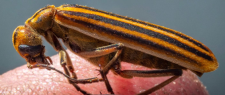
Blister beetles can range in size from three-quarters of an inch to 1 1/4 inches in length with narrow bodies and antennae that are one-third the length of their entire bodies. Four species common in Oklahoma are margined, black, ashgray and striped.

“The one we really need to worry about is the striped blister beetle,” Seuhs said. “They have the highest concentration of cantharidin, which is a blistering agent produced by the beetle as a defense mechanism.”

The blistering agent is toxic, and if a horse consumes blister beetles in high enough quantities, it may exhibit the following symptoms:  

  • Sores or blisters on the tongue and in the mouth
  • Colic
  • Straining
  • Increased temperature
  • Depression
  • Increased heart and respiratory rates
  • Dehydration
  • Sweating
  • Diarrhea
  • Bloody feces
  • Frequent urination

Seuhs said ruminant livestock, such as cattle and goats, can also be affected by blister beetles but generally not as severely as horses.

Signs of blister beetle toxicity typically occur within 3 to 12 hours after ingestion. It can be difficult to determine if horses have consumed blister beetles because horses could exhibit common symptoms of colic. A low fever, refusing feed, or acting depressed or lethargic are also possible signs a horse has ingested blister beetles.

Kris Hiney, OSU Extension’s equine specialist, said irritation of a horse’s mouth and mucous membranes may cause the animal to appear they are playing in or dunking their head in water. They may also display signs of straining and the need to urinate.

The cantharidin in beetles affects key electrolytes, which dysregulate breathing and elevate heart rate. The conditions can be fatal, and a veterinarian should be contacted immediately if blister beetle poisoning is suspected. The sooner a horse is treated, the greater the chance of survival.

Preventing blister beetles

Scouting alfalfa along field borders for beetles before the hay is baled can save a horse’s life. Seuhs said the insects are notorious for swarming and are known to congregate. They’re most active in the summer, and when a swarm is present, the ground will appear to move.

Hay most often becomes contaminated with blister beetles when they are crushed in alfalfa from the swather. Beetles are killed by the crimper rollers and become trapped in the hay. The remains of blister beetles may be concentrated in a small portion of the hay from a field. Beetles are also trapped and killed when forage is driven on before the beetles have had time to escape.

If left alone, most blister beetles leave alfalfa shortly after cutting. Harvesting the hay without using crimpers and avoiding wheel traffic on freshly cut alfalfa are two of the best ways to avoid problems.

The OSU Extension fact sheet on blister beetle activity advises alfalfa producers to take the following measures to avoid blister beetles in hay:

  • Maintain weed control within and outside the field.
  • Spray entire fields with a short residual insecticide just before harvesting. Spray the fence rows and field borders as well; or
  • Inspect fields shortly before cutting and spray only the infested areas if any are found.
  • Harvest alfalfa before it blooms, if possible.

Seuhs said treating fields for grasshoppers as early as possible in the spring can help reduce beetle numbers. Blister beetles feed on grasshopper eggs laid in the cracks and crevices of the ground as a nutrient source for the winter. The size of a grasshopper population can be a sign of next season’s blister beetle infestation.

While there is no way to eliminate the possibility of blister beetles in alfalfa completely, the best management approach is to take precautions to reduce the likelihood of their presence.

The OSU Extension fact sheet on blister beetles also provides tips to horse owners on how to purchase alfalfa safe for horses. Recommendations include: 

  • Know the alfalfa supplier.
  • Ask producers what precautions were taken to avoid blister beetles in forage.
  • Inspect hay before feeding if blister beetles are suspected.
  • If feeding small amounts of alfalfa, examine each flake for concentrations of dead blister beetles.
  • Purchase hay harvested before May or after September. This will not guarantee hay free of blister beetles but will significantly reduce the risk.
  • By Gail Ellis │ Oklahoma State University
Fall Colors of Trees

0
Fall Colors of Trees

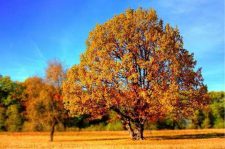
During the growing season leaves are making food for trees through photosynthesis. Chlorophyll found in the leaves captures the energy of the sun and gives trees their green pigment. As the amount of daylight decreases and the temperature drops heading into fall, chlorophyll production slows and the green color of leaves begins to fade. Xanthophylls and carotenes which are responsible for the orange and yellow pigment are always present in the leaves but only become visible as the green fades. Tannins are also present throughout the growing season and produce brown colors. Anthocyanins create red and purple pigments and are primarily produced during the fall.

The timing and intensity of the fall display varies based on types of trees and the environmental conditions. Different species will have differing levels of these pigments. Certain types of oaks and maples have brilliant fall foliage displays with varied colors while some trees will display primarily one color.

Temperature, soil moisture, rainfall and amount of sunlight impact the intensity and duration of the color. Warm, sunny days encourage photosynthesis which means sugar accumulation in the leaves. Cool nights slow respiration which helps conserve sugars. The combination of these factors results in a brilliant foliage display. Cloudy days and warm nights reduce sugar accumulation and consequently result in less vibrant leaf colors. Heavy rain, hot and dry summers, and frosts/freezes all have a negative effect on the vibrancy of fall colors and length of time they remain.

During this time, an abscission layer develops where the leaf petiole attaches to the branch. This barrier prevents sugars from being transported out of the leaf to the rest of the tree. Once the abscission layer is present, the leaf is ready to drop to the ground with the help of a windy gust or rainy day.

If you’ve noticed the fall display in your landscape changes from year to year pay attention to the weather patterns and this should give you an explanation as to why.

Cynthia Domenghini, Extension Agent


There is Still Time to Plant Spring-Flowering Bulbs   

0
Credit: Kham Tran, CC BY-SA 3.0

If you haven’t gotten bulbs in the ground yet, don’t despair. As long as the soil temperature stays above 40 degrees F roots still have time to develop. This means you should still have success if you plant bulbs into early November. Check soil temperature readings for the previous week at our Weather Data Library:  http://mesonet.k-state.edu/agriculture/soiltemp/

Healthy bulbs should be large, firm and dormant. Do not choose bulbs that have sprouted. Bulbs need well-drained soil. Incorporate peat moss, well-rotted manure or compost into the soil to prepare for planting.

Test the soil for fertility and follow recommendations from the results. You may see high phosphorus levels if you test the soil in an area that is fertilized regularly. This can be problematic because phosphorus can hinder the uptake of other essential micronutrients. In these situations, use a fertilizer that is relatively high in nitrogen such as 29-5-4 or 27-3-3. Although these are lawn fertilizers, they are suitable for this purpose as long as they don’t have a weed preventer or killer incorporated. Apply at the rate of 2/3 pounds (3 cups) per 100 square feet.

Blood meal is an organic fertilizer that is low in phosphorus and can be applied at a rate of 2 pounds of 12-0-0 per 100 square feet (1 tsp per square foot). Cottonseed meal (6-0.4-1.5) can be applied at 3 pounds per 100 square feet (2 tsp/square foot) or soybean meal (7-2-1) can be applied at 3 pounds per 100 square feet (2 tsp/square foot).

If a soil test is not available use a balanced fertilizer such as 5-10-5 or 6-10-4 at a rate of 3 pounds (6 cups) per 100 square feet (2 tsp/square foot). Fertilizer supplements need to be thoroughly integrated with the soil prior to planting.

The depth bulbs should be planted is typically two to three times the size of the bulb. This varies depending on the species so check planting instructions for more accurate recommendations.

Cynthia Domenghini, Extension Agent

If the wells run dry

0

CSU researchers analyze what could happen if Colorado fails to meet river compact deadline

In the 1940s, Colorado, Nebraska and Kansas signed the Republican River Compact, an agreement on exactly how much water each would receive from the Republican River basin. But in recent years, there’s been some dispute about Colorado’s compliance. Now the state is being tasked with a looming deadline: either voluntarily retire 25,000 acres of irrigated land in the basin area by 2029 or face the mandated shutdown of wells, potentially impacting several hundred thousand acres of irrigated ag land — and the surrounding communities.

Earlier this year, state legislators tasked Colorado State University’s College of Agricultural Sciences and its Colorado Water Center with researching the potential impact to the Republican River Basin region if we don’t meet the deadline.

John Tracy is director of the Colorado Water Center and a professor in the Department of Ecosystem Science and Sustainability in the Warner College of Natural Resources. Jordan Suter is a professor in the Department of Agricultural and Resource Economics in the College of Agricultural Sciences.

They recently spoke with The Audit podcast about the study and the complicated history of the compact.

By Stacy Nick │ Colorado State University

Kansas Corn: Cooperative effort leads to progress on Rattlesnake/Quivira issue

0
K-State's Southeast Research and Extension Center in Parsons will host its 2017 Spring Crops Field Day on May 23.

Encouraged by the work to manage water use in the Rattlesnake Creek Basin, the United States Fish and Wildlife Service has announced it will withdraw the call for water for the 2024 growing season for the Quivira National Wildlife Refuge.

The call for water would have decimated the local economy surrounding the wildlife refuge, agricultural industry officials say. Kansas Corn Growers Association leaders said the development is encouraging and builds momentum for continued work with local partners such as Groundwater Management District No. 5 and WaterPACK to seek voluntary water conservation efforts to remedy the impairment.

In a letter to the Kansas Department of Agriculture’s Division of Water Resources, the Fish and Wildlife Service thanked DWR for its leadership and acknowledged input and efforts from elected officials and stakeholders. The service asked to withdraw its call for water for 2024, to allow a working group to collaborate on developing options to be implemented in 2025.

Kansas Corn, WaterPACK, GMD5 and other stakeholders have worked closely on this issue to protect agricultural producers on more than 452,000 irrigated acres in the basin.

“This has become a cornerstone issue for the Kansas Corn Growers Association. We are working to protect access to water on nearly half a million irrigated acres in our state. Using our expertise and connections, we were able to help the leadership of GMD 5 to successfully apply for and receive funding for a watershed plan. We also worked closely with Kansas Gov. Laura Kelly who requested expansion of funding for water conservation projects in our state and encouraged the USFWS to allow this process to continue,” Kansas Corn CEO Josh Roe said. “While today’s news is positive, we remain more laser focused than ever to help craft solutions to permanently remedy this situation.”

WaterPACK President Pat Janssen said Kansas Corn and other agriculture groups provided needed assistance.

“Kansas Corn opened doors for the GMD and helped with the process of getting federal support to help farmers in the basin implement conservation efforts that are key to maintaining the economic backbone that irrigated ag provides to our communities and schools.” Janssen said. “We look forward to partnering with Kansas Corn to seek additional funding for water conservation projects that will benefit all water users in the basin.”

Iuka corn grower Kent Moore, who serves on the KCGA board said this recent announcement was the culmination of efforts on the private, local, state, and federal levels.

“These cooperative efforts are leading to meaningful progress in this area and are being recognized by the U.S. Fish and Wildlife Service,” Moore said. “We look forward to continuing to work with the Kelly administration using private, local, state and federal funding to facilitate and implement needed water conservation projects that benefit Kansas farmers, our environment, and our state’s economy.”

Kansas Corn Growers Association leaders look forward to continued participation in this issue, and plan to be active in the working group going forward. The Kansas Corn Growers Association represents its members in legislative and regulatory issues and promotes Kansas corn, the state’s top-producing crop.

As reported in the High Plains Journal