Sunday, February 22, 2026
Home Blog Page 583

Top Horse Show Jumper Suspension Upheld For Using Electric Spur

0

The Federation Equestrian International (FEI) announced that the Court of Arbitration for Sport has upheld its 2021 decision to suspend U.S. show jumper Andrew Kocher 10 years for using electric spurs on various horses.
The ruling upholds the 2021 decision not only to suspend Kocher for a decade but also to impose additional sanctions including the disqualification of his results from eight events between June 2018 and November 2019 where evidence supported his use of electric spurs.
Fines and legal costs total about $19,400. Kocher had appealed the decision in July 2021, seeking to eliminate or otherwise reduce the sanctions imposed.
In his defense, Kocher argued during proceedings that a device seen in pictures of him riding was a clicker and not a trigger for electrified spurs.
At the 2019 National Horse Show in Kentucky, Kocher rode Fashion V in the $36,000 Welcome Speed Stake. What appears to be a device with a button can be seen in his right hand in photos.
“We are extremely satisfied with this outcome and that the sanctions imposed, to reflect the severity of the offenses committed by Mr. Kocher have been upheld,”, said FEI Legal Director Mikael Rentsch.
“It may have taken two years to complete this process, but it confirms that we had the right decision to start with, and that there is no room for leniency when it comes to cases of horse abuse.
“We have rules and regulations in place to protect the integrity of our competitions and the wellbeing of our horses, and when these rules are breached and their welfare is jeopardized, we will continue to seek to impose maximum sentences,” Rentsch added.
Kocher is barred from participating in or attending, in any capacity, including as a spectator, any competition or event that is authorized or organized by the FEI or any National Federation until October. 27, 2030.
The provisional suspension that he began in October 2020, when the FEI opened disciplinary proceedings, will be credited against this period of suspension.
Kocher was first reported in the Independent Equestrian Community Integrity Unit (ECIU) in June 2020 by his former business partner, Eye Candy Jumpers owner Erica Hatfield.
She provided the ECIU with approximately 500 photos as well as key video evidence that showed a shock device and explained how it worked, as well as video of a pair of Kocher’s old riding boots, which showed holes cut in them where wires allegedly would run through to electrify the spurs.
Hatfield told the ECIU that Kocher had used electric spurs on a number of horses in international and national events, and during training.
+++30+++
 

“Land Values Can Decrease”; “They aren’t making any more land.”

0

The true comment has been repeated uncountable times throughout history.
“Land only comes up for sale once in lifetime, so purchase must be made when there is that opportunity.”
Similar statements have also frequently been quoted, but there are many exceptions. Certain land parcels have changed ownership numerous times in a few years.
“Cost of land will always be higher.”
While sometimes true, it is a misnomer verified in research of land sale prices throughout the century.
Prices paid for all types of land have skyrocketed comparatively in current times. However, a slowdown has been reported by financial institutions, with predictions for further decreases in prices.
“While land prices might continue to decline, they can’t go down to levels of 40 years ago.”
Comparable comments have often been made by the “younger” generation of agriculturalists and landowners.
It’s not said by the ones who remember earlier sharp land price deterioration. Generational family agriculture operations were forced out of business largely due to extremely high interest rates.
After record agriculture prices, producers became overly optimistic believing they would forever receive such high income.
That was far from the way it happened. Those paying record land prices found their purchase was valued at a small percentage of what they’d bought it for.
“Rich” farmers and ranchers suddenly became “poor,” from decline in net worth with little chance of continuing business.
Lending firms were in a similar struggle as the land was not valued at the amount for which loans were made.
Real estate businesses were hired to disperse the land at levels far below purchase price. It was truly a gloomy time both farmers and financiers could have never imagined.
Certain agriculture producers were able to realign operations and continue. Employment away from the farm helped keep some programs afloat at far reduced volume of peak times.
Farm wives in most cases then did not have off farm jobs but were forced to employment in town.
Never forget Dad saying land was $1 an acre in his earlier years. “Why didn’t you buy it?” naïve son questioned. “I didn’t have a dollar,” Dad replied.
Land values can deteriorate below present prices.
Reminded of Job 28:13: “Man knoweth not the price thereof; neither is it found in the land of the living.”
+++ALLELUIA+++
XVII–43–10-22-2023

Living the life of Riley … in Riley

0
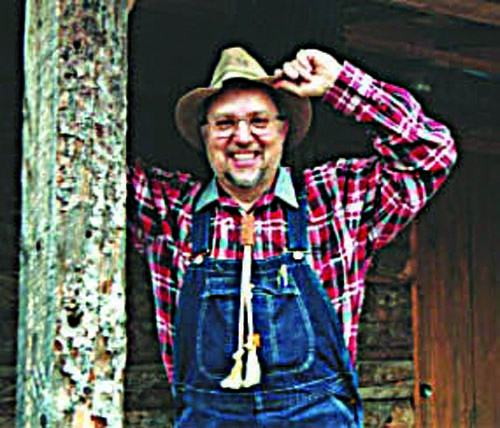
Thayne Cozart
Milo Yield
Well, faithful readers, Nevah and I have finally moved and settled into our new home and our new fiber optic internet connection (it’s fast) is up and running.  So, it’s column-writing time once again. No more excuses.
We moved Oct. 7 and with a lot of good help got the entire move done in one trip. We spent most of the first week, unpacking and finding an appropriate place for the main items. That process is still on-going in the garage.
So now, I’m happily reporting that I’m “Living the life of Riley … in Riley” — both literally and figuratively.
Our new home is just outside the little town of Riley, Kan., which is in the northwest corner of Riley County. Our daughter and son-in-law have a home a mile away. Also, since we have downsized, it made sense to change the name of our property from Damphewmore Acres, to Damphewer Acres.
After living in our new home for almost two weeks, I can list a growing number of things about our new home that make living here the “Life of Riley.”  Many are features that a hairy-legged, pot-bellied ol’ country boy like me would have considered “fantasy land” in my youth. And, I’m not talking about them to brag, but to express wonderment and amazement.
First, in our former home, we had to carry groceries the full length of the house and garage — probably 40 yards — to the kitchen.
In our new home, it’s less than 20 steps from the garage to the kitchen, humongous pantry, and deep freezer. That’s good for 80-year-old backs and knees.
We have a huge kitchen island that serves as the hub for all things that happen in the main living area. It’s particularly handy for using the electric skillet, crock pot, or grill. Another nice feature is that I don’t have to stand on my head — like I did in our former home — to get cooking pans or to get food storage containers out of drawers. They are all thigh-high accessible from drawers that expand when you pull them out. Another feature of the kitchen drawers is they won’t slam shut. They have cushioned closing and shut themselves the last few inches.
Another lazy-living feature is a propane-fueled fireplace that can be turned off and on and flame-adjusted with a handy-dandy remote control. So, can the ceiling lighting.
One more feature that I appreciate is the shower control. It has a control that  lets me set the water temperature in advance, so that every time I turn the water on, it flows at my preferred temperature without fiddling around with the control. No more freezing and scalding getting the water adjusted.
Both the new kitchen range and the microwave have features that let us adjust to multiple cooking and reheating conditions. As a constant snacker and cheese eater, I appreciate that our new refrigerator has a separate pull-out drawer for access to cheeses and deli-meats. It even has an easy-access  “snack zone.”
The sliding doors to our back patio feature internal “mini-blinds” that are enclosed between the glass panes. I can raise, lower, or tilt the blinds with a simple control device.
All in all, I guess Nevah and I are living a “Rurlban” lifestyle now. We are urban enuf to hook onto city sewer, so we don’t have to mess around with a septic tanks or sewer lagoon, but we are rural enuf that we had to dig a well for our water supply. That’s turning  out to be a good deal so far because the well has a high capacity and we won’t have a monthly water bill. In addition, the new water softener the builder installed doesn’t require the use of any softening salts. It uses two big replaceable cartridges instead … and the softened water is plant safe.
Our new home is north-south oriented, so we have perfect viewing of sunrises and sunsets. But, the plat is flat as a pancake with no trees for shade. Just for nostalgia’s sake, I’m going to plant a “memorial oak” sapling that I brought from our former home. And, I’m in the process of trying to plant a lawn while the area is still in a drought.
***
One interesting thing happened here. When we went into the post office to set up our new address, the postmistress saw the name “Milo Yield” and exclaimed “so, you’re the one!” Then she told me her parents live in rural Wyoming and read my column every week. They had informed their daughter to keep on the watch for me when I moved to Riley. I told her to have her parents drop by for an intro whenever they next visit her.
***
A farmer sadly told his doctor, “I can’t pay you, Doc. I slowed down doing all the hard work I needed to do on my farm — just like you advised me to do — and I and went broke.”
***
A harried farm wife dented the family pickup on a trip to town to fetch parts. In tears, she went to a local body shop and asked, “Can you fix this fender so my husband won’t know I bent it?”
The body-man replied, “Nope, but I can fix it so you can ask him in a few days, how he bent it.”
Words of wisdom for the week. “Experience may be a great teacher, but it overloads its students with homework.”
Have a good ‘un.

The dead zone

1
john marshal

Half the world erupts: Gaza in ruin, the Middle East a powder keg. War continues in Ukraine. Haiti, west Africa, Central America and Europe’s Balkans could blow any minute. The United Nations holds a long agenda of grief and grievance.
And in Washington, Congress roils. In a world desperate for unified leadership, the U.S. House is a goat ranch with no fence. The Senate’s troupe of unsteady herders probes the terrain for a stable footpath. In a nation at odds with itself, Congress is our accessory to chaos.
It wasn’t always this way. For evidence, consider Ken Burns’ engaging documentary, “The Congress”. This film tells us that government once worked, its foundation an elaborate system of compromise. Released in 1988, it remains an American Primer with enduring lessons.
Burns’ film explains that Congress embraced American sensibilities and common sense. It traces more than two centuries to the beginning, to John Adams, the obligations and responsibilities of a Congress that served the people who sent members to Washington. It is about a different Congress and Washington. Those earlier years may not have been such good old days, but for the Congress and the president and most Americans they were far more productive.
*
What a change: A Congress today of intransigence and ignorance, of shrillness and platitudes, of misfeasance, phobia and demagoguery rising like swamp gas through the Capitol’s hallowed halls.
One of the lessons drawn from “The Congress” is that our current version is incapable of writing the better laws that others had once fashioned; indeed, it cannot conceive of them, much less debate them.
Consider what was accomplished in times when legislators and the president were vibrant and supreme: Teddy Roosevelt’s Square Deal, its Robber Baron-busting enforcement of the Sherman Anti-Trust Act; Franklin Roosevelt’s New Deal, its banking laws, gold standard, Social Security, Depression-ending public works, soil conservation and flood control programs; Truman’s Fair Deal, its provisions for farm aid, unemployment compensation, public works, a minimum wage; and Truman’s Marshall Plan, which saved postwar Europe; Eisenhower’s Interstate highway program, Nixon’s revenue sharing – none of these glorious reforms, not to mention many others, would have a chance in the disorder that is Washington today.
Every major component of Kennedy’s New Frontier and Johnson’s Great Society – the Voting Rights and Civil Rights Acts, Medicare and Medicaid, the space program (Mercury, Gemini, Apollo 11, the moon!..), the Peace Corps, Consumer Protection acts including meat inspection, weights and measures, clean air and water legislation, and more –would be filibustered out and washed down today’s congressional sewer. Indeed, much of this legislation, the agencies and policies it created, is under threat today.
*
Burns’s film breathes irony. Time has turned it from the portrait of a great institution to the tale of a failed one. It tells us what Congress is no longer capable of doing. Even such basics as health insurance, road and bridge maintenance and improvement, and education are beyond reach. We can no longer conduct clean elections. Yesterday’s gifted Congress points to today’s lack of one.
Washington was once a place that welcomed ideas, not dogma. Then it became a place where ideas went to die. Now it is a place where ideas don’t go at all.

5 ways to reduce stress and fight pneumonia on the dairy

0
Photo credit: U.S. Department of Agriculture

As reported in High Plains Journal stress doesn’t just impact the hardworking dairy producer, it can also impact our calves. External stressors and management factors can compromise their immune system and make them susceptible to respiratory disease. Weaning, transportation and vaccination, to name a few, are all events in a calf’s life that can cause stress.

But there are things we can do to manage stress and keep calves healthy. “Taking a closer look at our management practices and improving them can help producers prevent respiratory infections from taking a toll on their herd and their bottom line,” said Dr. Linda Tikofsky, DVM, Boehringer Ingelheim.

Implementing the following can help mitigate stress and prevent disease in your herd:

No. 1: Prioritize cleanliness and comfort

“I’ve seen calves raised successfully in a variety of housing situations,” Tikofsky observed. “Much of that success comes down to good management.”

Calves should be put in a clean, well-bedded, draft-free space that shields them from harsh weather conditions. “It is essential that housing for heifers has good ventilation to reduce airborne pathogens and dust that can put disease pressure on young animals,” stated Tikofsky.

Individual calf pens, where young calves don’t have nose-to-nose contact, are the best option to minimize the transmission of respiratory pathogens. If group housing is required, keep calves in small groups with at least 22 to 33 square feet per calf.

No. 2: Practice low-stress handling

How we handle calves can greatly impact their stress levels, and it can also impact how they react to being handled in the future.

“When handling calves, we want to walk in positions where they can see us, and avoid staying directly behind them in their blind spot,” explained Tikofsky. “Other low-stress handling techniques include presenting a calm disposition, avoiding loud noises and removing visual distractions.”

No. 3: Feed calves a well-balanced diet

A structured feeding schedule, in which the calf is fed at the same time every day, reduces stress and improves average daily gain. The amount of feed should also be increased in colder weather, as animals burn more calories to stay warm. Work with a nutritionist to ensure calves are well-fed with a properly balanced diet.

No. 4: Manage parasites

Clinical or subclinical parasitism can suppress an animal’s immune system and decrease their ability to fight disease. Even calves kept in a confined environment can benefit from lice and mange control in the winter months. “Keep animals comfortable and tackle parasites by working with a veterinarian to implement a deworming protocol that works for your operation,” emphasized Tikofsky.

No. 5: Be ready with a game plan during stressful events

Even with the best management practices in place, some stressful events such as shipping are unavoidable. “When producers know that animals are about to experience a stressful event, metaphylaxis is an option to explore,” noted Tikofsky. Administering metaphylaxis, or a group antibiotic treatment, for at-risk animals can help reduce morbidity and mortality.

“Talk with a veterinarian about finding an antibiotic for metaphylaxis that works best for your herd,” Tikofsky concluded. “Typically, several factors should be evaluated, such as spectrum of activity, speed of action and post-metaphylactic interval, or the length of time the antibiotic is at effective levels in the bloodstream before another dose is required.”